Wholesale Cosmetic Sponges: Which Material Holds Up Best in Use?
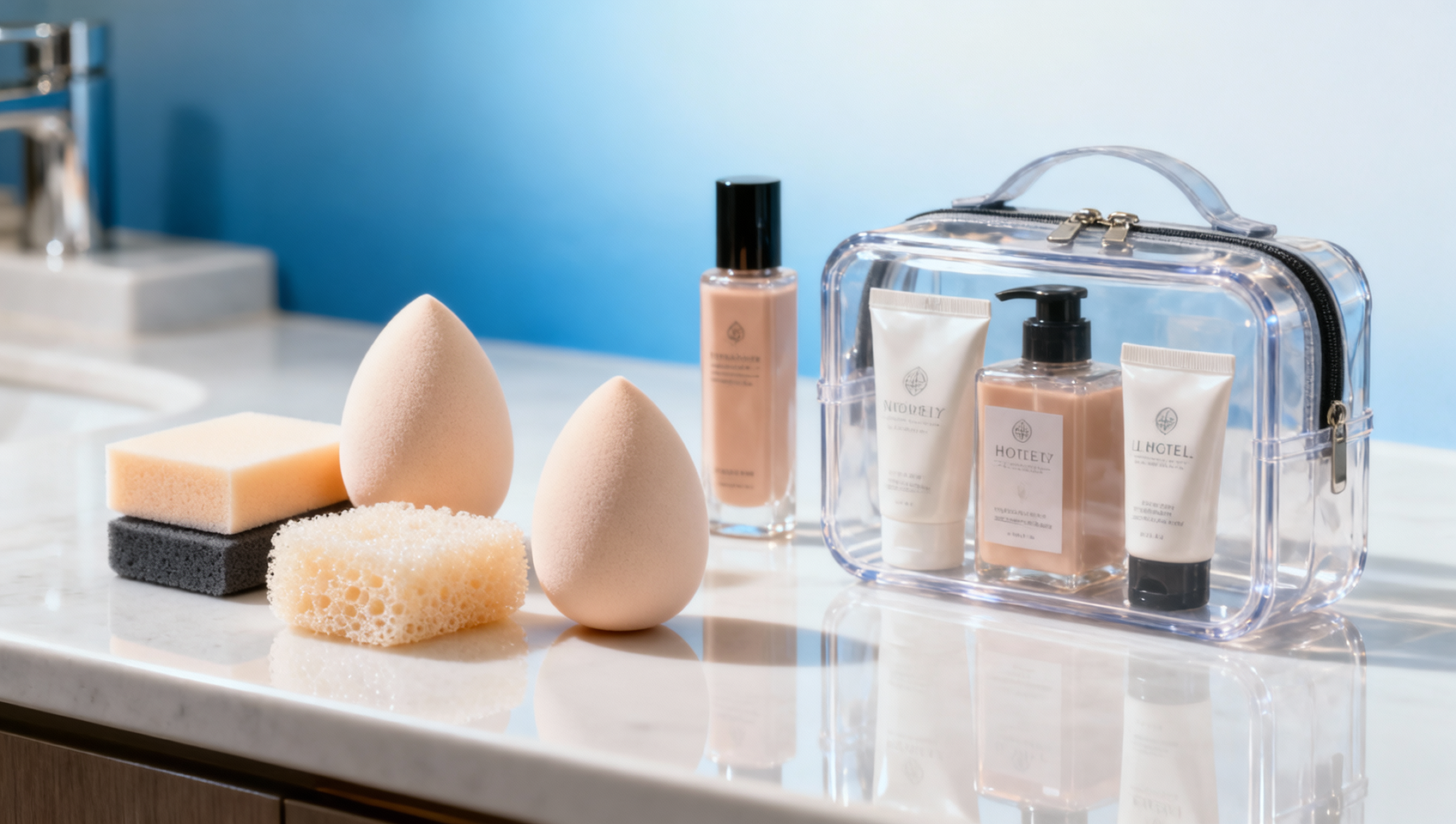
For buyers evaluating wholesale cosmetic sponges, material choice directly affects durability, hygiene, and user experience. From latex-free polyurethane foam to hydrophilic and silicone options, each performs differently under repeated washing, blending pressure, and retail use. This guide helps sourcing teams, quality managers, and brand decision-makers identify which sponge material holds up best while balancing cost, compliance, and long-term product value.
Why material durability matters in travel retail and hospitality beauty supply
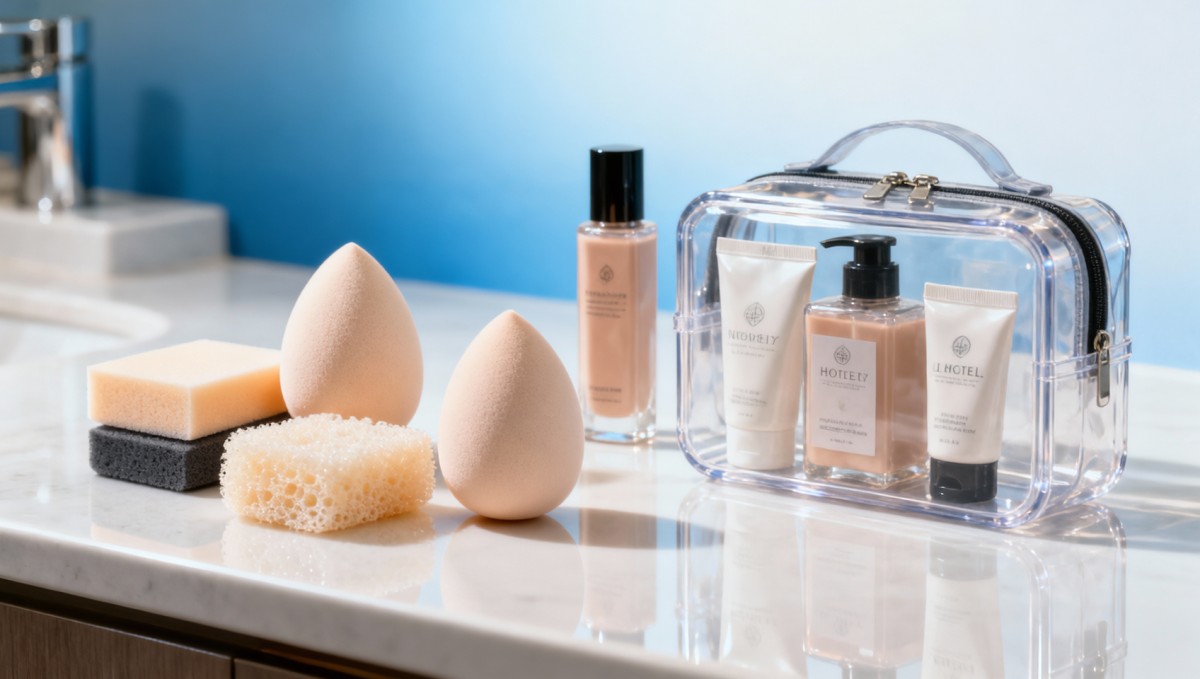
In travel services, cosmetic sponges are not only a beauty accessory. They can be part of hotel amenity kits, airport retail assortments, duty-free beauty promotions, cruise cabin gift packs, spa treatment support items, and travel-size private label sets. In these settings, buyers need a sponge that survives shipping, shelf handling, repeated squeezing, and at least several wash cycles without tearing, crumbling, or absorbing odor too quickly.
The buying challenge is practical. A sponge that looks soft in a sample room may fail after 2–4 weeks of regular use or after 3–5 cleaning cycles in a consumer travel routine. For distributors and procurement teams serving travel retail channels, poor durability creates returns, weak reviews, and avoidable replacement cost. For operators in spas or hotel beauty corners, it also affects hygiene control and guest satisfaction.
Global Consumer Sourcing supports this evaluation process by connecting material analysis with real sourcing decisions. That matters when a buyer is comparing OEM or ODM options across multiple factories, asking not only which wholesale cosmetic sponge is cheaper, but which material delivers stable quality under compressed lead times of 15–45 days and varied compliance expectations in cross-border retail distribution.
For technical reviewers and quality managers, the key question is not simply softness. It is retention of shape, water behavior, surface integrity, resilience after compression, and compatibility with liquid or cream makeup. In travel service channels, these factors influence whether a sponge can hold up in baggage, humid bathrooms, store displays, and rapid replenishment cycles.
- Travel retail buyers often need compact, visually consistent sponges that maintain shape after bulk packing.
- Hospitality operators typically prioritize easy cleaning, acceptable durability, and low complaint rates over ultra-premium texture.
- Distributors and agents need materials that stay commercially viable across small-batch, mid-volume, and large-volume orders.
Which wholesale cosmetic sponge material holds up best in actual use?
Different materials fail in different ways. Latex-free polyurethane foam is widely used because it balances softness, cost, and acceptable resilience. Hydrophilic foam expands when wet and is favored for blending, but durability depends heavily on foam density and cell structure. Silicone sponges resist absorption and are easy to wipe clean, yet many users find they provide less familiar blending performance, which can reduce repeat purchase in beauty-led travel retail channels.
For most wholesale cosmetic sponge programs, high-quality latex-free polyurethane or hydrophilic polyurethane tends to hold up best in day-to-day use when the factory controls pore uniformity, rebound speed, and edge finishing. Silicone usually wins on washability and lower product absorption, but not always on user acceptance. Natural latex can offer elasticity, but allergy sensitivity and market restrictions often make it less suitable for broad international distribution.
The table below helps procurement teams compare the most common material options across durability, hygiene, and travel-service fit. It is especially useful when reviewing supplier claims during sample approval, category selection, or private-label planning.
In practical sourcing terms, latex-free polyurethane and hydrophilic foam remain the strongest mainstream choices. Silicone should be considered when hygiene messaging, low product waste, or easy maintenance is more important than traditional blending feel. The best material is therefore not universal; it depends on whether your channel values user familiarity, cleaning speed, or low complaint exposure.
How users judge “holding up” after the first few weeks
Operators and end users usually assess durability through four visible signs within the first 7–30 days: cracking at the pointed tip, uneven rebound after squeezing, surface pilling, and odor retention after washing. If a sponge fails in any of these areas, the product may still be technically usable, but its retail quality perception drops quickly.
This is why sample approval should not stop at appearance. Buyers in travel services should ask for use-based evaluation under wet application, dry application, and repeated cleaning. A sponge that performs well in all 3 conditions usually has better resilience for guest amenities, airport shelf sales, and multi-destination distribution.
What technical checkpoints should procurement and QC teams review?
When sourcing wholesale cosmetic sponges, purchasing teams often focus first on unit price and packaging. That is understandable, but technical consistency often determines whether the order stays profitable. A small cost saving at production stage can become a larger service issue if the sponge loses elasticity, absorbs too much product, or shows color inconsistency across batches of 5,000–50,000 units.
For technical assessment, four checks are especially useful: density consistency, rebound behavior, water expansion control, and seam or edge integrity. Quality teams can compare these across pre-production samples, pilot samples, and shipment inspection. Even simple handling tests over 10–20 compression cycles can reveal weak foam structure before a large order is approved.
The table below summarizes procurement checkpoints that matter in wholesale cosmetic sponge selection for travel retail, hospitality sourcing, and distributor review. It helps cross-functional teams align product performance with operational risk.
These checkpoints do not require a laboratory-only process. In many sourcing programs, a structured sample protocol completed over 3 stages can already reduce poor-fit orders: visual inspection, use simulation, and wash evaluation. GCS adds value here by helping buyers compare supplier positioning, practical product claims, and manufacturing capability in a more decision-ready way.
A practical 4-step evaluation routine
For sourcing, technical, and project teams
- Review baseline sample condition on arrival, including shape uniformity, color consistency, and packaging protection.
- Run 10–20 hand compression cycles in dry state to check rebound and early cracking.
- Test wet expansion and blending feel after soaking, then monitor drying over 12–24 hours.
- Repeat washing for 3–5 cycles to identify tip damage, rough texture, or odor retention.
This process gives procurement teams a common language with suppliers. It also helps project managers avoid internal disagreement between commercial teams, product developers, and quality reviewers when selecting one sponge material for multiple travel retail markets.
How should buyers balance cost, compliance, and channel fit?
The lowest unit price is not always the lowest landed risk. In wholesale cosmetic sponge sourcing, the cost structure includes material grade, shape complexity, printing or logo work, packaging format, sampling rounds, and inspection requirements. For travel service buyers, additional considerations include carton efficiency, moisture protection during transit, and compatibility with multilingual retail or amenity labeling.
A basic polyurethane sponge may suit mass-distribution hotel kits, while a higher-grade hydrophilic sponge may be better for premium airport beauty retail or cruise gift sets where repeat purchase matters. Silicone options can work for niche merchandising, especially where quick wipe-clean usage is a selling point. The right choice depends on expected shelf image, guest usage frequency, and replacement cycle.
Compliance should also be part of the selection model. Buyers may need to review material safety declarations, packaging conformity, market labeling requirements, and claims such as latex-free or cruelty-free where applicable. If the sponge is included in a broader beauty set, the compliance review often extends to inks, plastic holders, pouches, and outer packaging. Lead times for such review can add 1–3 weeks depending on project complexity.
GCS is especially useful for teams managing this complexity across suppliers and markets. Instead of treating cosmetic sponge sourcing as a simple commodity purchase, buyers can use structured intelligence to compare production readiness, private-label responsiveness, and likely fit for retail, hospitality, and distribution channels that move at different speed and margin levels.
- For budget-led hotel amenity programs, prioritize stable latex-free foam, simple shapes, and repeatable bulk packaging.
- For premium travel retail, compare hydrophilic foam grades, packaging aesthetics, and consumer-facing care instructions.
- For hygiene-led concepts, assess whether silicone offers a meaningful retail story without hurting user acceptance.
Common mistakes buyers should avoid
One common mistake is approving based on softness alone. Another is ignoring drying behavior in humid travel settings such as resorts, cruise cabins, or tropical destinations. A third is assuming all latex-free sponges perform similarly. In reality, pore structure and factory process variation can create clear quality differences even within the same material family.
Buyers also underestimate packaging impact. Compression packing may reduce shipping volume, but if the sponge shape does not recover well after 24–48 hours, the retail presentation suffers. This matters for distributors, agents, and commercial reviewers who need product consistency across multiple sales channels.
FAQ for sourcing teams, quality managers, and travel channel buyers
Which sponge material is usually the safest mainstream choice for wholesale orders?
For most mainstream programs, latex-free polyurethane foam is the safest starting point because it balances durability, familiar blending feel, and manageable cost. If the target channel is premium beauty retail in airports or destination stores, hydrophilic polyurethane may justify the higher cost when user experience is central to repeat sales.
How many samples should a buyer review before placing a bulk order?
A practical approach is to review at least 2–3 sample rounds when the program includes custom shape, color, logo, or packaging. One round may be enough for a standard item, but private-label or multi-market travel distribution usually benefits from a second confirmation after packaging and wash testing are complete.
What is a typical lead time for wholesale cosmetic sponge projects?
Lead time varies by factory capacity, customization, and packaging complexity. Standard programs may move in 15–30 days after confirmation, while more customized private-label projects can extend to 30–45 days or longer if artwork approval, compliance review, or multi-component beauty kits are involved.
Are silicone cosmetic sponges better because they are easier to clean?
Not automatically. Silicone offers clear hygiene and low-absorption advantages, but many users still prefer foam for blending performance and handling. Silicone works best when the product concept emphasizes easy maintenance, travel convenience, or reduced makeup waste, rather than classic sponge feel.
What should quality control teams check during final inspection?
QC teams should review appearance consistency, shape recovery, edge defects, odor, packaging integrity, and labeling alignment. For travel service distribution, carton durability and moisture protection are also worth checking, especially when goods will pass through multiple climate zones or long transit periods.
Why work with GCS when selecting wholesale cosmetic sponge suppliers?
Selecting the best wholesale cosmetic sponge material is rarely a one-variable decision. Buyers need to connect material choice with retail positioning, travel service channel demands, lead time, customization depth, and compliance expectations. GCS helps bridge those decisions with market-focused sourcing intelligence rather than generic catalog comparison.
For information researchers, GCS clarifies material trade-offs and supplier-facing questions. For procurement managers, it supports faster shortlist building and stronger negotiation preparation. For quality and safety reviewers, it helps frame realistic checkpoints around durability, hygiene, and labeling. For commercial leaders and distributors, it improves confidence that the selected product will fit the intended travel retail or hospitality use case.
If you are comparing latex-free foam, hydrophilic sponge, silicone designs, or private-label travel beauty accessories, you can consult GCS on sample strategy, material selection, packaging direction, lead-time planning, and market-fit review. That is especially useful when your team must align technical performance with sourcing risk, budget pressure, and launch timing within one project window.
Contact GCS to discuss product parameters, sponge material selection, sample support, delivery schedules, custom packaging options, and applicable compliance checkpoints for your target market. Whether you are building a hotel amenity line, airport retail assortment, distributor catalog, or travel beauty private label range, a more structured sourcing process can reduce trial-and-error and improve long-term product value.
Related Intelligence
 Beauty DevicesApr 15, 2026Commercial microdermabrasion machine: what affects treatment consistency?Microdermabrasion machine commercial buying guide for tourism spas: learn what affects treatment consistency, supplier reliability, maintenance, and rollout value for high-turnover service environments.
 Beauty DevicesApr 15, 2026IPL hair removal device OEM quotes vary so much for one reasonIPL hair removal device OEM quotes vary for one key reason: manufacturing depth. Compare suppliers smarter across microdermabrasion machine commercial and beauty OEM projects.
 Cosmetics & PkgApr 15, 2026False eyelashes vendor selection often fails at sample qualityFalse eyelashes vendor selection often fails at sample quality. Learn how travel retail buyers compare suppliers, packaging, and adjacent sourcing like custom lip gloss vendor, organic face serum OEM, anti aging cream wholesale, IPL hair removal device OEM, and microdermabrasion machine commercial solutions.
 Cosmetics & PkgApr 15, 2026Custom lip gloss vendor options look similar until packaging startsCustom lip gloss vendor options look alike until packaging, compliance, and timing matter. Compare suppliers smarter for travel retail, with insights across false eyelashes vendor and organic face serum OEM sourcing.
 Skincare OEMApr 15, 2026Why anti aging cream wholesale margins shrink after the first orderAnti aging cream wholesale margins often shrink after the first order. Learn how packaging, compliance, and logistics affect costs across organic face serum oem and custom lip gloss vendor sourcing.
 Skincare OEMApr 15, 2026Organic face serum OEM claims that need proof before launchOrganic face serum OEM launch guide for travel retail: verify claims, safety, and compliance before rollout, while comparing anti aging cream wholesale, custom lip gloss vendor, and beauty device sourcing.
 Beauty DevicesApr 15, 2026Is a commercial microdermabrasion machine worth upgrading in 2026?microdermabrasion machine commercial upgrade guide for travel services in 2026. Compare ROI, compliance, and sourcing options from IPL OEM to skincare vendors.
 Beauty DevicesApr 15, 2026IPL hair removal device OEM lead times get delayed by these detailsIPL hair removal device OEM lead times slip due to packaging, compliance, and supplier gaps. Learn how travel buyers manage delays across microdermabrasion machine commercial sourcing and more.
 Cosmetics & PkgApr 15, 2026A false eyelashes vendor may pass inspection and still miss repeat ordersfalse eyelashes vendor insights for travel retail: compare custom lip gloss vendor, anti aging cream wholesale, organic face serum oem, and ipl hair removal device oem partners before scaling.
 Skincare OEMApr 15, 2026Organic face serum OEM formulas that scale badly in mass productionOrganic face serum OEM scale-up risks explained for travel retail buyers. Compare anti aging cream wholesale, custom lip gloss vendor, false eyelashes vendor, microdermabrasion machine commercial, and ipl hair removal device oem options.
 Cosmetics & PkgApr 15, 2026Wholesale Cosmetic Sponges: Which Material Holds Up Best in Use?Wholesale cosmetic sponges guide for travel retail buyers: compare latex-free foam, hydrophilic, and silicone options to find the best durability, hygiene, and sourcing value.
 Fitness EquipmentApr 15, 2026Commercial Treadmills Wholesale: The Maintenance Costs Often MissedCommercial treadmills wholesale buyers in travel service projects often miss hidden maintenance costs. Learn how to compare uptime, spare parts, service readiness, and long-term ROI before sourcing.
 Fitness EquipmentApr 15, 2026Indoor Cycling Bikes OEM: Which Specs Actually Affect Ride Feel?Indoor cycling bikes OEM guide for travel and hospitality buyers: learn which specs shape real ride feel, compare OEM quality, and source with confidence for commercial fitness projects.