RoHS Toy Safety Certification: 2026 Testing Checklist and Common Fail Points
Why RoHS toy safety certification matters more in 2026
RoHS toy safety certification has moved from routine paperwork to a commercial control point. In 2026, the pressure comes from deeper material checks, stricter traceability, and faster recall exposure.
That shift matters well beyond factory gates. In travel retail, airport stores, resort gift shops, cruise programs, and destination toy lines all depend on compliant goods entering multiple markets smoothly.
A failed shipment can disrupt seasonal launches, duty-free promotions, and licensed souvenir programs. The cost is not only retesting. It can also mean missed shelf windows and damaged buyer confidence.
This is why RoHS toy safety certification is now reviewed alongside CE, CPC, packaging data, and supplier declarations. More often, the practical question is not whether testing is needed, but whether the evidence is complete enough.
Across sourcing intelligence platforms such as Global Consumer Sourcing, the pattern is clear. Retail supply chains increasingly reward suppliers that can prove compliance readiness before product launch, not after a nonconformance appears.
What does RoHS toy safety certification actually cover for toys sold across travel channels?
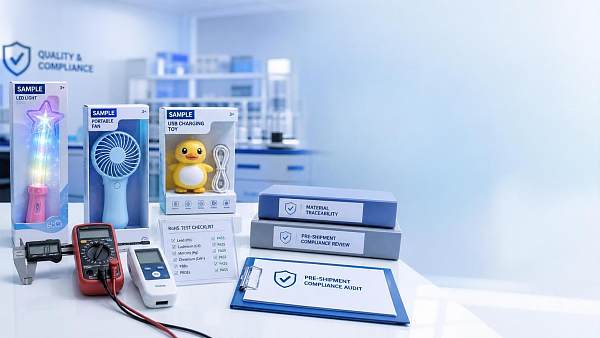
In simple terms, RoHS toy safety certification focuses on restricted hazardous substances in electrical and electronic products. For toys, that usually applies when the item contains circuits, lights, batteries, sound modules, or charging functions.
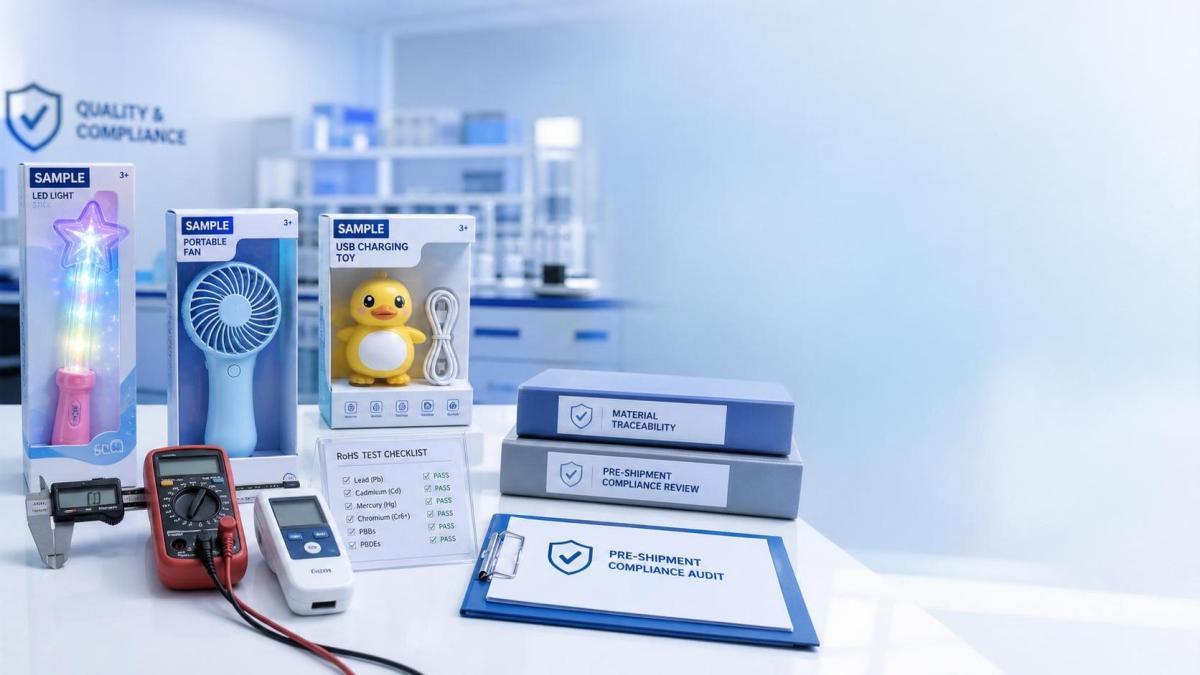
A plush souvenir without electronics may fall outside typical RoHS scope. A light-up wand, talking mascot, portable fan toy, or USB-charged travel game usually does not.
The confusion often starts when teams assume toy safety law and RoHS are the same thing. They are related, but they are not interchangeable. One addresses broader product safety. The other targets restricted substances.
For travel service operators, scope decisions matter because assortments are mixed. The same retail program may carry electronic toys, impulse gifts, kids' travel accessories, and branded collectibles with different compliance paths.
A practical review usually checks four points before sampling starts:
- Whether the toy includes electronic or electrical functions.
- Which materials contact solder, coatings, cables, plastics, or battery parts.
- Which destination markets request RoHS toy safety certification evidence.
- Whether supplier declarations match the current bill of materials.
Skipping that early scope check is one of the most common reasons testing plans become expensive later.
Which 2026 testing checklist helps prevent delays before shipment?
The strongest RoHS toy safety certification workflow starts before lab submission. It begins with a documented material map, supplier data review, and a sampling plan tied to actual production lots.
In practice, the 2026 checklist should cover both technical testing and evidence control. A clean lab report is weaker if part descriptions, revision numbers, or declarations do not align.
Need-to-test parts usually include solder joints, PVC cables, painted surfaces, metal plating, soft plastics, and battery connectors. These areas repeatedly show up in failed RoHS toy safety certification cases.
For travel retail programs, build extra time into the plan. Multi-country launches often require parallel review by importers, private-label teams, and destination operators, which slows approval if documents are inconsistent.
Where do most RoHS toy safety certification failures happen?
Failures rarely come from one dramatic mistake. More often, they come from overlooked details in low-cost components, undocumented substitutions, or outdated supplier files reused across several SKUs.
The most frequent fail points in RoHS toy safety certification include restricted lead in solder or paint, phthalates in soft plastic parts, cadmium in pigments, and noncompliant cable insulation.
In souvenir and travel toy lines, decorative parts are a repeat concern. Small add-ons such as charms, printed badges, zipper pulls, and illuminated base units may be sourced from different vendors.
That split sourcing creates a documentation mismatch. The main factory may pass review, while one subcontracted accessory fails because its declaration is generic or out of date.
Another common problem is engineering change after testing. A battery housing resin, cable colorant, or coating finish may change for cost or availability. The report remains old, but the product is now new.
A shorter warning list helps during line checks:
- Component substitutions without formal approval.
- Shared reports used for visually similar, but different, models.
- Declarations missing part numbers or issue dates.
- Testing only final assembly, not homogeneous materials.
- Assuming previous market approval covers new destinations.
When these gaps appear in travel service assortments, the impact can spread quickly because products move across airports, hotels, cruise retail, and online booking add-on channels together.
How should documentation and supplier control be handled before launch?
A useful rule is this: RoHS toy safety certification is only as reliable as the document trail behind the tested sample. Labs verify material conditions. Supply chains must verify continuity.
That means supplier control should sit next to testing, not after it. In real sourcing operations, the strongest files combine declarations, material disclosures, change notifications, and production traceability.
Global Consumer Sourcing often highlights this point in compliance-focused supply chain analysis. Buyers increasingly compare factories not only by price and speed, but by how clearly they manage evidence through product revisions.
The following decision table is helpful when document quality looks uncertain.
In travel merchandise programs, this matters because products are often refreshed for events, destinations, or licensing updates. Small visual changes can hide material changes that need new review.
How much time should teams allow, and when is retesting necessary?
There is no universal timeline, but RoHS toy safety certification usually takes longer when component sourcing is fragmented or when several markets request aligned technical files at once.
A clean repeat item with stable suppliers may move quickly. A new electronic travel toy, especially one built for seasonal tourism campaigns, needs more review time for scope checks and document reconciliation.
Retesting is usually justified when one of these changes appears:
- A new component supplier replaces the approved source.
- Paint, plating, resin, or cable material changes.
- Battery system or charging design is revised.
- The product enters a market with stricter review practice.
- Existing reports cannot be tied to the final shipped SKU.
A practical scheduling habit is to align RoHS toy safety certification with pilot production, not final packing. That timing gives room to fix a material issue before inventory is committed.
For destination retail and tourism-linked assortments, that buffer matters. Launch windows are often tied to school holidays, cruise itineraries, or peak passenger traffic, where late approval has an outsized cost.
What is the smart next step if compliance confidence is still uncertain?
Start with a gap review, not with more paperwork. Check whether the current RoHS toy safety certification file matches the actual product build, supplier map, and destination market requirements.
Then prioritize the parts most likely to fail: solder, soft plastics, cables, coatings, and decorative accessories. These are the areas where hidden risk tends to survive early document checks.
If a toy supports travel retail, hospitality gifting, or destination merchandising, confirm launch timing against test lead time and retest triggers. Compliance planning should follow the sales calendar, not chase it.
The main lesson for 2026 is straightforward. RoHS toy safety certification is no longer just a lab event. It is a material control system, a document control system, and a market access system working together.
The next useful move is to rebuild the checklist around real components, current declarations, and change management. That approach reduces avoidable failures and supports steadier market entry across complex retail and travel channels.
Related Intelligence
 Baby Gear & StrollersJul 05, 2026US West Coast Shipping Rates Jump 37% as Stroller Lead Times LengthenUS West Coast shipping rates jump 37% as stroller lead times lengthen, squeezing Q3 inventory plans. Learn what rising freight costs, booking limits, and delayed OEM orders mean for exporters and buyers.
 STEM & Educational ToysJul 05, 2026Amazon Japan Sets JIS C 62133-2:2026 Rule for STEM ToysAmazon Japan sets JIS C 62133-2:2026 rules for STEM toys with rechargeable batteries. Learn how sellers can avoid ASIN removals, update compliance documents, and protect listings.
 Camping & WaterJul 05, 2026Vietnam Enforces QCVN 16:2026 for Camping CookwareVietnam Enforces QCVN 16:2026 for Camping Cookware, requiring migration testing, QUACERT conformity, and label filing. Learn how exporters and importers can avoid sales disruption.
 Infant Feeding & CareJul 05, 2026CPSC Tightens Pacifier Silicone Bite Test RuleCPSC Tightens Pacifier Silicone Bite Test Rule: learn how the new 25N ASTM requirement affects importers, manufacturers, labs, and compliance teams entering the U.S. market.
 Beauty DevicesJul 05, 2026EU Rule Takes Effect: Beauty Devices Need EN IEC 61000-6-3:2025 EMC ReportsEU Rule Takes Effect: Beauty Devices Need EN IEC 61000-6-3:2025 EMC Reports. Learn how the new EU EMC compliance requirement affects customs clearance, market access, and delivery planning.
 Infant Feeding & CareJul 05, 2026Technical Product Guide Capacity Explained for Portable Bottle WarmersTechnical product guide capacity explained for portable bottle warmers: compare bottle fit, heating cycles, battery efficiency, and travel-ready safety to choose smarter for family trips.
 Nursery Furniture & MonitorsJul 05, 2026Purchasing Considerations Cost Factors for Nursery Monitor SourcingPurchasing considerations cost factors shape nursery monitor sourcing for travel retail. Learn how compliance, packaging, logistics, and supplier capability protect margin and reduce risk.
 Baby Gear & StrollersJul 05, 2026Consumer Product Trend Cost Factors Shaping Baby Gear in 2026Consumer product trend cost factors are reshaping baby gear for travel services in 2026. Discover what drives pricing, safety, durability, and smarter family travel sourcing.
 Infant Feeding & CareJul 05, 2026Baby Products Compliance Requirements: Key Rules Before Market EntryBaby products compliance requirements shape safe market entry for travel retail and hospitality. Learn key rules, documents, and risk checks before launch.
 STEM & Educational ToysJul 05, 2026RoHS Toy Safety Certification: 2026 Testing Checklist and Common Fail PointsRoHS toy safety certification in 2026: learn the testing checklist, common fail points, and smart supplier controls to avoid shipment delays across travel retail channels.
 Baby Gear & StrollersJul 04, 2026Ningbo-LA Spot Rates Hit $4,850 as Lead Times StretchNingbo-LA spot rates hit $4,850 as lead times stretch from 6 to 18 days. See how rising freight costs, tight space, and delivery risks could impact U.S. West Coast shipments.
 STEM & Educational ToysJul 04, 2026Amazon Japan Tightens Battery Rules for STEM ToysAmazon Japan tightens battery rules for STEM toys, requiring JIS C 62133-2:2026 test reports. Learn how sellers can avoid ASIN removal, frozen inventory, and compliance risks.
 Camping & WaterJul 04, 2026Vietnam Tightens Testing for Camping Cookware ExportsVietnam tightens testing for camping cookware exports under QCVN 16:2026. Learn how migration test reports affect market access, compliance planning, and Vietnam-bound shipments.