Japan's New PSE+JIS S 2021 Dual Certification for Smart Fitness Devices Takes Effect April 2026: Compliance Challenges for Chinese Beauty Device Exporters
Japan's New PSE+JIS S 2021 Dual Certification for Smart Fitness Devices Takes Effect April 2026: Compliance Challenges for Chinese Beauty Device Exporters
Introduction
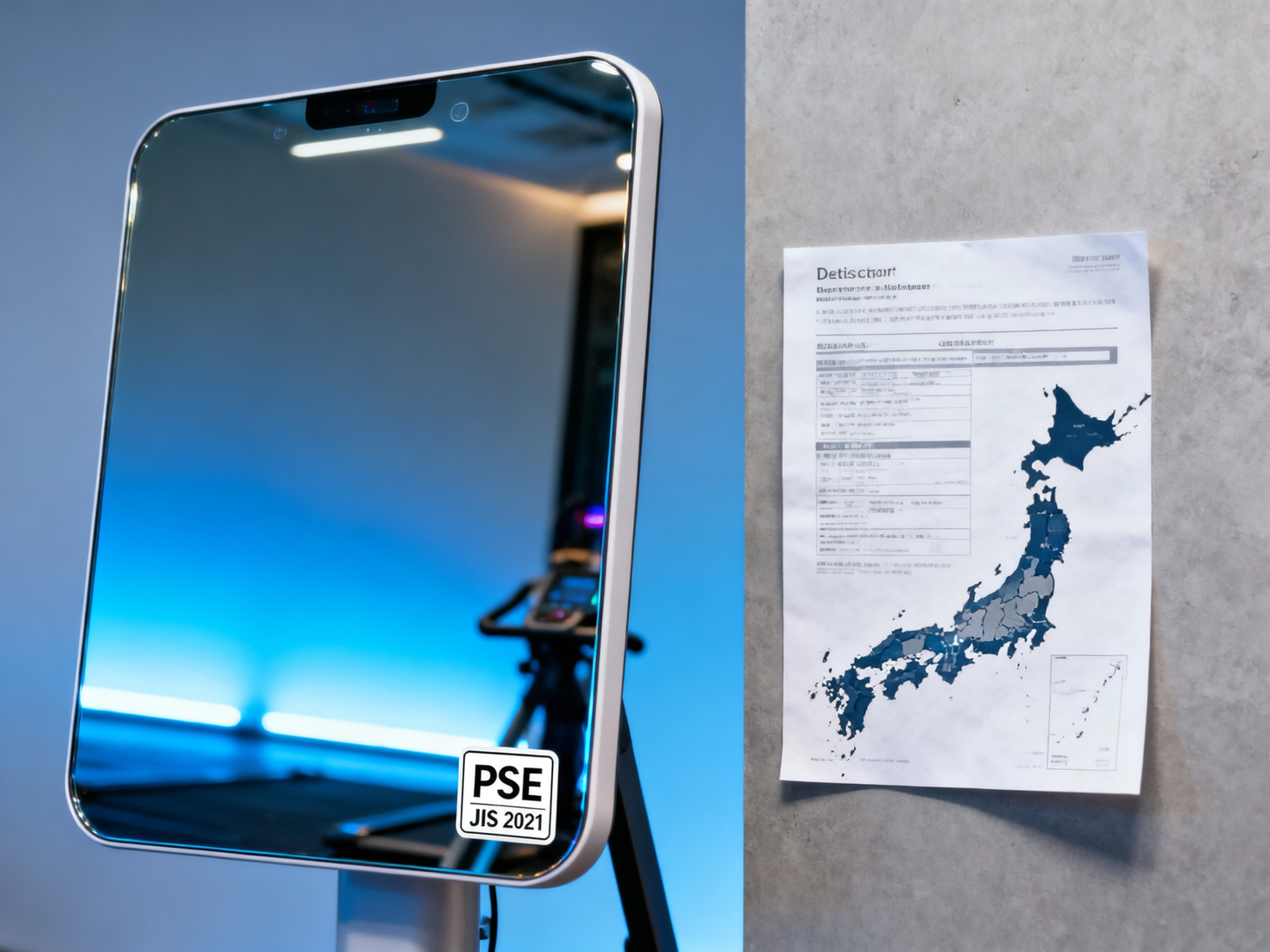
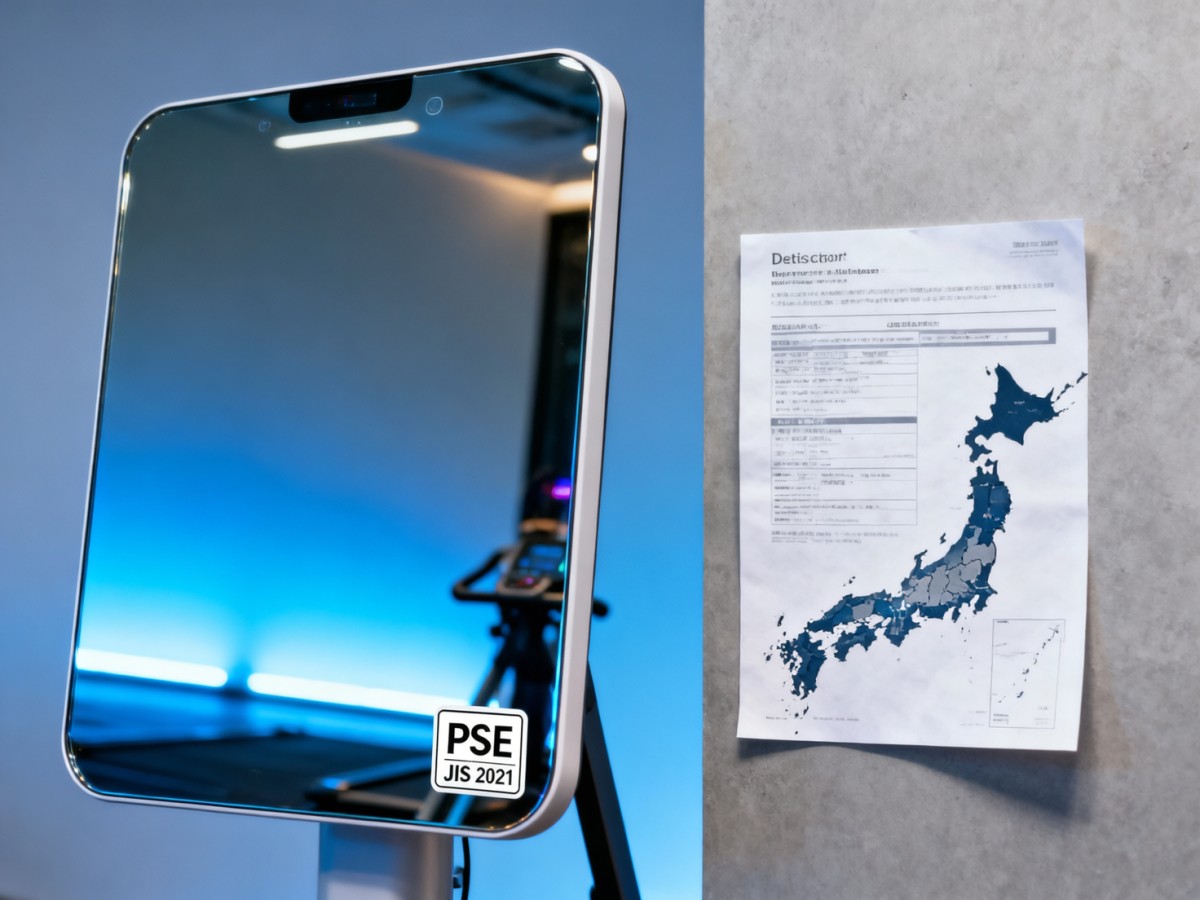
Starting April 1, 2026, Japan will implement new regulatory requirements for smart fitness devices, mandating dual certification under the PSE (Product Safety Electrical Appliance & Material) and JIS S 2021 (Japanese Industrial Standards for sports equipment) frameworks. This development, announced by Japan's Ministry of Economy, Trade and Industry on March 27, primarily affects Chinese manufacturers exporting smart fitness mirrors, motion-sensing training equipment, and similar electronic fitness products to Japan. The policy change creates immediate compliance challenges for the beauty device and smart fitness equipment industries, as uncertified products will face customs rejection or forced returns.
Event Overview
Japan's updated Import Guidelines for Sports Equipment specifically require that smart fitness devices containing electronic components must obtain both PSE certification (for electrical safety) and JIS S 2021 certification (for sports equipment safety standards). The policy takes effect on April 1, 2026, with no transitional grace period indicated in the current announcement. This represents Japan's first integration of electronic safety and sports equipment standards for the fitness technology sector.
Impact on Specific Sub-Sectors
1. Smart Fitness Device Manufacturers
Chinese OEM/ODM producers specializing in smart fitness mirrors, AI-powered training systems, and motion-tracking equipment will face direct export barriers. The dual certification process may require redesigns of power systems, safety mechanisms, and hardware durability to meet JIS S 2021's mechanical stress requirements.
2. Beauty Device Exporters
Companies exporting hybrid beauty-fitness products (e.g., smart mirrors with skin analysis features) now fall under expanded regulatory scope. Previously exempted as cosmetic devices, these products now require full compliance as electronic sports equipment.
3. Component Suppliers
Suppliers of motors, sensors, and power modules must provide technical documentation supporting PSE+JIS compliance. This affects procurement timelines and may require component substitutions for existing product lines.
4. Certification Service Providers
Testing laboratories and compliance consultancies with Japan-market expertise will see increased demand, particularly those offering combined PSE+JIS testing protocols.
Key Action Points for Industry Players
1. Certification Timeline Planning
Given typical 6-8 month certification cycles, manufacturers should initiate compliance processes by Q3 2025 at the latest. Priority should go to high-volume export models.
2. Technical Documentation Audit
Conduct gap analyses against JIS S 2021's mechanical safety requirements (impact resistance, stability testing) alongside existing PSE electrical documentation.
3. Supply Chain Communication
Engage component suppliers early regarding certification support requirements, particularly for power supplies and structural materials needing JIS-standard testing.
4. Customs Clearance Protocols
Update shipping documentation systems to explicitly include dual certification references, preventing logistics delays at Japanese ports.
Industry Perspective
From an industry standpoint, this move signals Japan's tightening of quality controls for IoT-enabled fitness products. While presented as a safety measure, the policy may also serve as a non-tariff trade barrier favoring domestic manufacturers with existing JIS compliance infrastructure. The immediate impact appears limited to new shipments post-April 2026, but companies should monitor for potential expansion of requirements to related product categories like rehabilitation equipment or smart yoga accessories.
Conclusion
Japan's new dual certification mandate represents a significant but manageable compliance hurdle for smart fitness device exporters. Rather than a blanket restriction, the policy establishes clear technical benchmarks that manufacturers can proactively address. The coming 18-month window before enforcement allows for strategic adjustments, though companies targeting the Japanese market should treat this as an urgent priority rather than a distant deadline.
Source Information
Primary source: Japan Ministry of Economy, Trade and Industry - Revised Import Guidelines for Sports Equipment (March 27, 2026 announcement).
Pending clarification: Whether the requirements apply to B2B commercial equipment versus consumer products, and potential differences in enforcement timelines.
Related Intelligence
 Cosmetics & PkgApr 22, 2026SAMR Penalizes 7 Platforms for 'Ghost Kitchen' Packaging ViolationsSAMR penalizes 7 platforms for 'ghost kitchen' packaging violations—critical for food-grade packaging OEMs, suppliers & procurement teams. Act now.
 Camping & WaterApr 22, 2026RCEP Camping Water Bags: Indonesia Cuts Tariff, Sets TPU+Aluminum SpecRCEP Camping Water Bags: Indonesia cuts tariff to 3.4% & mandates TPU+aluminum spec—key opportunity for exporters, TPU suppliers & converters in ASEAN-China supply chains.
 Corporate & Seasonal GiftsApr 22, 2026TÜV Green Packaging LCA Threshold Effective Apr 2026TÜV Green Packaging LCA Threshold takes effect Apr 2026 — mandatory carbon heatmaps & ISO-compliant LCAs for holiday, wedding &文创 packaging. Act now to meet EU tender requirements.
 Beauty DevicesApr 22, 2026Global Li-Battery Recycling Rate Hits 62%: Beauty Device BOM Cost Down 9%Li-battery recycling hits 62% globally—driving 9% BOM cost cuts for beauty devices. Discover how recycled LFP/NCM cells slash lead times & boost margins.
 Nursery Furniture & MonitorsApr 22, 2026Canton Fair Phase III: Infant Monitor Inquiries Surge, EN60601-1-12 Certification Critical for Middle EastEN60601-1-12 certification is now critical for infant monitors targeting the Middle East — Canton Fair Phase III reveals surging buyer demand from UAE & KSA.
 Smart Pet DevicesApr 22, 2026Vietnam Enforces ISO 13485 + Vietnamese Manual for Smart Pet CollarsISO 13485 + Vietnamese manual now mandatory for smart pet collars entering Vietnam — avoid import delays. Learn compliance essentials for Class IIa medical device classification.
 Infant Feeding & CareApr 22, 2026JETRO Spring Sourcing: Silicone Baby Feeding Items Must Link to BlockchainSilicone baby feeding items must link to blockchain for JETRO Spring Sourcing — avoid 11-day delays & 100% inspections. Act now to ensure compliance.
 STEM & Educational ToysApr 22, 2026SASO Launches 24-Hour AI STEM Toy Certification in Saudi ArabiaSASO's 24-hour AI STEM toy certification now live in Saudi Arabia — fast-track CoC for robotics, voice/vision learning toys meeting GB/T 34667-2025 & IEC 62368-1.
 Cosmetics & PkgApr 22, 2026EU EPR Dual-Country Registration Effective for Beauty PackagingEU EPR dual-country registration is now mandatory for beauty packaging exporters—secure France & Germany compliance before April 22, 2026 to avoid delisting and customs delays.
 Cosmetics & PkgApr 22, 2026FDA Requires Independent VCRP Registration for Cosmetic Packaging as of Apr 21, 2026FDA requires independent VCRP registration for cosmetic packaging by Apr 21, 2026—essential for U.S. importers, Chinese suppliers & OEMs. Act now to avoid delays.
 Cosmetics & PkgApr 21, 2026SAMR Penalizes 7 Platforms for 'Ghost Kitchen' Packaging ViolationsSAMR penalizes 7 platforms for 'ghost kitchen' packaging violations—key alert for food packaging exporters, converters & brands on licensing compliance.
 Cosmetics & PkgApr 21, 2026EU EPR Dual-Country Registration Effective for Beauty PackagingEU EPR Dual-Country Registration is now live for beauty packaging in France & Germany — act now to avoid shipment delays, fees, and customs holds.
 Cosmetics & PkgApr 21, 2026FDA MoCRA Rule: Cosmetic Packaging Must File Separate VCRPFDA MoCRA Rule requires cosmetic packaging—vacuum bottles, pumps, tubes—to file separate VCRP registration by April 17, 2026. Stay compliant & avoid shipment delays!