Custom Bath Bombs: Which Details Affect Repeat Orders Most?
For buyers evaluating custom bath bombs, repeat orders rarely depend on scent alone. Packaging consistency, skin-safe formulas, compliance clarity, lead times, and private-label flexibility all shape long-term retail performance. For sourcing teams comparing retail gifts, souvenir products, or adjacent categories like pet hygiene and toy production, understanding which product details drive reorders can reduce risk, improve margins, and strengthen supplier decisions.
Why do repeat orders matter more in travel retail and souvenir channels?
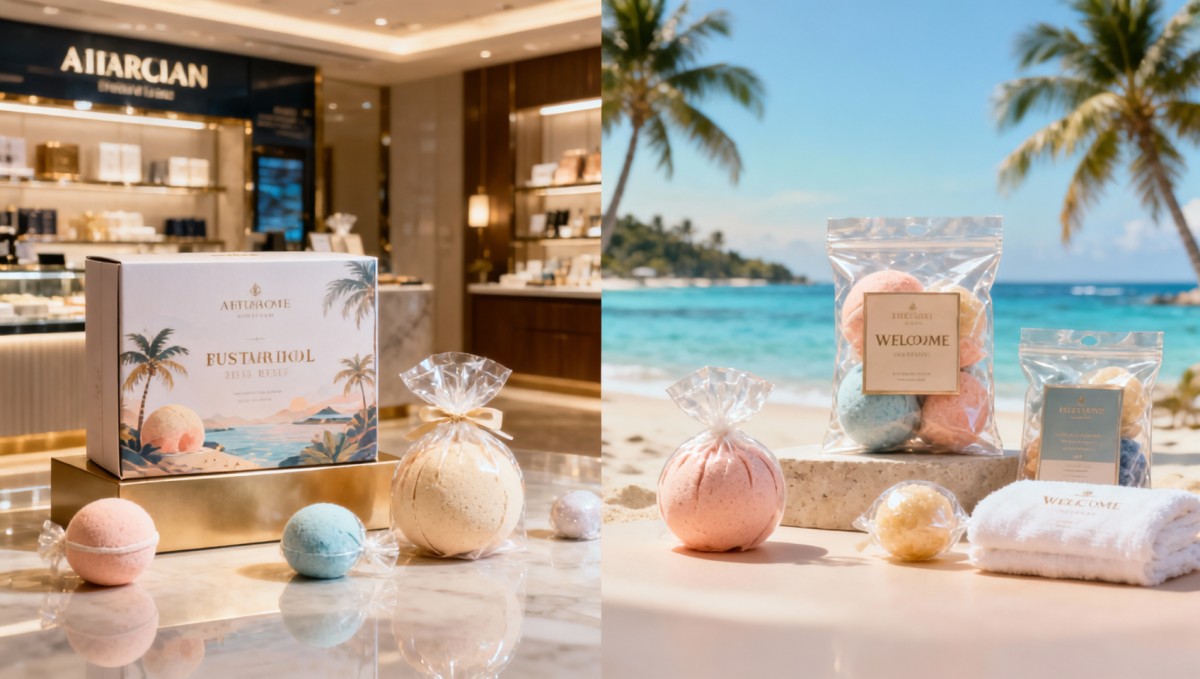
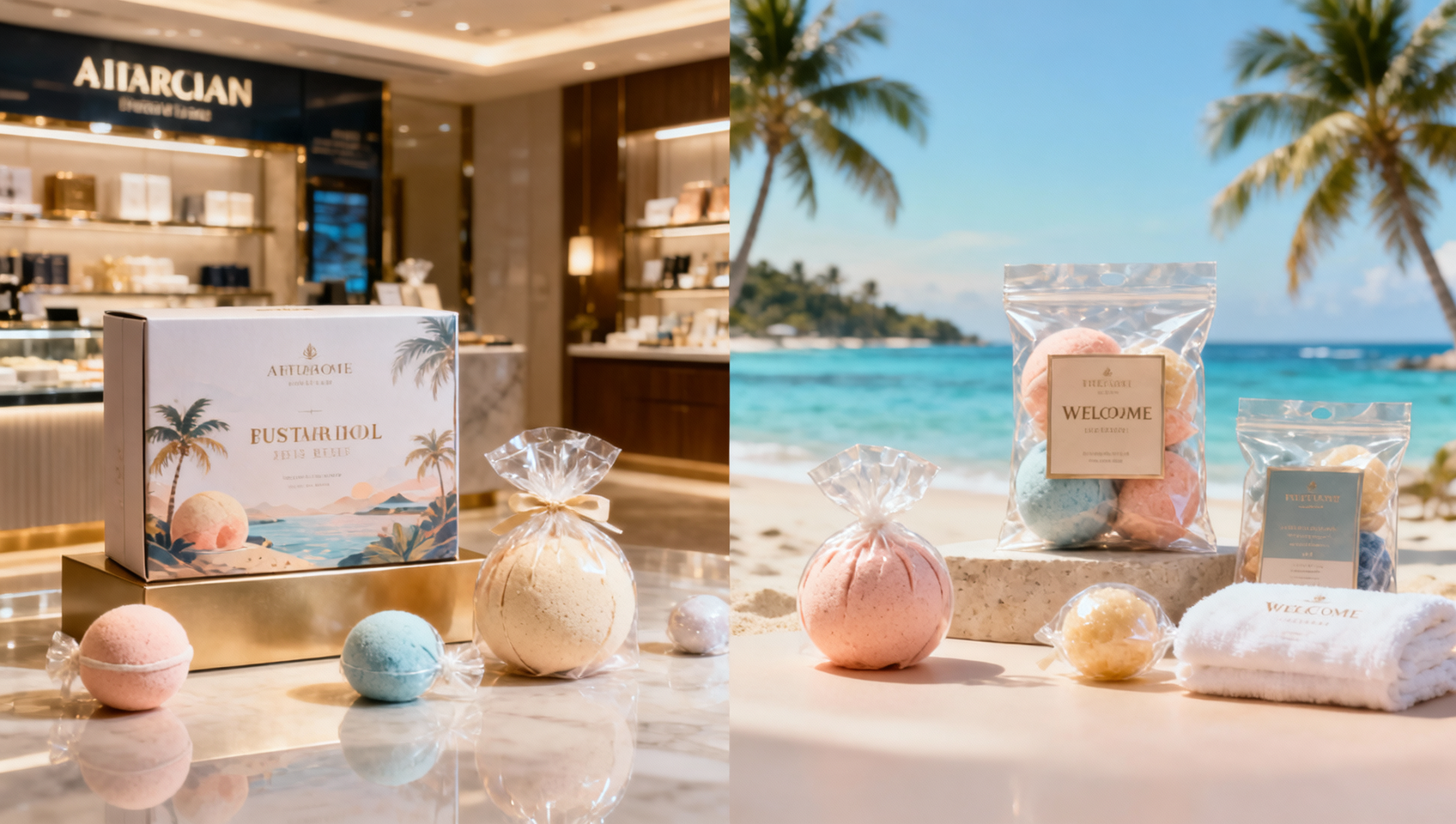
In travel service environments, bath bombs are rarely purchased as isolated beauty items. They are often positioned as hotel welcome gifts, spa add-ons, airport retail products, resort souvenirs, cruise amenities, or destination-themed private-label sets. In these channels, repeat orders reflect whether the product can support stable guest satisfaction across 1 season, 1 route, or 1 chain-wide rollout rather than a single promotional cycle.
For procurement teams, the real question is not whether a bath bomb looks attractive on first delivery. It is whether the next 3-6 replenishment orders will arrive with the same color, fragrance profile, packaging finish, and compliance paperwork. A reorder-friendly product reduces service disruption, protects branded guest experiences, and lowers the cost of requalification for finance, QA, and operations teams.
This is especially important in tourism-linked retail, where demand can shift quickly between peak and shoulder seasons. A supplier that performs well at 1,000 units but struggles at 10,000 units may create stock gaps during holiday periods or destination events. For distributors and agents, that inconsistency can hurt retailer confidence more than a slightly higher unit cost ever would.
Global Consumer Sourcing helps buyers decode these risks by connecting product design details to commercial outcomes. Instead of reviewing bath bombs only as cosmetics, GCS frames them as retail supply chain assets that affect margin, compliance workload, replenishment reliability, and brand positioning across tourism, gift, and lifestyle channels.
The 4 reorder signals buyers should track early
- Consistency across batches: color shade, shape integrity, and scent tolerance should remain commercially acceptable across multiple production runs.
- Sell-through suitability: the product must fit tourist buying behavior, including compact pack size, giftable appearance, and easy transport.
- Operational simplicity: labeling, carton marking, barcode support, and replenishment planning should not create extra back-office friction.
- Compliance visibility: ingredient lists, safety documents, and market-specific labeling need to be available before launch, not after a customs or retail query.
Which custom bath bomb details influence repeat orders most?
The strongest drivers of repeat orders usually sit in 5 practical areas: formula stability, packaging execution, lead-time control, customization depth, and compliance readiness. Buyers often focus first on fragrance novelty, but reorder decisions are usually made by a broader group that includes QA managers, finance approvers, and distribution partners. Each of these stakeholders evaluates risk differently.
Formula stability matters because travel retail products may sit in stores, hotel stockrooms, or distributor warehouses for 2-6 months. If the bath bomb cracks, fades, or loses fragrance too quickly, the product may still be technically deliverable but commercially weak. Skin comfort also matters. Mild formulas and clear ingredient disclosure support guest trust and reduce after-sales concerns.
Packaging consistency is equally decisive. In souvenir and resort channels, packaging often does more selling than the product itself. If paper boxes deform in humid conditions, shrink wrap loosens during transport, or labels vary across batches, repeat purchase confidence drops fast. For premium hospitality projects, even small print misalignment can trigger internal brand review.
Lead times and MOQ flexibility also affect reorders. A supplier with a standard 20-35 day production window and predictable sampling rhythm is easier to scale than one offering a low price but unstable scheduling. For tourism-linked businesses facing seasonal peaks, an extra 7-10 days can mean missing a campaign launch or running out of souvenir inventory during the highest-traffic period.
The table below shows how buyers in travel service, gift retail, and destination merchandising typically assess reorder-critical details when comparing custom bath bomb suppliers.
A practical takeaway is that repeat orders usually come from low-friction execution, not from the boldest concept. Buyers that evaluate custom bath bombs with a supply chain lens often make better long-term choices, especially when the product sits inside broader tourism merchandising or hotel gifting programs.
What operators and QA teams notice before decision makers do
Operators often spot handling problems first. If individual wrapping tears easily, carton counts are inconsistent, or SKU labeling is unclear, downstream teams lose time at receiving, storage, and shelf replenishment. These details may seem minor during sourcing, but across 4-8 restocking cycles per year, they create measurable operational cost.
QA teams also focus on controllable variability. They want to know whether colorants, fragrance oils, and decorative additives are managed consistently. If sample quality looks excellent but mass production shifts noticeably, the supplier may still be usable for one-off orders but unsuitable for a repeat-order program tied to hospitality brand standards.
How should buyers compare suppliers for travel gifts, hotel retail, and destination private label?
Comparing suppliers becomes easier when teams separate visual appeal from reorder performance. A good sourcing process usually has 3 stages: sample review, documentation review, and replenishment simulation. This approach works well for tourism service buyers because it tests not only the product, but also the supplier’s ability to support recurring programs across hotels, spas, museums, resorts, and local retail partners.
In the sample review stage, buyers should compare 3-5 variables: appearance after transit, scent balance, dissolution behavior, packaging integrity, and fit with the retail concept. In the documentation stage, teams should verify ingredient disclosure, labeling readiness, batch traceability, and any market-relevant safety documents. In the replenishment simulation stage, they should test response speed, artwork revision handling, and realistic production timing.
For finance approvers, the most useful comparison is total reorder cost rather than first-order unit price. A cheaper offer can become expensive if it causes extra sampling rounds, delayed launch windows, or higher write-off rates due to damaged packaging. For distributors, carton efficiency, mixed-SKU feasibility, and replenishment accuracy can matter as much as ex-factory cost.
GCS adds value here by translating supplier capabilities into buyer decision language. Instead of generic factory profiles, sourcing teams can prioritize manufacturers that align with private-label hospitality gifts, destination merchandising, and adjacent consumer categories where compliance, packaging, and retail speed all influence reorder behavior.
A practical supplier comparison framework
The following table can be used by sourcing teams, quality managers, and commercial leads when evaluating custom bath bombs for recurring travel retail and tourism gift programs.
This framework helps different stakeholders speak the same language. Technical reviewers can focus on formulation and controls, commercial teams can focus on shelf readiness, and finance teams can assess whether the reorder model is predictable enough to support multi-location tourism programs.
Checklist for a first supplier review meeting
- Ask for sample timelines, revision limits, and expected artwork approval steps.
- Request packaging options suitable for humid destinations, retail display, and traveler carry-out.
- Clarify MOQ by SKU, by fragrance, and by packaging format to avoid hidden complexity.
- Confirm how repeat orders are handled when only label or scent updates are needed.
What compliance, safety, and quality details reduce reorder risk?
For bath bombs sold through travel service channels, compliance is not just a regulatory issue. It is a retail continuity issue. If an airport shop, hotel group, or destination distributor asks for ingredient clarity, label correction, or safety support after launch, the supplier must respond quickly. Otherwise the next order may be delayed or canceled, even when customer demand is healthy.
Quality managers usually want 4 things from a bath bomb supplier: consistent batch records, clear ingredient declarations, packaging-spec accuracy, and reliable pre-shipment checks. In cross-border retail, they may also review labeling suitability for the destination market. This does not mean every project needs the same certification path, but it does mean buyers should avoid vague or incomplete documentation.
In tourism retail, the risk profile can be wider than in standard beauty channels. Products may pass through agents, souvenir wholesalers, duty-free distributors, local retailers, and hospitality procurement teams. Every additional handoff increases the need for traceable documentation and stable packaging information. That is why repeat-order success often starts with the paperwork quality attached to the first shipment.
Below is a practical reference for compliance and quality topics that commonly affect custom bath bomb approval and reorder confidence in travel-linked sales environments.
A useful rule is to treat compliance and quality files as reorder tools, not just approval tools. When documentation is organized from the beginning, buyers can move faster on second and third orders, especially when only packaging artwork, destination branding, or fragrance variants need to change.
Common mistakes that reduce reorder confidence
- Approving a great-looking sample without asking how closely mass production can match it over 2-3 consecutive runs.
- Assuming retail-ready packaging will also survive humid resorts, long-haul shipping, and local distribution handling.
- Reviewing compliance only after price negotiation, which can force redesign, relabeling, or launch delay.
- Overlooking carton and barcode requirements for distributors, causing receiving errors later.
How can buyers improve margin without hurting reorder performance?
Margin improvement in custom bath bombs usually comes from structural choices, not from pushing the factory to the lowest quote. Buyers in travel service channels can often improve profitability by adjusting pack architecture, assortment logic, and replenishment planning. For example, a 2-piece or 3-piece themed gift set may outperform single units in souvenir stores, while single wrapped units may work better for spa upsell or hotel minibar concepts.
Another lever is SKU discipline. Too many fragrances, colors, or destination variants can create artwork complexity, slow approval cycles, and split MOQ inefficiently. In many cases, a range of 3 core scents plus 1 seasonal scent gives enough variety without undermining reorder efficiency. This is particularly relevant for chains managing multiple resort locations or rotating event-driven tourism offers.
Packaging material choices also affect both cost and reorder success. A more premium rigid box may look impressive, but it may not be the best choice for humid coastal destinations, luggage-conscious travelers, or high-volume souvenir racks. Sometimes a well-designed folded carton or sealed wrap format offers better durability and lower freight impact while still supporting private-label storytelling.
GCS helps buyers benchmark these trade-offs across adjacent sectors such as gifts, toys, pet-care accessories, and personal care. That cross-category intelligence matters because many tourism retailers buy mixed lifestyle assortments. A sourcing strategy that works for one souvenir category can often inform better decisions in bath bombs, especially around packaging, compliance, and replenishment speed.
FAQ for repeat-order planning
How many SKUs are practical for a first custom bath bomb program?
For many travel retail and hotel gift projects, 3-4 SKUs are a manageable starting point. This usually gives enough assortment variety without creating excessive MOQ fragmentation, artwork complexity, or stock imbalance across locations.
What lead time should buyers expect?
A common range is 7-15 days for sample development and roughly 20-35 days for standard production after approval, though this varies by customization depth, season, and packaging type. Buyers should always ask about peak-season buffer time.
Are custom bath bombs suitable for souvenir channels?
Yes, especially when the product is designed as a giftable, transport-friendly item with destination branding and robust packaging. The key is matching format and presentation to traveler behavior, not treating it as a standard domestic beauty shelf item.
What should financial approvers focus on?
They should review reorder predictability, not just first-order price. Hidden costs often appear in resampling, packaging failures, delayed launch windows, and inefficient MOQ splits.
Why work with GCS when evaluating custom bath bomb suppliers?
Global Consumer Sourcing is built for buyers who need more than product catalogs. In custom bath bombs and related travel retail categories, the challenge is not simply finding a factory. It is identifying suppliers that can support private-label requirements, documentation discipline, compliance visibility, and repeat-order reliability across global retail and tourism channels.
This matters to multiple stakeholders at once. Information researchers need credible market interpretation. Operators need smoother replenishment. Technical evaluators need clearer product and packaging details. Decision makers need lower commercial risk. Finance teams need better predictability. QA managers need traceability and documentation that stands up during approvals and post-shipment review.
By combining retail intelligence, product-category insight, and sourcing context across beauty, gifts, toys, and adjacent consumer sectors, GCS helps buyers assess whether a custom bath bomb program is ready for long-term rollout. That includes questions around packaging options, lead-time structure, private-label scope, market-fit positioning, and documentation readiness for export-oriented retail.
If you are reviewing custom bath bombs for hotel retail, resort gifting, airport stores, spa merchandising, destination souvenirs, or broader travel-service product assortments, contact GCS for support on supplier screening, packaging direction, reorder risk review, sample strategy, compliance checkpoints, and quotation comparison. You can also discuss MOQ planning, artwork workflow, lead-time expectations, and how to align bath bomb sourcing with wider consumer goods programs.
Related Intelligence
 Cosmetics & PkgApr 22, 2026SAMR Penalizes 7 Platforms for 'Ghost Kitchen' Packaging ViolationsSAMR penalizes 7 platforms for 'ghost kitchen' packaging violations—critical for food-grade packaging OEMs, suppliers & procurement teams. Act now.
 Camping & WaterApr 22, 2026RCEP Camping Water Bags: Indonesia Cuts Tariff, Sets TPU+Aluminum SpecRCEP Camping Water Bags: Indonesia cuts tariff to 3.4% & mandates TPU+aluminum spec—key opportunity for exporters, TPU suppliers & converters in ASEAN-China supply chains.
 Corporate & Seasonal GiftsApr 22, 2026TÜV Green Packaging LCA Threshold Effective Apr 2026TÜV Green Packaging LCA Threshold takes effect Apr 2026 — mandatory carbon heatmaps & ISO-compliant LCAs for holiday, wedding &文创 packaging. Act now to meet EU tender requirements.
 Beauty DevicesApr 22, 2026Global Li-Battery Recycling Rate Hits 62%: Beauty Device BOM Cost Down 9%Li-battery recycling hits 62% globally—driving 9% BOM cost cuts for beauty devices. Discover how recycled LFP/NCM cells slash lead times & boost margins.
 Nursery Furniture & MonitorsApr 22, 2026Canton Fair Phase III: Infant Monitor Inquiries Surge, EN60601-1-12 Certification Critical for Middle EastEN60601-1-12 certification is now critical for infant monitors targeting the Middle East — Canton Fair Phase III reveals surging buyer demand from UAE & KSA.
 Smart Pet DevicesApr 22, 2026Vietnam Enforces ISO 13485 + Vietnamese Manual for Smart Pet CollarsISO 13485 + Vietnamese manual now mandatory for smart pet collars entering Vietnam — avoid import delays. Learn compliance essentials for Class IIa medical device classification.
 Infant Feeding & CareApr 22, 2026JETRO Spring Sourcing: Silicone Baby Feeding Items Must Link to BlockchainSilicone baby feeding items must link to blockchain for JETRO Spring Sourcing — avoid 11-day delays & 100% inspections. Act now to ensure compliance.
 STEM & Educational ToysApr 22, 2026SASO Launches 24-Hour AI STEM Toy Certification in Saudi ArabiaSASO's 24-hour AI STEM toy certification now live in Saudi Arabia — fast-track CoC for robotics, voice/vision learning toys meeting GB/T 34667-2025 & IEC 62368-1.
 Cosmetics & PkgApr 22, 2026EU EPR Dual-Country Registration Effective for Beauty PackagingEU EPR dual-country registration is now mandatory for beauty packaging exporters—secure France & Germany compliance before April 22, 2026 to avoid delisting and customs delays.
 Cosmetics & PkgApr 22, 2026FDA Requires Independent VCRP Registration for Cosmetic Packaging as of Apr 21, 2026FDA requires independent VCRP registration for cosmetic packaging by Apr 21, 2026—essential for U.S. importers, Chinese suppliers & OEMs. Act now to avoid delays.
 Cosmetics & PkgApr 21, 2026SAMR Penalizes 7 Platforms for 'Ghost Kitchen' Packaging ViolationsSAMR penalizes 7 platforms for 'ghost kitchen' packaging violations—key alert for food packaging exporters, converters & brands on licensing compliance.
 Cosmetics & PkgApr 21, 2026EU EPR Dual-Country Registration Effective for Beauty PackagingEU EPR Dual-Country Registration is now live for beauty packaging in France & Germany — act now to avoid shipment delays, fees, and customs holds.
 Cosmetics & PkgApr 21, 2026FDA MoCRA Rule: Cosmetic Packaging Must File Separate VCRPFDA MoCRA Rule requires cosmetic packaging—vacuum bottles, pumps, tubes—to file separate VCRP registration by April 17, 2026. Stay compliant & avoid shipment delays!