Canada to Ban DBP/BBP/DEHP in Kids' Cosmetics by 2026
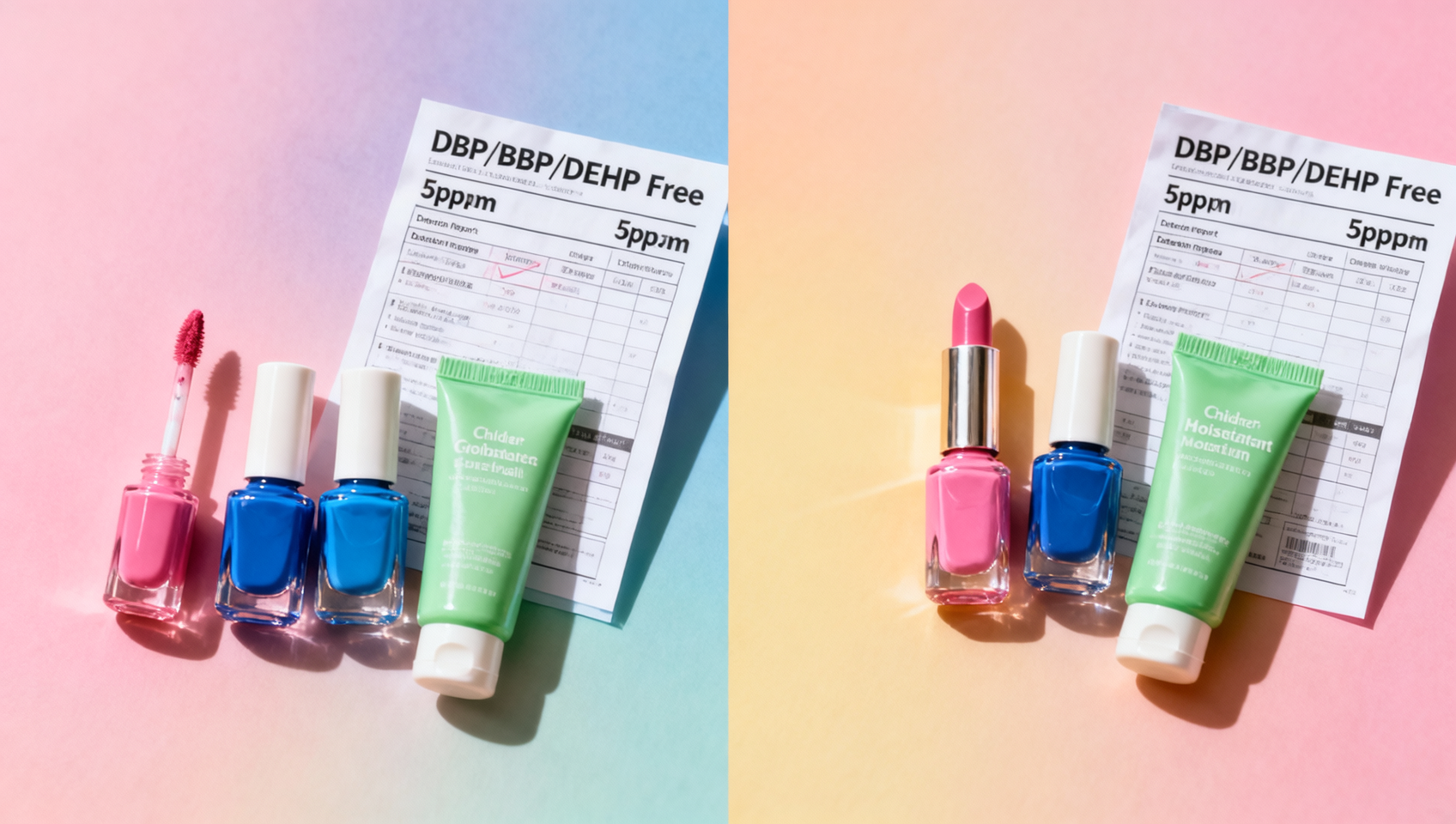
On April 2, 2026, Health Canada proposed amendments to the Cosmetic Regulations, aiming to prohibit three phthalates (DBP, BBP, DEHP) in children's skincare, lip cosmetics, and nail polish by Q4 2026, with a strict detection limit of 5ppm. This move impacts global suppliers, manufacturers, and brands relying on these chemicals, necessitating urgent formulation reviews and alternative sourcing.
Event Overview
Health Canada's draft regulation targets DBP, BBP, and DEHP in children's cosmetics, citing health concerns. The ban, effective late 2026, applies to products like moisturizers, lipsticks, and nail polishes. The 5ppm threshold aligns with stricter global standards, requiring immediate compliance actions.
Impacted Sectors
Raw Material Suppliers
Chinese and international phthalate producers face reduced demand. Alternative plasticizers (e.g., DINCH, TOTM) may see increased orders, but validation timelines could strain supply chains.
OEM/ODM Manufacturers
Contract manufacturers for North American brands must reformulate products, requiring 6-12 months for stability tests and regulatory submissions. Small-scale OEMs may struggle with R&D costs.
Brands & Distributors
Companies selling in Canada should audit ingredient lists, update product registrations, and plan for packaging revisions. Delays risk 2026 market access.
Key Actions for Stakeholders
1. Prioritize High-Risk Categories
Focus reformulation efforts on water-based nail polishes and lip products, where phthalate use is most prevalent.
2. Verify Alternative Ingredients
Test substitutes for compatibility with existing formulas. Citrate-based and adipate alternatives are gaining traction but require performance validation.
3. Monitor Regulatory Timelines
Track Health Canada's final rule publication (expected 2025) for potential scope adjustments or grace periods.
4. Update Compliance Documentation
Prepare revised Safety Data Sheets and CPDB notifications to reflect formulation changes ahead of enforcement.
Industry Perspective
Analysis suggests this mirrors broader regulatory trends—the EU's REACH and California's Proposition 65 have similarly restricted phthalates. While the 2026 deadline provides lead time, the 5ppm limit may challenge current detection methodologies, potentially increasing testing costs by 15-20% for some manufacturers.
Conclusion
This proposal signals Canada's alignment with stringent chemical regulations, emphasizing child safety in cosmetics. Stakeholders should treat it as an actionable mandate rather than a preliminary warning, given typical 18-24 month reformulation cycles. Proactive adaptation will be crucial to maintain North American market access.
Sources: Health Canada Draft Cosmetic Regulations (2026-04-02), pending final publication in Canada Gazette.
Related Intelligence
 Cosmetics & PkgApr 22, 2026SAMR Penalizes 7 Platforms for 'Ghost Kitchen' Packaging ViolationsSAMR penalizes 7 platforms for 'ghost kitchen' packaging violations—critical for food-grade packaging OEMs, suppliers & procurement teams. Act now.
 Camping & WaterApr 22, 2026RCEP Camping Water Bags: Indonesia Cuts Tariff, Sets TPU+Aluminum SpecRCEP Camping Water Bags: Indonesia cuts tariff to 3.4% & mandates TPU+aluminum spec—key opportunity for exporters, TPU suppliers & converters in ASEAN-China supply chains.
 Corporate & Seasonal GiftsApr 22, 2026TÜV Green Packaging LCA Threshold Effective Apr 2026TÜV Green Packaging LCA Threshold takes effect Apr 2026 — mandatory carbon heatmaps & ISO-compliant LCAs for holiday, wedding &文创 packaging. Act now to meet EU tender requirements.
 Beauty DevicesApr 22, 2026Global Li-Battery Recycling Rate Hits 62%: Beauty Device BOM Cost Down 9%Li-battery recycling hits 62% globally—driving 9% BOM cost cuts for beauty devices. Discover how recycled LFP/NCM cells slash lead times & boost margins.
 Nursery Furniture & MonitorsApr 22, 2026Canton Fair Phase III: Infant Monitor Inquiries Surge, EN60601-1-12 Certification Critical for Middle EastEN60601-1-12 certification is now critical for infant monitors targeting the Middle East — Canton Fair Phase III reveals surging buyer demand from UAE & KSA.
 Smart Pet DevicesApr 22, 2026Vietnam Enforces ISO 13485 + Vietnamese Manual for Smart Pet CollarsISO 13485 + Vietnamese manual now mandatory for smart pet collars entering Vietnam — avoid import delays. Learn compliance essentials for Class IIa medical device classification.
 Infant Feeding & CareApr 22, 2026JETRO Spring Sourcing: Silicone Baby Feeding Items Must Link to BlockchainSilicone baby feeding items must link to blockchain for JETRO Spring Sourcing — avoid 11-day delays & 100% inspections. Act now to ensure compliance.
 STEM & Educational ToysApr 22, 2026SASO Launches 24-Hour AI STEM Toy Certification in Saudi ArabiaSASO's 24-hour AI STEM toy certification now live in Saudi Arabia — fast-track CoC for robotics, voice/vision learning toys meeting GB/T 34667-2025 & IEC 62368-1.
 Cosmetics & PkgApr 22, 2026EU EPR Dual-Country Registration Effective for Beauty PackagingEU EPR dual-country registration is now mandatory for beauty packaging exporters—secure France & Germany compliance before April 22, 2026 to avoid delisting and customs delays.
 Cosmetics & PkgApr 22, 2026FDA Requires Independent VCRP Registration for Cosmetic Packaging as of Apr 21, 2026FDA requires independent VCRP registration for cosmetic packaging by Apr 21, 2026—essential for U.S. importers, Chinese suppliers & OEMs. Act now to avoid delays.
 Cosmetics & PkgApr 21, 2026SAMR Penalizes 7 Platforms for 'Ghost Kitchen' Packaging ViolationsSAMR penalizes 7 platforms for 'ghost kitchen' packaging violations—key alert for food packaging exporters, converters & brands on licensing compliance.
 Cosmetics & PkgApr 21, 2026EU EPR Dual-Country Registration Effective for Beauty PackagingEU EPR Dual-Country Registration is now live for beauty packaging in France & Germany — act now to avoid shipment delays, fees, and customs holds.
 Cosmetics & PkgApr 21, 2026FDA MoCRA Rule: Cosmetic Packaging Must File Separate VCRPFDA MoCRA Rule requires cosmetic packaging—vacuum bottles, pumps, tubes—to file separate VCRP registration by April 17, 2026. Stay compliant & avoid shipment delays!













