Toy Certification Delays Can Disrupt an Entire Launch Window
In travel services and retail sourcing alike, missing a compliance deadline can derail peak-season sales. For brands scaling toy ecommerce, delays in toy certification, toy inspection, and toy logistics can erase an entire launch window, strain supplier relationships, and increase landed costs. Understanding these risks helps procurement teams, quality managers, and decision-makers protect timelines, safeguard margins, and keep globally sourced products market-ready.
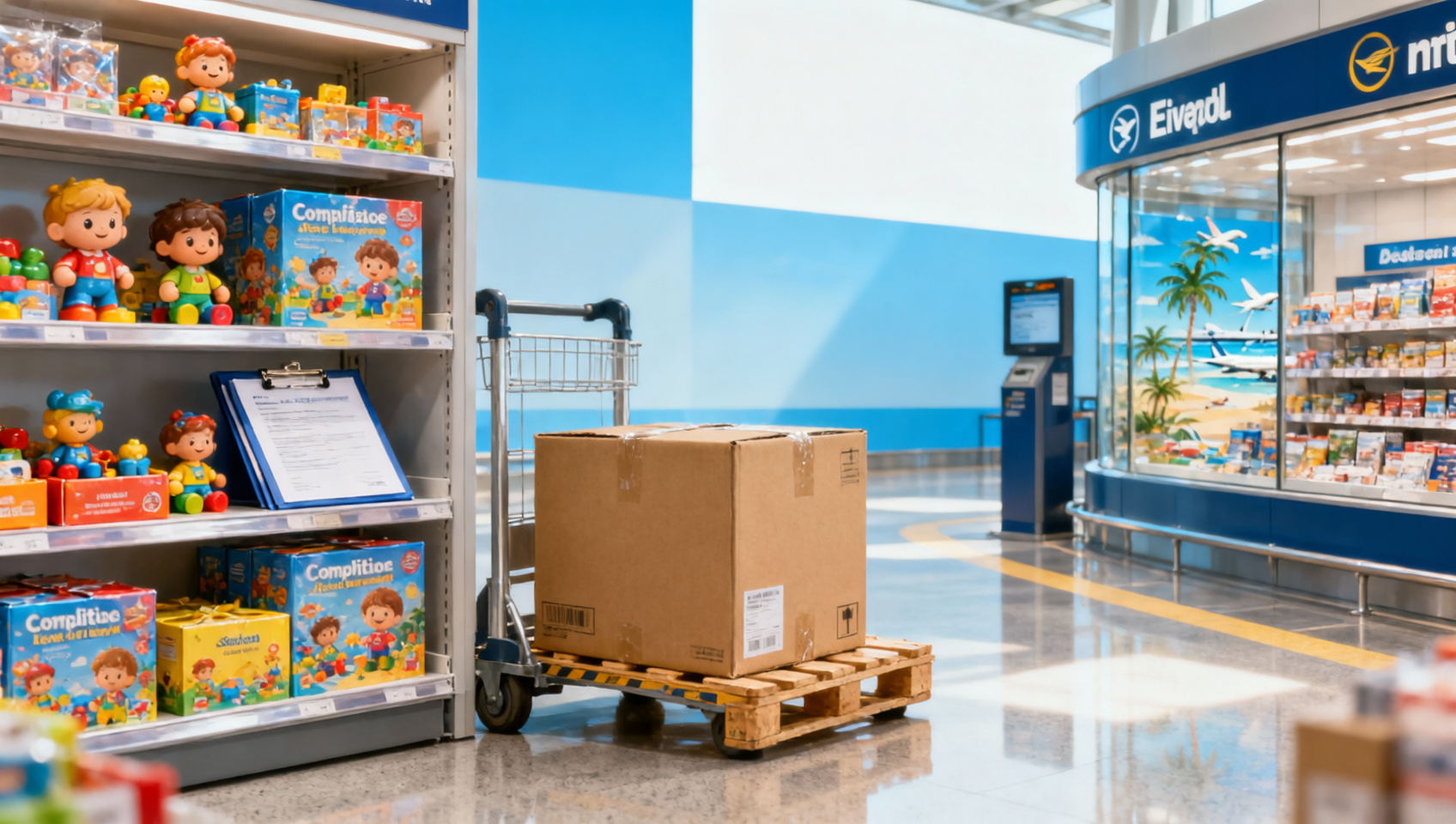
For travel service operators, distributors, project managers, and corporate buyers working with branded merchandise, airport retail programs, family travel bundles, or destination gift assortments, toy compliance is not a side task. It sits directly inside launch planning, demand forecasting, and customer experience management. A delayed safety file can affect not only customs clearance but also hotel promotions, onboard sales campaigns, resort shop resets, and seasonal booking packages tied to children’s products.
This is especially relevant to sourcing teams using Global Consumer Sourcing (GCS) intelligence to evaluate OEM/ODM suppliers across Gifts & Toys. In practice, the issue is broader than a single certificate. It includes lab scheduling, corrective action timing, packaging review, labeling accuracy, inspection readiness, freight booking, and destination-market documentation. When these steps slip by even 2–3 weeks, a launch window linked to school holidays, summer tourism, or year-end travel can be lost.
Why certification delays hit travel-linked toy launches so hard
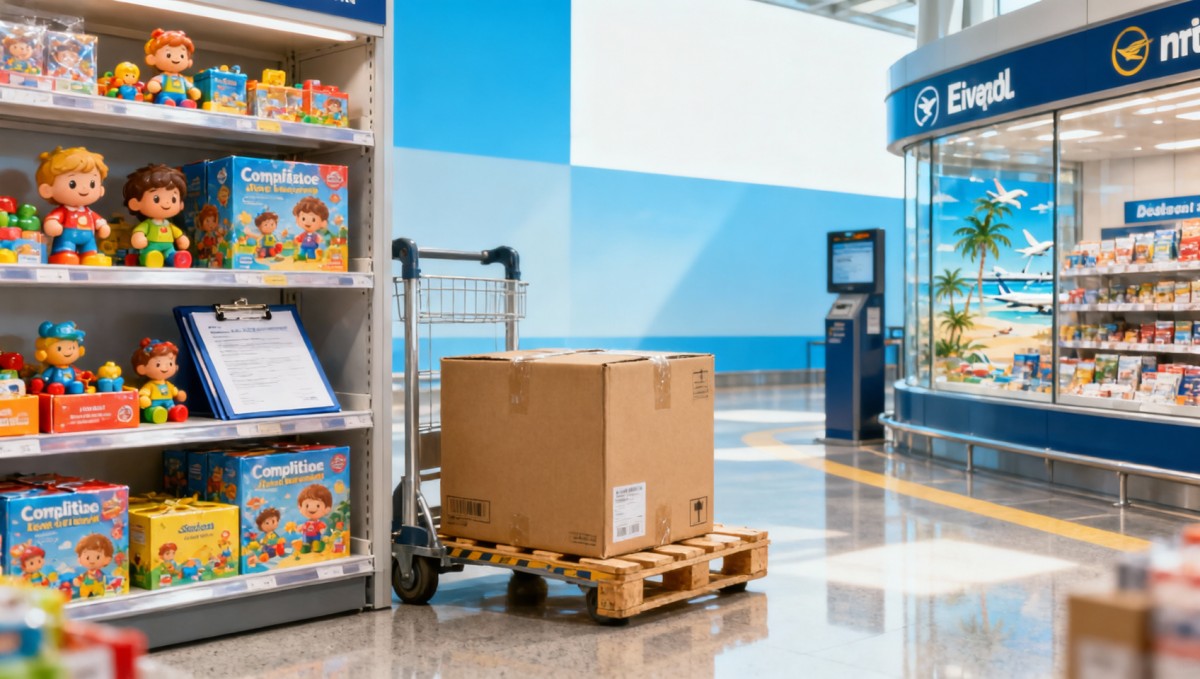
Travel services increasingly depend on retail adjacencies. Family resorts, cruise operators, airport stores, museum shops, and destination retailers often build short selling windows around holiday traffic, event-driven tourism, and limited seasonal campaigns. In many of these settings, toys are not evergreen items. They are tied to a 6–10 week peak window, which means even a moderate certification delay can destroy planned sell-through.
The operational problem is that toy certification rarely happens in isolation. A product may require design review, material verification, age grading, mechanical testing, chemical screening, packaging checks, and final documentation before it is ready for export. If one stage fails or arrives incomplete, the downstream schedule moves immediately. For a travel buyer preparing a summer family package, a 21-day delay can mean inventory lands after guest traffic has already peaked.
This timing pressure is magnified by travel service planning cycles. Promotions for school breaks, national holidays, and destination campaigns are often locked 8–16 weeks before launch. Marketing teams need final product shots, finance teams need landed-cost clarity, and operations teams need confirmed arrival dates. If toy inspection or documentation remains unresolved, the entire commercial calendar becomes unstable.
For procurement and quality teams, the key takeaway is simple: certification delays should be treated as launch-risk events, not as technical back-office issues. The earlier they are mapped against merchandising, transport, and campaign deadlines, the easier it is to prevent lost revenue, emergency airfreight, and supplier disputes.
Where the delay usually begins
Most launch disruptions start in one of four places: incomplete product specs, late sample submission, failed pre-shipment inspection, or mismatched labeling for the destination market. In travel retail, products often move across multiple jurisdictions, so a packaging file suitable for one market may not be acceptable in another. That creates hidden rework and often adds 7–14 days.
High-impact timing triggers
- Lab bookings made less than 3 weeks before vessel cut-off, leaving no room for retesting.
- Artwork or labeling finalized after production starts, which often forces packaging replacement.
- First article approval delayed by cross-functional review between sourcing, quality, and destination sales teams.
- Factory changeovers during peak manufacturing months, especially before major holiday exports.
The hidden cost chain behind a missed launch window
A certification delay rarely shows up as one line item. It creates a chain of commercial and operational costs that finance approvers and business leaders need to see clearly. The first impact is usually inventory timing. If family travel products arrive after the core booking period, markdown pressure rises and demand assumptions become unreliable. A product planned for a 9-week resort promotion may only have 3–4 effective selling weeks left.
The second impact is logistics distortion. Teams that miss planned ocean or consolidated freight bookings often shift to faster, more expensive transport. Depending on route and carton volume, expedited freight can multiply transportation costs by 2x to 5x. That directly compresses margin on already price-sensitive travel retail programs, where bundled offers and promotional pricing are common.
The third impact is channel confidence. Distributors, agents, airport concession partners, and hospitality operators prefer launch reliability. If a supplier repeatedly misses compliance milestones, buyers may reduce forecast commitments, shorten order terms, or require stricter pre-approval gates. Over time, the cost of damaged trust can be larger than any single late shipment.
Decision-makers therefore need a launch-risk view that combines compliance timing, freight options, sales window value, and channel obligations. This is where cross-functional planning matters. Quality managers may focus on pass rates, but project owners need to connect those pass rates to campaign revenue, occupancy-linked promotions, and destination sell-through.
Typical impact map for travel-service toy programs
The table below shows how a delay can move through procurement, logistics, and retail execution in travel-related sales environments.
The main pattern is that delays are cumulative rather than isolated. A 6-day sample delay, followed by a 9-day retest, followed by a missed freight cut-off can quickly become a 3–4 week commercial problem. For travel-linked assortments, that is often enough to wipe out the original launch window entirely.
Cost areas buyers often underestimate
- Packaging obsolescence when destination dates or promotional messages have already been printed.
- Storage and handling fees if inventory arrives too early for one market and too late for another.
- Staff re-planning time across sourcing, retail operations, and campaign management teams.
- Lower reorder confidence from distributors that rely on predictable family travel traffic.
How to build a safer certification timeline before procurement starts
The most effective way to protect a launch window is to move compliance planning upstream. Instead of treating certification as a final checkpoint, procurement teams should include it in supplier selection, sampling, packaging development, and freight planning. In practical terms, that means building a compliance calendar at least 12–18 weeks before target arrival for seasonal travel programs.
A strong timeline begins with clearer input control. Technical evaluators should confirm bill of materials, age grading assumptions, labeling requirements, and market destination rules before the first test sample is submitted. Quality and safety managers should also agree on pass/fail criteria for toy inspection, acceptable defect thresholds, and corrective action deadlines. This reduces the chance of late-stage debate when time is already limited.
Project managers can then place milestone gates across the process: sample freeze, lab booking, result review, packaging approval, production release, pre-shipment inspection, document handover, and freight dispatch. Even a simple 8-step gate plan improves decision speed because everyone sees what must be complete before the next spend commitment is approved.
For travel-service buyers, the timeline should also reflect channel realities. Airport retail, cruise stores, and resort boutiques each have different replenishment flexibility. If replenishment is infrequent, the buffer should be longer. Many teams work with a minimum 10–14 day buffer between certification completion and cargo handover, while riskier or multi-market launches may require 21 days.
Suggested milestone structure
The following framework helps procurement, quality, and finance teams align timeline decisions with operational risk.
This table is not a fixed rule for every program, but it shows a useful principle: testing, inspection, and logistics must be managed as one timeline. When teams separate them, they lose the ability to absorb failure, rework, or carrier changes without damaging the launch date.
A practical 5-step control routine
- Screen suppliers for compliance readiness before price negotiation is finalized.
- Lock specs and packaging copy before test samples are booked.
- Track failed items with 24–48 hour corrective action ownership.
- Do not release full production until critical documentation is visible to all stakeholders.
- Align freight booking deadlines with inspection completion, not with optimistic production estimates.
What buyers should ask suppliers, labs, and logistics partners
Travel-sector procurement is often cross-functional. A sourcing manager may focus on unit cost, while a quality manager checks compliance and a business leader prioritizes launch certainty. To make the right decision, the team needs questions that reveal schedule risk early. The goal is not just to confirm whether a supplier can produce a toy, but whether the supplier can support a market-ready launch under seasonal pressure.
Start with the supplier. Ask how many days are needed for sample preparation, what materials create the highest test failure risk, how packaging changes are controlled, and whether the factory has managed destination-specific retail programs before. For travel merchandise, it is also useful to ask whether the supplier understands short selling windows and fixed promotion dates.
Next, ask the lab or compliance partner about booking availability, typical turnaround, retest priority, and document issuance. A nominal 5-day test cycle can become 12 days if sample intake is incomplete or retest queues are full. Operational teams should request realistic ranges instead of best-case estimates.
Finally, question the logistics provider about booking cut-offs, consolidation schedules, destination customs documentation, and recovery options if cargo is delayed. The right freight partner will explain where 3–7 days can be saved and where no acceleration is realistic. That helps finance approvers assess whether expedited transport is commercially justified.
Supplier and partner evaluation checklist
- Can the supplier provide a documented compliance timeline with milestone ownership?
- What is the normal response time for corrective action after a failed toy inspection: 24 hours, 72 hours, or longer?
- How often does the lab update booking status, and who receives escalation notice?
- Is freight planning based on confirmed inspection pass dates or provisional production assumptions?
Red flags that deserve escalation
Buyers should escalate immediately if a supplier cannot explain previous test failures, resists pre-production document review, or offers unusually short lead times without buffer. Another warning sign is when packaging approval is handled separately from certification files. In many launches, those files are interdependent, and misalignment adds hidden delay.
Distributors and travel retail agents should also be cautious when a sourcing plan assumes that certification, inspection, and shipping can all be completed in a single compressed block. Unless the program is very simple, that approach leaves almost no room for rework and usually shifts risk downstream to the channel partner.
FAQ: common planning questions from travel retail and sourcing teams
Operational teams often ask similar questions when managing toy certification for travel-linked retail. The answers below are designed for procurement staff, quality personnel, technical evaluators, and executives balancing speed, cost, and launch certainty.
How much buffer should we add to a seasonal toy launch?
For most travel-service programs, a practical baseline is 10–14 days between final compliance clearance and planned cargo handover. If the item is new, the packaging is market-specific, or the launch covers more than one destination, a 21-day buffer is safer. The exact number depends on route stability, inspection complexity, and how costly a missed launch would be.
What is the biggest mistake in toy certification planning?
The biggest mistake is treating certification as a final approval step rather than an integrated project stream. When teams wait until production is already underway to finalize labeling, lab bookings, or destination requirements, they create avoidable rework. A small error in materials or packaging can then force retesting, repacking, and a freight reset.
Should travel buyers favor lower unit cost or stronger compliance support?
For short seasonal windows, stronger compliance support is often more valuable than a small unit-cost reduction. Saving 3% on purchase price may look attractive, but it can be erased quickly by one expedited shipment or a delayed launch. Buyers should compare total landed outcome, not just ex-factory pricing, especially when resort, airport, or cruise sales dates are fixed.
How can GCS-style sourcing intelligence help reduce delay risk?
A structured sourcing intelligence approach helps teams compare suppliers beyond price. It highlights compliance readiness, documentation discipline, category experience, and practical fit for private-label or destination-specific programs. That gives procurement leaders a better basis for selecting suppliers that can support both certification accuracy and commercial timing.
Toy certification delays are not just laboratory issues. In travel services and adjacent retail channels, they affect campaign timing, freight strategy, distributor confidence, and final margin. The safest approach is to connect compliance, inspection, packaging, and logistics into one measurable launch plan with milestone ownership, realistic buffers, and escalation rules.
For teams sourcing toys, gifts, and family-oriented merchandise through global supply networks, disciplined planning can protect a 6–10 week sales window, reduce emergency freight, and improve market readiness. If you are evaluating suppliers, refining launch timelines, or need a more resilient sourcing strategy for travel retail and destination sales, contact us to explore tailored solutions and deeper category insight through Global Consumer Sourcing.
Related Intelligence
 Cosmetics & PkgApr 22, 2026SAMR Penalizes 7 Platforms for 'Ghost Kitchen' Packaging ViolationsSAMR penalizes 7 platforms for 'ghost kitchen' packaging violations—critical for food-grade packaging OEMs, suppliers & procurement teams. Act now.
 Camping & WaterApr 22, 2026RCEP Camping Water Bags: Indonesia Cuts Tariff, Sets TPU+Aluminum SpecRCEP Camping Water Bags: Indonesia cuts tariff to 3.4% & mandates TPU+aluminum spec—key opportunity for exporters, TPU suppliers & converters in ASEAN-China supply chains.
 Corporate & Seasonal GiftsApr 22, 2026TÜV Green Packaging LCA Threshold Effective Apr 2026TÜV Green Packaging LCA Threshold takes effect Apr 2026 — mandatory carbon heatmaps & ISO-compliant LCAs for holiday, wedding &文创 packaging. Act now to meet EU tender requirements.
 Beauty DevicesApr 22, 2026Global Li-Battery Recycling Rate Hits 62%: Beauty Device BOM Cost Down 9%Li-battery recycling hits 62% globally—driving 9% BOM cost cuts for beauty devices. Discover how recycled LFP/NCM cells slash lead times & boost margins.
 Nursery Furniture & MonitorsApr 22, 2026Canton Fair Phase III: Infant Monitor Inquiries Surge, EN60601-1-12 Certification Critical for Middle EastEN60601-1-12 certification is now critical for infant monitors targeting the Middle East — Canton Fair Phase III reveals surging buyer demand from UAE & KSA.
 Smart Pet DevicesApr 22, 2026Vietnam Enforces ISO 13485 + Vietnamese Manual for Smart Pet CollarsISO 13485 + Vietnamese manual now mandatory for smart pet collars entering Vietnam — avoid import delays. Learn compliance essentials for Class IIa medical device classification.
 Infant Feeding & CareApr 22, 2026JETRO Spring Sourcing: Silicone Baby Feeding Items Must Link to BlockchainSilicone baby feeding items must link to blockchain for JETRO Spring Sourcing — avoid 11-day delays & 100% inspections. Act now to ensure compliance.
 STEM & Educational ToysApr 22, 2026SASO Launches 24-Hour AI STEM Toy Certification in Saudi ArabiaSASO's 24-hour AI STEM toy certification now live in Saudi Arabia — fast-track CoC for robotics, voice/vision learning toys meeting GB/T 34667-2025 & IEC 62368-1.
 Cosmetics & PkgApr 22, 2026EU EPR Dual-Country Registration Effective for Beauty PackagingEU EPR dual-country registration is now mandatory for beauty packaging exporters—secure France & Germany compliance before April 22, 2026 to avoid delisting and customs delays.
 Cosmetics & PkgApr 22, 2026FDA Requires Independent VCRP Registration for Cosmetic Packaging as of Apr 21, 2026FDA requires independent VCRP registration for cosmetic packaging by Apr 21, 2026—essential for U.S. importers, Chinese suppliers & OEMs. Act now to avoid delays.
 Cosmetics & PkgApr 21, 2026SAMR Penalizes 7 Platforms for 'Ghost Kitchen' Packaging ViolationsSAMR penalizes 7 platforms for 'ghost kitchen' packaging violations—key alert for food packaging exporters, converters & brands on licensing compliance.
 Cosmetics & PkgApr 21, 2026EU EPR Dual-Country Registration Effective for Beauty PackagingEU EPR Dual-Country Registration is now live for beauty packaging in France & Germany — act now to avoid shipment delays, fees, and customs holds.
 Cosmetics & PkgApr 21, 2026FDA MoCRA Rule: Cosmetic Packaging Must File Separate VCRPFDA MoCRA Rule requires cosmetic packaging—vacuum bottles, pumps, tubes—to file separate VCRP registration by April 17, 2026. Stay compliant & avoid shipment delays!