Olympic Barbell Manufacturing: What Separates Premium from Budget Options
Material Selection: The Foundation of Olympic Barbell Performance
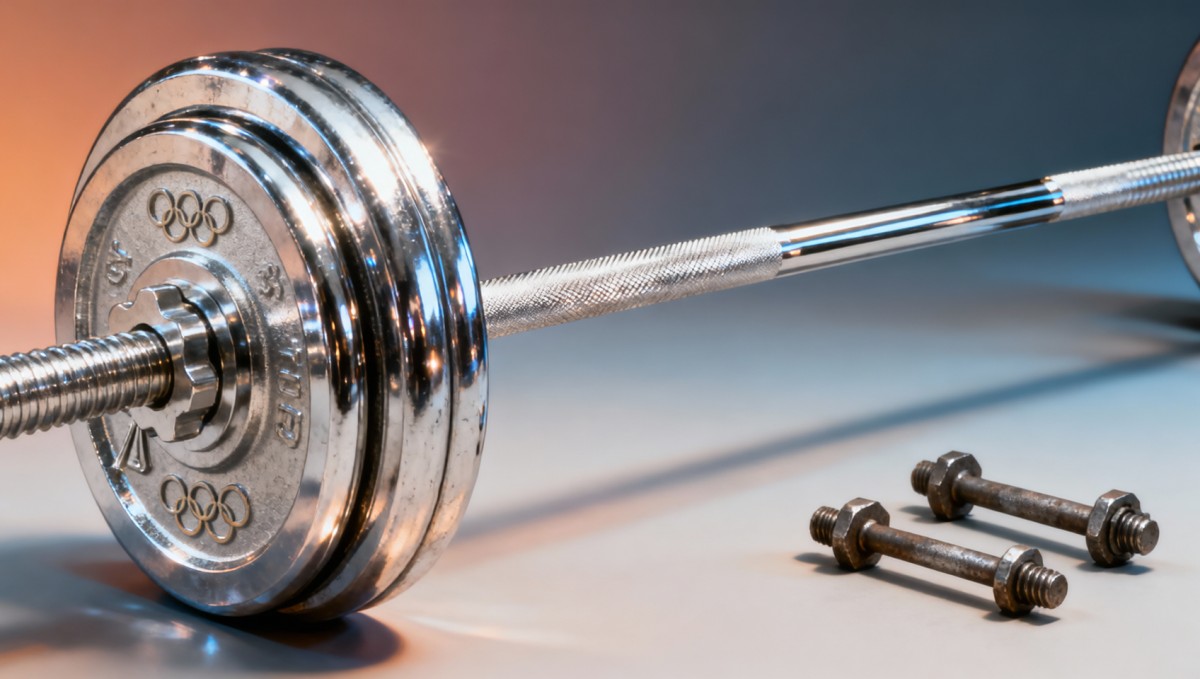
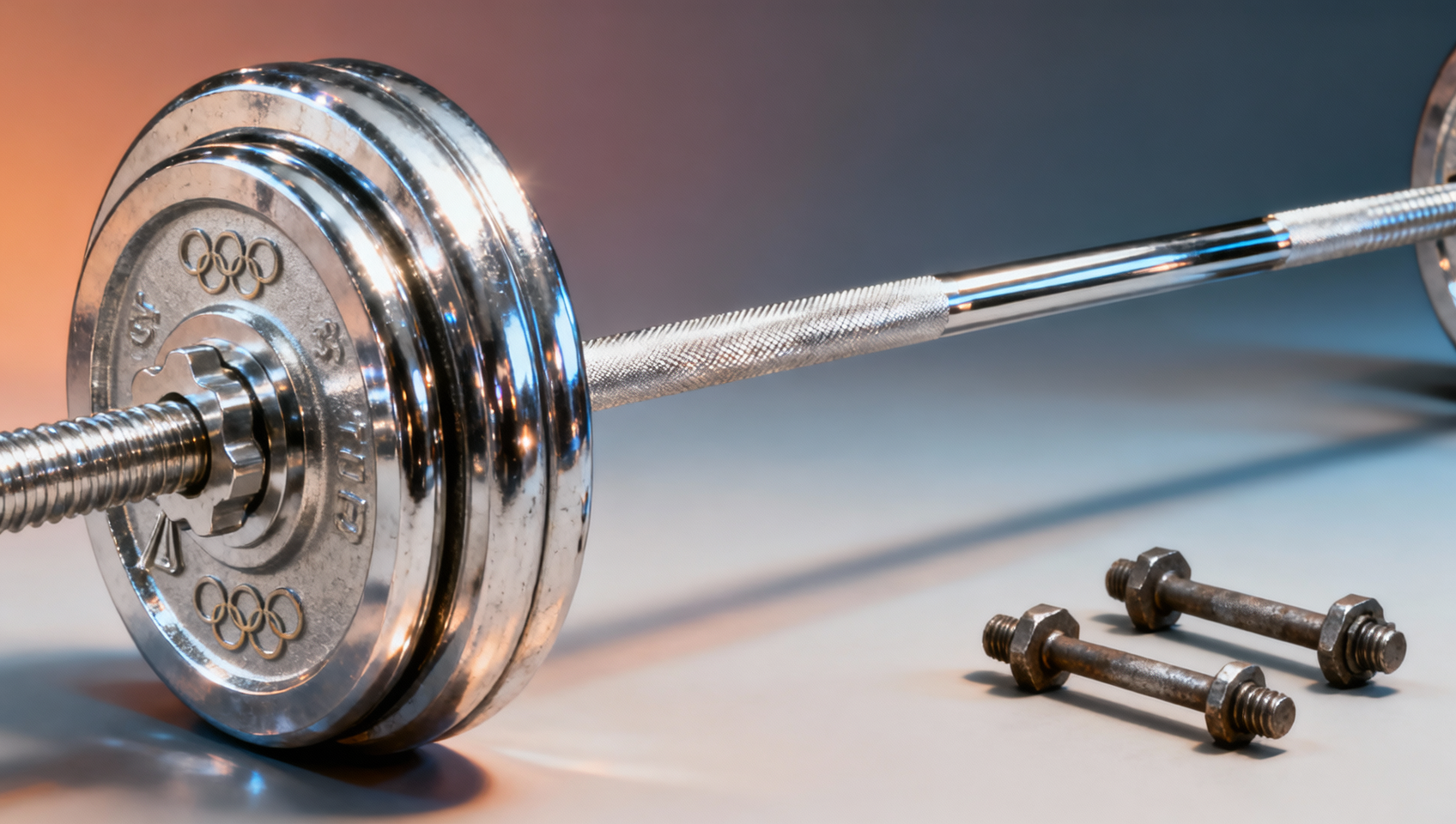
The choice of raw materials separates premium Olympic barbells from budget alternatives more than any other factor. High-end manufacturers exclusively use certified steel alloys with chromium plating, while budget options often employ inferior carbon steel with thin zinc coatings. The difference manifests in three critical areas:
Commercial gym operators should note that premium chrome-moly steel barbells typically last 5-7 years under heavy daily use (15,000+ lifts annually), whereas budget models often require replacement within 18-24 months. The higher initial investment translates to lower lifetime cost per lift.
Precision Engineering and Weight Tolerance Standards
Olympic weightlifting demands barbells with exacting dimensional accuracy. International Weightlifting Federation (IWF) certification requires:
- Shaft diameter tolerance of ±0.02mm (28mm men's/25mm women's)
- Weight accuracy within ±10g for 20kg bars
- Rotational resistance between 0.5-1.5 Newton-meters
- Whip (elastic deformation) of 2-3cm at 150kg load
Budget barbells often exceed these tolerances by 300-500%, with shaft diameters varying up to ±0.1mm and weight discrepancies reaching ±50g. For competitive training facilities, these variances can affect athlete performance and technique development.
Bushing vs. Bearing Systems
The rotation mechanism represents another key differentiator:
Safety Certifications and Compliance Considerations
Commercial operators must verify these critical certifications when sourcing Olympic barbells:
- IWF Certification: Validates competition-grade performance standards
- ISO 9001: Manufacturing quality management system
- EN 16630: European standard for outdoor fitness equipment
- ASTM F2216: U.S. standard for weightlifting equipment
Budget manufacturers often lack third-party testing, relying instead on self-certification. Premium brands provide full test reports including:
- Static load testing to 1,500kg
- Dynamic drop testing from 2.5m height
- 10,000-cycle rotation endurance testing
- Chemical composition analysis reports
Total Cost of Ownership Analysis
While premium Olympic barbells carry 2-3x higher upfront costs, their economic advantages become clear when analyzing 5-year ownership:
Procurement Decision Framework
When evaluating Olympic barbell suppliers, consider these 5 critical assessment criteria:
- Material Certifications: Request mill test reports for steel composition
- Manufacturing Process: Verify CNC machining vs. cast components
- Testing Protocols: Review third-party lab reports for load testing
- Warranty Terms: Compare coverage periods and exclusions
- After-Sales Support: Assess availability of replacement parts
For commercial gym operators planning bulk purchases (10+ units), negotiating 12-15% volume discounts with premium manufacturers often bridges the price gap with budget alternatives while delivering superior long-term value.
FAQ: Olympic Barbell Sourcing
How often should commercial gyms replace Olympic barbells?
Premium barbells require replacement every 5-7 years under typical commercial use (50+ lifts daily). Budget models typically last 18-30 months before showing significant wear.
What's the minimum tensile strength for serious weightlifting?
For athletes lifting 150kg+, bars should have minimum 190,000 PSI tensile strength. Recreational lifters can use 150,000 PSI bars for weights under 100kg.
Are there hybrid options between premium and budget barbells?
Some manufacturers offer "performance tier" bars with chrome-moly steel shafts but bushing (rather than bearing) rotation systems, typically priced 30-40% below full competition models.
Strategic Sourcing Recommendations
For fitness facilities balancing quality and budget:
- Allocate 70% of budget to premium bearing bars for heavy-use platforms
- Use bushing-system bars for general fitness areas
- Maintain 2-3 backup bars per 10 stations
- Implement quarterly bar inspections checking for:
- Sleeve rotation smoothness
- Knurling wear patterns
- Coating integrity
By understanding these manufacturing distinctions, procurement teams can make informed decisions that optimize equipment lifespan, athlete safety, and facility operating costs.
Related Intelligence
 Cosmetics & PkgApr 22, 2026SAMR Penalizes 7 Platforms for 'Ghost Kitchen' Packaging ViolationsSAMR penalizes 7 platforms for 'ghost kitchen' packaging violations—critical for food-grade packaging OEMs, suppliers & procurement teams. Act now.
 Camping & WaterApr 22, 2026RCEP Camping Water Bags: Indonesia Cuts Tariff, Sets TPU+Aluminum SpecRCEP Camping Water Bags: Indonesia cuts tariff to 3.4% & mandates TPU+aluminum spec—key opportunity for exporters, TPU suppliers & converters in ASEAN-China supply chains.
 Corporate & Seasonal GiftsApr 22, 2026TÜV Green Packaging LCA Threshold Effective Apr 2026TÜV Green Packaging LCA Threshold takes effect Apr 2026 — mandatory carbon heatmaps & ISO-compliant LCAs for holiday, wedding &文创 packaging. Act now to meet EU tender requirements.
 Beauty DevicesApr 22, 2026Global Li-Battery Recycling Rate Hits 62%: Beauty Device BOM Cost Down 9%Li-battery recycling hits 62% globally—driving 9% BOM cost cuts for beauty devices. Discover how recycled LFP/NCM cells slash lead times & boost margins.
 Nursery Furniture & MonitorsApr 22, 2026Canton Fair Phase III: Infant Monitor Inquiries Surge, EN60601-1-12 Certification Critical for Middle EastEN60601-1-12 certification is now critical for infant monitors targeting the Middle East — Canton Fair Phase III reveals surging buyer demand from UAE & KSA.
 Smart Pet DevicesApr 22, 2026Vietnam Enforces ISO 13485 + Vietnamese Manual for Smart Pet CollarsISO 13485 + Vietnamese manual now mandatory for smart pet collars entering Vietnam — avoid import delays. Learn compliance essentials for Class IIa medical device classification.
 Infant Feeding & CareApr 22, 2026JETRO Spring Sourcing: Silicone Baby Feeding Items Must Link to BlockchainSilicone baby feeding items must link to blockchain for JETRO Spring Sourcing — avoid 11-day delays & 100% inspections. Act now to ensure compliance.
 STEM & Educational ToysApr 22, 2026SASO Launches 24-Hour AI STEM Toy Certification in Saudi ArabiaSASO's 24-hour AI STEM toy certification now live in Saudi Arabia — fast-track CoC for robotics, voice/vision learning toys meeting GB/T 34667-2025 & IEC 62368-1.
 Cosmetics & PkgApr 22, 2026EU EPR Dual-Country Registration Effective for Beauty PackagingEU EPR dual-country registration is now mandatory for beauty packaging exporters—secure France & Germany compliance before April 22, 2026 to avoid delisting and customs delays.
 Cosmetics & PkgApr 22, 2026FDA Requires Independent VCRP Registration for Cosmetic Packaging as of Apr 21, 2026FDA requires independent VCRP registration for cosmetic packaging by Apr 21, 2026—essential for U.S. importers, Chinese suppliers & OEMs. Act now to avoid delays.
 Cosmetics & PkgApr 21, 2026SAMR Penalizes 7 Platforms for 'Ghost Kitchen' Packaging ViolationsSAMR penalizes 7 platforms for 'ghost kitchen' packaging violations—key alert for food packaging exporters, converters & brands on licensing compliance.
 Cosmetics & PkgApr 21, 2026EU EPR Dual-Country Registration Effective for Beauty PackagingEU EPR Dual-Country Registration is now live for beauty packaging in France & Germany — act now to avoid shipment delays, fees, and customs holds.
 Cosmetics & PkgApr 21, 2026FDA MoCRA Rule: Cosmetic Packaging Must File Separate VCRPFDA MoCRA Rule requires cosmetic packaging—vacuum bottles, pumps, tubes—to file separate VCRP registration by April 17, 2026. Stay compliant & avoid shipment delays!