SASO Updates Mandatory Certification List for Personal Care Appliances
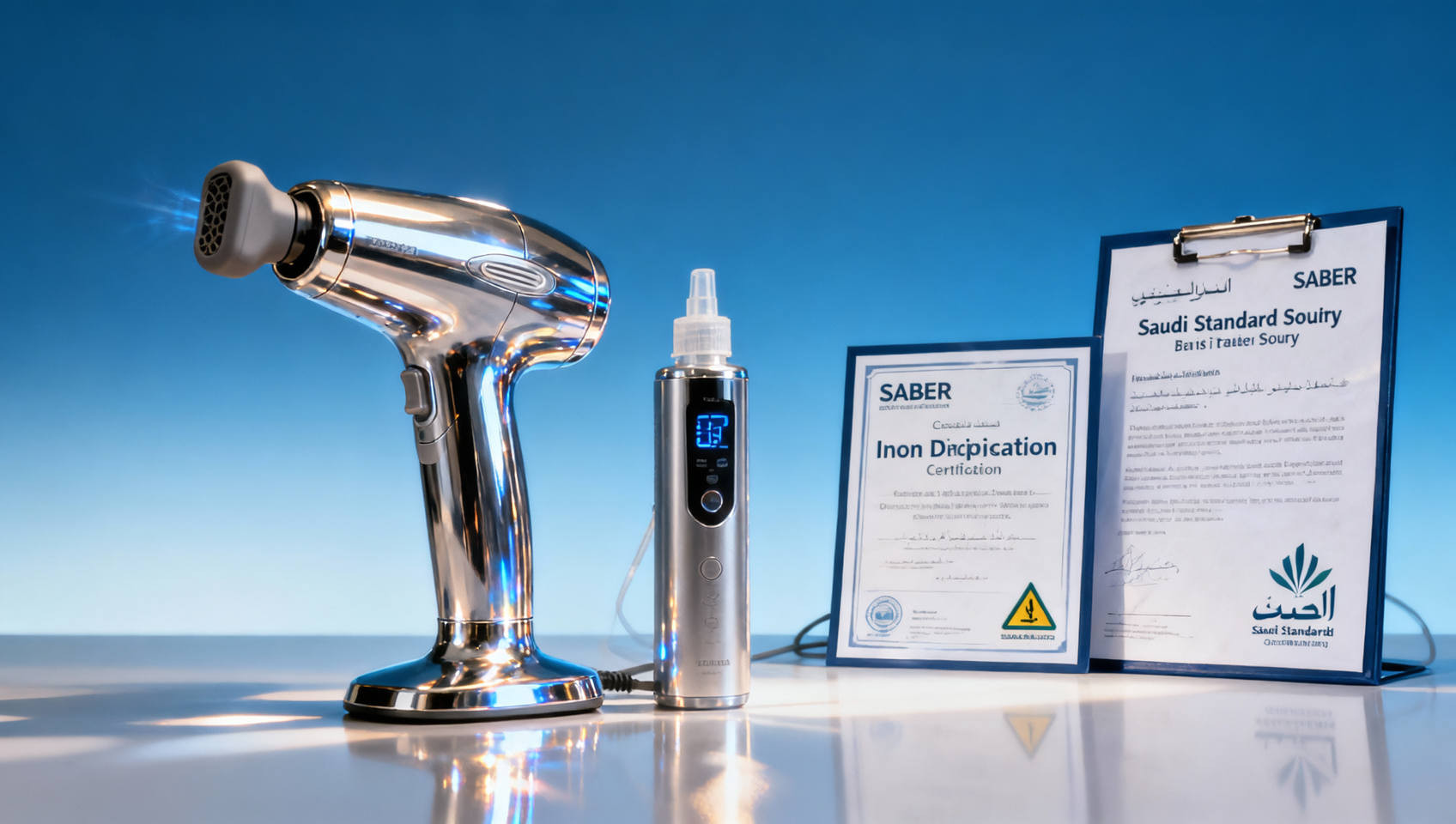
On April 3, 2026, the Saudi Standards, Metrology and Quality Organization (SASO) updated its Mandatory Certification Catalog for Personal Care Appliances, adding six types of devices, including handheld radiofrequency beauty devices and iontophoresis machines, to the SABER mandatory clearance certification. Starting July 1, 2026, all imported batches must include a valid SABER certificate and a PCOC conformity declaration. This move significantly raises compliance costs and entry barriers for Chinese exporters in the Saudi market.
Event Overview
SASO officially announced the update on April 3, 2026, expanding the scope of the SABER certification to cover handheld radiofrequency beauty devices, iontophoresis machines, and four other personal care appliances. The new regulation mandates that all imported shipments must comply with the certification requirements by July 1, 2026. This is the first time such devices have been included in the mandatory certification list.
Impact on Sub-Sectors
Direct Exporters
Manufacturers and traders exporting handheld beauty devices to Saudi Arabia will face immediate compliance challenges. The SABER certification process involves additional testing, documentation, and fees, which may delay shipments and increase operational costs.
Supply Chain Service Providers
Logistics and customs clearance service providers must adapt to the new requirements, ensuring that all shipments include the necessary certificates. Failure to comply could result in delays or rejections at Saudi ports.
Component Suppliers
Suppliers of parts for these devices may need to adjust their production processes to meet the new certification standards, particularly for safety and electromagnetic compatibility.
Key Considerations for Businesses
1. Certification Timeline
Companies should initiate the SABER certification process immediately to avoid disruptions. The three-month window before enforcement is critical for testing and documentation.
2. Cost Implications
The additional compliance costs may affect pricing strategies. Businesses should evaluate whether to absorb these costs or pass them on to customers.
3. Market Alternatives
If the Saudi market becomes less viable due to higher barriers, exporters may consider diversifying to other Gulf Cooperation Council (GCC) countries with less stringent requirements.
Editor’s Perspective
From an industry standpoint, this update signals Saudi Arabia’s tightening regulatory framework for consumer electronics. While it aims to ensure product safety, the immediate effect is higher compliance burdens for exporters. Businesses should treat this as a prompt to reassess their Saudi market strategy.
Conclusion
The SASO update underscores the growing complexity of exporting personal care appliances to Saudi Arabia. While the regulation enhances product standards, it also demands swift action from exporters to maintain market access. Companies should prioritize certification readiness and explore cost-effective compliance solutions.
Source
Saudi Standards, Metrology and Quality Organization (SASO) official announcement, April 3, 2026.
Related Intelligence
 Sports & OutdoorsApr 11, 2026The Rise of Custom Travel as a Premium Consumer Service: Analyzing the Inbound Market for Central ChinaDiscover premium custom travel in Central China with 2026 visa policies. Experience Luoyang's culture & Shaolin Temple's private lessons for elite travelers.
 Beauty DevicesApr 11, 2026RCEP ASEAN New Tariff List Takes Effect: Vietnam/Thailand Cuts Import Duty on Chinese Beauty Devices to 2.8%Vietnam & Thailand slash import duties on Chinese beauty devices to 2.8% under RCEP ASEAN tariff cuts. Boost your export competitiveness with RCEP Certificate of Origin benefits now!
 Beauty DevicesApr 11, 2026SASO Updates Mandatory Certification List for Personal Care AppliancesSASO updates its Mandatory Certification List for Personal Care Appliances, adding six new devices. Starting July 2026, SABER certification is required for imports. Learn how this impacts exporters and key compliance steps.
 Beauty DevicesApr 11, 2026EU to Enforce New EN IEC 62115-2 Standard for Beauty Devices by Q3 2026Learn how the new EN IEC 62115-2 standard for beauty devices will impact EU compliance by Q3 2026. Discover key changes in EMC testing, safety requirements, and strategies for manufacturers to stay competitive.
 Beauty DevicesApr 11, 2026Shenzhen Beauty & Healthcare Expo 2026: RF/Phototherapy/Microcurrent Devices Attract Global BuyersDiscover RF, phototherapy & microcurrent devices at Shenzhen Beauty & Healthcare Expo 2026. Global buyers seek FDA/CE-certified tech with clinical validation. Key trends for manufacturers & exporters.
 Fitness EquipmentApr 11, 2026Ningbo Port Fitness Equipment Export Space Tightens, US West Coast Rates Surge 18% in AprilNingbo Port fitness equipment exports face 98% booking rates as US West Coast shipping costs surge 18% in April 2026. Learn how to navigate delays and protect profits with expert logistics strategies.
 Fitness EquipmentApr 11, 2026US CPSC Updates Safety Guidelines for Fitness Resistance Bands: Minimum 150N Break Force & Usage Limits RequiredUS CPSC updates fitness resistance bands safety guidelines: New 150N break force & usage limit requirements. Learn how these changes impact manufacturers, retailers, and compliance strategies for 2026.
 Fitness EquipmentApr 11, 2026US CPSC Updates Safety Guidelines for Resistance Bands: Minimum 150N Break Force & Usage Limits RequiredUS CPSC updates safety guidelines for resistance bands, mandating 150N break force & usage limits. Learn how OEMs, exporters & suppliers must adapt to maintain US market access.
 Fitness EquipmentApr 11, 2026Canada to Ban DBP/BBP/DEHP in Children's Sports Toys by 2026Canada will ban DBP, BBP, and DEHP in children's sports toys by 2026. Learn how this 5ppm phthalate restriction impacts manufacturers, exporters, and supply chains, plus urgent compliance steps.
 Fitness EquipmentApr 11, 2026CBA's Nanjing Tongxi Registers Jermaine Cole, Replaces Jaylen Hands: Shift in Asian Basketball Recruitment TrendsCBA's Nanjing Tongxi replaces Jaylen Hands with Jermaine Cole, signaling a shift in Asian basketball recruitment towards versatile wing players. Explore how this trend impacts sports equipment, wearable tech, and player agencies in 2026.
 Camping & WaterApr 11, 20262026 CKC China Karting Championship in Macau: Safety and Carbon Neutral Focus2026 CKC China Karting Championship in Macau highlights FIA 8856-2018 safety standards & carbon-neutral innovations. Essential insights for karting manufacturers & exporters targeting EU/AU markets.
 Infant Feeding & CareApr 10, 2026Canada to Ban Three Phthalates in Toys: Urgent Material Switch NeededCanada bans three phthalates (DBP, BBP, DEHP) in toys by 2026 with a strict 5ppm limit. Urgent material switch needed for exporters to avoid rejections. Learn key actions for compliance now.
 Fitness EquipmentApr 10, 2026RCEP ASEAN New Tariff List Takes Effect: Vietnam/Thailand Cut Fitness Equipment Import Tariffs to 2.8%Vietnam & Thailand slash fitness equipment import tariffs to 2.8% under RCEP ASEAN deal. Faster China-Laos Railway shipments (12-14 days) boost trade for treadmills, ellipticals & strength racks. Key opportunity for exporters!