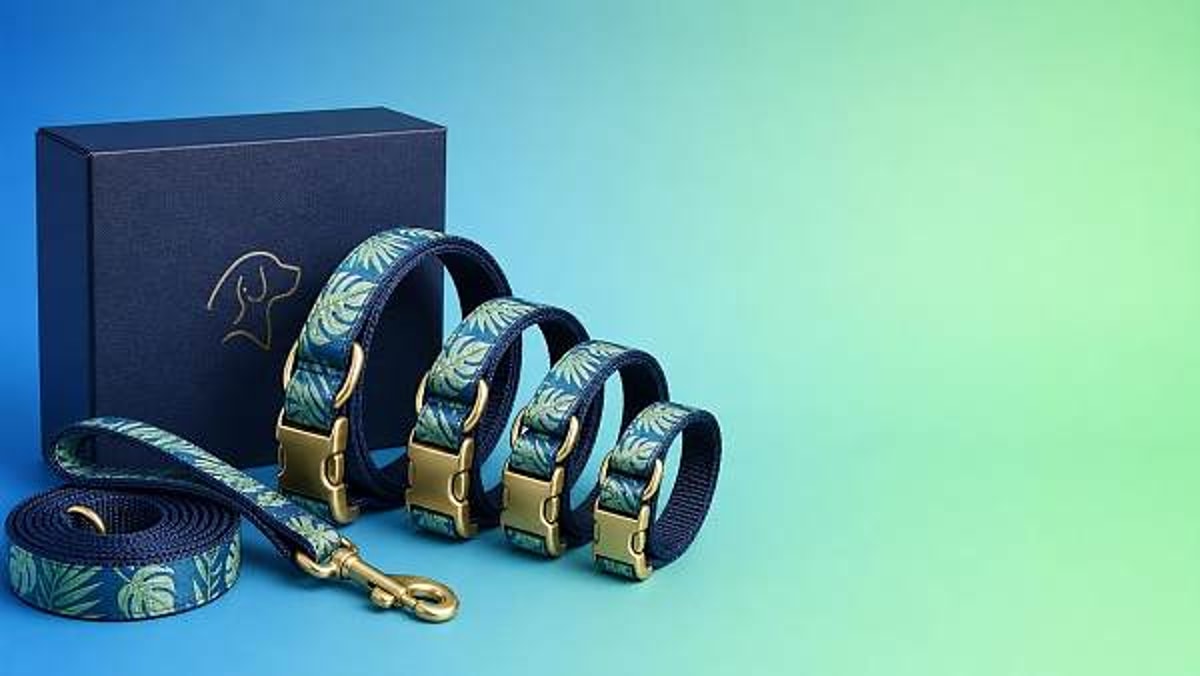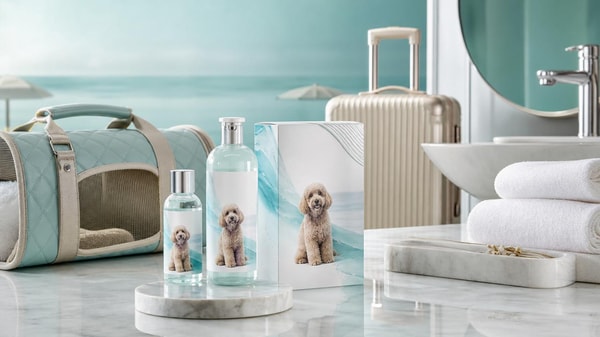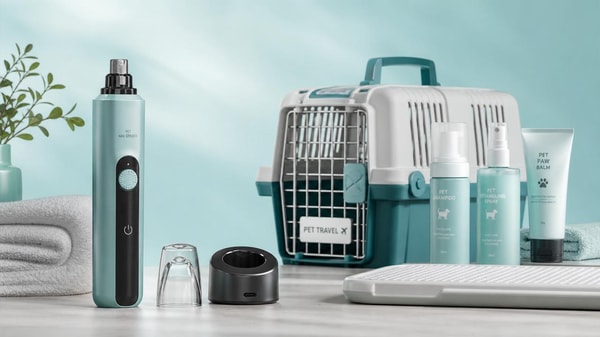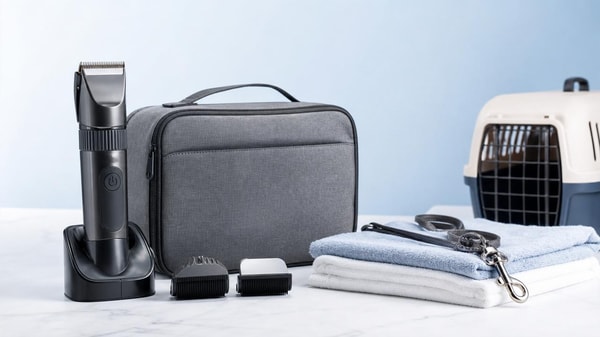
Custom Printed Dog Collars: Design Choices That Improve Repeat Orders
For buyers and sourcing evaluators, custom printed dog collars are more than a seasonal pet accessory—they are a repeat-order driver when design aligns with brand identity, safety, and market demand. From print durability and material selection to private-label flexibility and compliance readiness, the right design choices can improve customer satisfaction, strengthen retail performance, and create long-term sourcing value in the growing pet economy.
For commercial evaluation teams, the key question is not whether custom printed dog collars can sell. They already do. The more important question is which design decisions turn a one-time order into a stable, repeatable SKU with lower complaint rates, stronger shelf appeal, and better margin resilience.
In the pet economy, repeat orders are heavily influenced by product performance after purchase. A collar may look attractive on first inspection, but if the print cracks, the buckle fails, the size range is poorly planned, or the customization process is inflexible, reorder potential drops quickly. That is why sourcing decisions must connect design aesthetics with durability, compliance, and retail practicality.
This article focuses on the real buying criteria behind custom printed dog collars. Instead of discussing generic pet accessory trends, it examines the specific design choices that matter most to business evaluators: material selection, print methods, sizing architecture, safety details, packaging, private-label options, and supplier readiness for repeat business.
Why repeat orders depend on design quality, not just initial visual appeal
For retail buyers, distributors, and private-label brand managers, repeat orders usually come from products that minimize friction after launch. In the case of custom printed dog collars, attractive graphics may drive the first purchase, but repeat demand depends on whether the product performs well in daily use and supports consistent replenishment.
A collar is a functional product exposed to pulling force, moisture, dirt, sunlight, and frequent handling. If printed designs fade too quickly, edges fray, hardware rusts, or sizing causes a poor fit, negative reviews accumulate. That creates markdown pressure for retailers and raises replacement and service costs for brands. Repeat orders decline because the product fails commercially, not because the concept was wrong.
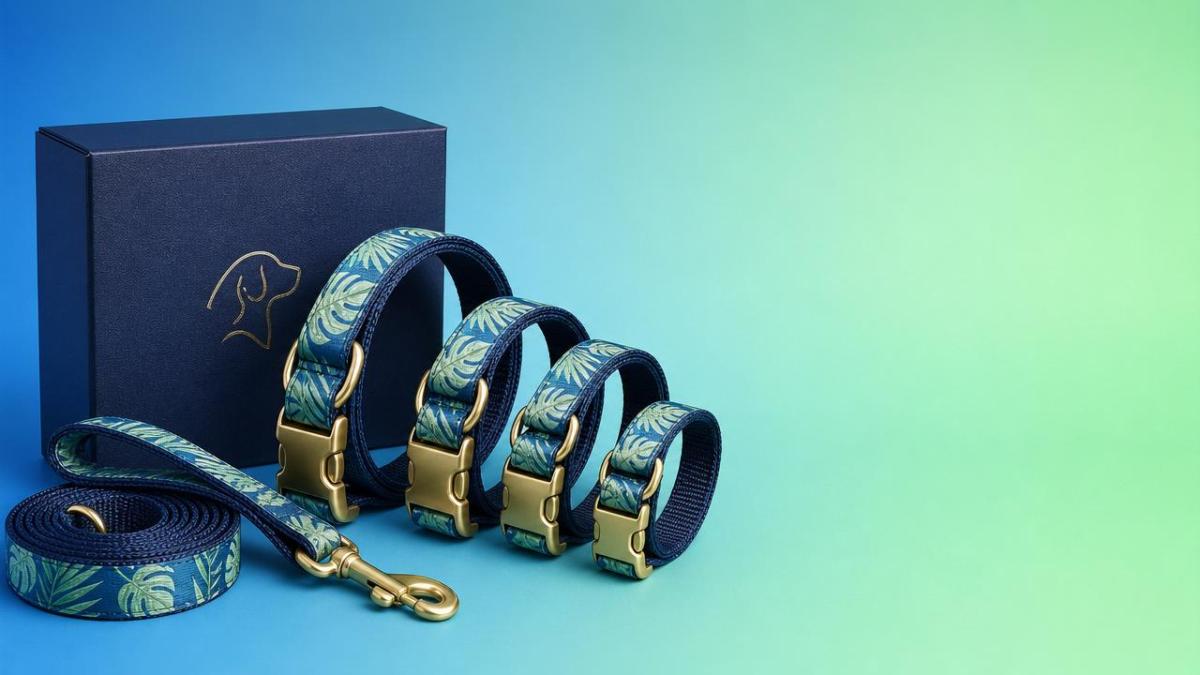
On the other hand, when a collar combines strong visual branding with dependable construction, it becomes easier to reorder across seasons, patterns, and promotional collections. Buyers are more likely to expand the line into matching leashes, harnesses, and travel accessories when the first SKU proves reliable.
For sourcing evaluators, this means design must be assessed as a business system. The right design is not simply “nice looking.” It protects reorder rates by supporting durability, compliance, price positioning, and manufacturing consistency.
Which material choices best support repeat business
Material selection is one of the most important predictors of long-term product success. Buyers evaluating custom printed dog collars should begin by matching material performance to the intended channel, dog size range, and end-user price expectations.
Nylon remains a widely used base material because it offers strength, flexible coloring options, and good compatibility with many print techniques. It performs well in mass retail, e-commerce, and promotional private-label programs where durability and cost control both matter. However, not all nylon webbing is equal. Weave density, edge finishing, and thickness directly affect hand feel and wear resistance.
Polyester is often preferred when color clarity and print vibrancy are priorities. It works especially well for full-pattern prints, brand-led seasonal collections, and style-focused D2C pet brands. Buyers looking for sharper pattern detail should ask suppliers whether the chosen polyester construction supports long-term color fastness under rubbing and UV exposure.
Cotton or canvas blends can support a more natural, lifestyle-oriented brand image, especially in boutique or eco-positioned collections. But they may absorb moisture more easily and may not deliver the same stain resistance or print precision as synthetic alternatives. For repeat-order programs, they must be evaluated carefully against real-world use conditions.
Recycled webbing materials are increasingly relevant for brands with ESG goals. They can create a strong retail story and improve listing appeal in sustainability-focused channels. Still, buyers should confirm whether recycled inputs affect tensile strength, print consistency, or certification documentation. Sustainability claims only help repeat orders when product performance remains dependable.
In practical terms, the best material is the one that balances appearance, durability, price point, and repeat manufacturability. Evaluators should ask suppliers for abrasion data, tensile performance, washability guidance, and sample aging results rather than relying on visual presentation alone.
Print methods that preserve brand value after the first sale
The print method has direct impact on repeat purchase potential because it determines how the collar looks after weeks or months of wear. A design that degrades too quickly damages both brand perception and the economics of replenishment.
Heat transfer printing can produce vivid graphics and detailed artwork. It is often attractive for fashion-driven collections and licensed designs. However, its long-term durability depends on application quality, substrate compatibility, and expected use conditions. Buyers should test for peeling, surface cracking, and fade resistance, especially for active dog segments.
Sublimation printing is commonly used on polyester-based collars and is often a strong option for all-over prints and vibrant branding. Because the dye penetrates the material rather than sitting only on the surface, it can offer better visual longevity when executed correctly. For repeat-order programs centered on design variety, sublimation may provide strong consistency across multiple print runs.
Screen printing can be effective for simpler logos or limited-color brand graphics, especially in promotional or lower-complexity programs. It may be cost-efficient at scale, but buyers should evaluate ink adhesion and wear performance carefully. Heavy rubbing and flexing may affect the lifespan of some printed areas.
Woven patterns or jacquard-style branding deserve consideration when the goal is long-term visual durability rather than highly complex artwork. While not always suitable for every graphic concept, woven branding can reduce concerns about fading or surface damage and may be especially useful in premium lines.
For sourcing teams, the key evaluation criteria are not just color brilliance at approval stage. They are repeatability, wear resistance, MOQ flexibility, lead time stability, and the supplier’s ability to maintain print registration across bulk orders. These factors determine whether a successful launch can become a repeatable program.
How sizing architecture influences returns, reviews, and reorder confidence
One of the most overlooked design choices in custom printed dog collars is the sizing structure. Poor sizing logic creates customer dissatisfaction quickly, especially in e-commerce channels where fit issues lead to returns, bad reviews, and reluctance to reorder.
Business evaluators should look for suppliers that can support a clear, commercially sensible size matrix. Too many sizes complicate inventory planning and raise MOQ pressure. Too few sizes create fit problems and reduce conversion. The best programs usually align size segmentation with common breed groups and channel needs.
Adjustability matters as much as nominal size. A collar with an effective adjustment range can reduce stock complexity and improve fit satisfaction across overlapping dog sizes. This is particularly important for private-label programs serving multiple markets where breed preferences and measurement habits vary.
Width selection also affects commercial performance. Narrow collars may suit small breeds and fashion-led categories, while wider constructions may better communicate safety and durability for medium to large dogs. The wrong width can undermine both comfort perception and brand positioning.
Evaluators should also check whether size labels, packaging dimensions, and online listing data are standardized. Consistency across physical product, barcode system, and digital merchandising reduces operational errors and supports easier repeat ordering across channels.
Safety and compliance features buyers should not treat as optional
In the pet accessory category, visual design drives attention, but safety drives trust. For business buyers, safety-related design details are essential because they influence regulatory risk, customer confidence, and long-term retailer relationships.
Hardware quality is a critical starting point. D-rings, adjustment sliders, and buckles must withstand repeated pulling without deformation or breakage. For medium and large dog segments, hardware failure can create serious customer complaints and reputational damage. Buyers should request material specifications, pull-test data, and corrosion resistance information.
Edge finishing is another important detail. Rough or poorly sealed edges can fray over time or irritate the dog’s neck. A collar that looks good on arrival but deteriorates quickly in use will not support repeat sales. Durable stitching patterns and reinforced stress points should be part of the standard review checklist.
Compliance readiness also matters, especially for global retail programs. Depending on target market and product positioning, buyers may need support documentation on chemical safety, restricted substances, colorfastness, labeling, and traceability. A supplier that understands market-specific compliance expectations can reduce friction during onboarding and future expansion.
Reflective elements, breakaway options for selected use cases, and odor-resistant or quick-dry treatments can also improve product value when matched to the target segment. The commercial lesson is simple: every safety feature should be evaluated not as a cost add-on, but as a potential driver of lower returns and stronger repeat demand.
Private-label flexibility is often what turns a product into a repeat-order program
For many sourcing evaluators, the most profitable custom printed dog collars are not generic designs with a logo added at the end. They are products built around private-label flexibility from the start. That includes print customization, packaging adaptation, hardware color options, and coordinated product extensions.
A supplier that can support multiple artwork styles, low-friction sampling, and scalable branding changes offers more than manufacturing capacity. It offers merchandising agility. This is particularly valuable for retailers testing seasonal themes, influencer collections, region-specific launches, or bundled gift sets.
Custom packaging also matters more than many buyers initially expect. Well-designed retail cards, recyclable boxes, QR-linked care instructions, and clear size communication can improve shelf conversion and reduce consumer confusion. In e-commerce, packaging influences unboxing satisfaction and review quality, both of which affect reorder potential.
Line extension capability is another major advantage. If a supplier can produce matching leashes, harnesses, bandanas, waste bag holders, or travel accessories using the same print story, the buyer gains a platform rather than a single SKU. This improves average order value and creates stronger reasons to reorder.
From a commercial perspective, flexibility lowers the risk of assortment fatigue. Buyers can refresh visual collections without changing the underlying fit and construction that already perform well. That is one of the most efficient ways to generate repeat business in a crowded pet category.
What sourcing evaluators should ask suppliers before approving a program
To identify whether a collar design is likely to produce repeat orders, buyers should move beyond price and sample appearance. A structured evaluation process reveals whether the supplier can support real market performance over time.
Start with print durability questions. Ask how the artwork is applied, what test standards are used, and how the print performs under abrasion, water exposure, UV light, and repeated flexing. If the supplier cannot provide clear answers, the design may not hold up in market conditions.
Next, review material consistency and hardware sourcing. Ask whether the webbing and metal or plastic components are standardized across batches, whether there are approved alternates, and how color matching is controlled. Repeat orders depend on reproducibility, especially for private-label accounts.
It is also important to examine MOQ structure and replenishment lead times. Some suppliers can create attractive initial samples but struggle with agile reorders or mixed-SKU production. For fast-moving pet programs, commercial success depends on the supplier’s ability to restock winning patterns quickly and accurately.
Packaging, labeling, and compliance documentation should be reviewed early, not after commercial approval. Delays in barcode setup, warning label adaptation, or test report preparation can disrupt launch windows and weaken trust between buyer and supplier.
Finally, request evidence of category experience. Suppliers with a track record in pet accessories are usually better positioned to anticipate wear issues, fit concerns, safety expectations, and merchandising needs than factories treating collars as a simple textile add-on.
The most commercially effective design choices for custom printed dog collars
When buyers compare sourcing options, the strongest repeat-order candidates usually share several practical features. They use materials appropriate for the target price tier, apply print methods that retain visual quality over time, offer clean sizing logic, and integrate reliable hardware and finishing.
They also make life easier for the retailer or brand. This means strong packaging execution, consistent labeling, manageable MOQs, and room for private-label differentiation. A collar that is easy to reorder, easy to merchandise, and easy for consumers to trust has a much better chance of becoming a long-term product line.
Not every market requires the most premium construction. Value retail, e-commerce bundles, boutique pet shops, and branded promotional programs all have different design priorities. What matters is whether the design choices are intentional and aligned with channel strategy rather than driven only by lowest-cost sourcing.
For business evaluation teams, custom printed dog collars should be reviewed as a repeat-revenue opportunity within the broader pet economy. The best sourcing decisions are those that connect branding potential with proven function, predictable compliance, and scalable replenishment.
In summary, repeat orders improve when collar design solves real customer needs while supporting operational efficiency for the buyer. If the material is durable, the print lasts, the sizing is clear, the safety details are credible, and the supplier can scale private-label execution, custom printed dog collars can become a dependable and expandable category rather than a short-term trend item.
Related Intelligence
 Pet Grooming & TravelMay 06, 2026Custom Printed Dog Collars: Design Choices That Improve Repeat OrdersCustom printed dog collars that drive repeat orders: explore durable materials, lasting print methods, safer hardware, and private-label design choices that boost retail appeal.
 Smart Pet DevicesMay 06, 2026Aquarium LED Lighting OEM: What Impacts Energy Use and Plant GrowthAquarium led lighting oem guide for travel service projects: compare energy use, PAR, spectrum, thermal control, and OEM reliability to improve plant growth and reduce operating costs.
 Skincare OEMMay 06, 2026Private Label Pet Shampoo: How to Balance Formula, Scent, and PositioningPrivate label pet shampoo strategies for travel brands: learn how to balance formula, scent, compliance, and positioning to boost guest experience, retail appeal, and brand value.
 Pet Grooming & TravelMay 06, 2026Airline Approved Pet Carrier: Common Mistakes Before You FlyAirline approved pet carrier guide: avoid common pre-flight mistakes, compare airline rules, size, ventilation, and comfort to choose a safer, stress-free travel carrier.
 Activewear OEMMay 06, 2026Custom Dog Sweaters: What Changes the Final Price MostCustom dog sweaters pricing explained for travel service buyers: compare materials, MOQ, customization, compliance, and supplier costs to cut risk, protect margins, and source smarter.
 Pet Furniture & EnrichmentMay 06, 2026Bird Cage Wholesale: Which Styles Fit Small Stores BestBird cage wholesale guide for small stores: discover compact, decorative, and foldable styles that save space, sell faster, and suit tourism-driven retail demand.
 Smart Pet DevicesMay 06, 2026LED Dog Collar Manufacturer: How to Judge Visibility and Battery LifeLED dog collar manufacturer selection starts with visibility and battery life. Learn how to compare suppliers, verify safety, and choose reliable collars for travel and outdoor use.
 Pet Grooming & TravelMay 06, 2026Pet Nail Grinder Manufacturer: 6 Safety Details You Should Not IgnorePet nail grinder manufacturer selection affects safety, compliance, and brand trust. Discover 6 critical details buyers in travel services should review before choosing a supplier.
 Pet Grooming & TravelMay 06, 2026Dog Grooming Clippers Wholesale: A Practical Guide to Motor and Blade OptionsDog grooming clippers wholesale guide covering motor types, blade options, noise, durability, and maintenance—helping buyers compare specs, reduce sourcing risk, and choose better-performing products.
 Pet Grooming & TravelMay 06, 2026Retractable Dog Leash Wholesale: Which Mechanisms Cause Fewer ComplaintsRetractable dog leash wholesale guide: discover which mechanisms cause fewer complaints, reduce returns, and improve buyer trust with smarter sourcing for travel retail channels.
 Smart Pet DevicesMay 06, 2026Canister Filter for Aquarium: How to Size It Correctly the First TimeCanister filter for aquarium sizing made simple: learn how to match flow, media capacity, and bioload for clear water, healthier fish, and fewer costly upgrade mistakes.
 Smart Pet DevicesMay 06, 2026Smart Pet Tag Tracker: What to Look for Beyond GPS ClaimsSmart pet tag tracker buying guide for travel: compare battery life, coverage, app usability, durability, and compliance beyond GPS claims to choose with confidence.
 Pet Grooming & TravelMay 06, 2026How a Pet Raincoat Manufacturer Handles Sizing and WaterproofingPet raincoat manufacturer insights for travel retail buyers: learn how suppliers manage sizing logic, waterproof testing, seam sealing, and scalable QC for reliable sourcing.