Organic Baby Clothes Wholesale: How to Verify Fabric Claims
In organic baby clothes wholesale, fabric claims can directly affect product safety, compliance, and brand trust. For quality control and safety managers, verifying certifications, fiber composition, and testing records is essential before approving any supplier. This guide explains how to assess organic material claims with a practical, risk-focused approach that supports safer sourcing and more reliable wholesale decisions.
Why do fabric claims matter so much in organic baby clothes wholesale?
In baby apparel, a fabric claim is never just a marketing phrase. In organic baby clothes wholesale, terms such as “organic cotton,” “natural dye,” “chemical-free,” or “eco-friendly” can influence safety reviews, import documentation, private-label positioning, and retailer risk exposure. For quality control managers, the issue is simple: if a claim cannot be verified, it should not be treated as a compliant product attribute.
This matters even more when products are intended for infants, because baby skin is more sensitive and the product often has prolonged skin contact. A weak verification process can lead to failed audits, consumer complaints, customs delays, product recalls, or reputational damage. In sectors connected to family travel, hospitality retail, resort gift shops, maternity tourism services, and airport or destination-based baby product distribution, the reputational impact can spread quickly across multiple sales channels.
From a sourcing perspective, organic baby clothes wholesale also sits at the intersection of sustainability claims and product safety claims. Those are not identical. A fabric may be organic in origin but still fail restricted substance testing after dyeing, printing, finishing, or packaging. That is why safety managers must examine the entire chain, not just the fiber story.
What documents should you ask for first before trusting an organic claim?
The fastest way to reduce risk in organic baby clothes wholesale is to request documents in a fixed sequence. Many teams waste time reviewing aesthetic product presentations before confirming whether the supplier can support the claim at all. Start with records that prove both material origin and process control.
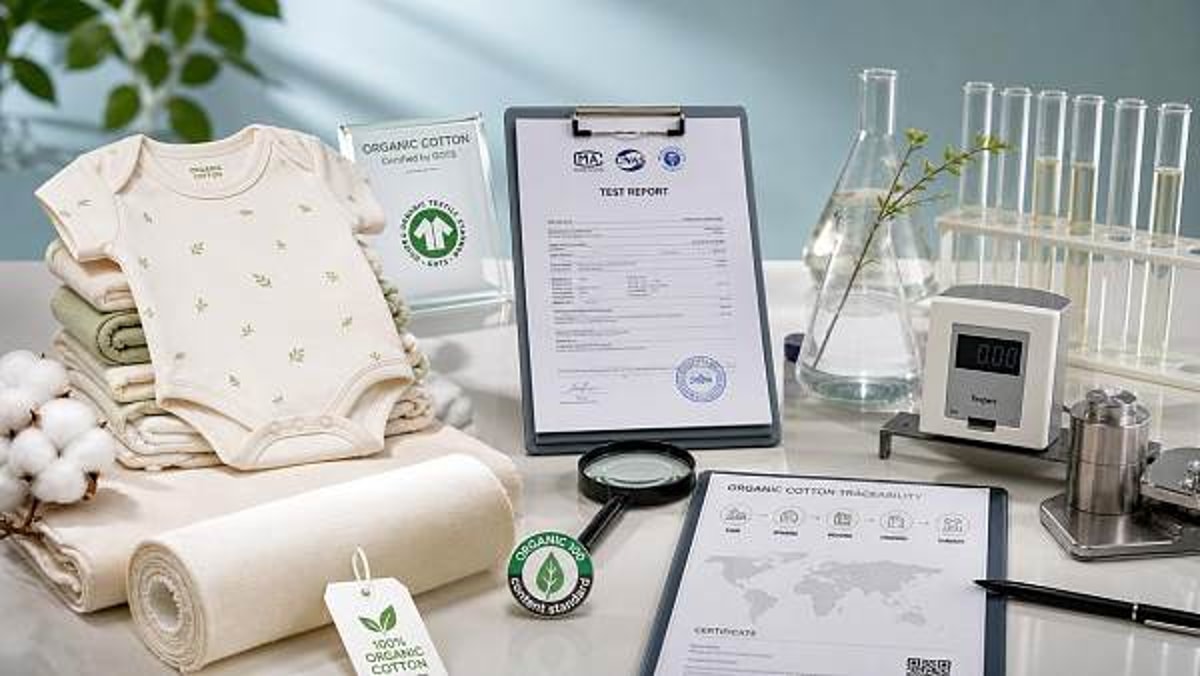
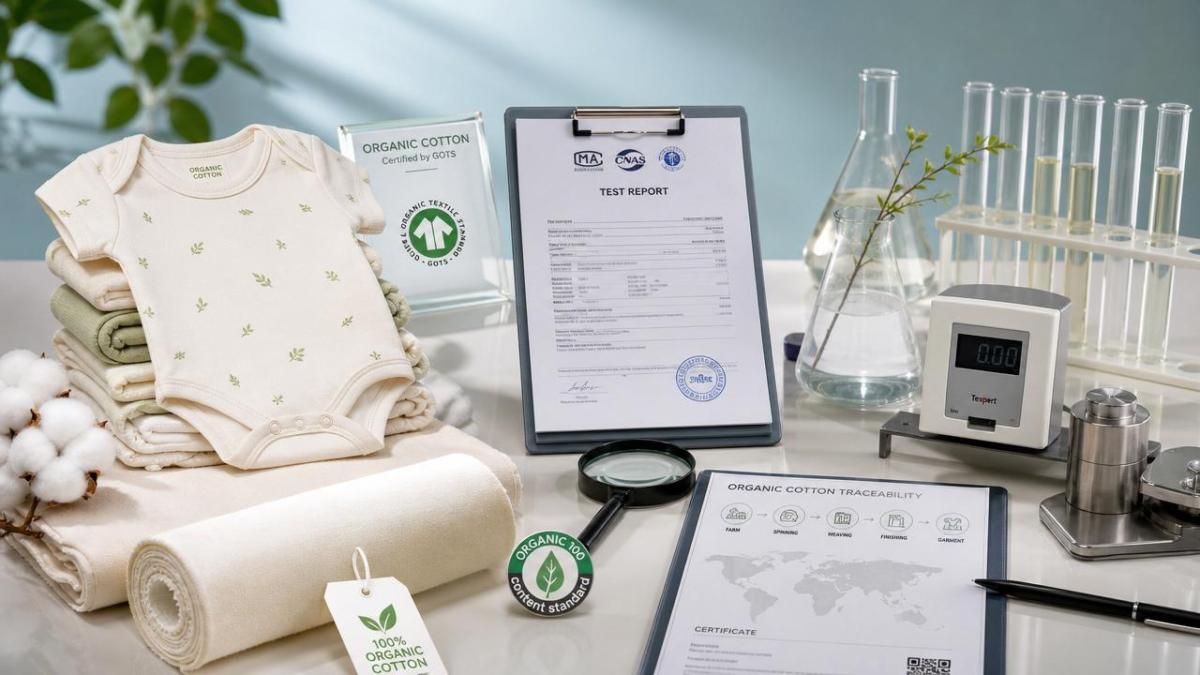
Ask for the scope certificate from the relevant certification body, then ask for transaction certificates linked to the actual shipment or production batch. A scope certificate shows that the facility is approved to handle certified material within a defined process. A transaction certificate helps connect the certified material to a specific order flow. Without that link, the organic claim may be too general to defend.
Next, request the bill of materials, fiber composition declaration, mill test records, dyeing and finishing chemical disclosures, and recent third-party laboratory reports. For babywear, also review product-specific compliance files, including testing for substances of concern, colorfastness, dimensional stability, and any components such as snaps, prints, elastics, or labels.
For safety managers, this table is often more useful than a polished catalog. If a supplier in organic baby clothes wholesale cannot provide these records promptly, that delay itself is a risk indicator.
How can you tell whether a certification is relevant, outdated, or incomplete?
A common mistake in organic baby clothes wholesale is accepting any certificate with the word “organic” on it. Certifications must be checked for scope, date, issuer credibility, and applicability to the actual production stage. A farm-level certificate is not enough if the knitting, dyeing, or garment assembly site is outside the certified chain of custody.
Review the certificate issue date and expiration date first. Then verify the certification body through its official database or public listing. After that, compare the legal entity name on the certificate with the supplier issuing the invoice and the factory handling production. Mismatches may indicate subcontracting, unauthorized use of credentials, or outdated documents reused for sales support.
You should also read the product scope carefully. Some facilities are certified to handle yarn or fabric, but not finished garments. Others may be certified only for storage or trading. For quality control teams, this distinction is critical. If a supplier offers finished baby rompers, bodysuits, or sleepwear, the document trail must support the finished product category rather than a generic raw material claim.
Another practical check is volume consistency. If a mid-sized supplier claims very high monthly output of certified organic items but only shows limited supporting transactions, investigate further. In organic baby clothes wholesale, unrealistic capacity claims often signal blending, document borrowing, or weak segregation controls.
Is certification alone enough, or should you still test the fabric?
Certification is important, but it is not enough on its own. In organic baby clothes wholesale, certification mainly supports chain-of-custody integrity and approved processing standards. It does not replace finished product testing. Quality and safety teams should still use independent laboratory analysis to confirm whether the delivered goods are suitable for infant use and match the approved specification.
Start with fiber identification and composition testing where needed, especially if the product carries a high-value organic premium. Then move to restricted substance screening based on the destination market and brand standard. Depending on product design, this may include formaldehyde, azo dyes, heavy metals, phthalates, PFAS-related concerns where applicable, and other chemical restrictions relevant to trims or prints.
Performance testing is equally important. Organic babywear still needs to perform in real use. Shrinkage, seam strength, colorfastness to saliva or perspiration, pH, and surface quality all affect safety and consumer satisfaction. In travel service retail environments, where replacement cycles can be short and customer expectations are high, poor product performance can damage both the product brand and the distribution partner.
For high-risk programs, create a layered verification plan: document review before sampling, laboratory testing on development samples, in-line inspection during production, and final random batch testing before shipment. This approach reduces the chance that a compliant sample is followed by a non-compliant bulk lot.
What are the most common red flags in organic baby clothes wholesale?
Several warning signs appear repeatedly when fabric claims are weak. The first is vague language. If a supplier says “organic-like,” “natural touch,” or “sustainable cotton blend” without clear percentages and supporting records, the claim may be designed for marketing flexibility rather than compliance clarity.
The second red flag is a mismatch between claim level and price level. While certified organic sourcing can be cost-competitive at scale, extremely low quotations may indicate substitution risk, uncertified blending, or missing process controls. A low price is not proof of fraud, but it should trigger deeper verification.
The third is inconsistent paperwork. Different company names, unsigned declarations, laboratory reports that do not match the product photo or composition, and certificates cropped to hide details all require follow-up. Another concern is resistance to factory audit questions, especially around material segregation, warehouse labeling, and subcontractor management.
Finally, watch for overreliance on one clean document. In organic baby clothes wholesale, no single file should carry the full verification burden. Strong suppliers usually present a coherent package: certification, traceability, testing, production records, and clear answers on process control.
Quick red-flag checklist
- Certificate is valid, but not for the actual production entity or product category.
- Transaction quantities do not reasonably support claimed order volume.
- Fiber declaration says 100% organic cotton, but trims, prints, or elastics are undocumented.
- Testing is old, sample-based only, or unrelated to the shipment batch.
- Supplier avoids discussing dyehouses, subcontractors, or chemical management.
How should quality and safety managers build a practical verification workflow?
The best workflow for organic baby clothes wholesale is one that is repeatable across suppliers and easy to audit internally. Start by classifying products by risk: direct skin contact infant garments, sleepwear, feeding-related textiles, and gift bundles with mixed components may require different levels of review. Then define a gate system.
Gate one is supplier prequalification. Confirm business identity, manufacturing capability, target-market compliance experience, and certification status. Gate two is material claim validation. Review scope certificates, transaction evidence, and composition declarations before approving development. Gate three is sample compliance. Test representative samples, including trims and prints, not just base fabric. Gate four is production control. Check whether the approved bill of materials is locked and whether certified inputs are segregated. Gate five is shipment release. Match batch records, labels, packaging claims, and final inspection outcomes.
This process is especially useful for sourcing teams serving travel service channels such as family resorts, maternity travel retail programs, cruise gift merchandising, and airport boutiques. These channels often need reliable replenishment, multilingual labeling consistency, and strong trust signals because products are bought in emotionally sensitive contexts involving newborns or young children.
To support internal decisions, maintain a supplier scorecard that includes certification accuracy, response speed, test pass rate, nonconformance history, corrective action quality, and traceability transparency. Over time, this turns organic baby clothes wholesale from a claim-based purchasing category into an evidence-based sourcing program.
What should you confirm before placing a large wholesale order?
Before scaling an order in organic baby clothes wholesale, confirm four things: claim language, compliance ownership, production consistency, and escalation procedure. First, decide exactly what claim will appear on product labels, packaging, catalogs, and marketplace listings. The language used in sales channels must match what the evidence supports.
Second, define who owns compliance at each stage. If the supplier uses external mills or subcontract sewing units, responsibilities for testing, record retention, and corrective action must be clear. Third, review production consistency through pilot orders or smaller batch trials. It is safer to validate process repeatability before committing to high-volume babywear lines.
Fourth, agree on what happens if a discrepancy appears. If final testing shows composition variance or restricted substance concerns, can the supplier isolate affected batches, replace goods quickly, or provide documented root-cause analysis? In risk-sensitive categories, the ability to respond is almost as important as the initial claim.
Buyers serving retail, hospitality, and travel-linked consumer programs should also verify packaging durability and destination-specific compliance. Products sold in tourist-heavy environments may move across regions faster than standard domestic retail, increasing the importance of correct documentation and defensible claims.
What are the biggest misconceptions teams have when reviewing organic babywear suppliers?
One misconception is that “organic” automatically means “safe.” In reality, safety depends on the full production process, including dye chemistry, finishing agents, printing methods, and accessory materials. Another misconception is that a trusted sourcing region or factory size guarantees authenticity. Even experienced exporters can have traceability gaps if subcontracting is not tightly controlled.
A third misconception is that documentation review can be done only at onboarding. In organic baby clothes wholesale, verification should continue across seasons, styles, and production lots. Supplier conditions change, material sources shift, and certification status can lapse. Ongoing monitoring protects both compliance and brand credibility.
The final misconception is that quality control is separate from brand trust. For baby products, those two are inseparable. The strength of your verification process affects not only product approval but also how confidently your company can communicate with distributors, marketplace platforms, travel retail partners, and end consumers.
What should you discuss first if you need to move from evaluation to supplier cooperation?
If you are preparing to engage a supplier in organic baby clothes wholesale, start the conversation with practical control points rather than price alone. Ask which certifications cover the exact product, which facilities touch the goods, how certified and non-certified materials are segregated, what infant-specific tests are routinely performed, and how often documentation is refreshed. Then ask for a sample file set from a recent comparable order.
You should also clarify lead times for testing, transaction documentation, corrective actions, and replacement plans if any issue arises after shipment. For quality control and safety managers, these answers reveal whether the supplier is prepared for disciplined cooperation or simply selling into the organic trend.
In short, successful organic baby clothes wholesale depends on verifying the claim from fiber to finished garment, not accepting sustainability language at face value. If you need to confirm a sourcing plan, compliance pathway, testing scope, production timeline, or cooperation model, the first priorities should be certification relevance, batch traceability, infant-safety testing, and documented accountability across the supply chain.
Related Intelligence
 Nursery Furniture & MonitorsMay 04, 2026Wooden Baby Cribs Wholesale: Safety Checks That Should Not Be SkippedWooden baby cribs wholesale safety checks every buyer should verify: compliance, materials, structural strength, hardware, and factory controls to reduce recall risk.
 Activewear OEMMay 04, 2026Organic Baby Clothes Wholesale: How to Verify Fabric ClaimsOrganic baby clothes wholesale guide: learn how to verify fabric claims, check certifications, review lab tests, and spot supplier risks for safer sourcing and confident wholesale decisions.
 Infant Feeding & CareMay 04, 2026Wholesale Cloth Diapers: Cost Trade-Offs That Matter Over TimeWholesale cloth diapers: compare more than unit price. Discover the long-term cost trade-offs in sourcing, compliance, returns, packaging, and margin strategy.
 Infant Feeding & CareMay 04, 2026Biodegradable Baby Wipes: Are They Better in Daily UseBiodegradable baby wipes: are they truly better for daily use? Explore softness, durability, skin safety, and travel convenience to choose the best option for family trips.
 Infant Feeding & CareMay 04, 2026Silicone Teething Rings: What to Look for Before You BuySilicone teething rings guide: learn how to compare safety, food-grade materials, easy-clean designs, and age-appropriate features before you buy for home or travel.
 Infant Feeding & CareMay 04, 2026Baby Pacifiers Manufacturer Comparison: Material, Mold, and ComplianceBaby pacifiers manufacturer comparison guide covering material safety, mold precision, and compliance readiness to help buyers reduce sourcing risk and choose reliable global partners.
 Infant Feeding & CareMay 04, 2026Silicone Baby Bibs OEM Trends That Make Sense in 2026Silicone baby bibs OEM trends for 2026: discover safer sourcing, private-label flexibility, and travel retail opportunities that help buyers reduce risk and grow family-focused sales.
 Infant Feeding & CareMay 04, 2026BPA Free Baby Bottles: How to Judge Safety Beyond the LabelBPA free baby bottles safety goes beyond the label. Learn how travel service quality teams assess materials, testing, certificates, and supplier risk for safer sourcing.
 Infant Feeding & CareMay 04, 2026Electric Breast Pump OEM: What to Review Before Final ApprovalElectric breast pump OEM final approval starts with more than price. Review compliance, reliability, warranty risk, and supplier readiness before you sign.
 Infant Feeding & CareMay 04, 2026Manual Breast Pump Wholesale: When Simpler Products Sell BetterManual breast pump wholesale performs best where portability, affordability, and easy selling matter most. Discover why simpler products win in travel retail, pharmacies, e-commerce, and emerging markets.
 Infant Feeding & CareMay 04, 2026Baby High Chairs OEM: Features Parents Notice Before Anything ElseBaby high chairs OEM guide for parents: compare stability, harness safety, non-toxic materials, and easy-clean design to choose a trusted high chair with confidence.
 Baby Gear & StrollersMay 04, 2026Maternity Backpack OEM Ideas That Fit Modern Parenting NeedsMaternity backpack OEM ideas for modern parenting: explore travel-ready layouts, smart storage, safe materials, and customization tips that help brands source better and launch with confidence.
 Baby Gear & StrollersMay 04, 2026Baby Walkers Wholesale: Market Demand, Risks, and Model SelectionBaby walkers wholesale insights for travel retail and global buyers: explore demand shifts, compliance risks, and the best model mix to source safer, higher-converting products.