SASO Tightens BPA Limits in CPC 2026 for Infant Feeding Products
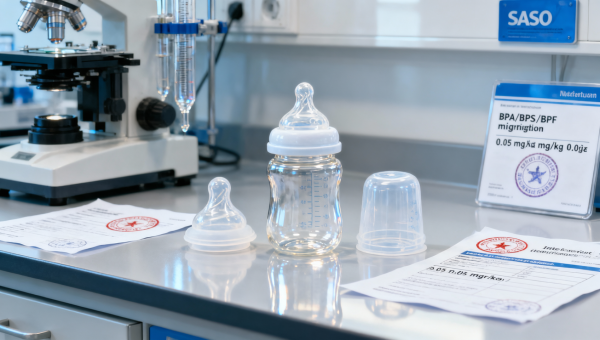
Saudi Arabia’s Standards, Metrology and Quality Organization (SASO) confirmed on 25 May 2026 the immediate enforcement of the updated CPC 2026 mandatory standard, significantly impacting manufacturers and exporters of infant feeding and care products destined for the Saudi market.
Key Regulatory Changes Effective Immediately
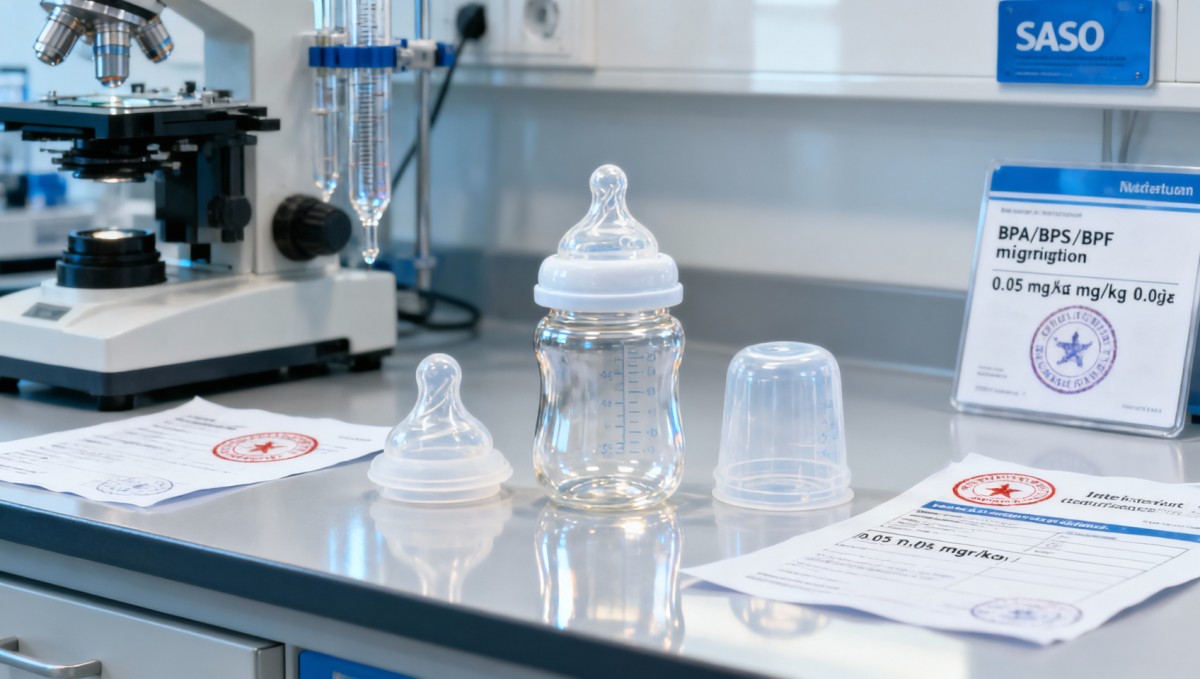
As of 25 May 2026, SASO’s revised CPC 2026 standard applies to infant feeding and care products—including baby bottles, breast pumps, and baby food processors. The regulation reduces the maximum allowable bisphenol A (BPA) migration limit from 0.6 mg/kg to 0.05 mg/kg. Additionally, testing for bisphenol S (BPS) and bisphenol F (BPF) is now mandatory alongside BPA. Non-compliant products will be denied customs clearance into Saudi Arabia.
Impact Across the Supply Chain
Exporters and Trading Companies
Direct trade enterprises face heightened compliance risk at port entry. Customs rejection due to non-conforming test reports may cause shipment delays, storage fees, and contract penalties—especially where delivery timelines are tied to tender or retail commitments.
Raw Material Suppliers
Suppliers of polymers, resins, and food-contact-grade plastics must now provide updated declarations and third-party verification confirming BPA/BPS/BPF migration levels meet the new 0.05 mg/kg threshold—requiring tighter traceability and batch-level documentation.
Manufacturers and Contract Producers
Production facilities must revalidate processing parameters (e.g., temperature, time, post-molding conditioning) affecting bisphenol migration. Existing product lines require full retesting; legacy test reports citing the old 0.6 mg/kg limit are no longer acceptable.
Compliance and Certification Service Providers
Testing laboratories and certification bodies must align their protocols with SASO’s updated sampling, extraction, and analytical methods for all three bisphenols. Accreditation scope extensions for BPS and BPF detection are now essential prerequisites for issuing valid CPC certificates.
Actionable Compliance Priorities for Businesses
Immediate Reassessment of Product Certifications
All CPC-certified infant feeding products must undergo re-evaluation against the revised BPA limit and expanded analyte scope (BPA, BPS, BPF). Existing certificates issued under prior CPC versions do not cover the new requirements.
Supply Chain Traceability Upgrades
Companies must verify upstream material declarations down to polymer grade and supplier lot number—particularly for polycarbonate, epoxy-lined components, and thermal paper used in packaging inserts—since contamination sources may be indirect.
Adaptation of Technical Documentation
Product specifications, technical files, and declarations of conformity must explicitly reference CPC 2026, list all three bisphenols with measured migration values, and cite accredited lab reports meeting SASO’s current method requirements.
Revised Export Planning and Lead Times
Testing turnaround for the expanded tri-bisphenol panel typically adds 7–10 working days. Export schedules should accommodate this extension, especially for time-sensitive launches or seasonal demand peaks (e.g., Ramadan or back-to-school periods).
Industry Perspective: Beyond Compliance, a Shift in Material Strategy
Analysis shows this revision reflects a broader regional shift toward precautionary chemical management—not just for BPA, but for structural analogues like BPS and BPF, which are increasingly scrutinized globally for endocrine-disrupting potential. From an industry perspective, it is more appropriate to understand this as a de facto material qualification requirement: suppliers unable to demonstrate consistent sub-0.05 mg/kg BPA migration across production runs—and verified absence of BPS/BPF—will likely be excluded from qualified vendor lists. What deserves closer attention is the implied timeline pressure: SASO’s ‘immediate enforcement’ leaves little room for phased implementation, compressing supply chain adaptation windows traditionally seen in GCC regulatory transitions.
Strategic Implication for Market Access
This update signals that CPC is evolving from a static conformity mark into a dynamic, science-informed safety gate—particularly for sensitive categories like infant products. While the change does not introduce new product categories or broaden scope beyond Infants Feeding & Care items, its technical stringency raises the baseline for chemical safety validation. For international manufacturers, achieving compliance is no longer solely about passing a single test—it requires integrated control across R&D, sourcing, production, and quality assurance.
Source Attribution and Ongoing Monitoring
This article synthesizes information provided in the user-submitted title, event date (25 May 2026), and summary. Specific official source links were not provided in the input and should be verified continuously. Stakeholders are advised to monitor SASO’s official portal for updates on enforcement guidance, recognized testing methodologies (e.g., ISO 28721 adaptations), interpretation of ‘infant feeding and care products’, and any transitional arrangements for existing stock—none of which are specified in the current input.
Related Intelligence
 Activewear OEMJul 10, 2026Amazon Middle East Adds OEM Activewear Review PathAmazon Middle East adds an OEM activewear review path requiring OEKO-TEX STANDARD 100 Class I reports. Learn what this means for listings, compliance timing, and supplier readiness.
 STEM & Educational ToysJul 10, 2026Vietnam Raises STEM Toy Tariff to 12% Without CPCVietnam raises STEM toy tariff to 12% without CPC, reshaping import costs and customs clearance. Learn what importers, exporters, and buyers must prepare now.
 Smart Pet DevicesJul 10, 2026JETRO Opens Fast-Track Import Channel for Smart Pet DevicesJETRO opens a fast-track import channel for smart pet devices in Japan, cutting clearance from 7 days to 2 for JIS T 2201:2026-compliant shipments. Learn what exporters and distributors should do now.
 Fitness EquipmentJul 10, 2026CPSC Tightens Rules on Kids’ Fitness Equipment LocksCPSC tightens rules on kids’ fitness equipment locks, requiring dual physical locking certification by Sept. 1, 2026. Learn how ODM suppliers can prepare design, inspection, and export compliance fast.
 Infant Feeding & CareJul 10, 2026REACH SVHC Update Triggers Review of Silicone Feeding ProductsREACH SVHC update puts silicone feeding products under new EU compliance review. Learn what OEMs, importers, and suppliers must check before the October 31, 2026 deadline.
 Corporate & Seasonal GiftsJul 10, 2026Buyer Guide for Vendor Selection: Red Flags Before You CommitBuyer guide for vendor selection in travel services: spot red flags in pricing, compliance, communication, and capacity before you commit.
 Pet Grooming & TravelJul 10, 2026Pet Travel Products Germany: Key Safety and Demand Shifts in 2026Pet travel products Germany in 2026: discover how safety rules, premium demand, and changing travel habits are reshaping this market—and what smart buyers should watch next.
 Corporate & Seasonal GiftsJul 10, 2026Brand Chain Buying Guide: How to Compare Vendor StabilityBrand chain buying guide for travel services: compare vendor stability through compliance, resilience, and supply performance to protect guest trust and improve sourcing decisions.
 STEM & Educational ToysJul 10, 2026Market Entry Research and CPSIA Compliance: What to Check FirstMarket entry research CPSIA compliance starts with product scope, age grading, materials, and labels. Learn what travel-linked brands must check first to launch faster and reduce risk.
 Skincare OEMJul 10, 2026Beauty Product Development Pricing: Cost Drivers and Margin RisksBeauty product development pricing for travel retail: uncover hidden cost drivers, supplier risks, and margin traps to launch smarter and protect seasonal sales.
 Baby Gear & StrollersJul 09, 2026EN 14765:2026 Update Tightens Stroller Dynamic TestsEN 14765:2026 update tightens stroller dynamic tests for EU exports from Oct 1, 2026. Learn the new mandatory checks, 22-day testing timeline, and how to avoid launch delays.
 Beauty DevicesJul 09, 2026Ningbo Port Fees Rise 35% as Beauty Device Exports Face 7-10 Day DelaysNingbo Port fees rise 35% as beauty device exports face 7-10 day delays. Learn how lithium-battery OEMs, buyers, and shippers can reduce cost risk and protect delivery schedules.
 STEM & Educational ToysJul 09, 2026Amazon Japan Requires JIS T 0901:2026 Reports for STEM ToysAmazon Japan now requires JIS T 0901:2026 reports for STEM toys. Learn who is affected, what listings risk suppression, and how sellers can stay compliant fast.