
Beauty & Care Packaging Trends Shaping 2026 Product Lines

Beauty & Care Packaging Is Moving From Shelf Detail to Travel Strategy
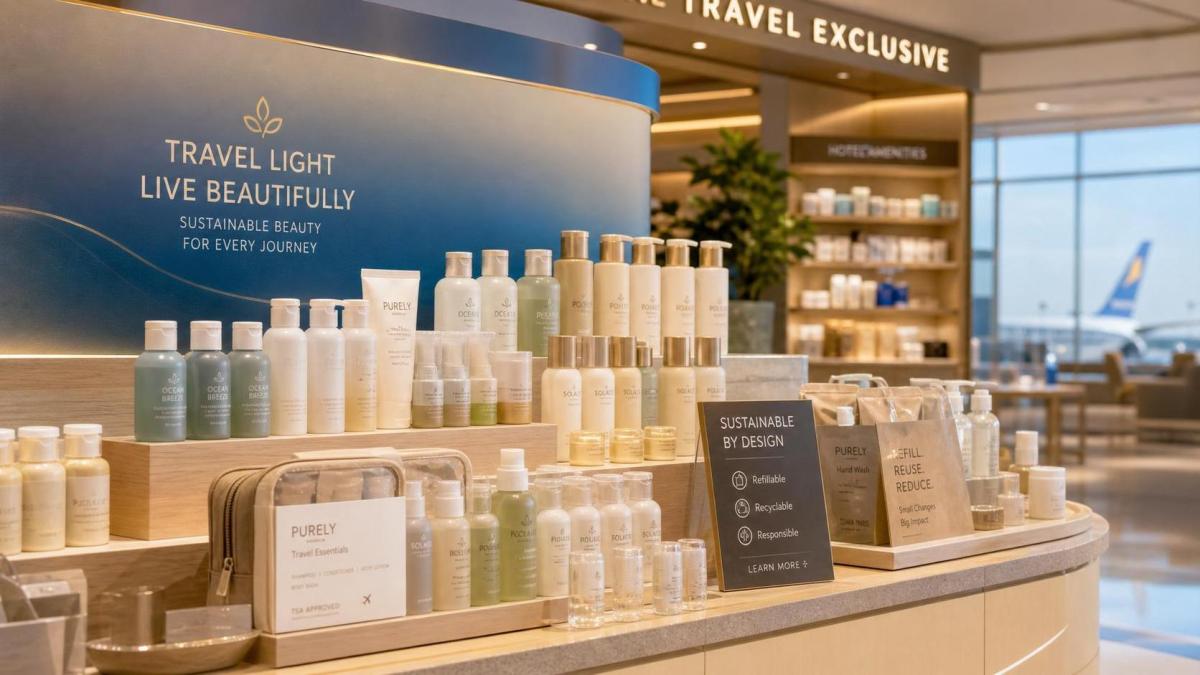
Beauty & Care packaging is no longer a finishing touch for 2026 product lines.
It is becoming a strategic layer that shapes product appeal, compliance readiness, and service experience across travel retail, hospitality, and global tourism channels.
From airport stores to resort amenities, packaging now influences how Beauty & Care products are discovered, carried, trusted, and repurchased.
That shift matters because travel service operators increasingly rely on curated personal care assortments to lift brand perception and ancillary revenue.
The more mobile the customer journey becomes, the more visible packaging decisions become.
This is also where Global Consumer Sourcing, or GCS, fits naturally into the conversation.
Its value lies in connecting Beauty & Care market intelligence with sourcing, compliance, and retail execution realities across fast-changing international channels.
For 2026 planning, the central question is not whether packaging will change.
It is which Beauty & Care packaging formats will perform best when sustainability, travel convenience, and regulatory scrutiny intensify at the same time.
Why the Packaging Signal Is Getting Stronger Now
Recent demand patterns show a clear reset in what buyers expect from Beauty & Care packaging.
The change is not driven by aesthetics alone.
It is being shaped by operational pressure across travel service environments where portability, refill logic, and waste control are now commercial issues.
In hotels and airlines, single-use formats are facing deeper scrutiny.
In duty-free and travel retail, compact premium packs are gaining attention because they travel well and support gifting behavior.
In wellness tourism, packaging is expected to signal safety, ingredient clarity, and local relevance without losing premium appeal.
Beauty & Care demand is therefore converging around a narrower set of packaging expectations.
Products must be easy to carry, easy to sort, hard to leak, and credible under compliance review.
That is a different planning environment from the one many product lines were designed for just a few years ago.
The strongest forces behind this shift
- Travel mobility is favoring lighter, smaller, and modular Beauty & Care packaging formats.
- Sustainability targets are pushing refillable, recyclable, and mono-material packaging into mainstream sourcing discussions.
- Global compliance expectations are raising the value of traceable materials, clearer labeling, and packaging consistency.
- Premiumization in tourism is increasing demand for packaging that looks elevated without becoming fragile or wasteful.
- Private-label expansion is creating pressure for faster packaging development with lower risk and stronger differentiation.
Taken together, these signals suggest that Beauty & Care packaging is becoming a business model decision, not only a design one.
The Formats Gaining Ground Across Travel-Linked Beauty & Care
Not every packaging change carries the same weight.
Some are temporary reactions, while others are becoming structural choices for 2026 Beauty & Care lines.
The most durable moves tend to solve both customer friction and supply chain complexity.
What stands out is that these Beauty & Care packaging formats are not winning for the same reason.
Some reduce operating waste.
Others improve travel convenience or protect premium positioning in crowded retail environments.
The common thread is practicality under movement, regulation, and brand pressure.
What This Changes for Tourism Channels and Guest Experience
The impact of Beauty & Care packaging does not stop at sourcing teams or product developers.
It reaches the guest room, the airport shelf, the cruise cabin, and the spa reception desk.
That broader effect is why 2026 planning needs a cross-channel view.
Hospitality and accommodation
Hotels are moving away from packaging that looks disposable, even when the unit cost appears favorable.
Guests increasingly read packaging quality as a signal of cleanliness, sustainability, and overall service standard.
Poor closure performance or unclear labeling can damage trust faster than before.
Travel retail and duty-free
Here, Beauty & Care packaging must do two jobs at once.
It needs to attract quickly on shelf, then justify purchase through convenience, safety, and gifting value.
Packaging that photographs well also matters more as travel discovery starts online before departure.
Wellness and destination experiences
Resorts and wellness operators are using Beauty & Care products to extend destination identity.
That creates room for packaging with natural textures, refill logic, and stronger ingredient storytelling.
Still, visual calm is not enough.
Durability in humid, hot, or mobile environments remains essential.
Compliance and Supply Chain Discipline Are Now Part of the Design Brief
A more subtle trend is now becoming impossible to ignore.
Beauty & Care packaging is being judged less by appearance alone and more by how reliably it performs under compliance review.
That includes material declarations, labeling accuracy, transit durability, and alignment with destination-specific standards.
For globally distributed product lines, this is where delays often begin.
A pack that works in one market may create documentation or recyclability issues in another.
GCS has become relevant here because data-backed sourcing insight helps narrow those blind spots earlier.
Its editorial focus on certification, private-label readiness, and supply resilience mirrors the real pressure facing Beauty & Care category expansion.
In practical terms, packaging teams now need closer coordination with compliance and logistics functions than many organizations were used to.
- Check closure integrity under long-haul transit and temperature fluctuation.
- Review whether refill claims are supported by actual operating conditions.
- Verify that decoration, inks, and materials align with market-specific regulations.
- Confirm packaging dimensions fit travel display, storage, and replenishment constraints.
These checkpoints sound technical, but they increasingly determine whether a Beauty & Care launch feels smooth or fragile.
Where the Smarter 2026 Decisions Will Likely Be Made
The next phase will not be defined by a single hero material.
It will be shaped by how well Beauty & Care packaging decisions match channel behavior and operational reality.
That means looking beyond broad sustainability claims and asking sharper planning questions.
Questions worth prioritizing now
- Which Beauty & Care formats support both guest experience and replenishment efficiency?
- Where can premium appearance be maintained with fewer mixed materials?
- Which travel service channels need miniatures, and which are ready for refill systems?
- How exposed is the current packaging plan to certification, leakage, or waste-related complaints?
- What market intelligence is needed before scaling a private-label Beauty & Care line internationally?
The strongest product lines in 2026 are likely to be those that treat packaging as a forecasting tool.
Beauty & Care packaging now reveals where consumer movement is heading, where regulations are tightening, and where supply chain flexibility is becoming non-negotiable.
For travel-linked categories, that makes packaging one of the clearest signals to monitor over the next planning cycle.
A useful next step is to compare current formats against real channel demands, then map gaps in portability, compliance, and sustainability claims.
From there, follow emerging signals through trusted intelligence sources such as GCS, especially where sourcing complexity and market expansion intersect.
That approach creates a more resilient basis for Beauty & Care decisions than reacting to design trends in isolation.
Related Intelligence
 Skincare OEMAug 16, 2026Amazon Enforces AI Human Metadata Rule for Beauty and Personal Care SellersAmazon now enforces AI human metadata rules for beauty sellers. Learn how to protect listings, traffic, and compliance in skincare, cosmetics, and beauty devices.
 Beauty DevicesAug 15, 2026China to Roll Out Nationwide Cross-Border Cash Pooling for MultinationalsChina to roll out nationwide cross-border cash pooling for multinationals from Sept. 14. Discover how this policy could improve treasury efficiency, liquidity management, and China-linked supply chains.
 Beauty DevicesAug 14, 2026China Imposes Temporary Export Ban on Helium, Affecting Cooling Supply ChainsChina's temporary helium export ban may disrupt cooling supply chains for beauty RF devices and laser systems. Learn what ODMs, buyers, and procurement teams should check now.
![]() Cosmetics & PkgAug 13, 2026PPWR becomes mandatory: Beauty and personal care packaging materials usher in new EPR and PFAS compliance requirementsPPWR takes effect for cosmetics packaging in the EU, bringing EPR registration and PFAS limits. Learn what brands, importers, and suppliers must do now.
Cosmetics & PkgAug 13, 2026PPWR becomes mandatory: Beauty and personal care packaging materials usher in new EPR and PFAS compliance requirementsPPWR takes effect for cosmetics packaging in the EU, bringing EPR registration and PFAS limits. Learn what brands, importers, and suppliers must do now. Cosmetics & PkgAug 12, 2026EU PPWR Now Enforced for Beauty Packaging ComplianceEU PPWR now enforced for beauty packaging compliance: learn how EPR, ERN, heavy metals and PFAS rules affect EU exports, customs clearance and platform sales.
 Cosmetics & PkgAug 11, 2026EU PPWR Rules Take Effect on Aug. 12 for Beauty PackagingEU PPWR rules for beauty packaging take effect on Aug. 12, 2026. Learn key compliance steps, EPR, labeling, PFAS limits, and how to avoid customs delays and fines.
 Smart Pet DevicesAug 10, 2026EU EPR Rules to Cover Smart Pet Devices on Aug. 15EU EPR Rules will cover smart pet devices from Aug. 15, 2026. Learn how smart collars, feeders, and monitoring devices can avoid delisting, customs delays, and compliance risks in the EU.
 Infant Feeding & CareAug 09, 2026CPSC Recalls Baby Sleep Sacks Over Undeclared TDCPPCPSC Recalls Baby Sleep Sacks Over Undeclared TDCPP: learn how this 2026 recall impacts CPC documents, third-party testing, and U.S. baby product compliance for exporters.
 Infant Feeding & CareAug 08, 2026ECHA Adds 5 SVHCs, Importer Notices Due From Oct 2026ECHA adds 5 SVHCs to the Candidate List, with importer notices due from October 2026. Learn how REACH affects exporters, supply chains, and documentation readiness.
 Baby Gear & StrollersAug 07, 2026CPSC Revises Crib Rail Standard for November 2026CPSC revises crib rail standard for November 2026, adding dynamic impact tests and mandatory third-party lab testing. Learn how the new rule affects U.S. market access, compliance, and shipments.
 Electronic & RC ToysAug 06, 2026EU to Require EN IEC 62115:2025 for Electronic ToysEU to Require EN IEC 62115:2025 for Electronic Toys from Oct 1, 2026. Learn scope, battery and AI safety updates, CE compliance risks, and how exporters can avoid customs delays.
 Baby Gear & StrollersAug 05, 2026US Stroller Stability Rule Takes Effect Aug. 15US Stroller Stability Rule Takes Effect Aug. 15: learn how new U.S. stroller compliance, ASTM F833-26a, and CPSC testing rules may affect imports, certification, and shipment readiness.
 Infant Feeding & CareAug 04, 2026ECHA Adds 5 SVHCs, Triggering Baby Care Export ReviewECHA adds 5 SVHCs, prompting an urgent baby care export review for EU-bound products. Learn the 0.1% threshold risks, compliance steps, and how to avoid customs delays and fines.












