
Dongguan PLA Insert Maker Gains EN13432 and FDA Approval
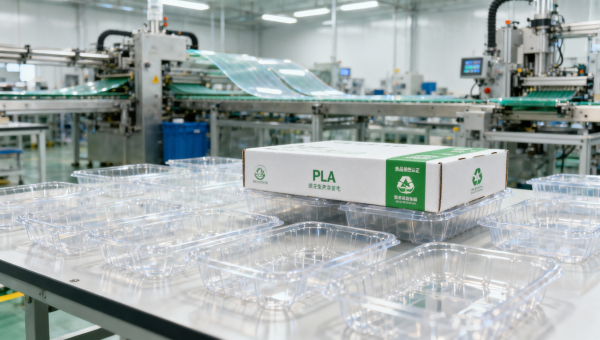
On June 17, 2026, Green Action Biodegradable Products (Dongguan) Co., Ltd. announced that its full PLA thermoformed insert line for beauty packaging had obtained both EU EN13432 industrial compostability certification and FDA food-contact material certification. The company also said it had shortened standard order lead times to 12 working days through an integrated design-sheet-thermoforming workflow supported by an 8,000-square-meter clean workshop. For cosmetics packaging buyers, converters, and supply-chain teams serving export markets, this development is worth watching because it connects compliance credentials with delivery speed at a time when supplier screening is increasingly tied to sustainability execution.
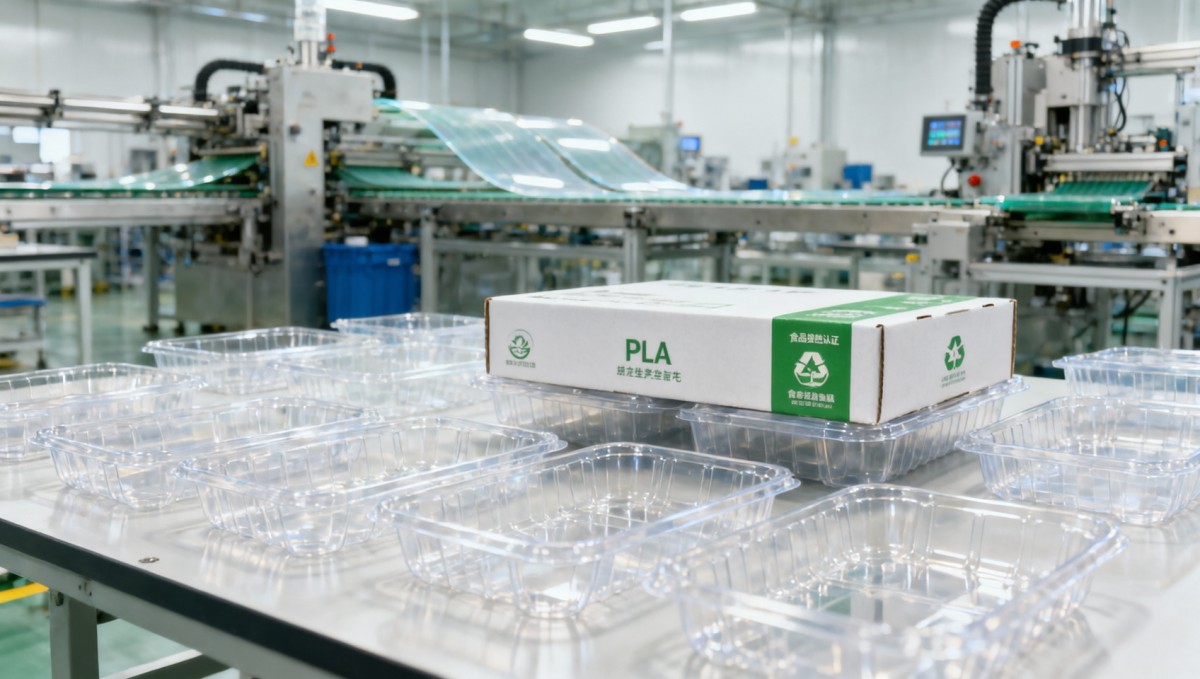
What the company confirmed on June 17
According to the information provided, Green Action Biodegradable Products (Dongguan) Co., Ltd. stated on June 17, 2026 that its entire PLA blister insert product line had passed EU EN13432 industrial compostability certification as well as FDA food-contact material certification.
The company further stated that it relies on an 8,000-square-meter clean workshop to provide an integrated process covering design, sheet production, and thermoforming. Based on that setup, it said the standard order delivery cycle had been reduced to 12 working days.
The disclosed information also noted that three European beauty brands have already included the company on their priority supplier list for sustainable packaging for the second half of 2026.
Why this matters across the packaging chain
For beauty brands sourcing export-ready inserts
From an industry perspective, the immediate relevance for brand procurement teams lies in the combination of certification status and lead-time claims. Where sustainable packaging projects often face delays between material validation and production scheduling, a supplier presenting both compliance credentials and a defined standard delivery cycle may affect how buyers assess shortlist readiness for upcoming launches or packaging updates.
What deserves closer attention is whether procurement decisions begin to place greater weight on suppliers that can present both qualification documents and manufacturing coordination in one package, especially for projects tied to European market expectations.
For converters and packaging manufacturers
For processors and packaging manufacturers, the development points to pressure not only on material choice but also on execution speed. Analysis shows that an integrated design-to-thermoforming setup can become a competitive factor in categories where insert customization, hygiene requirements, and lead-time discipline all matter.
The potential impact is therefore not limited to product specification. It may also extend to quotation response, sample development, production planning, and the ability to align internal processes with certified material claims.
For supply-chain and vendor management teams
For supply-chain service providers and vendor managers, the announcement is relevant because supplier evaluation may increasingly hinge on whether certification, production environment, and delivery capacity can be reviewed together rather than separately. In practical terms, teams may need to pay closer attention to document readiness, production coordination, and the credibility of standard lead-time commitments when comparing suppliers.
What companies should watch next
Check the scope behind the certification claims
Companies evaluating similar suppliers should focus on how certification statements are presented in formal documents and commercial communication. The key practical issue is not only whether EN13432 and FDA are mentioned, but whether the claimed scope clearly matches the specific PLA thermoformed insert products being purchased.
Separate market access language from operational readiness
Analysis shows that certification status and delivery capability serve different business functions. One supports compliance and customer communication, while the other affects launch timing, replenishment planning, and supplier substitution risk. Buyers should therefore avoid treating the two as interchangeable indicators.
Prepare for tighter supplier file reviews
Because three European beauty brands have reportedly placed the company on a priority supplier list for sustainable packaging in the second half of 2026, other market participants may respond by reviewing vendor qualification files more closely. That makes supporting documents, product descriptions, and production-capacity communication more important in commercial discussions.
Monitor whether priority-list inclusion turns into repeat orders
Observably, inclusion on a priority supplier list signals commercial attention, but it is not the same as a confirmed long-term volume outcome. Companies should watch whether such supplier-list positioning translates into sustained orders, broader category adoption, or more formal procurement requirements in subsequent periods.
How this news is best understood now
Analysis shows that this is more than a routine certification update, because the announcement combines standards compliance, manufacturing integration, and a stated delivery benchmark in one message. That combination is particularly relevant in beauty packaging, where sustainability claims often meet practical constraints in sampling, approval, and replenishment timelines.
At the same time, it is more appropriate to understand this as an industry signal rather than a settled market shift. The confirmed facts show supplier progress and early customer recognition, but they do not by themselves establish broader market adoption, category-wide supplier replacement, or a durable change in procurement rules.
A signal on execution, not yet a final market verdict
In summary, the June 17 update is most useful as a sign that parts of the sustainable beauty packaging market are paying attention not only to material claims but also to whether those claims can be delivered within a defined production cycle. For companies in sourcing, packaging development, and supply-chain coordination, the practical takeaway is to track how certification, factory integration, and lead-time performance are being linked in supplier evaluation.
Current evidence supports a measured reading: this is a concrete near-term development with possible longer-term relevance, but it still requires continued observation before being treated as a broader market conclusion.
Basis of this report
This article is based on the user-provided news title, event date, and event summary. For this type of development, commonly relevant source categories may include official company announcements, industry association information, authoritative media coverage, and standard-related documentation.
A specific official source link was not provided in the input, so the underlying claims still require ongoing verification as more formal disclosures, customer-side confirmations, or standard-related documentation become available. Continued attention should focus on subsequent official wording, supplier documentation scope, and whether priority supplier status leads to further disclosed business progress.
Related Intelligence
 Skincare OEMAug 16, 2026Amazon Enforces AI Human Metadata Rule for Beauty and Personal Care SellersAmazon now enforces AI human metadata rules for beauty sellers. Learn how to protect listings, traffic, and compliance in skincare, cosmetics, and beauty devices.
 Beauty DevicesAug 15, 2026China to Roll Out Nationwide Cross-Border Cash Pooling for MultinationalsChina to roll out nationwide cross-border cash pooling for multinationals from Sept. 14. Discover how this policy could improve treasury efficiency, liquidity management, and China-linked supply chains.
 Beauty DevicesAug 14, 2026China Imposes Temporary Export Ban on Helium, Affecting Cooling Supply ChainsChina's temporary helium export ban may disrupt cooling supply chains for beauty RF devices and laser systems. Learn what ODMs, buyers, and procurement teams should check now.
![]() Cosmetics & PkgAug 13, 2026PPWR becomes mandatory: Beauty and personal care packaging materials usher in new EPR and PFAS compliance requirementsPPWR takes effect for cosmetics packaging in the EU, bringing EPR registration and PFAS limits. Learn what brands, importers, and suppliers must do now.
Cosmetics & PkgAug 13, 2026PPWR becomes mandatory: Beauty and personal care packaging materials usher in new EPR and PFAS compliance requirementsPPWR takes effect for cosmetics packaging in the EU, bringing EPR registration and PFAS limits. Learn what brands, importers, and suppliers must do now. Cosmetics & PkgAug 12, 2026EU PPWR Now Enforced for Beauty Packaging ComplianceEU PPWR now enforced for beauty packaging compliance: learn how EPR, ERN, heavy metals and PFAS rules affect EU exports, customs clearance and platform sales.
 Cosmetics & PkgAug 11, 2026EU PPWR Rules Take Effect on Aug. 12 for Beauty PackagingEU PPWR rules for beauty packaging take effect on Aug. 12, 2026. Learn key compliance steps, EPR, labeling, PFAS limits, and how to avoid customs delays and fines.
 Smart Pet DevicesAug 10, 2026EU EPR Rules to Cover Smart Pet Devices on Aug. 15EU EPR Rules will cover smart pet devices from Aug. 15, 2026. Learn how smart collars, feeders, and monitoring devices can avoid delisting, customs delays, and compliance risks in the EU.
 Infant Feeding & CareAug 09, 2026CPSC Recalls Baby Sleep Sacks Over Undeclared TDCPPCPSC Recalls Baby Sleep Sacks Over Undeclared TDCPP: learn how this 2026 recall impacts CPC documents, third-party testing, and U.S. baby product compliance for exporters.
 Infant Feeding & CareAug 08, 2026ECHA Adds 5 SVHCs, Importer Notices Due From Oct 2026ECHA adds 5 SVHCs to the Candidate List, with importer notices due from October 2026. Learn how REACH affects exporters, supply chains, and documentation readiness.
 Baby Gear & StrollersAug 07, 2026CPSC Revises Crib Rail Standard for November 2026CPSC revises crib rail standard for November 2026, adding dynamic impact tests and mandatory third-party lab testing. Learn how the new rule affects U.S. market access, compliance, and shipments.
 Electronic & RC ToysAug 06, 2026EU to Require EN IEC 62115:2025 for Electronic ToysEU to Require EN IEC 62115:2025 for Electronic Toys from Oct 1, 2026. Learn scope, battery and AI safety updates, CE compliance risks, and how exporters can avoid customs delays.
 Baby Gear & StrollersAug 05, 2026US Stroller Stability Rule Takes Effect Aug. 15US Stroller Stability Rule Takes Effect Aug. 15: learn how new U.S. stroller compliance, ASTM F833-26a, and CPSC testing rules may affect imports, certification, and shipment readiness.
 Infant Feeding & CareAug 04, 2026ECHA Adds 5 SVHCs, Triggering Baby Care Export ReviewECHA adds 5 SVHCs, prompting an urgent baby care export review for EU-bound products. Learn the 0.1% threshold risks, compliance steps, and how to avoid customs delays and fines.












