
Guangzhou Cross-Border Fair Puts Factory Compliance First
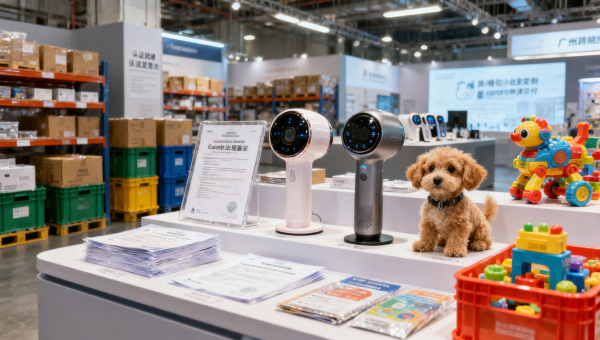
Opened on June 16, 2026, the China (Guangzhou) Cross-Border E-Commerce Fair signals a practical shift in how cross-border sourcing is being screened: factory-direct supply is no longer presented mainly as a cost advantage, but as a compliance and delivery capability tied to certifications, flexible customization, and small-batch rapid response. For ODM/OEM manufacturers, platform-facing exporters, buyers, and compliance service providers, the event is worth watching because it links market access more directly to certification readiness and supply-chain execution.
A fair format that highlights certification-ready supply
The 2026 China (Guangzhou) Cross-Border E-Commerce Fair is being held from June 16 to June 18. This edition introduces a dedicated “1688 Super Factory” zone for the first time.
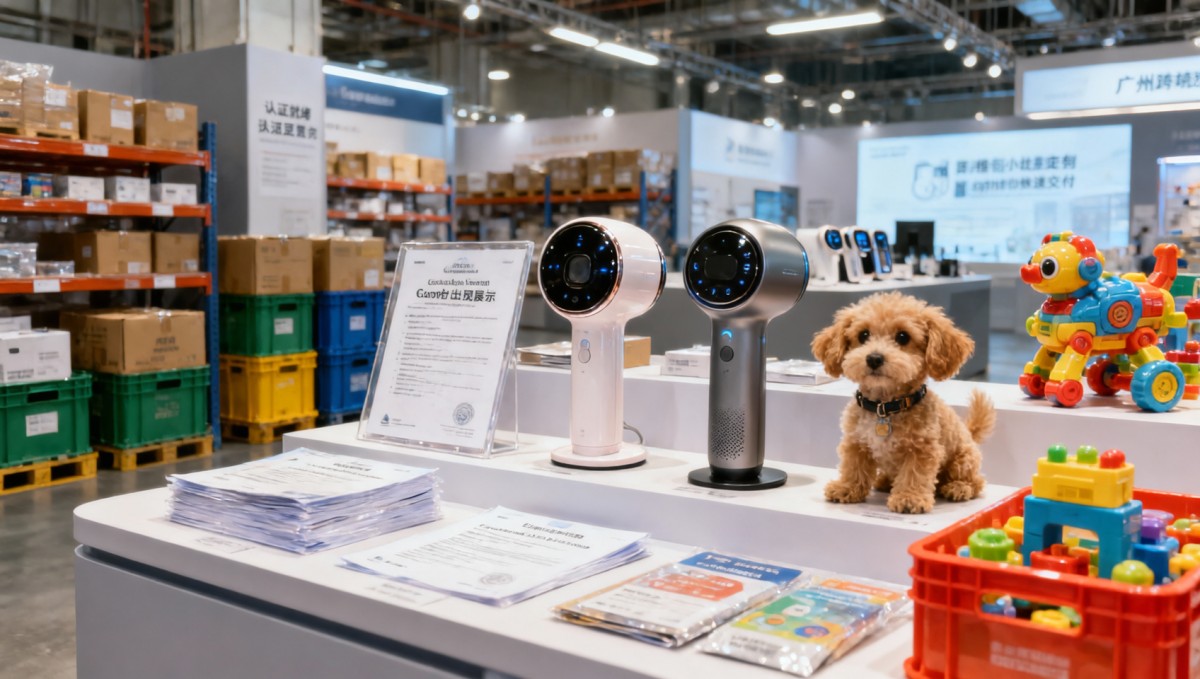
The zone focuses on ODM/OEM source-factory supply capabilities in Beauty Devices, Smart Pet Devices, STEM & Educational Toys, and Corporate & Seasonal Gifts.
More than 50 platforms, including Amazon, Shein, and Wayfair, are recruiting on site. The event materials state that the priority is factories with FDA, CE, and CPC certifications, as well as flexible customization and the ability to handle small orders with rapid turnaround.
The fair has become an important offline hub for buyers from Europe, Latin America, and Southeast Asia to identify qualified Chinese supply-chain partners.
Why the screening signal matters across the supply chain
For source factories, certifications are moving closer to front-end customer acquisition
From an industry perspective, the most immediate effect is on factories seeking ODM/OEM orders through cross-border channels. When platform recruitment explicitly emphasizes FDA, CE, and CPC, certification status is not just a later-stage compliance item; it becomes part of early supplier selection. What deserves closer attention is whether technical files, test reports, product documentation, and proof of manufacturing capability can be presented quickly enough to support business discussions.
For exporters and channel operators, supplier qualification becomes a commercial filter
Export-oriented trading companies and channel operators may feel the impact in supplier onboarding and procurement decisions. Analysis shows that when buyers and platforms use certification readiness and delivery flexibility as visible filters, intermediary firms need to review not only price and capacity, but also whether upstream factories can support required documents, stable lead times, and product adaptation for different markets.
For buyers, the sourcing focus shifts from broad selection to risk-controlled selection
For procurement teams, the fair format points to a more selective sourcing logic. Observably, product categories such as beauty devices, smart pet devices, and educational toys are being discussed together with certification capability, which means supplier comparison is likely to center more on compliance evidence and fulfillment responsiveness, not only on sampling speed or quoted cost.
For testing and compliance service providers, earlier engagement may become more important
Certification-related service providers may also be affected because the stated recruitment criteria place regulatory and standards-related readiness near the start of the transaction process. It is more appropriate to understand this as a signal that testing, document review, and certification support may need to connect earlier with factory sales, product development, and export planning.
What companies should monitor after the exhibition signal
Check whether certification evidence is transaction-ready
Analysis shows that factories targeting cross-border platform opportunities should pay close attention to whether FDA, CE, or CPC-related materials are complete, current, and usable in buyer review scenarios. The key issue is not only whether a certification is claimed, but whether supporting records and technical documentation can stand up to commercial due diligence.
Review category-specific documentation and product claims
Companies in the highlighted categories should closely examine product descriptions, technical parameters, labeling materials, and claim language used in quotations or display packs. What deserves closer attention is whether commercial materials match the compliance position being presented to buyers and platforms.
Align delivery promises with flexible production capacity
The recruitment focus on flexible customization and small-batch rapid response means manufacturers and exporters should review how production scheduling, minimum order logic, sample handling, and delivery commitments are presented. Observably, this is an execution issue as much as a sales issue, because mismatched promises can create downstream compliance and after-sales pressure.
Track how platform-facing sourcing requirements are expressed next
The available information does not provide detailed implementation rules. For that reason, companies should continue to watch how platform recruitment language, buyer qualification requests, tender-style sourcing documents, or follow-up screening criteria are expressed after the event, rather than assuming a fully settled rule framework already exists.
How this should be read at this stage
Observably, this development is less about a newly published regulation and more about an execution-level market signal: cross-border sourcing conversations are being structured around certification status, supplier responsiveness, and direct factory capability. Analysis shows that the exhibition format itself is useful because it reveals what downstream channels and buyers are prioritizing when choosing Chinese suppliers.
At the same time, it would be premature to treat the event alone as proof of a completed rule change across all markets or platforms. It is more appropriate to understand this as a strong screening signal that may influence procurement behavior, supplier preparation, and compliance workflows, while the exact application still requires continued observation.
A practical reading of the fair's significance
For the industry, the main value of this event lies in what it makes visible: certification-backed factory capability, customization flexibility, and fast-turn small-order fulfillment are being presented together as core sourcing conditions. From an industry perspective, that combination matters because it connects compliance, procurement, and delivery into one buyer-facing threshold.
At present, this news is best understood not as a final rule outcome, but as a concrete market cue about how supplier selection is being organized in cross-border trade settings. Companies that depend on ODM/OEM exports should therefore treat it as a prompt to review certification readiness, documentation quality, and fulfillment credibility.
Basis of this article and points still requiring verification
This article is generated based on the user-provided news title, event date, and event summary. For developments of this type, commonly relevant source categories may include official event announcements, regulatory releases, trade or customs authority information, industry association updates, standards organization documents, and reporting by established business media.
No specific official source link was provided in the input, so further verification remains necessary. What still needs continued observation includes any later policy details, certification interpretation in actual sourcing practice, changes in buyer or platform screening documents, market feedback after the fair, and how companies implement these requirements in real transactions.
Related Intelligence
 Skincare OEMAug 16, 2026Amazon Enforces AI Human Metadata Rule for Beauty and Personal Care SellersAmazon now enforces AI human metadata rules for beauty sellers. Learn how to protect listings, traffic, and compliance in skincare, cosmetics, and beauty devices.
 Beauty DevicesAug 15, 2026China to Roll Out Nationwide Cross-Border Cash Pooling for MultinationalsChina to roll out nationwide cross-border cash pooling for multinationals from Sept. 14. Discover how this policy could improve treasury efficiency, liquidity management, and China-linked supply chains.
 Beauty DevicesAug 14, 2026China Imposes Temporary Export Ban on Helium, Affecting Cooling Supply ChainsChina's temporary helium export ban may disrupt cooling supply chains for beauty RF devices and laser systems. Learn what ODMs, buyers, and procurement teams should check now.
![]() Cosmetics & PkgAug 13, 2026PPWR becomes mandatory: Beauty and personal care packaging materials usher in new EPR and PFAS compliance requirementsPPWR takes effect for cosmetics packaging in the EU, bringing EPR registration and PFAS limits. Learn what brands, importers, and suppliers must do now.
Cosmetics & PkgAug 13, 2026PPWR becomes mandatory: Beauty and personal care packaging materials usher in new EPR and PFAS compliance requirementsPPWR takes effect for cosmetics packaging in the EU, bringing EPR registration and PFAS limits. Learn what brands, importers, and suppliers must do now. Cosmetics & PkgAug 12, 2026EU PPWR Now Enforced for Beauty Packaging ComplianceEU PPWR now enforced for beauty packaging compliance: learn how EPR, ERN, heavy metals and PFAS rules affect EU exports, customs clearance and platform sales.
 Cosmetics & PkgAug 11, 2026EU PPWR Rules Take Effect on Aug. 12 for Beauty PackagingEU PPWR rules for beauty packaging take effect on Aug. 12, 2026. Learn key compliance steps, EPR, labeling, PFAS limits, and how to avoid customs delays and fines.
 Smart Pet DevicesAug 10, 2026EU EPR Rules to Cover Smart Pet Devices on Aug. 15EU EPR Rules will cover smart pet devices from Aug. 15, 2026. Learn how smart collars, feeders, and monitoring devices can avoid delisting, customs delays, and compliance risks in the EU.
 Infant Feeding & CareAug 09, 2026CPSC Recalls Baby Sleep Sacks Over Undeclared TDCPPCPSC Recalls Baby Sleep Sacks Over Undeclared TDCPP: learn how this 2026 recall impacts CPC documents, third-party testing, and U.S. baby product compliance for exporters.
 Infant Feeding & CareAug 08, 2026ECHA Adds 5 SVHCs, Importer Notices Due From Oct 2026ECHA adds 5 SVHCs to the Candidate List, with importer notices due from October 2026. Learn how REACH affects exporters, supply chains, and documentation readiness.
 Baby Gear & StrollersAug 07, 2026CPSC Revises Crib Rail Standard for November 2026CPSC revises crib rail standard for November 2026, adding dynamic impact tests and mandatory third-party lab testing. Learn how the new rule affects U.S. market access, compliance, and shipments.
 Electronic & RC ToysAug 06, 2026EU to Require EN IEC 62115:2025 for Electronic ToysEU to Require EN IEC 62115:2025 for Electronic Toys from Oct 1, 2026. Learn scope, battery and AI safety updates, CE compliance risks, and how exporters can avoid customs delays.
 Baby Gear & StrollersAug 05, 2026US Stroller Stability Rule Takes Effect Aug. 15US Stroller Stability Rule Takes Effect Aug. 15: learn how new U.S. stroller compliance, ASTM F833-26a, and CPSC testing rules may affect imports, certification, and shipment readiness.
 Infant Feeding & CareAug 04, 2026ECHA Adds 5 SVHCs, Triggering Baby Care Export ReviewECHA adds 5 SVHCs, prompting an urgent baby care export review for EU-bound products. Learn the 0.1% threshold risks, compliance steps, and how to avoid customs delays and fines.












