
Baby Skincare Ingredients to Avoid in 2026 Product Lines
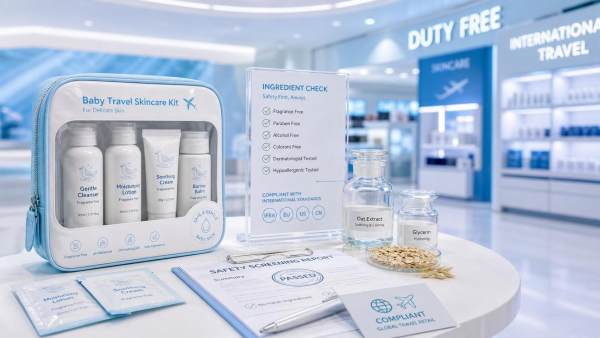
Why is everyone rechecking baby skincare ingredients for 2026?
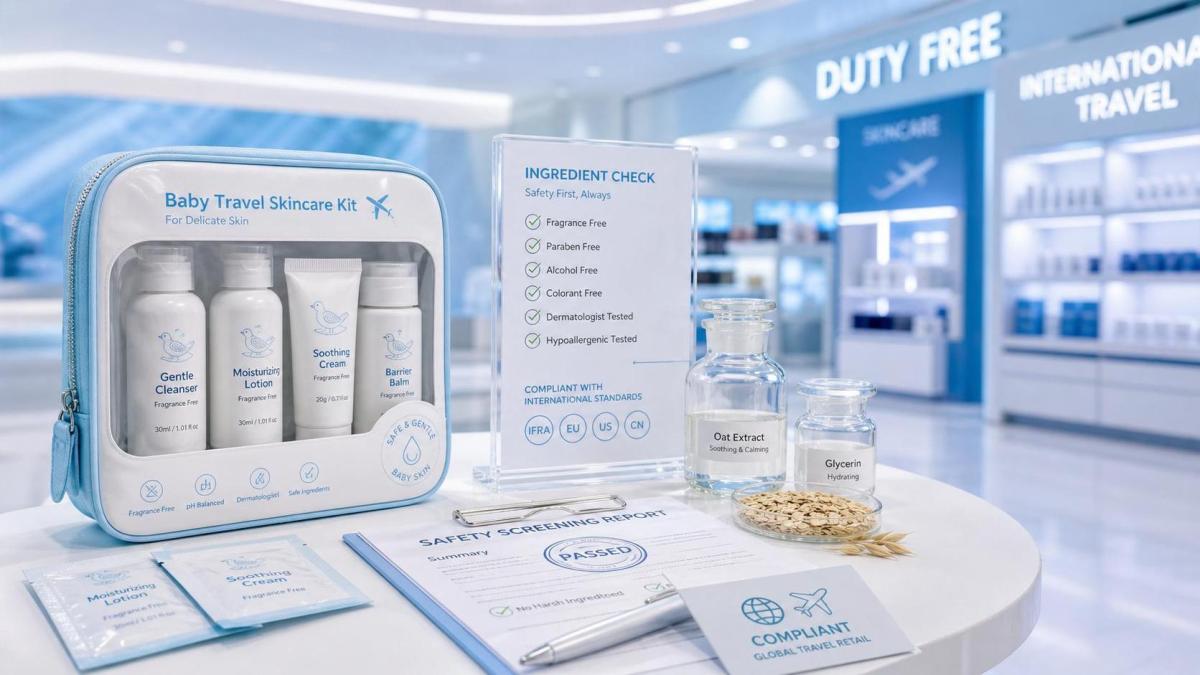
Baby skincare is entering a tighter compliance cycle in 2026, and that changes how formulas are reviewed before launch.
The pressure does not come from one rule alone. It comes from cross-border retail, online scrutiny, and faster product comparison.
In travel retail, that pressure is even more visible. Airport stores, hotel boutiques, and resort pharmacies serve international families with different safety expectations.
A baby skincare formula accepted in one market may face rejection in another because ingredient limits, fragrance rules, or labeling standards do not align.
That is why ingredient screening now sits closer to route-to-market planning. Formulation, packaging, travel distribution, and documentation need to move together.
A platform such as Global Consumer Sourcing often frames this issue through supply-chain resilience rather than marketing language.
The practical question is simple: which ingredients are likely to create avoidable risk in baby skincare, especially for internationally distributed product lines?
The answer is not just “banned ingredients.” More often, concern starts with restricted, controversial, or poorly substantiated materials.
Which baby skincare ingredients are most likely to trigger concern?
Most reviews begin with ingredients that combine three warning signs: irritation potential, regulatory uncertainty, and consumer distrust.
In baby skincare, the highest-risk categories usually include the following:
- High-allergen fragrance blends, especially where full allergen disclosure becomes difficult across markets.
- Essential oils with sensitizing profiles, including those promoted as “natural” but unsuitable for infant skin.
- Formaldehyde-releasing preservatives and older preservative systems under rising toxicology debate.
- Harsh surfactants that can weaken the skin barrier in baby washes and cleansing lotions.
- Colorants with little functional value, especially when they increase review burden without improving product safety.
- Ingredients linked to contamination concerns, such as talc in poorly controlled sourcing environments.
Parabens remain a frequent search topic, but the real issue is not public perception alone. The issue is whether the chosen preservative system is justified and market-fit.
Phenoxyethanol also deserves careful review. It is still widely used, yet concentration control and infant suitability must be clearly documented.
Some teams also flag PEG compounds, BHA, BHT, and ethanol-heavy systems. These are not always prohibited, but they raise more questions during audits.
In travel service environments, especially duty-free and destination retail, fewer ingredients with cleaner documentation usually reduce friction during market entry.
A quick judgment table helps separate high noise from real risk
This kind of screening table is useful when reviewing baby skincare formulas for multi-market travel channels.
Are “natural” ingredients always safer in baby skincare?
Not necessarily. This is one of the most common misunderstandings in baby skincare reviews.
A natural origin does not automatically mean low irritation, low sensitization, or low compliance burden.
Lavender oil, tea tree oil, citrus extracts, and some botanical actives can look appealing on pack, yet perform poorly under infant safety review.
The challenge grows in travel-related retail. International shoppers often interpret “natural” as “safe for newborns,” which can increase complaint risk if expectations are not matched.
A better judgment method is to ask four things before approval:
- Does the ingredient have a clear functional reason in the formula?
- Is there infant-relevant safety support rather than general cosmetic use history?
- Will the ingredient complicate claims, allergen labeling, or cross-border registration?
- Can the same formula goal be achieved with a milder and simpler alternative?
In practice, simpler baby skincare often performs better than trend-driven formulas packed with plant stories and unnecessary aromatic components.
How do travel retail and global distribution change the ingredient decision?
This is where baby skincare moves beyond lab review and into real distribution logic.
Travel service channels are not ordinary shelves. Products may be purchased in transit, used immediately, and carried across borders within hours.
That creates extra pressure on baby skincare documentation, because authorities and retail partners may expect fast access to clear ingredient substantiation.
For example, a lotion sold in airport retail may need cleaner harmonization across EU cosmetic expectations, Asian importer rules, and destination-specific warning practices.
More important, families traveling with infants often prefer low-risk formulas with short INCI lists, fragrance-free positioning, and visible safety cues.
This consumer behavior has a supply-chain effect. Ingredients that are legally usable but reputation-sensitive can slow approvals or increase retailer hesitation.
That is why intelligence-led sourcing matters. GCS-style market tracking becomes useful when ingredient decisions must support both compliance and travel-channel acceptance.
A formula that looks efficient on paper may still be weak if it creates fragmented labeling, repeated retailer questions, or avoidable returns in tourism-heavy markets.
What usually travels better?
Across baby skincare assortments, the more resilient options usually share these traits:
- Fragrance-free or very low-allergen composition
- Barrier-focused moisturizers with familiar mild emollients
- Preservative systems supported by robust challenge testing
- Claims that match formula evidence without overpromising
- Supplier files that are complete enough for quick partner review
What mistakes keep showing up in baby skincare safety reviews?
The repeated mistakes are rarely dramatic. Usually, they come from small shortcuts taken too early.
One common error is treating retailer blacklists as the only decision tool. Those lists matter, but they are not a substitute for full exposure review.
Another mistake is accepting supplier summaries without checking batch-level consistency, impurity controls, and origin traceability.
There is also a growing tendency to copy adult “clean beauty” language into baby skincare. That often creates claim pressure without improving real safety.
In actual audits, more useful questions are narrower:
- Can this ingredient be justified for infant use, not just cosmetic use?
- Will the preservative system remain effective after packaging and climate stress?
- Does the formula introduce reputation risk in tourism-facing retail environments?
- Do claims such as “gentle” or “sensitive” align with the actual ingredient profile?
The better approach is less reactive. Build an internal screening standard before formula lock, not after packaging is approved.
So how should a 2026 baby skincare review be organized?
A workable review process does not need to be complicated, but it should be consistent and evidence-led.
Start with ingredient mapping. Separate essential formula components from decorative or trend-driven additions.
Then compare the formula against destination market restrictions, retailer policies, and travel retail expectations.
After that, verify whether each higher-risk ingredient has a clear infant-use rationale, stable sourcing records, and current test support.
Where uncertainty remains, the safest decision is often simplification rather than substitution with another fashionable material.
For baby skincare lines intended for international movement, this discipline protects more than compliance. It protects continuity across sourcing, launch timing, and retail trust.
The strongest 2026 formulas will likely be the ones that avoid unnecessary fragrance load, questionable botanical stories, and weakly defended preservatives.
If the next review cycle is approaching, begin by listing the ingredients that create the most repeated questions.
Then align formula screening with travel distribution plans, documentation readiness, and the safety signals global buyers now expect from baby skincare.
Related Intelligence
 Skincare OEMAug 16, 2026Amazon Enforces AI Human Metadata Rule for Beauty and Personal Care SellersAmazon now enforces AI human metadata rules for beauty sellers. Learn how to protect listings, traffic, and compliance in skincare, cosmetics, and beauty devices.
 Beauty DevicesAug 15, 2026China to Roll Out Nationwide Cross-Border Cash Pooling for MultinationalsChina to roll out nationwide cross-border cash pooling for multinationals from Sept. 14. Discover how this policy could improve treasury efficiency, liquidity management, and China-linked supply chains.
 Beauty DevicesAug 14, 2026China Imposes Temporary Export Ban on Helium, Affecting Cooling Supply ChainsChina's temporary helium export ban may disrupt cooling supply chains for beauty RF devices and laser systems. Learn what ODMs, buyers, and procurement teams should check now.
![]() Cosmetics & PkgAug 13, 2026PPWR becomes mandatory: Beauty and personal care packaging materials usher in new EPR and PFAS compliance requirementsPPWR takes effect for cosmetics packaging in the EU, bringing EPR registration and PFAS limits. Learn what brands, importers, and suppliers must do now.
Cosmetics & PkgAug 13, 2026PPWR becomes mandatory: Beauty and personal care packaging materials usher in new EPR and PFAS compliance requirementsPPWR takes effect for cosmetics packaging in the EU, bringing EPR registration and PFAS limits. Learn what brands, importers, and suppliers must do now. Cosmetics & PkgAug 12, 2026EU PPWR Now Enforced for Beauty Packaging ComplianceEU PPWR now enforced for beauty packaging compliance: learn how EPR, ERN, heavy metals and PFAS rules affect EU exports, customs clearance and platform sales.
 Cosmetics & PkgAug 11, 2026EU PPWR Rules Take Effect on Aug. 12 for Beauty PackagingEU PPWR rules for beauty packaging take effect on Aug. 12, 2026. Learn key compliance steps, EPR, labeling, PFAS limits, and how to avoid customs delays and fines.
 Smart Pet DevicesAug 10, 2026EU EPR Rules to Cover Smart Pet Devices on Aug. 15EU EPR Rules will cover smart pet devices from Aug. 15, 2026. Learn how smart collars, feeders, and monitoring devices can avoid delisting, customs delays, and compliance risks in the EU.
 Infant Feeding & CareAug 09, 2026CPSC Recalls Baby Sleep Sacks Over Undeclared TDCPPCPSC Recalls Baby Sleep Sacks Over Undeclared TDCPP: learn how this 2026 recall impacts CPC documents, third-party testing, and U.S. baby product compliance for exporters.
 Infant Feeding & CareAug 08, 2026ECHA Adds 5 SVHCs, Importer Notices Due From Oct 2026ECHA adds 5 SVHCs to the Candidate List, with importer notices due from October 2026. Learn how REACH affects exporters, supply chains, and documentation readiness.
 Baby Gear & StrollersAug 07, 2026CPSC Revises Crib Rail Standard for November 2026CPSC revises crib rail standard for November 2026, adding dynamic impact tests and mandatory third-party lab testing. Learn how the new rule affects U.S. market access, compliance, and shipments.
 Electronic & RC ToysAug 06, 2026EU to Require EN IEC 62115:2025 for Electronic ToysEU to Require EN IEC 62115:2025 for Electronic Toys from Oct 1, 2026. Learn scope, battery and AI safety updates, CE compliance risks, and how exporters can avoid customs delays.
 Baby Gear & StrollersAug 05, 2026US Stroller Stability Rule Takes Effect Aug. 15US Stroller Stability Rule Takes Effect Aug. 15: learn how new U.S. stroller compliance, ASTM F833-26a, and CPSC testing rules may affect imports, certification, and shipment readiness.
 Infant Feeding & CareAug 04, 2026ECHA Adds 5 SVHCs, Triggering Baby Care Export ReviewECHA adds 5 SVHCs, prompting an urgent baby care export review for EU-bound products. Learn the 0.1% threshold risks, compliance steps, and how to avoid customs delays and fines.












