
Beauty OEM Private Label: Cost, MOQ, and Margin Basics
Why does beauty OEM private label matter in travel retail now?
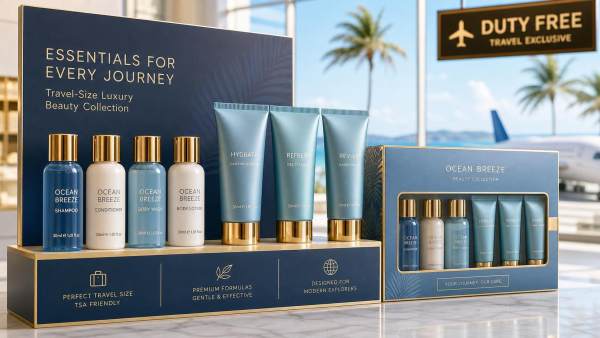
Beauty buying for travel service channels has changed quickly. Airport stores, resort boutiques, cruise retail, hotel collections, and destination gift programs now need faster product decisions.
That is where beauty OEM private label becomes relevant. It gives travel-facing businesses a way to launch exclusive SKUs without building a factory or in-house formulation team.
The real question is not whether private label is possible. The real question is whether cost, MOQ, and margin still work after freight, compliance, and seasonal demand are added.
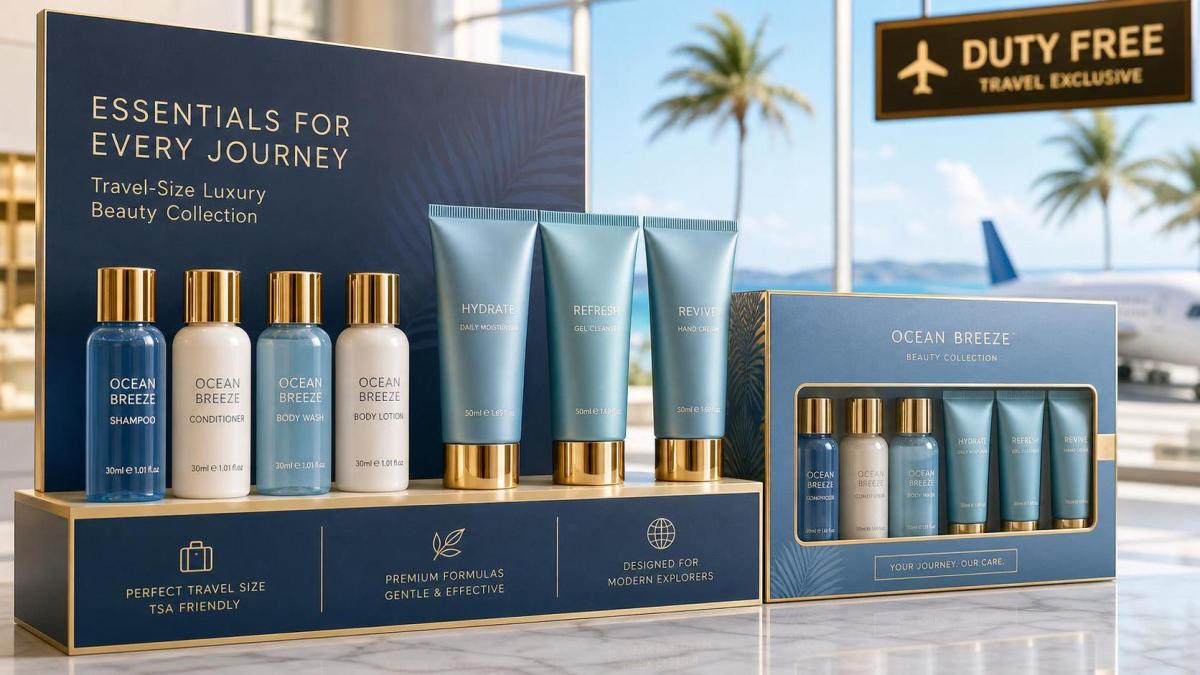
In practical sourcing work, beauty OEM private label is often used for amenity kits, spa lines, sun care, travel-size skincare, gift-with-stay programs, and destination-themed beauty sets.
Those categories look attractive because branding can lift perceived value. Even so, margin disappears quickly when minimum runs are too high or packaging choices are made too early.
Platforms such as Global Consumer Sourcing help make this comparison easier. The value is not just trend visibility. It is the ability to judge suppliers through compliance, category expertise, and supply chain logic.
What exactly is included in beauty OEM private label cost?
Many buyers begin with unit price. That is too narrow. A beauty OEM private label quote usually combines product cost, packaging cost, setup fees, testing, labeling work, and shipping assumptions.
For travel service programs, size format changes the equation. A 30ml amenity bottle, a 50ml spa retail tube, and a five-piece hotel gift set carry very different filling and packing costs.
Formula complexity also matters. Basic body lotion or shampoo is usually easier to quote. Sunscreen, active skincare, or fragrance-heavy items may need extra testing and regulatory review.
Packaging often moves the price more than the formula. Frosted bottles, custom molds, pumps, metallized caps, and multilingual cartons add cost before the first sellable unit ships.
A useful way to read a quote is to separate fixed costs from variable costs. That helps when comparing a short-run resort launch against a larger airport retail rollout.
When cost reviews stay at FOB level only, decisions look cheaper than reality. Landed cost per saleable unit is the more useful baseline for beauty OEM private label planning.
How should MOQ be judged for hotel, resort, cruise, or airport programs?
MOQ is rarely just one number. In beauty OEM private label, it may apply separately to formula, bottle, decoration, carton, and master case configuration.
That is why a supplier offering a low formula MOQ can still become expensive. Custom packaging may force a much larger commitment than the formula itself.
For travel service demand, seasonality should lead the discussion. A beach resort line may sell strongly for six months. A duty-free airport set may spike around holiday travel windows.
A practical MOQ review usually starts with three checks.
- Can the first run fit one realistic season or one contracted distribution cycle?
- Will aging risk increase because shelf life is shorter than the sales window?
- Is standard packaging available to avoid committing to custom components too early?
More common than many expect, the best first order is not the cheapest one. It is the order size that protects cash flow and still leaves room for repeat ordering.
This is where market intelligence helps. GCS-style category tracking is useful because it shows which beauty formats are scaling in retail and which ones are still testing demand.
What margin is realistic, and where does it usually get lost?
A healthy beauty OEM private label margin depends on channel, not only on product type. Hotel amenities and minibar add-ons behave differently from spa retail or airport gifting.
Amenity items may carry lower direct margin but support guest experience. Spa retail products often need stronger retail margin because staff training, testers, and slower inventory turns are involved.
Margin also depends on how many hands touch the product. Importers, regional distributors, concession operators, and on-site retail partners each compress the final result.
The usual leakage points are easy to miss:
- Overdesigned packaging that adds little booking or sell-through value
- Sampling and tester demand not included in launch calculations
- Small replenishment orders shipped by air during peak travel periods
- Claim language requiring extra testing or relabeling by destination market
- Promotional bundles that reduce average selling price more than expected
In actual buying decisions, it helps to model three margin cases. Use a base case, a slow-sell case, and a peak-season replenishment case. That reveals whether the beauty OEM private label plan is resilient.
When comparing suppliers, what signals separate a workable quote from a risky one?
A workable quote is detailed enough to challenge. A risky quote looks attractive because it hides assumptions.
In beauty OEM private label, one supplier may include artwork checks, batch coding, and compatibility testing. Another may leave them outside the quote and charge later.
Travel service channels also need extra attention to portability, leakage risk, multilingual compliance, and replenishment speed. Those issues matter more than headline pricing alone.
A quick judgment table can help during supplier shortlisting.
This is one reason authoritative sourcing platforms matter. Verified market and compliance insight reduces the chance of choosing a supplier based on price theater instead of execution strength.
Which mistakes are most common in a first beauty OEM private label launch?
One common mistake is treating all travel demand as the same. A luxury resort guest, a cruise shopper, and an airport convenience buyer do not respond to the same format or price point.
Another mistake is building a premium pack before confirming sales velocity. In many cases, standard packaging with strong branding creates better first-order economics.
Teams also underestimate timing. Beauty OEM private label projects may need artwork approval, lab sampling, stability work, and shipping lead time before the launch date is truly secure.
Then there is compliance drift. A formula acceptable in one market may need extra documentation elsewhere, especially if products move through multiple travel retail destinations.
The smarter approach is to narrow the first launch. Choose one hero format, one sales environment, and one replenishment path. Complexity can expand after sell-through data arrives.
What is the best next step before placing an order?
Start with a landed-cost worksheet linked to one real travel scenario. Use a hotel amenity rollout, a destination spa shelf, or an airport gift set program as the planning model.
Then match that scenario against MOQ, shelf life, compliance needs, and likely reorder timing. If one of those pieces is unclear, the quote is not yet decision-ready.
For beauty OEM private label, the strongest decisions usually come from comparing fewer suppliers more deeply, not collecting many shallow quotations.
It also helps to use trusted market intelligence when judging category direction. GCS is relevant here because sourcing choices improve when pricing data, safety expectations, and retail trends are read together.
In short, cost, MOQ, and margin should be tested as one system. Once those numbers hold under real travel service conditions, a private label launch becomes far easier to scale with confidence.
Related Intelligence
 Skincare OEMAug 16, 2026Amazon Enforces AI Human Metadata Rule for Beauty and Personal Care SellersAmazon now enforces AI human metadata rules for beauty sellers. Learn how to protect listings, traffic, and compliance in skincare, cosmetics, and beauty devices.
 Beauty DevicesAug 15, 2026China to Roll Out Nationwide Cross-Border Cash Pooling for MultinationalsChina to roll out nationwide cross-border cash pooling for multinationals from Sept. 14. Discover how this policy could improve treasury efficiency, liquidity management, and China-linked supply chains.
 Beauty DevicesAug 14, 2026China Imposes Temporary Export Ban on Helium, Affecting Cooling Supply ChainsChina's temporary helium export ban may disrupt cooling supply chains for beauty RF devices and laser systems. Learn what ODMs, buyers, and procurement teams should check now.
![]() Cosmetics & PkgAug 13, 2026PPWR becomes mandatory: Beauty and personal care packaging materials usher in new EPR and PFAS compliance requirementsPPWR takes effect for cosmetics packaging in the EU, bringing EPR registration and PFAS limits. Learn what brands, importers, and suppliers must do now.
Cosmetics & PkgAug 13, 2026PPWR becomes mandatory: Beauty and personal care packaging materials usher in new EPR and PFAS compliance requirementsPPWR takes effect for cosmetics packaging in the EU, bringing EPR registration and PFAS limits. Learn what brands, importers, and suppliers must do now. Cosmetics & PkgAug 12, 2026EU PPWR Now Enforced for Beauty Packaging ComplianceEU PPWR now enforced for beauty packaging compliance: learn how EPR, ERN, heavy metals and PFAS rules affect EU exports, customs clearance and platform sales.
 Cosmetics & PkgAug 11, 2026EU PPWR Rules Take Effect on Aug. 12 for Beauty PackagingEU PPWR rules for beauty packaging take effect on Aug. 12, 2026. Learn key compliance steps, EPR, labeling, PFAS limits, and how to avoid customs delays and fines.
 Smart Pet DevicesAug 10, 2026EU EPR Rules to Cover Smart Pet Devices on Aug. 15EU EPR Rules will cover smart pet devices from Aug. 15, 2026. Learn how smart collars, feeders, and monitoring devices can avoid delisting, customs delays, and compliance risks in the EU.
 Infant Feeding & CareAug 09, 2026CPSC Recalls Baby Sleep Sacks Over Undeclared TDCPPCPSC Recalls Baby Sleep Sacks Over Undeclared TDCPP: learn how this 2026 recall impacts CPC documents, third-party testing, and U.S. baby product compliance for exporters.
 Infant Feeding & CareAug 08, 2026ECHA Adds 5 SVHCs, Importer Notices Due From Oct 2026ECHA adds 5 SVHCs to the Candidate List, with importer notices due from October 2026. Learn how REACH affects exporters, supply chains, and documentation readiness.
 Baby Gear & StrollersAug 07, 2026CPSC Revises Crib Rail Standard for November 2026CPSC revises crib rail standard for November 2026, adding dynamic impact tests and mandatory third-party lab testing. Learn how the new rule affects U.S. market access, compliance, and shipments.
 Electronic & RC ToysAug 06, 2026EU to Require EN IEC 62115:2025 for Electronic ToysEU to Require EN IEC 62115:2025 for Electronic Toys from Oct 1, 2026. Learn scope, battery and AI safety updates, CE compliance risks, and how exporters can avoid customs delays.
 Baby Gear & StrollersAug 05, 2026US Stroller Stability Rule Takes Effect Aug. 15US Stroller Stability Rule Takes Effect Aug. 15: learn how new U.S. stroller compliance, ASTM F833-26a, and CPSC testing rules may affect imports, certification, and shipment readiness.
 Infant Feeding & CareAug 04, 2026ECHA Adds 5 SVHCs, Triggering Baby Care Export ReviewECHA adds 5 SVHCs, prompting an urgent baby care export review for EU-bound products. Learn the 0.1% threshold risks, compliance steps, and how to avoid customs delays and fines.












