
Holiday Custom Gifts: How to Compare MOQ, Lead Time, and Packaging

Holiday Custom Gifts: How to Compare MOQ, Lead Time, and Packaging
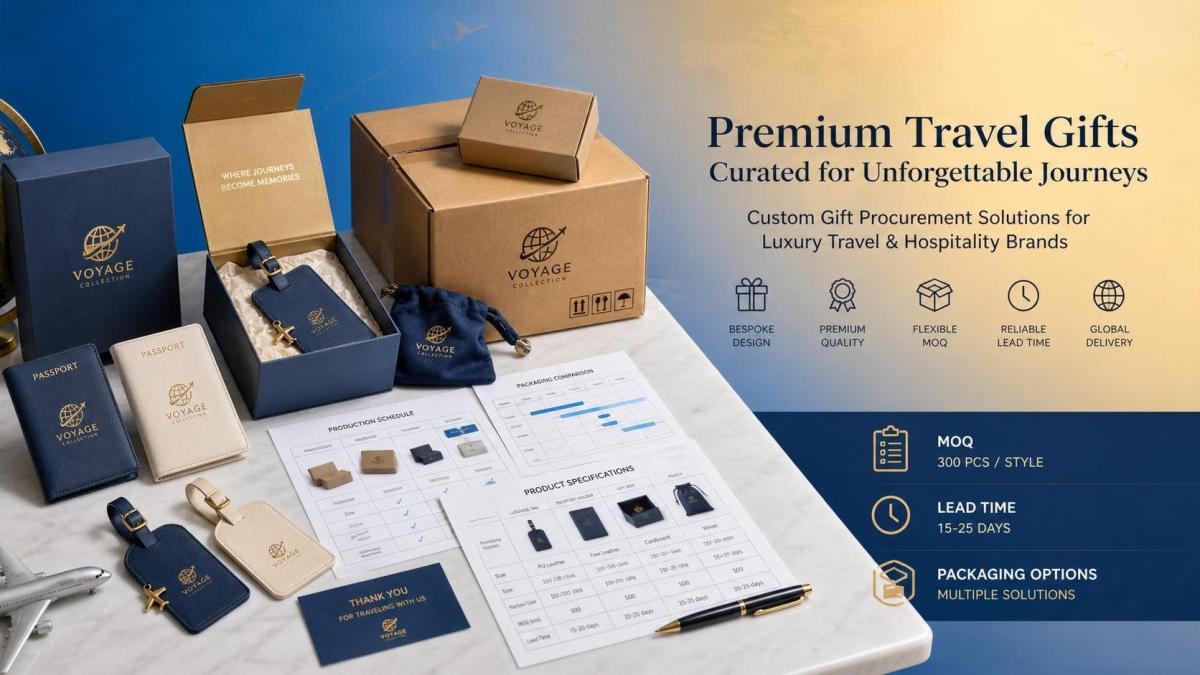
For holiday custom gifts, the hardest part is rarely the concept. It is choosing a supplier structure that protects cost, timing, and presentation at the same time.
That pressure grows fast during peak seasonal planning. A small error in MOQ, lead time, or packaging can turn a promising order into excess stock or missed delivery windows.
In travel service retail, holiday custom gifts often support hotel programs, loyalty campaigns, airport retail, tour partnerships, and destination merchandising. That makes sourcing decisions especially visible.
This guide breaks down how to compare holiday custom gifts suppliers in a practical way. The goal is to help buyers make faster, cleaner, and more defensible decisions.
Start with the Real Buying Context
Before comparing quotes, define the business use case. Holiday custom gifts for resort welcome kits need a different supplier profile than gifts for duty-free shelves or corporate travel campaigns.
That sounds obvious, but many sourcing teams compare factory offers too early. They review unit price first, then discover the supplier cannot support the required presentation or shipping rhythm.
A stronger process starts with four filters:
- Sales channel: retail, gifting, event, loyalty, or hospitality distribution
- Demand shape: one holiday drop, phased replenishment, or multi-market rollout
- Brand requirement: premium unboxing, simple utility packaging, or mixed tiers
- Delivery model: direct import, consolidation, or destination-level dispatch
Once those points are fixed, comparing holiday custom gifts becomes much easier. MOQ, lead time, and packaging start to look like connected commercial variables, not separate checklist items.
How to Judge MOQ Beyond the Headline Number
MOQ is usually the first number buyers receive. It is also one of the most misunderstood parts of holiday custom gifts sourcing.
A low MOQ looks attractive, especially for seasonal demand. But the real question is what that MOQ actually covers.
Some suppliers quote MOQ by total order volume. Others apply it by SKU, color, print method, packaging type, or destination assortment. Those differences affect real inventory exposure.
For holiday custom gifts, ask these questions early:
- Is MOQ based on product only, or product plus custom packaging?
- Can one MOQ cover mixed colors or destination-specific artwork?
- Does the supplier allow repeat orders at lower replenishment quantities?
- Are tooling, mold, or print plate costs separated from MOQ commitments?
In practice, a higher MOQ may still be better if it unlocks stronger unit economics, fewer packaging compromises, and better freight efficiency. The cheapest entry point is not always the best buying decision.
This matters even more when holiday custom gifts support premium travel brands. Overcommitting inventory for one season can create storage pressure and markdown risk long after the campaign ends.
A Practical MOQ Comparison Table
Lead Time Is More Than Production Days
Lead time is often quoted too simply. A supplier may say 30 days, but that number can exclude sampling, artwork approval, packaging confirmation, inspection booking, or export congestion.
For holiday custom gifts, the only useful lead time is end-to-end lead time. That means from approved specification to goods ready for shipment, with visible milestones in between.
A reliable supplier should break timing into stages:
- Pre-production sample development
- Artwork and packaging approval
- Material sourcing and booking
- Mass production window
- Quality inspection and rework allowance
- Pack-out and shipment release
This level of detail tells you how the supplier actually manages risk. It also shows whether the lead time for holiday custom gifts is stable or dependent on too many assumptions.
From recent sourcing shifts, the clearer signal is this: shorter quoted lead times are not automatically safer. Compressed schedules usually reduce room for packaging checks and corrective action.
Questions That Expose Lead Time Risk
- What inputs must be approved before the clock starts?
- Which components are stocked, and which are made to order?
- What happens if packaging artwork changes after sample approval?
- How many active holiday custom gifts projects run in the same period?
- Can the supplier commit to milestone dates, not just ship dates?
These questions matter because seasonal retail timing is unforgiving. Missing an airport promotion or hotel holiday activation by two weeks can erase the entire commercial value of the order.
Packaging Often Decides the Final Winner
Packaging is where many holiday custom gifts programs become expensive, slow, or inconsistent. It is also where brand perception becomes visible to the end customer.
For travel-related retail and gifting, packaging does more than look good. It affects shelf appeal, portability, damage rates, and destination-level handling.
That means packaging should be compared across three layers:
- Primary packaging: the immediate gift box, pouch, sleeve, or wrap
- Secondary packaging: assortment packs, display trays, or set assembly
- Transit packaging: cartons, dividers, labels, and pallet protection
A supplier with good product pricing can still lose when packaging is underdeveloped. Weak carton planning increases breakage, slows receiving, and creates poor first impressions at the point of sale.
This is especially true for holiday custom gifts sold in premium tourism environments. Guests often judge value in seconds, and packaging usually shapes that first judgment.
What to Compare in Packaging Reviews
- Print finish consistency across batches
- Material durability during transit and in-store display
- Size efficiency for freight and storage
- Barcode, labeling, and destination mark accuracy
- Sustainability claims and supporting documentation
- Ability to support gift sets or multilingual market packs
In many cases, the winning holiday custom gifts supplier is not the one with the lowest ex-factory price. It is the one whose packaging system reduces friction across the whole supply chain.
Compare Suppliers Using a Weighted Scorecard
When multiple offers look similar, a weighted scorecard brings discipline to the decision. It also helps internal teams align faster around the trade-offs.
For holiday custom gifts, a simple scorecard can include:
This method works well because holiday custom gifts decisions are rarely about one metric. A scorecard keeps the team focused on total outcome instead of headline price.
Common Buying Mistakes to Avoid
Several sourcing mistakes appear again and again in holiday custom gifts programs. Most are avoidable with better early comparison.
- Accepting low MOQ without checking packaging minimums
- Comparing lead times without including approval cycles
- Reviewing product samples but skipping full packaged drop tests
- Ignoring replenishment terms after the first seasonal order
- Assuming premium packaging always improves sell-through
In real buying situations, the best holiday custom gifts program is often the one with fewer surprises. Predictability creates margin just as surely as price negotiation does.
A Smarter Way to Make the Final Decision
When choosing among holiday custom gifts suppliers, bring MOQ, lead time, and packaging into one conversation. Treat them as one commercial system rather than three independent checkpoints.
A supplier with moderate MOQ, transparent lead time, and dependable packaging can outperform a cheaper option that creates delays or presentation issues. That difference becomes obvious during holiday execution.
For teams sourcing holiday custom gifts in travel service channels, the strongest decisions usually come from disciplined comparison, early packaging validation, and realistic schedule planning.
Use that framework early, and each supplier discussion becomes more strategic. The result is a cleaner shortlist, better seasonal readiness, and stronger retail performance when demand actually arrives.
Related Intelligence
 Skincare OEMAug 16, 2026Amazon Enforces AI Human Metadata Rule for Beauty and Personal Care SellersAmazon now enforces AI human metadata rules for beauty sellers. Learn how to protect listings, traffic, and compliance in skincare, cosmetics, and beauty devices.
 Beauty DevicesAug 15, 2026China to Roll Out Nationwide Cross-Border Cash Pooling for MultinationalsChina to roll out nationwide cross-border cash pooling for multinationals from Sept. 14. Discover how this policy could improve treasury efficiency, liquidity management, and China-linked supply chains.
 Beauty DevicesAug 14, 2026China Imposes Temporary Export Ban on Helium, Affecting Cooling Supply ChainsChina's temporary helium export ban may disrupt cooling supply chains for beauty RF devices and laser systems. Learn what ODMs, buyers, and procurement teams should check now.
![]() Cosmetics & PkgAug 13, 2026PPWR becomes mandatory: Beauty and personal care packaging materials usher in new EPR and PFAS compliance requirementsPPWR takes effect for cosmetics packaging in the EU, bringing EPR registration and PFAS limits. Learn what brands, importers, and suppliers must do now.
Cosmetics & PkgAug 13, 2026PPWR becomes mandatory: Beauty and personal care packaging materials usher in new EPR and PFAS compliance requirementsPPWR takes effect for cosmetics packaging in the EU, bringing EPR registration and PFAS limits. Learn what brands, importers, and suppliers must do now. Cosmetics & PkgAug 12, 2026EU PPWR Now Enforced for Beauty Packaging ComplianceEU PPWR now enforced for beauty packaging compliance: learn how EPR, ERN, heavy metals and PFAS rules affect EU exports, customs clearance and platform sales.
 Cosmetics & PkgAug 11, 2026EU PPWR Rules Take Effect on Aug. 12 for Beauty PackagingEU PPWR rules for beauty packaging take effect on Aug. 12, 2026. Learn key compliance steps, EPR, labeling, PFAS limits, and how to avoid customs delays and fines.
 Smart Pet DevicesAug 10, 2026EU EPR Rules to Cover Smart Pet Devices on Aug. 15EU EPR Rules will cover smart pet devices from Aug. 15, 2026. Learn how smart collars, feeders, and monitoring devices can avoid delisting, customs delays, and compliance risks in the EU.
 Infant Feeding & CareAug 09, 2026CPSC Recalls Baby Sleep Sacks Over Undeclared TDCPPCPSC Recalls Baby Sleep Sacks Over Undeclared TDCPP: learn how this 2026 recall impacts CPC documents, third-party testing, and U.S. baby product compliance for exporters.
 Infant Feeding & CareAug 08, 2026ECHA Adds 5 SVHCs, Importer Notices Due From Oct 2026ECHA adds 5 SVHCs to the Candidate List, with importer notices due from October 2026. Learn how REACH affects exporters, supply chains, and documentation readiness.
 Baby Gear & StrollersAug 07, 2026CPSC Revises Crib Rail Standard for November 2026CPSC revises crib rail standard for November 2026, adding dynamic impact tests and mandatory third-party lab testing. Learn how the new rule affects U.S. market access, compliance, and shipments.
 Electronic & RC ToysAug 06, 2026EU to Require EN IEC 62115:2025 for Electronic ToysEU to Require EN IEC 62115:2025 for Electronic Toys from Oct 1, 2026. Learn scope, battery and AI safety updates, CE compliance risks, and how exporters can avoid customs delays.
 Baby Gear & StrollersAug 05, 2026US Stroller Stability Rule Takes Effect Aug. 15US Stroller Stability Rule Takes Effect Aug. 15: learn how new U.S. stroller compliance, ASTM F833-26a, and CPSC testing rules may affect imports, certification, and shipment readiness.
 Infant Feeding & CareAug 04, 2026ECHA Adds 5 SVHCs, Triggering Baby Care Export ReviewECHA adds 5 SVHCs, prompting an urgent baby care export review for EU-bound products. Learn the 0.1% threshold risks, compliance steps, and how to avoid customs delays and fines.












