
How to Choose Promotional Gifts That Deliver Brand Value
Why do promotional gifts matter more in travel services than they used to?
In travel services, a promotional gift is rarely just a giveaway.
It often becomes part of the journey experience, the booking memory, or the post-trip impression.
That is why choosing promotional gifts now affects brand value, not only short-term visibility.
Useful items can reinforce trust, service quality, and operational care.
Poorly chosen items do the opposite.
They may feel generic, break quickly, or create waste that weakens brand perception.
For travel-related brands, the better question is not, “What is cheapest?”
A stronger question is, “Which promotional gifts support the customer journey and still justify procurement cost?”
This is also where market intelligence matters.
Platforms such as Global Consumer Sourcing track sourcing trends, compliance demands, and supplier readiness across fast-moving consumer categories.
That perspective is useful when gift decisions involve safety, packaging, sustainability, and private-label consistency.
What makes promotional gifts actually deliver brand value?
Brand value comes from fit, not from volume alone.
In practical terms, promotional gifts work best when they match one or more travel moments.
That may include pre-departure planning, airport transit, hotel stay, guided tours, or return-home recall.
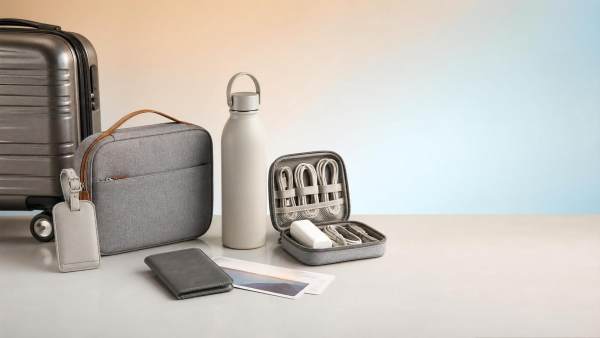
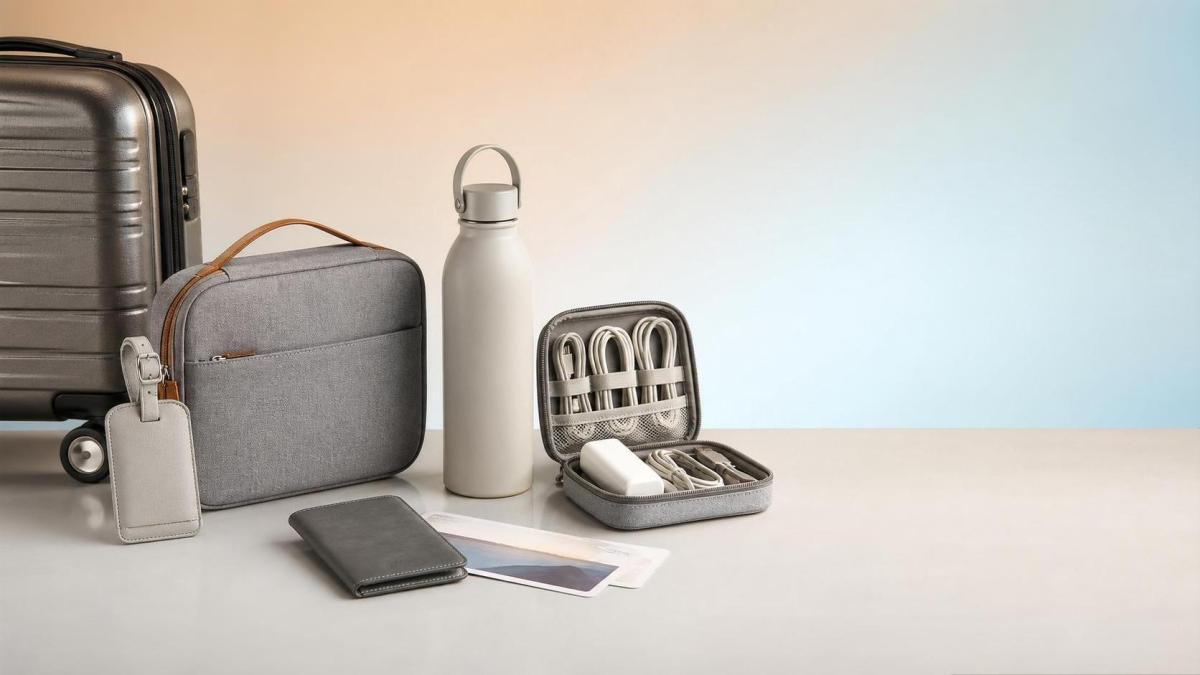
A luggage tag, compact toiletry pouch, travel adapter case, or reusable bottle can all make sense.
Yet the right choice depends on audience behavior, route type, and usage frequency.
A good rule is to score promotional gifts against four filters.
- Relevance: Does the item solve a small but real travel need?
- Durability: Will it still look acceptable after repeated handling?
- Visibility: Can the brand remain noticeable without feeling intrusive?
- Compliance: Does the material or function create avoidable risk?
When one item performs well across all four, it usually delivers stronger recall than a larger batch of low-value gifts.
That is especially true in travel services, where customers notice details tied to convenience and comfort.
A quick decision table can help narrow options
Before comparing suppliers, it helps to sort promotional gifts by travel use case and operational burden.
This kind of table prevents procurement decisions from being driven by unit price alone.
How should you compare low-cost and premium promotional gifts?
The comparison is not really about cheap versus expensive.
It is about total value across usage, shelf life, logistics, and impression.
Low-cost promotional gifts can work for large trade events, seasonal tourism campaigns, or short booking windows.
They are useful when reach matters more than retention.
Premium items make more sense when the travel service itself is positioned around comfort, exclusivity, or loyalty.
In those cases, a low-grade item can quietly damage the experience.
A helpful way to compare options is to ask three operational questions.
- Will the gift be handed out once, or used over several trips?
- Does the item support a premium service promise or a mass campaign?
- Can the packaging, branding, and storage stay efficient at scale?
In actual sourcing, the best promotional gifts often sit in the middle.
They are not the cheapest line item, but they avoid the replacement rate and negative perception of poor-quality alternatives.
This is where data-backed supplier review becomes useful.
GCS-style sourcing intelligence is valuable because it highlights not only products, but also manufacturing stability, certification readiness, and category trends.
Which sourcing risks are easy to overlook when choosing promotional gifts?
The most common mistake is focusing on design before confirming production reality.
A mockup may look strong, while the delivered item feels flimsy or inconsistent.
Another risk is ignoring compliance.
Travel-friendly products can involve coatings, plastics, metal parts, liquid contact, or child-adjacent use.
That may trigger testing or certification concerns depending on destination markets.
Needless complexity also adds cost.
Custom inserts, oversized packaging, and too many decoration methods can slow lead times.
More often than not, simple, durable promotional gifts outperform highly customized items that are harder to replenish.
Watch for these warning signs during supplier evaluation.
- Samples differ noticeably from production specifications.
- Material claims are broad, but test documentation is unclear.
- Lead times look attractive, but refill capacity is not explained.
- Sustainability claims rely on marketing language only.
- Brand printing quality is inconsistent across color batches.
In travel services, these details matter because distribution often happens across multiple touchpoints and regions.
A sourcing mistake can scale quickly.
How do cost, lead time, and sustainability affect the final decision?
Cost should be measured beyond the quoted unit price.
For promotional gifts, landed cost may include sampling, printing plates, packaging, quality checks, and warehousing.
Lead time matters just as much.
Travel campaigns are often tied to seasons, route launches, trade events, or loyalty milestones.
A strong item delivered late can still fail commercially.
Sustainability deserves a realistic review, not a symbolic one.
Reusable promotional gifts can strengthen brand credibility only if they are durable enough to stay in use.
Otherwise, the sustainability message becomes weak.
A practical decision framework usually includes:
- Target cost per distributed item, not only per ordered item.
- Expected usage duration after receipt.
- Reorder flexibility for peak travel periods.
- Evidence of material traceability or certification.
- Packaging efficiency for storage and transport.
This is one reason sourcing platforms with editorial discipline stand out.
When market insights are reviewed by compliance and supply chain specialists, gift selection becomes more defensible and less reactive.
So what is the smartest next step before placing an order?
Start by mapping the gift to a precise travel scenario.
That single step removes many weak options.
Then compare promotional gifts against a short evaluation sheet covering utility, durability, compliance, lead time, and total landed cost.
If two items look similar, choose the one that is easier to replenish and more likely to stay in daily use.
In travel services, memorable brands are often built through useful details.
The right promotional gifts support that goal because they connect service promise with real-world experience.
It also helps to monitor broader retail sourcing signals.
Insights from Global Consumer Sourcing can inform which categories are improving in quality, compliance, and sustainable manufacturing readiness.
That kind of evidence leads to better decisions than trend chasing or price-led buying.
If the goal is real brand value, choose fewer promotional gifts, choose them more carefully, and make every item earn its place in the customer journey.
Related Intelligence
 Skincare OEMAug 16, 2026Amazon Enforces AI Human Metadata Rule for Beauty and Personal Care SellersAmazon now enforces AI human metadata rules for beauty sellers. Learn how to protect listings, traffic, and compliance in skincare, cosmetics, and beauty devices.
 Beauty DevicesAug 15, 2026China to Roll Out Nationwide Cross-Border Cash Pooling for MultinationalsChina to roll out nationwide cross-border cash pooling for multinationals from Sept. 14. Discover how this policy could improve treasury efficiency, liquidity management, and China-linked supply chains.
 Beauty DevicesAug 14, 2026China Imposes Temporary Export Ban on Helium, Affecting Cooling Supply ChainsChina's temporary helium export ban may disrupt cooling supply chains for beauty RF devices and laser systems. Learn what ODMs, buyers, and procurement teams should check now.
![]() Cosmetics & PkgAug 13, 2026PPWR becomes mandatory: Beauty and personal care packaging materials usher in new EPR and PFAS compliance requirementsPPWR takes effect for cosmetics packaging in the EU, bringing EPR registration and PFAS limits. Learn what brands, importers, and suppliers must do now.
Cosmetics & PkgAug 13, 2026PPWR becomes mandatory: Beauty and personal care packaging materials usher in new EPR and PFAS compliance requirementsPPWR takes effect for cosmetics packaging in the EU, bringing EPR registration and PFAS limits. Learn what brands, importers, and suppliers must do now. Cosmetics & PkgAug 12, 2026EU PPWR Now Enforced for Beauty Packaging ComplianceEU PPWR now enforced for beauty packaging compliance: learn how EPR, ERN, heavy metals and PFAS rules affect EU exports, customs clearance and platform sales.
 Cosmetics & PkgAug 11, 2026EU PPWR Rules Take Effect on Aug. 12 for Beauty PackagingEU PPWR rules for beauty packaging take effect on Aug. 12, 2026. Learn key compliance steps, EPR, labeling, PFAS limits, and how to avoid customs delays and fines.
 Smart Pet DevicesAug 10, 2026EU EPR Rules to Cover Smart Pet Devices on Aug. 15EU EPR Rules will cover smart pet devices from Aug. 15, 2026. Learn how smart collars, feeders, and monitoring devices can avoid delisting, customs delays, and compliance risks in the EU.
 Infant Feeding & CareAug 09, 2026CPSC Recalls Baby Sleep Sacks Over Undeclared TDCPPCPSC Recalls Baby Sleep Sacks Over Undeclared TDCPP: learn how this 2026 recall impacts CPC documents, third-party testing, and U.S. baby product compliance for exporters.
 Infant Feeding & CareAug 08, 2026ECHA Adds 5 SVHCs, Importer Notices Due From Oct 2026ECHA adds 5 SVHCs to the Candidate List, with importer notices due from October 2026. Learn how REACH affects exporters, supply chains, and documentation readiness.
 Baby Gear & StrollersAug 07, 2026CPSC Revises Crib Rail Standard for November 2026CPSC revises crib rail standard for November 2026, adding dynamic impact tests and mandatory third-party lab testing. Learn how the new rule affects U.S. market access, compliance, and shipments.
 Electronic & RC ToysAug 06, 2026EU to Require EN IEC 62115:2025 for Electronic ToysEU to Require EN IEC 62115:2025 for Electronic Toys from Oct 1, 2026. Learn scope, battery and AI safety updates, CE compliance risks, and how exporters can avoid customs delays.
 Baby Gear & StrollersAug 05, 2026US Stroller Stability Rule Takes Effect Aug. 15US Stroller Stability Rule Takes Effect Aug. 15: learn how new U.S. stroller compliance, ASTM F833-26a, and CPSC testing rules may affect imports, certification, and shipment readiness.
 Infant Feeding & CareAug 04, 2026ECHA Adds 5 SVHCs, Triggering Baby Care Export ReviewECHA adds 5 SVHCs, prompting an urgent baby care export review for EU-bound products. Learn the 0.1% threshold risks, compliance steps, and how to avoid customs delays and fines.












