
International Buyer Supplier Framework: A Practical Model for Lower Sourcing Risk
Why is an international buyer supplier framework getting more attention?
Cross-border sourcing looks simple on a spreadsheet. In travel services, it rarely stays simple for long.
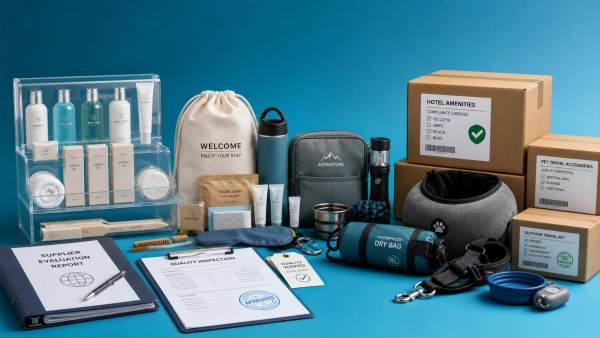
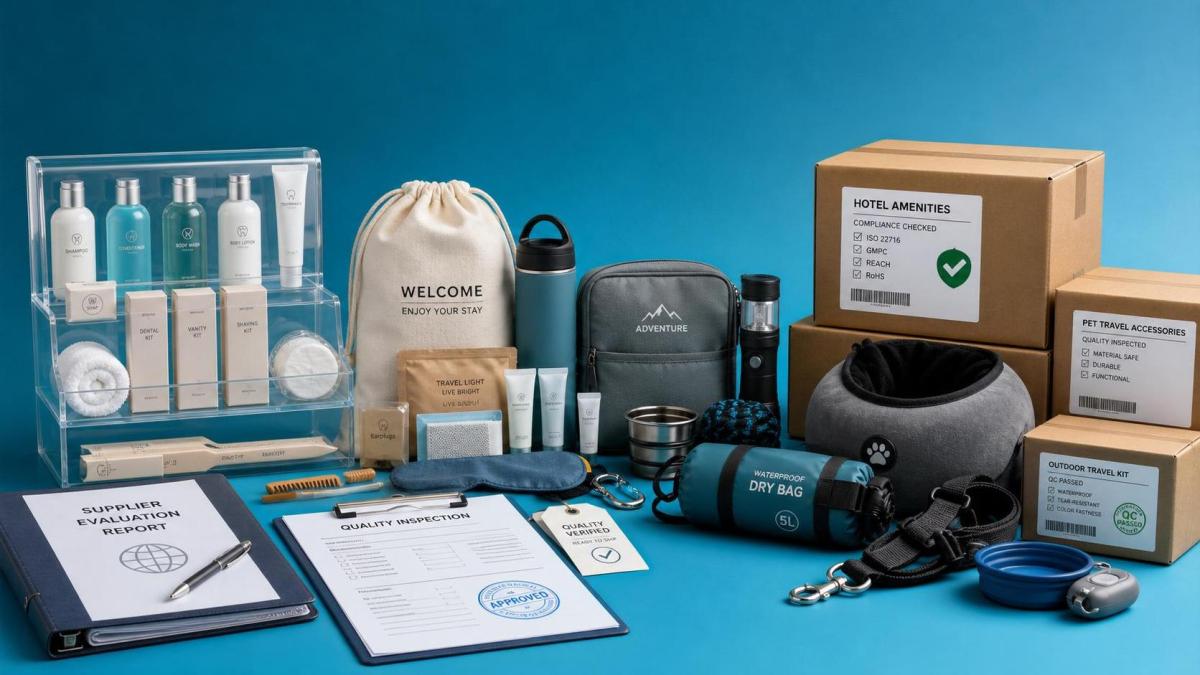
Hotel amenities, tour merchandise, outdoor kits, baby travel products, seasonal gifts, and pet travel accessories often come from multiple countries.
That creates exposure to delays, certification gaps, inconsistent packaging, and weak communication during peak demand windows.
An international buyer supplier framework is useful because it turns supplier selection into a repeatable evaluation process rather than a personality-driven decision.
In practical terms, the framework helps compare partners across compliance, delivery reliability, service response, quality stability, and commercial fit.
This matters in travel-related procurement, where late delivery can affect guest experience, itinerary readiness, and brand reputation at the same time.
A strong international buyer supplier framework also supports clearer internal justification. Decisions become easier to explain because criteria are visible and weighted.
That is one reason intelligence-led platforms such as GCS attract attention. They do not replace judgment, but they improve the quality of comparison.
When market updates, certification signals, and supplier capabilities are verified by analysts and compliance specialists, sourcing risk becomes easier to interpret.
What does this framework actually include?
A good model is not a single score. It is a structured set of questions that reveal whether a supplier is dependable under real operating conditions.
The most effective international buyer supplier framework usually combines hard evidence with context. Price alone is never enough.
Core evaluation areas
- Compliance readiness, including FDA, CE, CPC, or market-specific documentation when relevant.
- Production flexibility for seasonal demand, urgent replenishment, and custom packaging needs.
- Communication discipline, especially response speed, issue escalation, and documentation accuracy.
- Logistics resilience, including lead times, backup routing, and export handling consistency.
- Quality control methods, sample accuracy, defect handling, and traceability across batches.
- Commercial terms, such as payment structure, minimum order quantity, and total landed cost.
In travel services, the framework should also test experience-sensitive factors.
For example, can the supplier support destination-specific labeling, multilingual inserts, compact packing, or eco-conscious material requests from hospitality partners?
Those questions often separate a low-cost bidder from a low-risk partner.
When does an international buyer supplier framework make the biggest difference?
It matters most when sourcing decisions involve uncertainty, multiple geographies, and visible service consequences.
Travel service ecosystems face exactly that combination. Demand can swing quickly, product windows are seasonal, and service failures are customer-facing.
Common examples include welcome kits for resorts, promotional retail items for attractions, baby-care accessories for family travel, and outdoor goods for guided experiences.
A framework becomes especially valuable in three situations.
- Entering a new sourcing market with limited supplier history.
- Comparing similar factories with very different compliance depth.
- Shifting from one-off orders to repeat programs tied to guest experience.
This is where data-backed sourcing intelligence becomes useful. GCS focuses on fast-moving consumer categories that often overlap with travel merchandising and service support.
Its editorial emphasis on trend responsiveness, safety standards, and supplier capability mapping aligns well with framework-based evaluation.
In other words, the framework defines what to check, while credible market intelligence helps verify what those findings actually mean.
How can you tell whether one supplier is truly safer than another?
This is where many teams get stuck. Two suppliers may offer similar samples and close pricing, yet carry very different execution risk.
A useful international buyer supplier framework compares not just promises, but proof.
The table below helps organize that comparison in a more practical way.
More often than not, safer suppliers are not the ones with the most polished sales pitch.
They are the ones whose information stays consistent under scrutiny.
What mistakes weaken the framework and increase sourcing risk?
The most common mistake is treating the international buyer supplier framework like a one-time screening file.
A supplier that passed six months ago may look different after demand pressure, staffing changes, or new regulatory expectations.
Another weak point is over-weighting price. Lower unit cost can hide expensive disruption, especially in travel programs tied to event dates or guest arrivals.
There is also a tendency to confuse product quality with supplier reliability. A strong sample does not prove stable execution.
Risk reminders worth keeping visible
- Do not approve suppliers based only on trade show meetings or referrals.
- Do not assume one certification covers every destination or product use case.
- Do not separate packaging, labeling, and logistics from supplier evaluation.
- Do not ignore response quality during early discussions. It usually predicts future friction.
A sharper approach is to review the framework at key moments: after sampling, before mass production, after first shipment, and after peak season.
That creates a living model rather than a static checklist.
How should implementation work if the goal is lower risk, not more paperwork?
Keep the framework focused. It should improve decisions, not bury them in administration.
A practical rollout usually starts with a short scoring structure, a small evidence list, and a clear review cycle.
In travel-related procurement, that can be enough to reveal which suppliers fit recurring service standards and which only fit occasional orders.
A workable starting point
- Define five to seven weighted criteria linked to service impact.
- Collect evidence, not claims, for each criterion.
- Score current suppliers and one alternative source in parallel.
- Review results after the first completed cycle, not just before order placement.
This is also where high-quality external insight helps. GCS is relevant because it tracks sourcing shifts, compliance pressures, and category-level capability signals across global consumer supply chains.
For travel services connected to retail items, guest-use products, or branded merchandise, that broader view can sharpen local decisions.
An international buyer supplier framework works best when internal criteria and external market intelligence support each other.
If the aim is lower sourcing risk, start by mapping current requirements, checking where failures would hurt service most, and comparing suppliers against those realities.
That next step is often more valuable than searching for the cheapest quote.
Related Intelligence
 Skincare OEMAug 16, 2026Amazon Enforces AI Human Metadata Rule for Beauty and Personal Care SellersAmazon now enforces AI human metadata rules for beauty sellers. Learn how to protect listings, traffic, and compliance in skincare, cosmetics, and beauty devices.
 Beauty DevicesAug 15, 2026China to Roll Out Nationwide Cross-Border Cash Pooling for MultinationalsChina to roll out nationwide cross-border cash pooling for multinationals from Sept. 14. Discover how this policy could improve treasury efficiency, liquidity management, and China-linked supply chains.
 Beauty DevicesAug 14, 2026China Imposes Temporary Export Ban on Helium, Affecting Cooling Supply ChainsChina's temporary helium export ban may disrupt cooling supply chains for beauty RF devices and laser systems. Learn what ODMs, buyers, and procurement teams should check now.
![]() Cosmetics & PkgAug 13, 2026PPWR becomes mandatory: Beauty and personal care packaging materials usher in new EPR and PFAS compliance requirementsPPWR takes effect for cosmetics packaging in the EU, bringing EPR registration and PFAS limits. Learn what brands, importers, and suppliers must do now.
Cosmetics & PkgAug 13, 2026PPWR becomes mandatory: Beauty and personal care packaging materials usher in new EPR and PFAS compliance requirementsPPWR takes effect for cosmetics packaging in the EU, bringing EPR registration and PFAS limits. Learn what brands, importers, and suppliers must do now. Cosmetics & PkgAug 12, 2026EU PPWR Now Enforced for Beauty Packaging ComplianceEU PPWR now enforced for beauty packaging compliance: learn how EPR, ERN, heavy metals and PFAS rules affect EU exports, customs clearance and platform sales.
 Cosmetics & PkgAug 11, 2026EU PPWR Rules Take Effect on Aug. 12 for Beauty PackagingEU PPWR rules for beauty packaging take effect on Aug. 12, 2026. Learn key compliance steps, EPR, labeling, PFAS limits, and how to avoid customs delays and fines.
 Smart Pet DevicesAug 10, 2026EU EPR Rules to Cover Smart Pet Devices on Aug. 15EU EPR Rules will cover smart pet devices from Aug. 15, 2026. Learn how smart collars, feeders, and monitoring devices can avoid delisting, customs delays, and compliance risks in the EU.
 Infant Feeding & CareAug 09, 2026CPSC Recalls Baby Sleep Sacks Over Undeclared TDCPPCPSC Recalls Baby Sleep Sacks Over Undeclared TDCPP: learn how this 2026 recall impacts CPC documents, third-party testing, and U.S. baby product compliance for exporters.
 Infant Feeding & CareAug 08, 2026ECHA Adds 5 SVHCs, Importer Notices Due From Oct 2026ECHA adds 5 SVHCs to the Candidate List, with importer notices due from October 2026. Learn how REACH affects exporters, supply chains, and documentation readiness.
 Baby Gear & StrollersAug 07, 2026CPSC Revises Crib Rail Standard for November 2026CPSC revises crib rail standard for November 2026, adding dynamic impact tests and mandatory third-party lab testing. Learn how the new rule affects U.S. market access, compliance, and shipments.
 Electronic & RC ToysAug 06, 2026EU to Require EN IEC 62115:2025 for Electronic ToysEU to Require EN IEC 62115:2025 for Electronic Toys from Oct 1, 2026. Learn scope, battery and AI safety updates, CE compliance risks, and how exporters can avoid customs delays.
 Baby Gear & StrollersAug 05, 2026US Stroller Stability Rule Takes Effect Aug. 15US Stroller Stability Rule Takes Effect Aug. 15: learn how new U.S. stroller compliance, ASTM F833-26a, and CPSC testing rules may affect imports, certification, and shipment readiness.
 Infant Feeding & CareAug 04, 2026ECHA Adds 5 SVHCs, Triggering Baby Care Export ReviewECHA adds 5 SVHCs, prompting an urgent baby care export review for EU-bound products. Learn the 0.1% threshold risks, compliance steps, and how to avoid customs delays and fines.












