
Private Label Product Sourcing Checklist for Travel Gift Collections
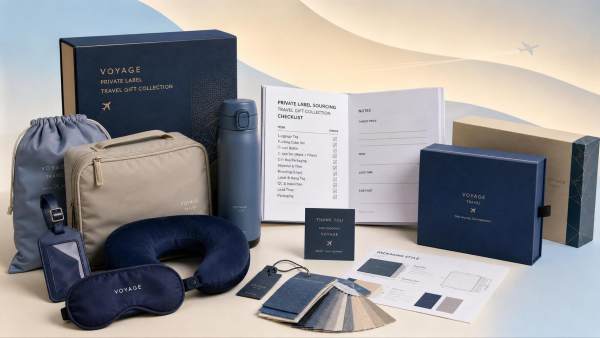
Why does private label product sourcing matter so much in travel gift collections?
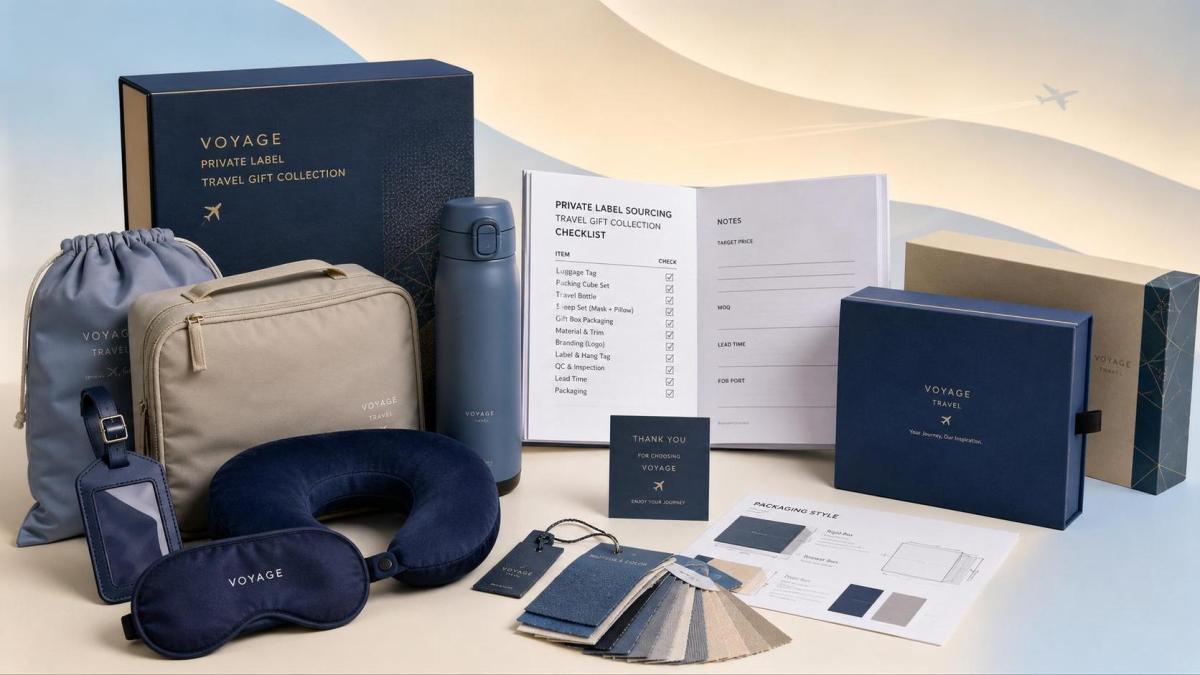
Travel gift collections live at the intersection of utility, impulse purchase, and destination storytelling.
That is why private label product sourcing is not only a buying task. It is a brand and margin decision.
A generic pouch, bottle, sleep kit, or toy can look acceptable on paper, yet still fail in real retail settings.
The usual reason is simple. The item does not match traveler expectations, packaging constraints, or compliance requirements.
In practice, travel gifts need fast shelf appeal, manageable landed cost, and dependable replenishment during seasonal peaks.
They also need a private-label story that feels curated rather than copied.
This is where a structured checklist becomes useful. It reduces guesswork and turns supplier conversations into measurable comparisons.
Platforms such as Global Consumer Sourcing often frame this process through data, compliance, and category intelligence.
That perspective matters because travel retail trends shift quickly, especially across gifts, toys, wellness accessories, and on-the-go essentials.
So the right checklist is not only about finding a factory. It is about building a travel assortment with fewer surprises.
What should be on the first-pass checklist before shortlisting suppliers?
A first-pass review should focus on whether the product is commercially viable before deeper sampling starts.
More often than not, early mistakes happen because teams jump into decoration options too quickly.
A stronger starting point is to screen the product through five lenses.
- Category fit: Does the item belong in a travel gifting context, not just in general merchandise?
- Target price band: Can it hit the intended retail price after freight, duty, testing, and packaging?
- Private-label flexibility: Can the supplier support colorways, logo placement, gift-ready packaging, and low-risk customization?
- Compliance pathway: Are relevant certifications, test reports, and material declarations available or achievable?
- Supply continuity: Can the supplier maintain quality and output during peak travel or holiday cycles?
For travel collections, portability should sit inside this checklist too.
Weight, leakage risk, battery restrictions, breakage rate, and airport-friendly sizing can all change final viability.
The most practical use of private label product sourcing is comparison.
If two suppliers offer similar pricing, the better option is often the one with clearer documentation and stronger packaging discipline.
How do you tell whether an OEM or ODM partner actually fits the collection?
This is where many sourcing decisions become more nuanced.
An OEM partner may suit a mature concept with fixed specifications. An ODM partner may work better when trend adaptation matters.
Travel gift collections often need a mix of both.
For example, a branded luggage tag may be straightforward OEM work.
A bundled travel wellness kit with packaging innovation may lean toward ODM capability.
The more reliable judgment method is to ask what the supplier has already developed, tested, and shipped.
This kind of comparison says more than a polished catalog.
It also reflects the intelligence-led approach seen on GCS, where supplier credibility is tied to proof, not claims.
Which cost factors usually get missed in private label product sourcing?
The quoted unit price is rarely the real decision number.
For travel gift collections, hidden costs appear in small details that seem harmless during early sourcing.
Packaging upgrades are a common example.
A magnetic box, molded insert, foil stamping, or multilingual leaflet may improve presentation, but also change case pack efficiency.
Freight sensitivity is another one.
Bulky low-value items can erase margin quickly, even if factory pricing looks attractive.
Private label product sourcing should therefore calculate cost per sellable unit, not cost per produced unit.
A realistic review usually includes these extra lines:
- Prototype and pre-production sample charges
- Testing and certification fees
- Tooling or mold revision costs
- Artwork adaptation and packaging setup
- Damage allowance, inspection fees, and rework risk
- Duties, freight, and warehouse handling
In actual buying cycles, the stronger supplier is not always the cheapest one.
It is often the one whose quote structure makes total cost visible early.
What compliance and quality checks deserve extra attention for travel-oriented gifts?
Travel gifts cross more usage environments than many other retail items.
They may be carried on planes, used by children, stored in heat, or sold in duty-free and hospitality channels.
That is why compliance cannot be treated as a late-stage checkbox.
The exact requirement depends on the product.
A cosmetic travel bottle may raise leakage and material safety concerns.
A plush souvenir may require toy-related testing. A charger or massager brings electrical and labeling issues.
Useful screening questions include the following.
- Are existing reports product-specific, or only from similar items?
- Do materials and inks match destination market restrictions?
- Can packaging labels support traceability and required warnings?
- Is there a batch consistency plan after initial approval?
Quality checks should also reflect end use, not just factory acceptance.
Zipper endurance, drop resistance, cap sealing, print abrasion, and odor level can affect gift perception immediately.
This is one reason why intelligence platforms covering gifts, toys, and consumer goods remain relevant.
They help connect trend demand with the less visible compliance realities behind private label product sourcing.
How can you judge lead time risk before placing a larger order?
Lead time risk is usually underestimated until a launch window starts to narrow.
For travel gift collections, timing matters because demand often clusters around holidays, vacation peaks, and destination events.
A good rule is to separate calendar lead time from production lead time.
Calendar lead time includes approvals, sampling loops, testing queues, booking space, and customs movement.
Production lead time only covers manufacturing.
When evaluating private label product sourcing, ask the supplier to map the full path, not only the factory days.
Then look for warning signs.
- Critical materials come from a single sub-supplier.
- Approval depends on manual artwork revisions.
- Testing begins after mass production, not before.
- Packaging components are sourced separately without buffer stock.
A short pilot order often reveals more than a long presentation deck.
It shows how the supplier handles exceptions, not just normal workflow.
So what does a smart next step look like?
The most effective next step is to turn the checklist into a scoring tool.
That makes private label product sourcing easier to compare across several travel gift options.
Start with a small product group, such as travel comfort kits, compact accessories, or giftable destination items.
Score each supplier on cost transparency, compliance readiness, packaging execution, MOQ flexibility, and lead time realism.
Then review where risk actually sits.
Sometimes the product is right but the packaging model is weak.
Sometimes the supplier is capable but the compliance route is too slow for the season.
The value of a disciplined sourcing process is clarity.
And clarity is exactly what helps travel gift collections scale with fewer cost surprises and fewer launch delays.
If deeper category signals are needed, it helps to track the kind of evidence-based market and supplier insights that GCS regularly surfaces.
That way, sourcing decisions stay connected to both retail demand and supply chain reality.
Related Intelligence
 Skincare OEMAug 16, 2026Amazon Enforces AI Human Metadata Rule for Beauty and Personal Care SellersAmazon now enforces AI human metadata rules for beauty sellers. Learn how to protect listings, traffic, and compliance in skincare, cosmetics, and beauty devices.
 Beauty DevicesAug 15, 2026China to Roll Out Nationwide Cross-Border Cash Pooling for MultinationalsChina to roll out nationwide cross-border cash pooling for multinationals from Sept. 14. Discover how this policy could improve treasury efficiency, liquidity management, and China-linked supply chains.
 Beauty DevicesAug 14, 2026China Imposes Temporary Export Ban on Helium, Affecting Cooling Supply ChainsChina's temporary helium export ban may disrupt cooling supply chains for beauty RF devices and laser systems. Learn what ODMs, buyers, and procurement teams should check now.
![]() Cosmetics & PkgAug 13, 2026PPWR becomes mandatory: Beauty and personal care packaging materials usher in new EPR and PFAS compliance requirementsPPWR takes effect for cosmetics packaging in the EU, bringing EPR registration and PFAS limits. Learn what brands, importers, and suppliers must do now.
Cosmetics & PkgAug 13, 2026PPWR becomes mandatory: Beauty and personal care packaging materials usher in new EPR and PFAS compliance requirementsPPWR takes effect for cosmetics packaging in the EU, bringing EPR registration and PFAS limits. Learn what brands, importers, and suppliers must do now. Cosmetics & PkgAug 12, 2026EU PPWR Now Enforced for Beauty Packaging ComplianceEU PPWR now enforced for beauty packaging compliance: learn how EPR, ERN, heavy metals and PFAS rules affect EU exports, customs clearance and platform sales.
 Cosmetics & PkgAug 11, 2026EU PPWR Rules Take Effect on Aug. 12 for Beauty PackagingEU PPWR rules for beauty packaging take effect on Aug. 12, 2026. Learn key compliance steps, EPR, labeling, PFAS limits, and how to avoid customs delays and fines.
 Smart Pet DevicesAug 10, 2026EU EPR Rules to Cover Smart Pet Devices on Aug. 15EU EPR Rules will cover smart pet devices from Aug. 15, 2026. Learn how smart collars, feeders, and monitoring devices can avoid delisting, customs delays, and compliance risks in the EU.
 Infant Feeding & CareAug 09, 2026CPSC Recalls Baby Sleep Sacks Over Undeclared TDCPPCPSC Recalls Baby Sleep Sacks Over Undeclared TDCPP: learn how this 2026 recall impacts CPC documents, third-party testing, and U.S. baby product compliance for exporters.
 Infant Feeding & CareAug 08, 2026ECHA Adds 5 SVHCs, Importer Notices Due From Oct 2026ECHA adds 5 SVHCs to the Candidate List, with importer notices due from October 2026. Learn how REACH affects exporters, supply chains, and documentation readiness.
 Baby Gear & StrollersAug 07, 2026CPSC Revises Crib Rail Standard for November 2026CPSC revises crib rail standard for November 2026, adding dynamic impact tests and mandatory third-party lab testing. Learn how the new rule affects U.S. market access, compliance, and shipments.
 Electronic & RC ToysAug 06, 2026EU to Require EN IEC 62115:2025 for Electronic ToysEU to Require EN IEC 62115:2025 for Electronic Toys from Oct 1, 2026. Learn scope, battery and AI safety updates, CE compliance risks, and how exporters can avoid customs delays.
 Baby Gear & StrollersAug 05, 2026US Stroller Stability Rule Takes Effect Aug. 15US Stroller Stability Rule Takes Effect Aug. 15: learn how new U.S. stroller compliance, ASTM F833-26a, and CPSC testing rules may affect imports, certification, and shipment readiness.
 Infant Feeding & CareAug 04, 2026ECHA Adds 5 SVHCs, Triggering Baby Care Export ReviewECHA adds 5 SVHCs, prompting an urgent baby care export review for EU-bound products. Learn the 0.1% threshold risks, compliance steps, and how to avoid customs delays and fines.












