
Promotional Gifts MOQ: How Minimum Order Size Changes Unit Cost

Why does promotional gifts MOQ matter so much in travel-service purchasing?
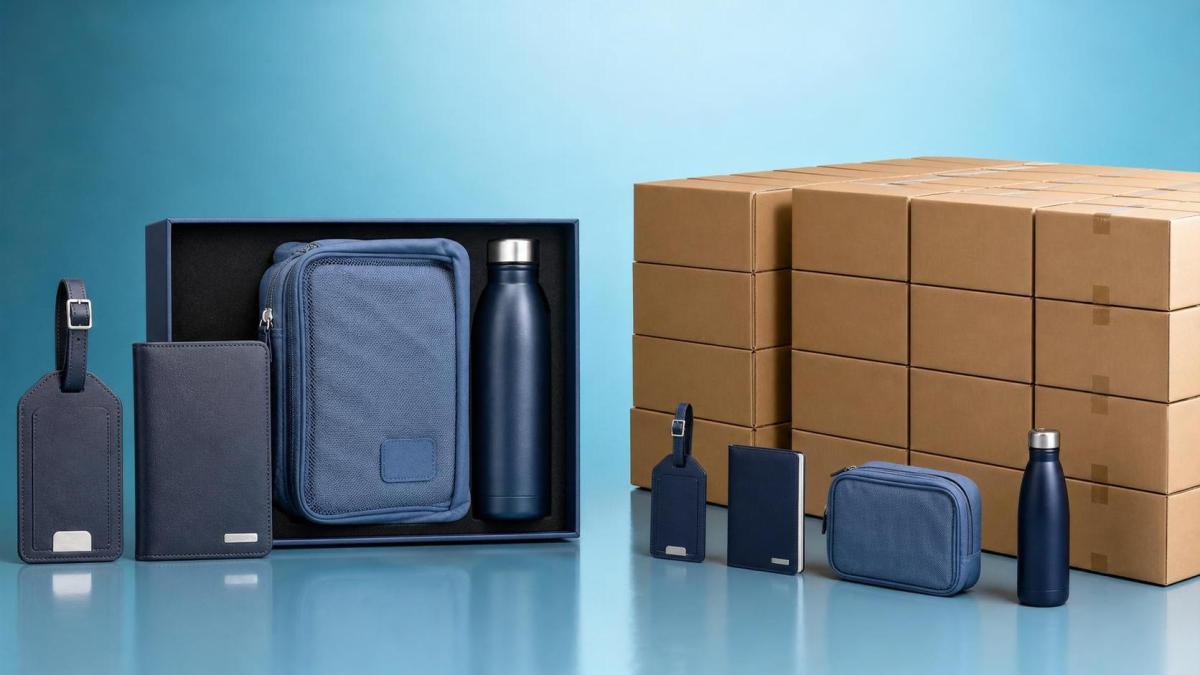
In travel services, promotional items rarely sit outside budget scrutiny.
They support loyalty campaigns, tour launches, airport partnerships, seasonal offers, and guest welcome packs.
That is why promotional gifts MOQ affects more than purchasing convenience.
It shapes unit economics, working capital pressure, storage exposure, and markdown risk.
A supplier may quote an attractive low price, but the number usually assumes a higher promotional gifts MOQ.
If the order is reduced, the price per piece often climbs fast.
For travel businesses, demand can be uneven.
Peak holiday periods, route launches, conference seasons, and weather disruptions all change consumption speed.
So the right MOQ is not simply the lowest available minimum.
The better question is whether the order size matches campaign timing, replenishment ability, and margin targets.
This is also where market intelligence becomes useful.
Platforms such as Global Consumer Sourcing track sourcing behavior, compliance expectations, and supplier capabilities across gifts and toys.
That broader context helps buyers judge whether a quoted promotional gifts MOQ reflects factory efficiency, packaging constraints, or simple negotiation posture.
When does a higher MOQ actually lower total cost?
A larger promotional gifts MOQ can reduce unit cost for several practical reasons.
Factories spread tooling, setup labor, printing preparation, and packing line changeovers across more pieces.
Raw material purchasing also becomes more efficient at scale.
This matters for common travel items such as luggage tags, travel pouches, branded bottles, amenity kits, and passport holders.
Still, lower unit cost does not always mean lower total cost.
The difference depends on how quickly the inventory converts into guest usage or revenue support.
A practical way to judge this is to compare landed cost against inventory carrying cost.
In other words, the break-even point matters more than the headline discount.
If the larger order sits in storage for nine months, the savings may disappear through warehousing, obsolescence, and tied capital.
How should you judge the right promotional gifts MOQ for a campaign?
The strongest decisions usually start with usage visibility, not supplier pressure.
A travel promotion tied to school holidays behaves differently from an always-on membership perk.
That means the right promotional gifts MOQ should be tested against campaign mechanics.
- Estimate redemption or distribution volume by week, not only by campaign total.
- Check whether the item is date-sensitive, destination-specific, or brand-seasonal.
- Separate launch quantity from reorder quantity.
- Include freight mode, customs timing, and storage duration in the model.
- Ask whether packaging artwork or personalization drives the MOQ higher.
A common mistake is approving volume based only on annual demand.
In practice, annual demand can look solid while monthly drawdown stays unpredictable.
For travel service brands, route closures, event cancellations, and occupancy swings can leave excess stock behind.
A more reliable approach is to align promotional gifts MOQ with the smallest operationally efficient batch.
That may not be the cheapest quote on paper, but it often protects margin better.
What hidden costs make a low MOQ less attractive than it first appears?
Smaller orders look safer because they reduce immediate commitment.
However, a low promotional gifts MOQ can create hidden cost layers.
The most obvious one is repeat setup expense.
If a branded travel kit is reordered four times, print plates, admin time, and inbound freight may be paid four times too.
There is also service inconsistency.
Materials, shades, zipper quality, or logo position can vary between small runs.
That matters when gifts are part of a premium guest experience.
Another overlooked issue is compliance.
Travel promotions increasingly overlap with regulated consumer categories, especially bottles, children’s items, cosmetics accessories, and electronics.
A very low promotional gifts MOQ may limit testing efficiency or reduce the supplier pool willing to document standards properly.
That is one reason data-led sourcing matters.
GCS content often highlights how certification readiness, category expertise, and factory responsiveness influence true procurement value beyond the quote.
So while a low MOQ can be useful, it should be reviewed together with repeat-order friction and quality stability.
Is there a smarter way to negotiate promotional gifts MOQ without harming flexibility?
Yes, and it usually starts by changing the negotiation frame.
Instead of asking only for a lower promotional gifts MOQ, ask which cost drivers create the minimum.
Sometimes the barrier is custom packaging.
Sometimes it is carton quantity, material color, or logo method.
That opens room for structured trade-offs.
- Use standard packaging for the first run, then upgrade later.
- Hold one core design across several destinations to pool volume.
- Commit to an annual volume forecast with staggered call-offs.
- Approve one material color family to avoid small-batch surcharges.
- Ask for split shipment timing under a single production batch.
These options preserve some price benefits of a higher promotional gifts MOQ while reducing stock concentration risk.
In real sourcing discussions, flexibility often comes from specification discipline rather than aggressive price pressure.
What final checks help prevent a bad MOQ decision?
Before approval, it helps to run a short decision screen.
This avoids treating promotional gifts MOQ as a standalone number.
A useful final question is simple.
If demand arrives slower than forecast, does this promotional gifts MOQ still make financial sense after ninety days?
If the answer is unclear, the order size is probably too ambitious.
The most reliable decisions combine price breaks with evidence on turnover, compliance, and supplier resilience.
That is especially true in travel services, where campaign timing and guest demand can shift quickly.
As a next step, map each planned item to forecast volume, storage window, reorder lead time, and certification needs.
Then compare at least two MOQ scenarios side by side.
That simple discipline usually reveals whether the lowest entry point or the larger batch truly delivers better value.
Related Intelligence
 Skincare OEMAug 16, 2026Amazon Enforces AI Human Metadata Rule for Beauty and Personal Care SellersAmazon now enforces AI human metadata rules for beauty sellers. Learn how to protect listings, traffic, and compliance in skincare, cosmetics, and beauty devices.
 Beauty DevicesAug 15, 2026China to Roll Out Nationwide Cross-Border Cash Pooling for MultinationalsChina to roll out nationwide cross-border cash pooling for multinationals from Sept. 14. Discover how this policy could improve treasury efficiency, liquidity management, and China-linked supply chains.
 Beauty DevicesAug 14, 2026China Imposes Temporary Export Ban on Helium, Affecting Cooling Supply ChainsChina's temporary helium export ban may disrupt cooling supply chains for beauty RF devices and laser systems. Learn what ODMs, buyers, and procurement teams should check now.
![]() Cosmetics & PkgAug 13, 2026PPWR becomes mandatory: Beauty and personal care packaging materials usher in new EPR and PFAS compliance requirementsPPWR takes effect for cosmetics packaging in the EU, bringing EPR registration and PFAS limits. Learn what brands, importers, and suppliers must do now.
Cosmetics & PkgAug 13, 2026PPWR becomes mandatory: Beauty and personal care packaging materials usher in new EPR and PFAS compliance requirementsPPWR takes effect for cosmetics packaging in the EU, bringing EPR registration and PFAS limits. Learn what brands, importers, and suppliers must do now. Cosmetics & PkgAug 12, 2026EU PPWR Now Enforced for Beauty Packaging ComplianceEU PPWR now enforced for beauty packaging compliance: learn how EPR, ERN, heavy metals and PFAS rules affect EU exports, customs clearance and platform sales.
 Cosmetics & PkgAug 11, 2026EU PPWR Rules Take Effect on Aug. 12 for Beauty PackagingEU PPWR rules for beauty packaging take effect on Aug. 12, 2026. Learn key compliance steps, EPR, labeling, PFAS limits, and how to avoid customs delays and fines.
 Smart Pet DevicesAug 10, 2026EU EPR Rules to Cover Smart Pet Devices on Aug. 15EU EPR Rules will cover smart pet devices from Aug. 15, 2026. Learn how smart collars, feeders, and monitoring devices can avoid delisting, customs delays, and compliance risks in the EU.
 Infant Feeding & CareAug 09, 2026CPSC Recalls Baby Sleep Sacks Over Undeclared TDCPPCPSC Recalls Baby Sleep Sacks Over Undeclared TDCPP: learn how this 2026 recall impacts CPC documents, third-party testing, and U.S. baby product compliance for exporters.
 Infant Feeding & CareAug 08, 2026ECHA Adds 5 SVHCs, Importer Notices Due From Oct 2026ECHA adds 5 SVHCs to the Candidate List, with importer notices due from October 2026. Learn how REACH affects exporters, supply chains, and documentation readiness.
 Baby Gear & StrollersAug 07, 2026CPSC Revises Crib Rail Standard for November 2026CPSC revises crib rail standard for November 2026, adding dynamic impact tests and mandatory third-party lab testing. Learn how the new rule affects U.S. market access, compliance, and shipments.
 Electronic & RC ToysAug 06, 2026EU to Require EN IEC 62115:2025 for Electronic ToysEU to Require EN IEC 62115:2025 for Electronic Toys from Oct 1, 2026. Learn scope, battery and AI safety updates, CE compliance risks, and how exporters can avoid customs delays.
 Baby Gear & StrollersAug 05, 2026US Stroller Stability Rule Takes Effect Aug. 15US Stroller Stability Rule Takes Effect Aug. 15: learn how new U.S. stroller compliance, ASTM F833-26a, and CPSC testing rules may affect imports, certification, and shipment readiness.
 Infant Feeding & CareAug 04, 2026ECHA Adds 5 SVHCs, Triggering Baby Care Export ReviewECHA adds 5 SVHCs, prompting an urgent baby care export review for EU-bound products. Learn the 0.1% threshold risks, compliance steps, and how to avoid customs delays and fines.












