
Retail Sourcing Testing Checklist: Cost, Compliance, and Delay Risks
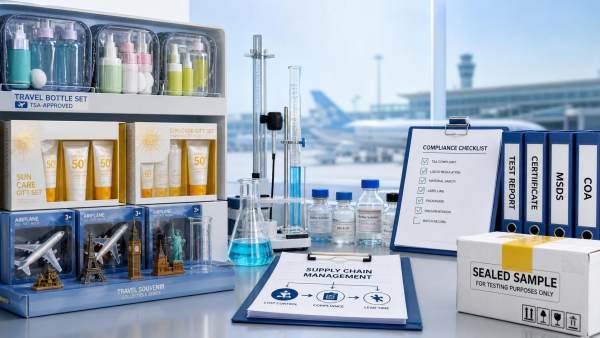
Why does retail sourcing testing matter so much in travel retail?
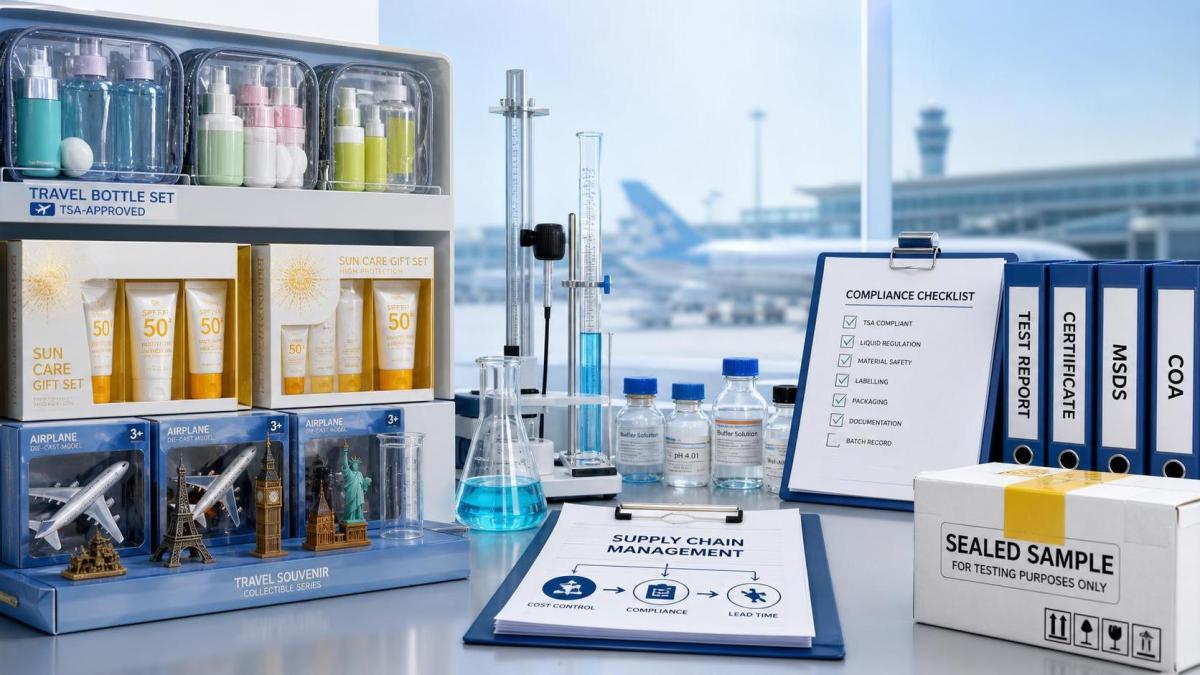
Travel retail moves faster than many standard store programs. Airport shops, resort boutiques, cruise lines, museum stores, and destination gift channels all work against fixed launch dates.
That timing pressure is exactly why retail sourcing testing deserves early attention. A failed safety check can delay an entire seasonal range, even when the product itself looks market-ready.
In practice, retail sourcing testing is the process of verifying whether a sourced item meets safety, regulatory, quality, and performance requirements before shipment and retail release.
For travel-related assortments, the risk profile is often wider. Products may cross several customs zones, serve international travelers, and face destination-specific labeling or restricted material rules.
A sunscreen gift set for a beach resort, a travel bottle kit for airport retail, or a toy souvenir in a family attraction all require different testing logic.
This is where reliable market intelligence matters. Global Consumer Sourcing, or GCS, tracks sourcing trends, compliance shifts, and category-level manufacturing realities across consumer sectors that often overlap with travel retail demand.
The useful takeaway is simple. Retail sourcing testing is not only about passing a lab report. It is a decision tool for cost control, supplier screening, and timeline protection.
Which products usually need the most testing attention before a travel program goes live?
The short answer is any product with direct body contact, child use, electrical parts, liquid formulas, or destination-specific claims.
Travel retail often blends convenience, gifting, and impulse purchase. That creates a mixed assortment where testing needs can vary sharply within the same shipment.
A helpful way to judge priority is to ask two questions. What can cause harm if it fails, and what becomes expensive if customs or retail compliance teams stop it?
- Beauty and personal care items may require ingredient review, stability checks, packaging compatibility, and market-specific cosmetic compliance.
- Baby products and toys usually need stricter mechanical, chemical, and labeling tests, especially where CPC or similar child safety rules apply.
- Travel accessories with batteries, chargers, lights, or heating functions often trigger electrical and transport compliance review.
- Sports and outdoors souvenirs may need material durability, flammability, or small-part verification, depending on design and user age.
- Pet travel goods can require material safety checks, odor control review, and claim substantiation if marketed for wellness or hygiene.
This category view reflects why GCS focuses on consumer pillars rather than broad general sourcing. Testing decisions become clearer when product type, retail context, and regulatory exposure are read together.
What should a practical retail sourcing testing checklist include before placing the order?
A workable checklist starts before production, not after. Waiting until goods are packed usually turns a manageable issue into a freight or relabeling problem.
Most travel programs benefit from a staged checklist covering product risk, supplier readiness, documentation, and timing buffers.
One detail often missed is packaging language. In travel retail, multilingual labeling and claim wording can trigger compliance issues even when product chemistry or construction passes testing.
Another useful control is a document gate. No purchase release should move forward until the testing scope, sample identity, and target market requirements are signed off together.
How do cost, compliance, and lead time pull against each other?
This is usually the hardest part of the decision. Many teams try to lower unit cost first, then discover the cheaper source carries higher testing complexity or slower correction cycles.
Retail sourcing testing helps expose that tradeoff earlier. A factory with a slightly higher quote may still deliver lower landed risk if its documentation, material control, and pass history are stronger.
The same logic applies to timelines. Short production promises look attractive, but they lose value if the supplier cannot prepare compliant samples or respond quickly to failed reports.
Where do hidden costs usually appear?
- Repeat testing after a material change that was never disclosed
- Urgent relabeling for airport, cruise, or bonded retail requirements
- Air freight used to recover time lost during failed compliance review
- Retail markdowns when seasonal launch windows are missed
- Chargebacks tied to incomplete documents or missing declarations
A more stable approach is to compare offers using total execution cost. That means unit price, expected test spend, correction speed, packaging accuracy, and likely delay exposure.
Data-backed sourcing platforms such as GCS are useful here because they help separate low-price offers from operationally dependable ones across fast-moving consumer categories.
What are the most common mistakes when retail sourcing testing is handled too late?
Late testing rarely creates one problem. It usually creates a chain reaction across approvals, booking windows, and shelf readiness.
One common mistake is assuming an old report covers a new item. Even small changes in fragrance, coating, zipper pull, print ink, or battery source can change the testing requirement.
Another is treating destination retail like ordinary domestic retail. Duty-free, resort, and travel venue programs may require extra attention to pack size, language, transport, and restricted ingredient handling.
There is also a paperwork issue. Some shipments fail because the test itself passed, yet the declaration, certificate, or factory trace file did not match the final goods.
More preventable problems usually include the following:
- Testing only finished goods, without checking raw material risk earlier
- Approving supplier substitutions without lab or compliance review
- Ignoring retail packaging as part of the testing file
- Using the cheapest lab without confirming market acceptance
These are not abstract issues. In travel-linked retail, every delay can disrupt launch calendars tied to holiday traffic, cruise boarding cycles, or resort opening peaks.
How can retail sourcing testing become a smarter buying decision, not just a compliance task?
The best results come when testing is built into supplier selection from the start. That changes the conversation from “Can this be tested?” to “Can this source execute reliably?”
A practical screening method is to score each source on five factors: product risk, market complexity, documentation quality, corrective speed, and historical pass consistency.
When two offers look similar on price, the one with cleaner retail sourcing testing records usually protects margin better over the full program cycle.
A simple next-step framework
Start by mapping each SKU to its sales channel, destination market, and user risk. Then define the minimum compliance file required before order approval.
After that, check whether the supplier can support the exact scope with current reports, traceable materials, and stable packaging controls.
Finally, leave buffer time for retesting and corrections. In travel retail, that reserve is often what protects the launch, not the original calendar promise.
The broader lesson is clear. Retail sourcing testing works best when it combines cost judgment, category knowledge, and compliance discipline in one sourcing decision.
For teams tracking fast-changing consumer categories, GCS offers a useful lens on supplier capability, certification expectations, and sourcing shifts that affect travel-related retail planning.
Before the next order cycle, review the checklist against actual destination requirements, compare supplier readiness side by side, and confirm where testing risk could still affect cost or timing.
- baby products
- retail sourcing
- personal care
- data-backed
- consumer pillars
- market intelligence
- global consumer sourcing
- supplier capability
- beauty and personal care
- supplier selection
- sports and outdoors
- cosmetic compliance
- practical retail sourcing
- retail sourcing testing
- beauty and personal care items
- personal care items
Related Intelligence
 Skincare OEMAug 16, 2026Amazon Enforces AI Human Metadata Rule for Beauty and Personal Care SellersAmazon now enforces AI human metadata rules for beauty sellers. Learn how to protect listings, traffic, and compliance in skincare, cosmetics, and beauty devices.
 Beauty DevicesAug 15, 2026China to Roll Out Nationwide Cross-Border Cash Pooling for MultinationalsChina to roll out nationwide cross-border cash pooling for multinationals from Sept. 14. Discover how this policy could improve treasury efficiency, liquidity management, and China-linked supply chains.
 Beauty DevicesAug 14, 2026China Imposes Temporary Export Ban on Helium, Affecting Cooling Supply ChainsChina's temporary helium export ban may disrupt cooling supply chains for beauty RF devices and laser systems. Learn what ODMs, buyers, and procurement teams should check now.
![]() Cosmetics & PkgAug 13, 2026PPWR becomes mandatory: Beauty and personal care packaging materials usher in new EPR and PFAS compliance requirementsPPWR takes effect for cosmetics packaging in the EU, bringing EPR registration and PFAS limits. Learn what brands, importers, and suppliers must do now.
Cosmetics & PkgAug 13, 2026PPWR becomes mandatory: Beauty and personal care packaging materials usher in new EPR and PFAS compliance requirementsPPWR takes effect for cosmetics packaging in the EU, bringing EPR registration and PFAS limits. Learn what brands, importers, and suppliers must do now. Cosmetics & PkgAug 12, 2026EU PPWR Now Enforced for Beauty Packaging ComplianceEU PPWR now enforced for beauty packaging compliance: learn how EPR, ERN, heavy metals and PFAS rules affect EU exports, customs clearance and platform sales.
 Cosmetics & PkgAug 11, 2026EU PPWR Rules Take Effect on Aug. 12 for Beauty PackagingEU PPWR rules for beauty packaging take effect on Aug. 12, 2026. Learn key compliance steps, EPR, labeling, PFAS limits, and how to avoid customs delays and fines.
 Smart Pet DevicesAug 10, 2026EU EPR Rules to Cover Smart Pet Devices on Aug. 15EU EPR Rules will cover smart pet devices from Aug. 15, 2026. Learn how smart collars, feeders, and monitoring devices can avoid delisting, customs delays, and compliance risks in the EU.
 Infant Feeding & CareAug 09, 2026CPSC Recalls Baby Sleep Sacks Over Undeclared TDCPPCPSC Recalls Baby Sleep Sacks Over Undeclared TDCPP: learn how this 2026 recall impacts CPC documents, third-party testing, and U.S. baby product compliance for exporters.
 Infant Feeding & CareAug 08, 2026ECHA Adds 5 SVHCs, Importer Notices Due From Oct 2026ECHA adds 5 SVHCs to the Candidate List, with importer notices due from October 2026. Learn how REACH affects exporters, supply chains, and documentation readiness.
 Baby Gear & StrollersAug 07, 2026CPSC Revises Crib Rail Standard for November 2026CPSC revises crib rail standard for November 2026, adding dynamic impact tests and mandatory third-party lab testing. Learn how the new rule affects U.S. market access, compliance, and shipments.
 Electronic & RC ToysAug 06, 2026EU to Require EN IEC 62115:2025 for Electronic ToysEU to Require EN IEC 62115:2025 for Electronic Toys from Oct 1, 2026. Learn scope, battery and AI safety updates, CE compliance risks, and how exporters can avoid customs delays.
 Baby Gear & StrollersAug 05, 2026US Stroller Stability Rule Takes Effect Aug. 15US Stroller Stability Rule Takes Effect Aug. 15: learn how new U.S. stroller compliance, ASTM F833-26a, and CPSC testing rules may affect imports, certification, and shipment readiness.
 Infant Feeding & CareAug 04, 2026ECHA Adds 5 SVHCs, Triggering Baby Care Export ReviewECHA adds 5 SVHCs, prompting an urgent baby care export review for EU-bound products. Learn the 0.1% threshold risks, compliance steps, and how to avoid customs delays and fines.












