
Electronic Toy Sourcing for Startups: Cost, Safety, and MOQ Basics
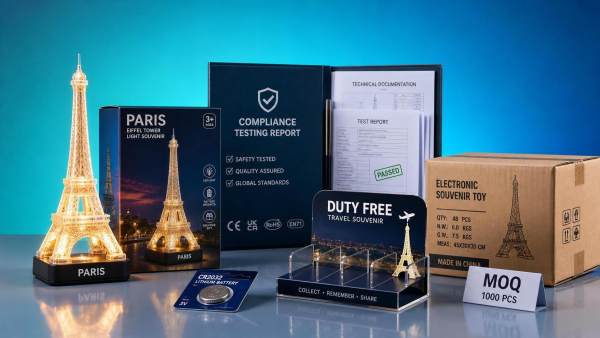
Electronic toy sourcing for startups: why the first decisions matter so much
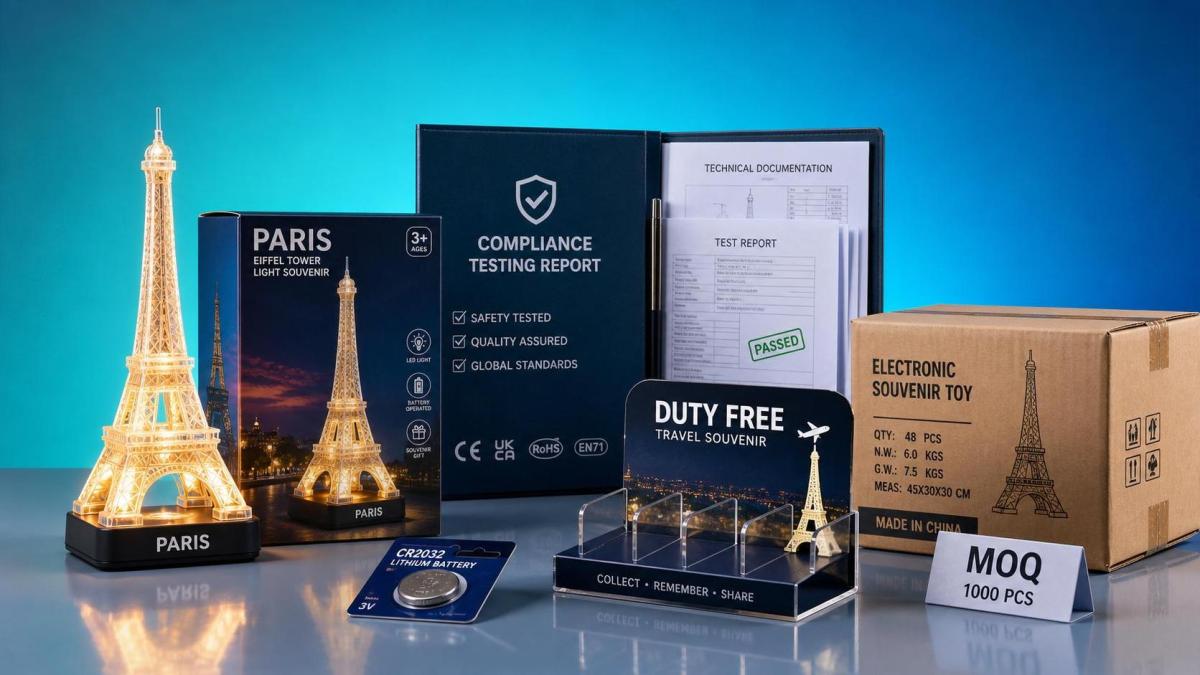
Electronic toy sourcing for startups looks attractive because novelty sells fast, especially in gift shops, family attractions, airport retail, and travel-adjacent seasonal channels.
The pressure starts early. A toy that seems affordable at sample stage can become expensive after tooling, testing, packaging, batteries, and shipping are added.
Safety adds another layer. For products sold across borders, missing CPC, CE, or battery compliance can delay launches and damage trust.
That is why electronic toy sourcing for startups should begin with a sourcing model, not just a product idea.
In travel service ecosystems, this matters even more. Souvenir retail, resort gift programs, museum stores, and family destination merchandising depend on compact, compliant, impulse-friendly items.
A sourcing mistake in those channels affects margins, replenishment speed, and customer experience at the point of sale.
Industry platforms such as Global Consumer Sourcing, or GCS, are useful here because they frame supplier choices through compliance, retail readiness, and market timing, not price alone.
What does electronic toy sourcing for startups actually include?
It is broader than finding a factory. In practice, it covers concept feasibility, component sourcing, compliance planning, packaging design, MOQ negotiation, and production scheduling.
For a travel retail concept, the sourcing brief usually starts with four filters: age grading, battery type, footprint, and transport risk.
A light-up souvenir wand for a theme destination faces different constraints than an educational coding toy sold online.
The more common mistake is assuming all electronic toys follow the same economics. They do not.
Simple sound modules may have low engineering complexity, yet high defect sensitivity if button life, speaker quality, or battery contacts are weak.
Interactive toys with Bluetooth or app functions can require firmware validation, stronger documentation, and longer testing cycles.
A workable sourcing scope usually includes these checkpoints before mass production:
- Target landed cost by channel and region
- Required certifications and labeling
- Battery and electronics specification
- Packaging size for freight efficiency
- Initial MOQ and reorder flexibility
- Acceptable defect rate and inspection method
Without those basics, electronic toy sourcing for startups turns into guesswork disguised as speed.
How should cost be calculated before the first purchase order?
Unit price is only one line in the cost structure. Early decisions should be based on total landed cost and expected sell-through, not quoted factory price.
For travel-linked retail, packaging volume matters a lot because compact products fit better into concession spaces and reduce freight per sellable unit.
A realistic pre-order costing model often includes:
More disciplined buyers also model return risk. Electronic toys have higher complaint exposure than static toys because sound, light, and motion features can fail.
In actual sourcing reviews, the better question is not “What is the cheapest option?” but “Which cost structure survives the first six months?”
That shift usually leads to fewer variants, tighter specifications, and stronger negotiation leverage.
Where do safety and compliance usually go wrong?
The biggest problem is timing. Many teams discuss testing after artwork approval, when design changes are already expensive.
Electronic toy sourcing for startups should treat safety as an input, not a final checkpoint.
For travel service channels, this becomes more sensitive. Products sold in airports, family resorts, cruises, and destination stores face visible customer scrutiny and limited tolerance for recalls.
Common trouble spots include battery accessibility, sharp edges after drop impact, poor soldering, overheating, and missing age warnings.
Paperwork problems are just as common. Factories may mention CE or CPC readiness, yet the test scope, lab name, or product configuration does not match the final item.
A practical review should confirm:
- Whether the sample and production version are identical
- Which market the test reports actually cover
- Whether battery packaging and manuals match regulations
- How the supplier handles component substitutions
- Who pays for retesting after design changes
This is where GCS-style intelligence is valuable. It helps compare factories by documentation discipline and category expertise, not by catalog size alone.
That distinction matters because compliant production is usually more repeatable, which is exactly what scaling brands need.
Are supplier MOQs fixed, or can they be negotiated intelligently?
MOQs are often more flexible than they appear, but only when the negotiation is based on production logic.
Factories set minimums for reasons such as mold setup time, component purchasing thresholds, packaging runs, and assembly efficiency.
That means electronic toy sourcing for startups should ask which part of the MOQ is truly fixed.
Sometimes the full MOQ applies only to one housing color, while mixed packaging or shared internal parts can lower the opening order.
A common travel retail strategy is to simplify the first launch: one hero design, one package format, and one destination-specific graphic element.
That approach reduces inventory risk while preserving local relevance.
Useful ways to discuss MOQ include:
- Ask for a trial run with standard electronics and custom packaging
- Combine variants that share the same internal components
- Accept a slightly higher unit cost for a smaller first batch
- Use a forecast-backed reorder plan to support the request
The wrong move is pushing MOQ down without understanding how that affects quality control, lead time, or component consistency.
How can you tell whether a supplier is right for a scalable launch?
A good supplier is not just the one that answers quickly. The stronger sign is process clarity.
When reviewing electronic toy sourcing for startups, look for evidence that the supplier can explain materials, test pathways, defect controls, and change management.
That matters if the product later expands into souvenir chains, hotel retail programs, museum shops, or destination events.
A short comparison table helps clarify the signal:
The stronger sourcing relationships usually begin with narrow focus, careful validation, and realistic volume planning.
What should happen next before committing to production?
The next step is to turn the product idea into a decision sheet. That sheet should connect cost, compliance, MOQ, timeline, and channel fit.
For electronic toy sourcing for startups, the most reliable path is usually a limited first run with strict specifications and fewer variables.
That reduces surprises and creates better data for the second order.
In travel service environments, also confirm display conditions, replenishment windows, and destination seasonality before locking packaging quantities.
A product that works online may still fail in a resort store if it occupies too much shelf space or cannot survive frequent customer handling.
Useful action points are simple:
- Define target landed cost before sampling expands
- Match compliance requirements to destination markets
- Test MOQ flexibility using a simplified launch version
- Review suppliers through documentation quality, not speed alone
- Use market intelligence sources such as GCS to compare category readiness
When cost, safety, and MOQ are judged together, electronic toy sourcing for startups becomes more predictable, more scalable, and much easier to defend internally.
Related Intelligence
 Skincare OEMAug 16, 2026Amazon Enforces AI Human Metadata Rule for Beauty and Personal Care SellersAmazon now enforces AI human metadata rules for beauty sellers. Learn how to protect listings, traffic, and compliance in skincare, cosmetics, and beauty devices.
 Beauty DevicesAug 15, 2026China to Roll Out Nationwide Cross-Border Cash Pooling for MultinationalsChina to roll out nationwide cross-border cash pooling for multinationals from Sept. 14. Discover how this policy could improve treasury efficiency, liquidity management, and China-linked supply chains.
 Beauty DevicesAug 14, 2026China Imposes Temporary Export Ban on Helium, Affecting Cooling Supply ChainsChina's temporary helium export ban may disrupt cooling supply chains for beauty RF devices and laser systems. Learn what ODMs, buyers, and procurement teams should check now.
![]() Cosmetics & PkgAug 13, 2026PPWR becomes mandatory: Beauty and personal care packaging materials usher in new EPR and PFAS compliance requirementsPPWR takes effect for cosmetics packaging in the EU, bringing EPR registration and PFAS limits. Learn what brands, importers, and suppliers must do now.
Cosmetics & PkgAug 13, 2026PPWR becomes mandatory: Beauty and personal care packaging materials usher in new EPR and PFAS compliance requirementsPPWR takes effect for cosmetics packaging in the EU, bringing EPR registration and PFAS limits. Learn what brands, importers, and suppliers must do now. Cosmetics & PkgAug 12, 2026EU PPWR Now Enforced for Beauty Packaging ComplianceEU PPWR now enforced for beauty packaging compliance: learn how EPR, ERN, heavy metals and PFAS rules affect EU exports, customs clearance and platform sales.
 Cosmetics & PkgAug 11, 2026EU PPWR Rules Take Effect on Aug. 12 for Beauty PackagingEU PPWR rules for beauty packaging take effect on Aug. 12, 2026. Learn key compliance steps, EPR, labeling, PFAS limits, and how to avoid customs delays and fines.
 Smart Pet DevicesAug 10, 2026EU EPR Rules to Cover Smart Pet Devices on Aug. 15EU EPR Rules will cover smart pet devices from Aug. 15, 2026. Learn how smart collars, feeders, and monitoring devices can avoid delisting, customs delays, and compliance risks in the EU.
 Infant Feeding & CareAug 09, 2026CPSC Recalls Baby Sleep Sacks Over Undeclared TDCPPCPSC Recalls Baby Sleep Sacks Over Undeclared TDCPP: learn how this 2026 recall impacts CPC documents, third-party testing, and U.S. baby product compliance for exporters.
 Infant Feeding & CareAug 08, 2026ECHA Adds 5 SVHCs, Importer Notices Due From Oct 2026ECHA adds 5 SVHCs to the Candidate List, with importer notices due from October 2026. Learn how REACH affects exporters, supply chains, and documentation readiness.
 Baby Gear & StrollersAug 07, 2026CPSC Revises Crib Rail Standard for November 2026CPSC revises crib rail standard for November 2026, adding dynamic impact tests and mandatory third-party lab testing. Learn how the new rule affects U.S. market access, compliance, and shipments.
 Electronic & RC ToysAug 06, 2026EU to Require EN IEC 62115:2025 for Electronic ToysEU to Require EN IEC 62115:2025 for Electronic Toys from Oct 1, 2026. Learn scope, battery and AI safety updates, CE compliance risks, and how exporters can avoid customs delays.
 Baby Gear & StrollersAug 05, 2026US Stroller Stability Rule Takes Effect Aug. 15US Stroller Stability Rule Takes Effect Aug. 15: learn how new U.S. stroller compliance, ASTM F833-26a, and CPSC testing rules may affect imports, certification, and shipment readiness.
 Infant Feeding & CareAug 04, 2026ECHA Adds 5 SVHCs, Triggering Baby Care Export ReviewECHA adds 5 SVHCs, prompting an urgent baby care export review for EU-bound products. Learn the 0.1% threshold risks, compliance steps, and how to avoid customs delays and fines.












