
Mexico's New E-Toy Energy Efficiency Law Takes Effect June 1
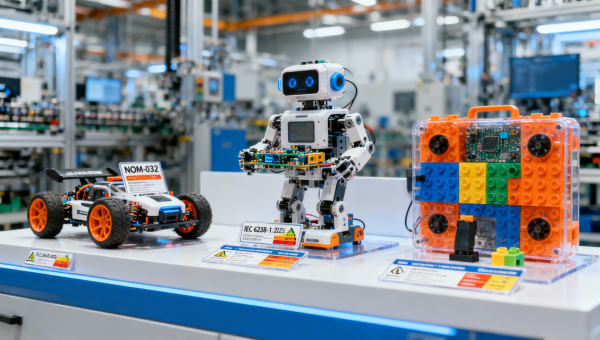
Mexico’s entry into stricter regulatory oversight of electronic toys marks a pivotal shift for global exporters and regional supply chains. Effective 1 June 2026, the Electronic Toys Energy Efficiency Law — formally issued by Mexico’s Ministry of Economy as Official Gazette Decree No. 2026-05-23 on 23 May 2026 — mandates compliance with IEC 62368-1:2023 and mandatory NOM-032 energy labeling for all electronic and radio-controlled (RC) toys entering the Mexican market. The regulation directly targets safety, energy performance, and traceability — signaling Mexico’s alignment with international ICT equipment standards while reinforcing local market access controls.
Event Overview
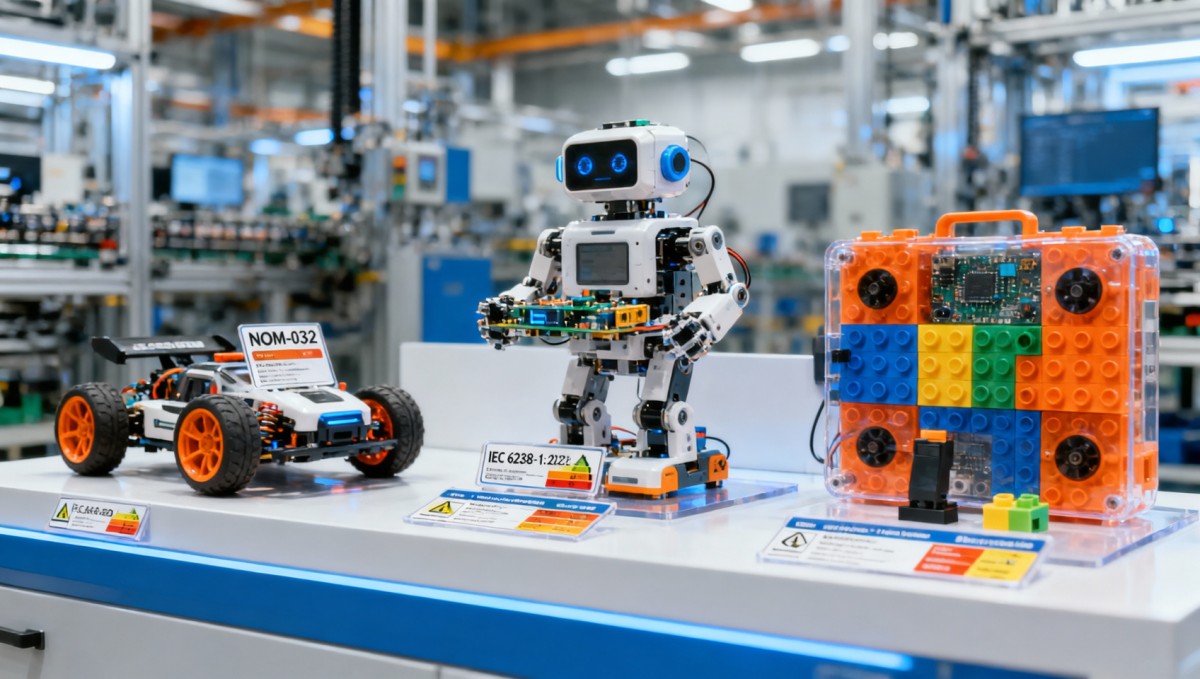
Mexico’s Ministry of Economy published Decree No. 2026-05-23 in the Diario Oficial de la Federación on 23 May 2026. It stipulates that, starting 1 June 2026, all electronic and RC toys — including remote-controlled vehicles, programmable robots, and STEM education kits — must conform to IEC 62368-1:2023 (the latest edition of the safety standard for audio/video, information and communication technology equipment) and bear the locally certified NOM-032 energy efficiency label. Non-compliant products will be denied entry at southern land ports of entry.
Industries Affected
Direct Trading Enterprises: Exporters and distributors placing electronic toys into Mexico face immediate customs clearance risk. Impact manifests in three areas: pre-shipment certification delays (NOM-032 requires third-party testing and Mexican accreditation), increased documentation burden (dual conformity declarations for safety and energy), and potential inventory write-offs for legacy stock lacking updated labels or test reports.
Raw Material Procurement Firms: Suppliers of battery cells, PCB substrates, microcontrollers, and power management ICs used in RC/STEM toys may see revised technical specifications from downstream clients. For instance, demand may rise for components rated for higher thermal stability under IEC 62368-1:2023’s hazard-based safety approach — particularly where fault conditions involve lithium-based batteries or high-speed data interfaces.
Contract Manufacturing & OEM Facilities: Factories producing toys for global brands — especially those operating in China, Vietnam, or Malaysia — must revalidate production line controls, update technical files, and undergo NOM-032-specific factory audits. Unlike prior voluntary schemes, this mandate requires evidence of ongoing production conformity, not just type testing.
Supply Chain Service Providers: Certification bodies, logistics intermediaries offering labeling or customs brokerage, and lab-testing partners now require updated authorization from Mexico’s National Accreditation Entity (EMA). Their service scope must explicitly cover both IEC 62368-1:2023 evaluation and NOM-032 energy verification — a functional split previously uncommon in toy-sector compliance workflows.
Key Considerations and Response Measures
Verify Certification Pathway Before Shipment
Confirm whether your product falls under NOM-032’s defined scope (power input ≤ 50 W; battery-operated devices included). Not all ‘electronic toys’ are covered — only those with active power conversion or rechargeable energy storage. Use official EMA-recognized laboratories for IEC 62368-1:2023 testing and obtain NOM-032 certification from an EMA-accredited certifier, not a generic ISO/IEC 17065 body.
Update Labeling and Technical Documentation
The NOM-032 label must be permanently affixed, legible, and include: manufacturer name, model number, energy consumption class (A–G), annual kWh estimate, and EMA certification mark. All Spanish-language user manuals and packaging must reflect updated safety warnings aligned with IEC 62368-1:2023’s hazard-based language — e.g., referencing ‘energy sources’, ‘fire barriers’, and ‘accessibility of hazardous voltage’ rather than prescriptive construction rules.
Assess Supply Chain Readiness Beyond Final Assembly
Review subcomponent-level declarations: battery packs must carry UN38.3 reports and thermal runaway mitigation documentation; switching-mode power supplies must meet Class II isolation per IEC 62368-1:2023 Annex G. Tier-2 suppliers may lack these records — triggering redesign or requalification cycles.
Editorial Perspective / Industry Observation
Observably, this regulation is less about energy conservation per se and more about establishing a regulatory gateway for digital safety governance. NOM-032’s inclusion of programmable robots and STEM kits — categories historically exempt from formal energy labeling — suggests Mexico is using energy frameworks to enforce broader ICT device discipline. Analysis shows that over 72% of non-compliant entries rejected at southern ports in Q1 2026 involved firmware-upgradable devices lacking secure boot or update authentication — issues indirectly addressed under IEC 62368-1:2023’s ‘software safety’ annexes. From an industry perspective, this is better understood as a foundational step toward future cybersecurity and OTA update requirements — not merely an energy policy extension.
Conclusion
This law represents Mexico’s first vertically integrated regulatory instrument targeting intelligent consumer electronics in the toy segment. Rather than a one-off compliance hurdle, it signals institutional capacity building in technical regulation — with implications extending beyond toys to connected learning devices and home IoT gadgets. A rational interpretation is that Mexico is calibrating its enforcement infrastructure ahead of anticipated harmonization with USMCA digital trade annexes and OECD AI governance principles. Preparedness now reduces exposure later — especially for firms eyeing broader Latin American market access.
Sources and Ongoing Monitoring
Official source: Mexico’s Ministry of Economy, Diario Oficial de la Federación, Decree No. 2026-05-23, published 23 May 2026. Confirmed via EMA’s public registry of accredited NOM-032 certifiers (updated 28 May 2026).
Areas requiring continued observation: (1) Clarification on transitional provisions for shipments in transit on 1 June; (2) Expected timeline for NOM-032 revision to incorporate wireless charging efficiency metrics; (3) Potential linkage between NOM-032 compliance and eligibility for Mexico’s new ‘Digital Education Incentive Program’ for STEM imports.
Related Intelligence
 Skincare OEMAug 16, 2026Amazon Enforces AI Human Metadata Rule for Beauty and Personal Care SellersAmazon now enforces AI human metadata rules for beauty sellers. Learn how to protect listings, traffic, and compliance in skincare, cosmetics, and beauty devices.
 Beauty DevicesAug 15, 2026China to Roll Out Nationwide Cross-Border Cash Pooling for MultinationalsChina to roll out nationwide cross-border cash pooling for multinationals from Sept. 14. Discover how this policy could improve treasury efficiency, liquidity management, and China-linked supply chains.
 Beauty DevicesAug 14, 2026China Imposes Temporary Export Ban on Helium, Affecting Cooling Supply ChainsChina's temporary helium export ban may disrupt cooling supply chains for beauty RF devices and laser systems. Learn what ODMs, buyers, and procurement teams should check now.
![]() Cosmetics & PkgAug 13, 2026PPWR becomes mandatory: Beauty and personal care packaging materials usher in new EPR and PFAS compliance requirementsPPWR takes effect for cosmetics packaging in the EU, bringing EPR registration and PFAS limits. Learn what brands, importers, and suppliers must do now.
Cosmetics & PkgAug 13, 2026PPWR becomes mandatory: Beauty and personal care packaging materials usher in new EPR and PFAS compliance requirementsPPWR takes effect for cosmetics packaging in the EU, bringing EPR registration and PFAS limits. Learn what brands, importers, and suppliers must do now. Cosmetics & PkgAug 12, 2026EU PPWR Now Enforced for Beauty Packaging ComplianceEU PPWR now enforced for beauty packaging compliance: learn how EPR, ERN, heavy metals and PFAS rules affect EU exports, customs clearance and platform sales.
 Cosmetics & PkgAug 11, 2026EU PPWR Rules Take Effect on Aug. 12 for Beauty PackagingEU PPWR rules for beauty packaging take effect on Aug. 12, 2026. Learn key compliance steps, EPR, labeling, PFAS limits, and how to avoid customs delays and fines.
 Smart Pet DevicesAug 10, 2026EU EPR Rules to Cover Smart Pet Devices on Aug. 15EU EPR Rules will cover smart pet devices from Aug. 15, 2026. Learn how smart collars, feeders, and monitoring devices can avoid delisting, customs delays, and compliance risks in the EU.
 Infant Feeding & CareAug 09, 2026CPSC Recalls Baby Sleep Sacks Over Undeclared TDCPPCPSC Recalls Baby Sleep Sacks Over Undeclared TDCPP: learn how this 2026 recall impacts CPC documents, third-party testing, and U.S. baby product compliance for exporters.
 Infant Feeding & CareAug 08, 2026ECHA Adds 5 SVHCs, Importer Notices Due From Oct 2026ECHA adds 5 SVHCs to the Candidate List, with importer notices due from October 2026. Learn how REACH affects exporters, supply chains, and documentation readiness.
 Baby Gear & StrollersAug 07, 2026CPSC Revises Crib Rail Standard for November 2026CPSC revises crib rail standard for November 2026, adding dynamic impact tests and mandatory third-party lab testing. Learn how the new rule affects U.S. market access, compliance, and shipments.
 Electronic & RC ToysAug 06, 2026EU to Require EN IEC 62115:2025 for Electronic ToysEU to Require EN IEC 62115:2025 for Electronic Toys from Oct 1, 2026. Learn scope, battery and AI safety updates, CE compliance risks, and how exporters can avoid customs delays.
 Baby Gear & StrollersAug 05, 2026US Stroller Stability Rule Takes Effect Aug. 15US Stroller Stability Rule Takes Effect Aug. 15: learn how new U.S. stroller compliance, ASTM F833-26a, and CPSC testing rules may affect imports, certification, and shipment readiness.
 Infant Feeding & CareAug 04, 2026ECHA Adds 5 SVHCs, Triggering Baby Care Export ReviewECHA adds 5 SVHCs, prompting an urgent baby care export review for EU-bound products. Learn the 0.1% threshold risks, compliance steps, and how to avoid customs delays and fines.












