
Germany’s New Toy Safety Amendment Requires AI Safety Assessment for STEM Toys
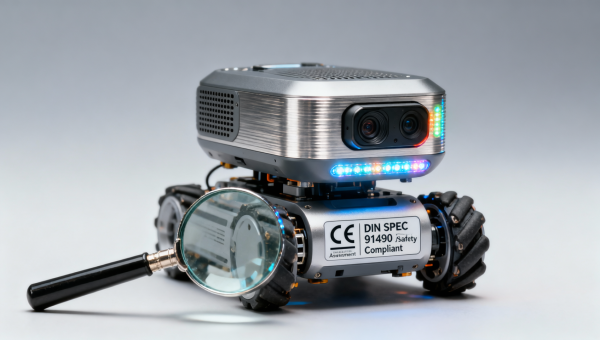
Germany’s Federal Parliament passed the Second Amendment to the Toy Safety Act on May 23, 2026, mandating AI interaction safety assessments for STEM and educational toys containing voice recognition, image generation, or autonomous decision-making modules—effective October 1, 2026. This development directly impacts manufacturers, exporters, and compliance service providers active in the EU toy market, particularly those supplying AI-integrated learning products. It signals a regulatory shift toward formalized evaluation of AI behavior in children’s products—a domain previously governed by general toy safety standards.
Event Overview
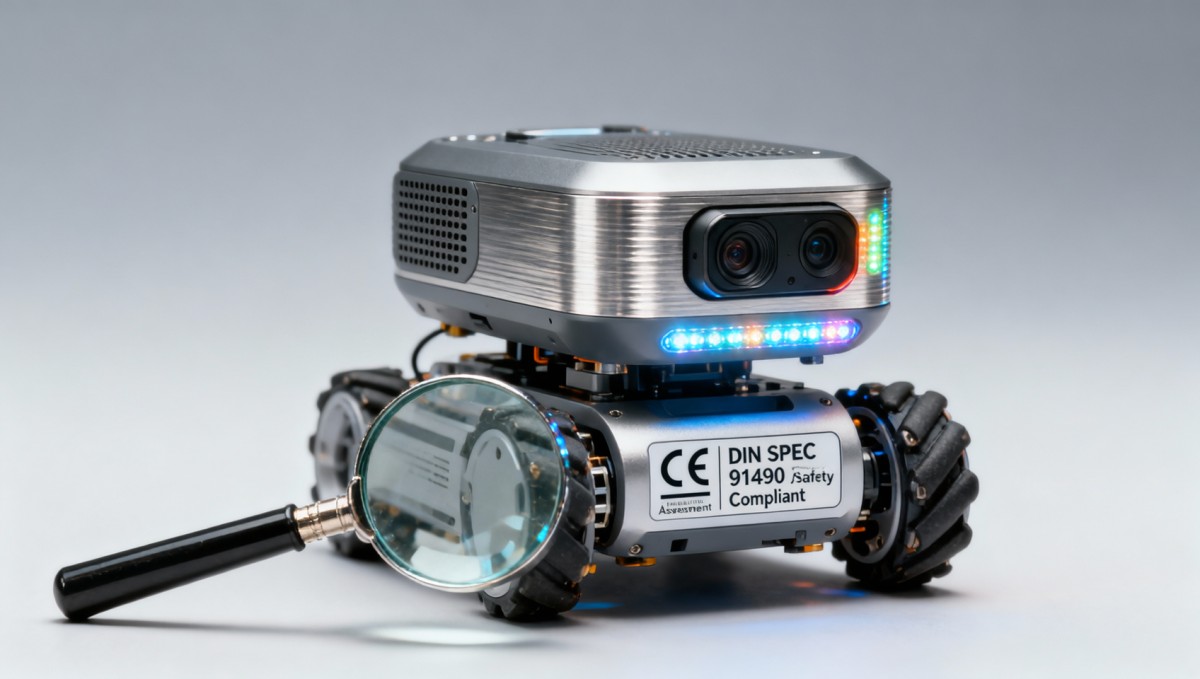
The German Bundestag approved the Second Amendment to the Toy Safety Act on May 23, 2026. Starting October 1, 2026, all STEM and educational toys incorporating voice recognition, image generation, or autonomous decision-making functionality must comply with DIN SPEC 91490, titled ‘Specification for Safety Assessment of AI-Driven Toys’. The standard was co-drafted by the Shenzhen Institute of Metrology (China) and has been authorized for certification by TÜV Rheinland. Notably, TÜV Rheinland’s authorization includes provision of localized testing pathways for Chinese manufacturers.
Industries Affected
Direct Exporters and Brand Owners
Companies exporting AI-enabled STEM toys from China or other third countries into Germany—and by extension, the broader EU—must now ensure conformity with DIN SPEC 91490 prior to market placement. Non-compliance may result in customs rejection, post-market surveillance actions, or withdrawal from distribution channels. The requirement applies regardless of brand origin, as long as the product is placed on the German market.
Contract Manufacturers and OEM/ODM Suppliers
Manufacturers producing AI-integrated toys under private label or white-label arrangements face upstream compliance obligations. Buyers may begin embedding DIN SPEC 91490 assessment requirements into procurement contracts as early as Q3 2026. Since the standard addresses system-level AI behavior—not just hardware or software components—manufacturers must coordinate closely with firmware developers, cloud service providers, and AI model trainers to define testable use cases and failure modes.
Compliance and Certification Service Providers
Testing labs and certification bodies accredited under DIN SPEC 91490—including those operating in China via TÜV Rheinland’s authorized local pathways—will see increased demand for AI interaction evaluation services. However, only entities explicitly authorized under the TÜV Rheinland framework may issue valid declarations for this specific assessment. General CE marking labs without this authorization cannot fulfill the new requirement.
What Relevant Companies or Practitioners Should Focus On
Monitor official implementation guidance from German market surveillance authorities
While the amendment enters force on October 1, 2026, transitional provisions, enforcement priorities, and interpretation notes (e.g., thresholds for ‘autonomous decision-making’) have not yet been published. Stakeholders should track updates from the German Federal Institute for Risk Assessment (BfR) and the Market Surveillance Authority of North Rhine-Westphalia—the lead authority for toy safety oversight.
Identify and triage affected product categories ahead of Q3 2026
Products with real-time voice interaction (e.g., conversational robots), generative visual output (e.g., AI drawing assistants), or adaptive learning logic (e.g., self-modifying quiz engines) fall within scope. Firms should map their portfolios against the functional definitions in DIN SPEC 91490’s Clause 3 (Terms and Definitions) and prioritize high-volume or high-risk SKUs for pre-assessment planning.
Distinguish between policy signal and operational readiness
The adoption of DIN SPEC 91490 reflects an emerging regulatory pattern—not yet harmonized at EU level—but currently enforceable in Germany as national law. It does not replace EN71 or the EU Toy Safety Directive (2009/48/EC), but adds a parallel layer of AI-specific verification. Businesses should treat it as a binding national requirement, not a voluntary guideline.
Initiate alignment with authorized testing partners before August 2026
Given typical lead times for AI interaction test case development, model documentation review, and iterative validation, firms aiming for uninterrupted market access should engage TÜV Rheinland–authorized labs—including those offering local testing in Shenzhen—no later than mid-August 2026. Early engagement helps clarify data logging requirements, child-user simulation protocols, and edge-case coverage expectations.
Editorial Perspective / Industry Observation
Analysis shows that this amendment is less about immediate enforcement scale and more about establishing a precedent: it institutionalizes AI behavior as a distinct safety dimension in children’s products. Observably, DIN SPEC 91490 introduces structured evaluation of AI outputs (e.g., response appropriateness, bias mitigation, fail-safe fallbacks), moving beyond traditional electrical or mechanical hazard frameworks. From an industry perspective, it functions primarily as a forward-looking signal—indicating how AI-integrated consumer products may be assessed in regulated markets going forward. Current enforcement capacity remains limited, but the legal basis is now codified and enforceable. The involvement of a Chinese metrology institute in drafting suggests growing technical collaboration on AI governance, though its direct implications for non-German markets remain unconfirmed.
Conclusion: This amendment marks the first nationally enforceable AI safety requirement targeting children’s educational products in Europe. Its significance lies not in broad applicability across all toys, but in its specificity: it defines a new compliance axis—AI interaction safety—that intersects hardware, software, cloud infrastructure, and pedagogical design. For stakeholders, it is best understood not as a one-off regulatory hurdle, but as an early indicator of how AI functionality will be progressively segmented and assessed in safety-critical consumer domains.
Source: Official record of the German Bundestag (Drucksache 20/12845), DIN SPEC 91490 publication notice (DIN, May 2026), TÜV Rheinland press release on certification authorization (June 2026).
Note: Implementation details—including enforcement timelines, inspection frequency, and criteria for ‘autonomous decision-making’—remain subject to further official clarification and are under ongoing observation.
Related Intelligence
 Skincare OEMAug 16, 2026Amazon Enforces AI Human Metadata Rule for Beauty and Personal Care SellersAmazon now enforces AI human metadata rules for beauty sellers. Learn how to protect listings, traffic, and compliance in skincare, cosmetics, and beauty devices.
 Beauty DevicesAug 15, 2026China to Roll Out Nationwide Cross-Border Cash Pooling for MultinationalsChina to roll out nationwide cross-border cash pooling for multinationals from Sept. 14. Discover how this policy could improve treasury efficiency, liquidity management, and China-linked supply chains.
 Beauty DevicesAug 14, 2026China Imposes Temporary Export Ban on Helium, Affecting Cooling Supply ChainsChina's temporary helium export ban may disrupt cooling supply chains for beauty RF devices and laser systems. Learn what ODMs, buyers, and procurement teams should check now.
![]() Cosmetics & PkgAug 13, 2026PPWR becomes mandatory: Beauty and personal care packaging materials usher in new EPR and PFAS compliance requirementsPPWR takes effect for cosmetics packaging in the EU, bringing EPR registration and PFAS limits. Learn what brands, importers, and suppliers must do now.
Cosmetics & PkgAug 13, 2026PPWR becomes mandatory: Beauty and personal care packaging materials usher in new EPR and PFAS compliance requirementsPPWR takes effect for cosmetics packaging in the EU, bringing EPR registration and PFAS limits. Learn what brands, importers, and suppliers must do now. Cosmetics & PkgAug 12, 2026EU PPWR Now Enforced for Beauty Packaging ComplianceEU PPWR now enforced for beauty packaging compliance: learn how EPR, ERN, heavy metals and PFAS rules affect EU exports, customs clearance and platform sales.
 Cosmetics & PkgAug 11, 2026EU PPWR Rules Take Effect on Aug. 12 for Beauty PackagingEU PPWR rules for beauty packaging take effect on Aug. 12, 2026. Learn key compliance steps, EPR, labeling, PFAS limits, and how to avoid customs delays and fines.
 Smart Pet DevicesAug 10, 2026EU EPR Rules to Cover Smart Pet Devices on Aug. 15EU EPR Rules will cover smart pet devices from Aug. 15, 2026. Learn how smart collars, feeders, and monitoring devices can avoid delisting, customs delays, and compliance risks in the EU.
 Infant Feeding & CareAug 09, 2026CPSC Recalls Baby Sleep Sacks Over Undeclared TDCPPCPSC Recalls Baby Sleep Sacks Over Undeclared TDCPP: learn how this 2026 recall impacts CPC documents, third-party testing, and U.S. baby product compliance for exporters.
 Infant Feeding & CareAug 08, 2026ECHA Adds 5 SVHCs, Importer Notices Due From Oct 2026ECHA adds 5 SVHCs to the Candidate List, with importer notices due from October 2026. Learn how REACH affects exporters, supply chains, and documentation readiness.
 Baby Gear & StrollersAug 07, 2026CPSC Revises Crib Rail Standard for November 2026CPSC revises crib rail standard for November 2026, adding dynamic impact tests and mandatory third-party lab testing. Learn how the new rule affects U.S. market access, compliance, and shipments.
 Electronic & RC ToysAug 06, 2026EU to Require EN IEC 62115:2025 for Electronic ToysEU to Require EN IEC 62115:2025 for Electronic Toys from Oct 1, 2026. Learn scope, battery and AI safety updates, CE compliance risks, and how exporters can avoid customs delays.
 Baby Gear & StrollersAug 05, 2026US Stroller Stability Rule Takes Effect Aug. 15US Stroller Stability Rule Takes Effect Aug. 15: learn how new U.S. stroller compliance, ASTM F833-26a, and CPSC testing rules may affect imports, certification, and shipment readiness.
 Infant Feeding & CareAug 04, 2026ECHA Adds 5 SVHCs, Triggering Baby Care Export ReviewECHA adds 5 SVHCs, prompting an urgent baby care export review for EU-bound products. Learn the 0.1% threshold risks, compliance steps, and how to avoid customs delays and fines.












