
Ningbo Port Gives July Priority Berthing to EPR and CCC-Cleared Stroller Shipments
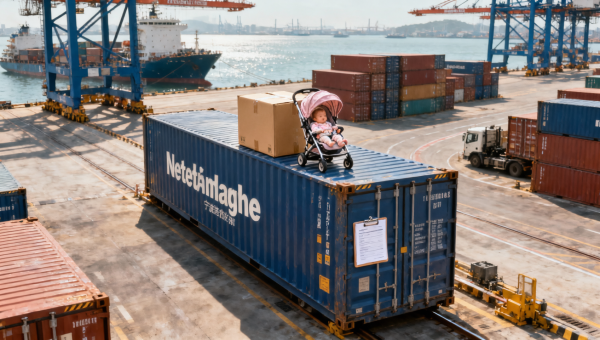
On July 1, 2026, the export handling rules around baby gear and stroller shipments at Ningbo Port moved in a more compliance-linked direction. Under a support plan released by Ningbo Zhoushan Port Group on June 29, full-container loads of Baby Gear & Strollers holding both an EU EPR registration number and a China CCC certificate can enter a green channel with berth priority, reduced storage pressure, and 24-hour inspection response. For exporters, buyers, certification-related service providers, and logistics operators, this is worth watching because port-side operational convenience is now being tied more directly to documentation readiness during a seasonal shipping window.
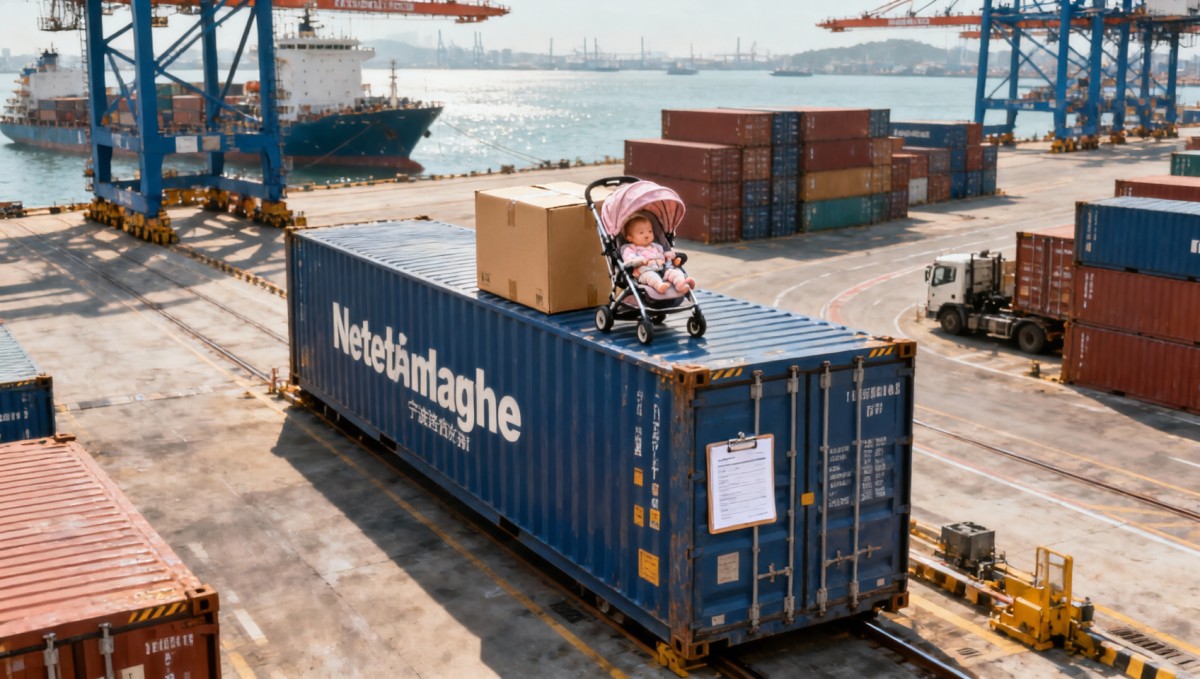
What the port scheme formally changes from July 1
Ningbo Zhoushan Port Group issued an Export Support Plan for infant and child mobility products on June 29, 2026. The plan takes effect from July 1. It applies to full-container cargoes of Baby Gear & Strollers that hold both an EU EPR registration number and a China CCC compulsory certification certificate.
For qualifying cargo, the port has opened a green channel. The measures specified in the summary are priority berth allocation, compressed storage charges, and 24-hour inspection response. The stated purpose is to address the Q3 procurement peak for baby products in Europe and the United States and to ease the risk of concentrated shipment delays caused by insufficient EPR compliance preparation.
Where the pressure and advantage may shift in the export chain
Exporters with near-term July shipping plans
From an industry perspective, the immediate effect is likely to be felt by exporters moving full-container stroller and baby gear cargo through Ningbo. They may be affected because the operational benefits described in the plan are available only when both the EPR and CCC conditions are met. The business impact is therefore concentrated in booking preparation, document readiness, shipment scheduling, and inspection coordination. What deserves closer attention is whether internal export files clearly support the dual-certificate status before cargo reaches the port-side handling stage.
Manufacturers supplying under buyer delivery windows
Manufacturing companies involved in stroller and related baby mobility product exports may feel this change through production release timing and handover discipline. Analysis shows that the issue is not only port access speed, but whether finished goods can be matched to compliant documentation early enough to avoid shipment bunching. For these companies, the key point is the link between certification status and delivery execution rather than production volume alone.
Freight and port-facing service providers
Supply chain service providers, including those managing container movement, customs coordination, and inspection interface work, may need to treat compliant and non-compliant cargo differently in operational planning. The reason is that the green channel creates a practical distinction in handling priority. The main impact is likely to appear in cargo screening, booking advice, and the sequencing of documentation checks. Service providers should pay attention to whether a shipment qualifies as a full-container load and whether the required EPR and CCC records are complete and usable in practice.
Buyers and sourcing teams managing seasonal replenishment
Buyers and sourcing teams may also be affected because compliance preparedness now appears more directly connected to delivery reliability during a procurement peak. Observably, this does not change product demand by itself, but it can alter how purchasers evaluate supplier readiness. The focus for these market participants is whether suppliers can demonstrate stable certification and export documentation control before shipment cutoff points tighten.
What companies should review now
Check whether dual-certificate status is truly shipment-ready
Analysis shows that the central practical issue is not simply possessing compliance in principle, but being able to support a July shipment with an EU EPR registration number and a China CCC certificate in a form that matches the cargo being exported. Companies should therefore review whether the relevant documents are current, internally traceable, and aligned with the goods prepared for full-container export.
Watch for operational wording and execution scope
The summary confirms the green channel measures, but it does not provide fuller execution details. It is more appropriate to understand this as an implemented operational signal with points that still require follow-up observation. Companies should watch for any further official wording on how qualification is checked, how inspection response is arranged, and how the berth-priority treatment is applied in daily operations.
Reassess July delivery plans around compliance timing
For companies shipping into the Q3 baby products buying season, document timing may now matter as much as vessel timing. What deserves closer attention is whether EPR and CCC preparation is completed early enough to support container release, booking confirmation, and inspection coordination. Where compliance preparation remains incomplete, delivery planning may need to be reviewed with suppliers and logistics partners to reduce delay risk.
Keep product files and handover records consistent
Because the announced support is tied to named compliance conditions, exporters and service partners should pay attention to consistency across shipment documents, certification records, and product handover files. The input does not provide a detailed checklist, so this cannot be treated as a fixed execution standard yet. Still, careful document consistency is a reasonable compliance focus under the announced arrangement.
Why this looks more like an execution signal than a broad policy rewrite
Observably, this development is less about a new product regulation being created and more about a port operator translating existing compliance conditions into handling priority during a peak export period. Analysis shows that the notable shift is operational: compliance status is being used as a basis for faster logistics treatment for a defined cargo category. That makes the announcement relevant well beyond port operations, because it links certification readiness to actual delivery conditions.
At the same time, it would be premature to read this as a complete or permanent rule reset for all related cargo. The available information is specific to the announced support plan, the named product range, the full-container condition, and the July 1 launch point. Industry participants should therefore continue watching how consistently the arrangement is applied and whether any further clarifications affect execution.
How the market is best reading this announcement
The clearest takeaway is that compliance documentation is no longer only a regulatory checkpoint in the background; in this case, it is also part of shipment prioritization at the port interface. For the baby gear and stroller export chain, that matters because timing, certification, and cargo release are being pulled closer together during a seasonal demand window.
Current evidence supports a measured interpretation. It is more appropriate to understand this announcement as a live execution signal tied to compliance-ready cargo, rather than as proof of a wider industry outcome already achieved. Companies with relevant exports should focus on document readiness, shipment qualification, and follow-up implementation details rather than assume the operational benefit will apply automatically.
Basis of this article and points still to verify
This article is based on the user-provided news title, event date, and event summary. The factual basis used here is the June 29, 2026 release of the Export Support Plan by Ningbo Zhoushan Port Group and its July 1 application to full-container Baby Gear & Strollers cargo holding both an EU EPR registration number and a China CCC certificate.
For this type of development, source categories that are usually relevant include official announcements, regulator releases, customs or trade-administration information, industry association updates, standards-related documents, and reporting by established trade media. A specific official source link was not provided in the input, so that link remains to be verified. Follow-up attention should remain on any detailed implementation wording, certification interpretation, shipping document requirements, market feedback, and how companies are actually executing against the announced conditions.
Related Intelligence
 Skincare OEMAug 16, 2026Amazon Enforces AI Human Metadata Rule for Beauty and Personal Care SellersAmazon now enforces AI human metadata rules for beauty sellers. Learn how to protect listings, traffic, and compliance in skincare, cosmetics, and beauty devices.
 Beauty DevicesAug 15, 2026China to Roll Out Nationwide Cross-Border Cash Pooling for MultinationalsChina to roll out nationwide cross-border cash pooling for multinationals from Sept. 14. Discover how this policy could improve treasury efficiency, liquidity management, and China-linked supply chains.
 Beauty DevicesAug 14, 2026China Imposes Temporary Export Ban on Helium, Affecting Cooling Supply ChainsChina's temporary helium export ban may disrupt cooling supply chains for beauty RF devices and laser systems. Learn what ODMs, buyers, and procurement teams should check now.
![]() Cosmetics & PkgAug 13, 2026PPWR becomes mandatory: Beauty and personal care packaging materials usher in new EPR and PFAS compliance requirementsPPWR takes effect for cosmetics packaging in the EU, bringing EPR registration and PFAS limits. Learn what brands, importers, and suppliers must do now.
Cosmetics & PkgAug 13, 2026PPWR becomes mandatory: Beauty and personal care packaging materials usher in new EPR and PFAS compliance requirementsPPWR takes effect for cosmetics packaging in the EU, bringing EPR registration and PFAS limits. Learn what brands, importers, and suppliers must do now. Cosmetics & PkgAug 12, 2026EU PPWR Now Enforced for Beauty Packaging ComplianceEU PPWR now enforced for beauty packaging compliance: learn how EPR, ERN, heavy metals and PFAS rules affect EU exports, customs clearance and platform sales.
 Cosmetics & PkgAug 11, 2026EU PPWR Rules Take Effect on Aug. 12 for Beauty PackagingEU PPWR rules for beauty packaging take effect on Aug. 12, 2026. Learn key compliance steps, EPR, labeling, PFAS limits, and how to avoid customs delays and fines.
 Smart Pet DevicesAug 10, 2026EU EPR Rules to Cover Smart Pet Devices on Aug. 15EU EPR Rules will cover smart pet devices from Aug. 15, 2026. Learn how smart collars, feeders, and monitoring devices can avoid delisting, customs delays, and compliance risks in the EU.
 Infant Feeding & CareAug 09, 2026CPSC Recalls Baby Sleep Sacks Over Undeclared TDCPPCPSC Recalls Baby Sleep Sacks Over Undeclared TDCPP: learn how this 2026 recall impacts CPC documents, third-party testing, and U.S. baby product compliance for exporters.
 Infant Feeding & CareAug 08, 2026ECHA Adds 5 SVHCs, Importer Notices Due From Oct 2026ECHA adds 5 SVHCs to the Candidate List, with importer notices due from October 2026. Learn how REACH affects exporters, supply chains, and documentation readiness.
 Baby Gear & StrollersAug 07, 2026CPSC Revises Crib Rail Standard for November 2026CPSC revises crib rail standard for November 2026, adding dynamic impact tests and mandatory third-party lab testing. Learn how the new rule affects U.S. market access, compliance, and shipments.
 Electronic & RC ToysAug 06, 2026EU to Require EN IEC 62115:2025 for Electronic ToysEU to Require EN IEC 62115:2025 for Electronic Toys from Oct 1, 2026. Learn scope, battery and AI safety updates, CE compliance risks, and how exporters can avoid customs delays.
 Baby Gear & StrollersAug 05, 2026US Stroller Stability Rule Takes Effect Aug. 15US Stroller Stability Rule Takes Effect Aug. 15: learn how new U.S. stroller compliance, ASTM F833-26a, and CPSC testing rules may affect imports, certification, and shipment readiness.
 Infant Feeding & CareAug 04, 2026ECHA Adds 5 SVHCs, Triggering Baby Care Export ReviewECHA adds 5 SVHCs, prompting an urgent baby care export review for EU-bound products. Learn the 0.1% threshold risks, compliance steps, and how to avoid customs delays and fines.












