
Ningbo Port Launches Green Clearance Code for Infant Products
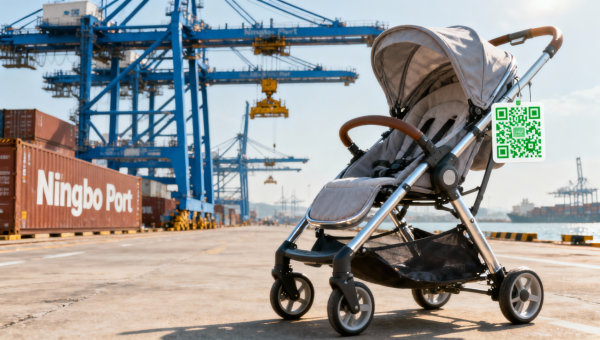
On May 10, 2026, Ningbo Customs and the Ningbo Municipal Administration for Market Regulation jointly launched a pilot program for an infant product ‘Green Clearance Code’ at Ningbo Port — the first such initiative in China targeting baby gear and strollers. Leveraging full compliance with GB 31701-2026 (covering mechanical/physical, flammability, and chemical safety modules), the scheme enables near-instant customs release, significantly accelerating export throughput for certified products.
Event Overview
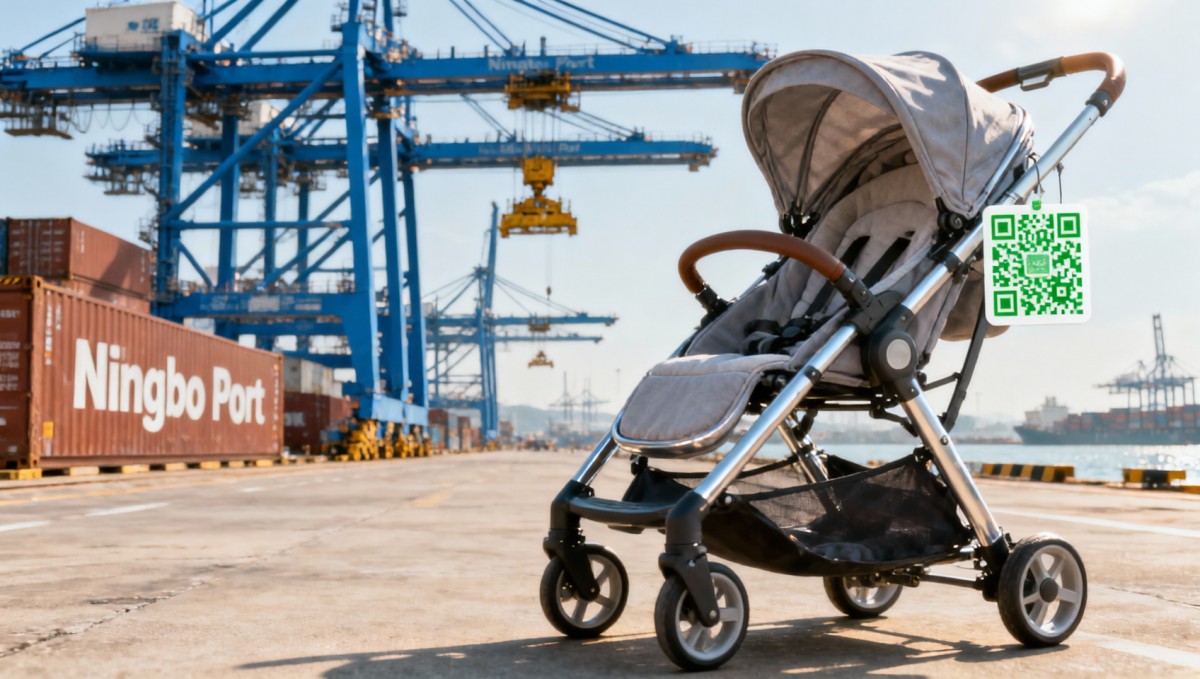
Ningbo Customs and the Ningbo Municipal Administration for Market Regulation rolled out the ‘Green Clearance Code’ pilot for infant products on May 10, 2026. The system applies to the full range of baby gear and strollers. Exporters presenting a valid, complete GB 31701-2026 test report — verified across mechanical/physical, flammability, and chemical safety domains — may generate a dynamic QR code. At the port, automated inspection systems recognize the code and trigger immediate release. Average clearance time dropped from 48 hours to 1.2 hours. Among the first 37 participating exporters, weekly shipment volume rose 40% year-on-year during the first week of May 2026.
Industries Affected
Direct Export Enterprises: These firms face reduced lead times and lower demurrage/storage costs due to accelerated clearance. The 40% shipment increase observed in the pilot’s first week reflects improved order fulfillment capacity — particularly valuable for time-sensitive seasonal demand (e.g., Q3 back-to-school or holiday inventory builds). However, eligibility is strictly contingent on holding up-to-date, full-scope GB 31701-2026 reports; partial or legacy certifications do not qualify.
Raw Material Suppliers: Suppliers of plastics, flame-retardant textiles, metal hardware, and non-toxic coatings are seeing increased specification scrutiny. Buyers now explicitly require documentation traceable to GB 31701-2026 sub-clauses (e.g., EN71-3 migration limits for coatings, ASTM F963-comparable mechanical testing for plastics). This shifts procurement emphasis from price alone toward verifiable, test-ready material pedigrees.
Contract Manufacturing & OEM Facilities: Factories producing baby strollers or infant carriers must align internal quality control checkpoints with GB 31701-2026’s tri-module structure. Pre-shipment sampling now routinely includes third-party verification of both finished-product assembly and component-level compliance (e.g., hinge torque, harness tensile strength, formaldehyde content in fabrics). Non-conformance at any stage invalidates the entire report required for the Green Clearance Code.
Supply Chain Service Providers: Logistics intermediaries, testing labs, and certification consultants are adapting service offerings. Testing labs report rising demand for bundled GB 31701-2026 full-scope packages with report issuance within 5 working days. Customs brokers are integrating QR code generation workflows into their digital declaration platforms. Meanwhile, freight forwarders are revising transit time guarantees — now quoting ‘door-to-port’ windows under 72 hours for compliant shipments.
Key Considerations and Recommended Actions
Verify Report Validity and Scope
Confirm that existing GB 31701-2026 reports include all three mandatory modules (mechanical/physical, flammability, chemical) and were issued by CNAS-accredited laboratories. Reports referencing older editions (e.g., GB 31701-2015) or omitting one module are ineligible.
Align Internal QC Protocols with Module-Specific Requirements
Map production line checkpoints to GB 31701-2026 clauses: e.g., torque testing for folding mechanisms (Clause 4.5), surface coating migration tests (Annex B), and small-parts detachment force thresholds (Clause 4.3). Document each step to support audit readiness.
Engage Accredited Labs Early in Product Development
Integrate testing timelines into new product introduction (NPI) schedules. Allow ≥10 working days for full-scope GB 31701-2026 evaluation — especially where iterative design changes affect chemical composition or structural integrity.
Update Digital Customs Interfaces
Ensure ERP or customs declaration systems can ingest and transmit structured test report metadata (lab ID, report number, issue date, scope codes) to generate compliant Green Clearance Codes. Manual entry is error-prone and disqualifies automatic validation.
Editorial Insight / Industry Observation
Observably, this pilot is less about ‘regulatory easing’ and more about regulatory precision: it rewards upstream compliance rigor with downstream operational efficiency. Analysis shows that the 40% shipment lift stems not from expanded capacity, but from compressed cycle times — freeing up container slots, warehouse space, and working capital. From an industry perspective, the Green Clearance Code functions as a de facto compliance benchmark, potentially influencing buyer sourcing decisions beyond Ningbo Port. Current evidence does not yet confirm whether other Chinese ports will adopt similar schemes — however, the model’s reliance on standardized, machine-readable compliance data makes replication technically feasible.
Conclusion
This initiative marks a tangible shift toward outcome-based trade facilitation — where verified safety performance directly translates into logistical advantage. It signals growing alignment between domestic regulatory infrastructure and global market expectations for infant product safety. While still limited to a pilot phase, its early metrics suggest scalability could reshape how compliance investment is valued across the baby product supply chain — not as a cost center, but as a throughput accelerator.
Source Attribution
Official announcement issued by Ningbo Customs and Ningbo Municipal Administration for Market Regulation, May 10, 2026. Public notice accessible via Ningbo Customs website and Ningbo Market Regulation Bureau portal. Note: Expansion timeline, national rollout plans, and inclusion of additional product categories (e.g., infant feeding products, nursery furniture) remain unconfirmed and are under active observation.
Related Intelligence
 Skincare OEMAug 16, 2026Amazon Enforces AI Human Metadata Rule for Beauty and Personal Care SellersAmazon now enforces AI human metadata rules for beauty sellers. Learn how to protect listings, traffic, and compliance in skincare, cosmetics, and beauty devices.
 Beauty DevicesAug 15, 2026China to Roll Out Nationwide Cross-Border Cash Pooling for MultinationalsChina to roll out nationwide cross-border cash pooling for multinationals from Sept. 14. Discover how this policy could improve treasury efficiency, liquidity management, and China-linked supply chains.
 Beauty DevicesAug 14, 2026China Imposes Temporary Export Ban on Helium, Affecting Cooling Supply ChainsChina's temporary helium export ban may disrupt cooling supply chains for beauty RF devices and laser systems. Learn what ODMs, buyers, and procurement teams should check now.
![]() Cosmetics & PkgAug 13, 2026PPWR becomes mandatory: Beauty and personal care packaging materials usher in new EPR and PFAS compliance requirementsPPWR takes effect for cosmetics packaging in the EU, bringing EPR registration and PFAS limits. Learn what brands, importers, and suppliers must do now.
Cosmetics & PkgAug 13, 2026PPWR becomes mandatory: Beauty and personal care packaging materials usher in new EPR and PFAS compliance requirementsPPWR takes effect for cosmetics packaging in the EU, bringing EPR registration and PFAS limits. Learn what brands, importers, and suppliers must do now. Cosmetics & PkgAug 12, 2026EU PPWR Now Enforced for Beauty Packaging ComplianceEU PPWR now enforced for beauty packaging compliance: learn how EPR, ERN, heavy metals and PFAS rules affect EU exports, customs clearance and platform sales.
 Cosmetics & PkgAug 11, 2026EU PPWR Rules Take Effect on Aug. 12 for Beauty PackagingEU PPWR rules for beauty packaging take effect on Aug. 12, 2026. Learn key compliance steps, EPR, labeling, PFAS limits, and how to avoid customs delays and fines.
 Smart Pet DevicesAug 10, 2026EU EPR Rules to Cover Smart Pet Devices on Aug. 15EU EPR Rules will cover smart pet devices from Aug. 15, 2026. Learn how smart collars, feeders, and monitoring devices can avoid delisting, customs delays, and compliance risks in the EU.
 Infant Feeding & CareAug 09, 2026CPSC Recalls Baby Sleep Sacks Over Undeclared TDCPPCPSC Recalls Baby Sleep Sacks Over Undeclared TDCPP: learn how this 2026 recall impacts CPC documents, third-party testing, and U.S. baby product compliance for exporters.
 Infant Feeding & CareAug 08, 2026ECHA Adds 5 SVHCs, Importer Notices Due From Oct 2026ECHA adds 5 SVHCs to the Candidate List, with importer notices due from October 2026. Learn how REACH affects exporters, supply chains, and documentation readiness.
 Baby Gear & StrollersAug 07, 2026CPSC Revises Crib Rail Standard for November 2026CPSC revises crib rail standard for November 2026, adding dynamic impact tests and mandatory third-party lab testing. Learn how the new rule affects U.S. market access, compliance, and shipments.
 Electronic & RC ToysAug 06, 2026EU to Require EN IEC 62115:2025 for Electronic ToysEU to Require EN IEC 62115:2025 for Electronic Toys from Oct 1, 2026. Learn scope, battery and AI safety updates, CE compliance risks, and how exporters can avoid customs delays.
 Baby Gear & StrollersAug 05, 2026US Stroller Stability Rule Takes Effect Aug. 15US Stroller Stability Rule Takes Effect Aug. 15: learn how new U.S. stroller compliance, ASTM F833-26a, and CPSC testing rules may affect imports, certification, and shipment readiness.
 Infant Feeding & CareAug 04, 2026ECHA Adds 5 SVHCs, Triggering Baby Care Export ReviewECHA adds 5 SVHCs, prompting an urgent baby care export review for EU-bound products. Learn the 0.1% threshold risks, compliance steps, and how to avoid customs delays and fines.












