
US CPSC Recalls 120K Chinese-Made Baby Walkers
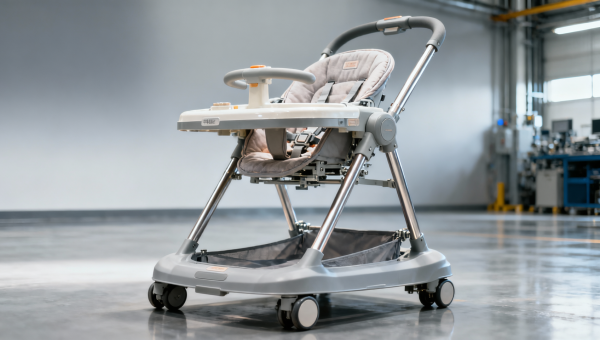
On May 23, 2026, the U.S. Consumer Product Safety Commission (CPSC) issued an urgent recall—Recall #2026-142—for approximately 120,000 infant walkers manufactured in China. The action follows three documented tip-over incidents linked to structural instability during high-speed turning maneuvers. The recall directly impacts U.S. infant mobility product markets and signals heightened regulatory scrutiny across global supply chains serving North American retailers.
Event Overview
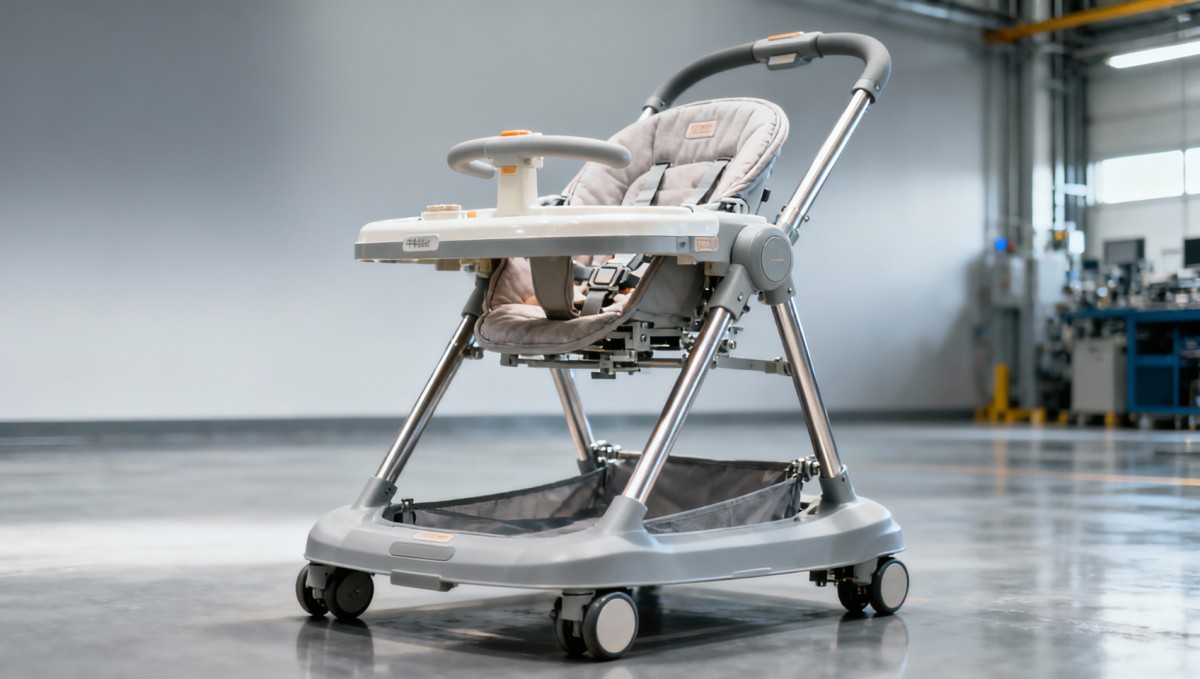
The CPSC announced Recall #2026-142 on May 23, 2026, targeting a specific model of baby walker produced under OEM arrangement in China. The identified hazard is a design-related center-of-gravity flaw in the base structure, resulting in loss of stability during dynamic directional changes. Units were distributed through major U.S. retail channels including Walmart and Target. No injuries have been reported beyond the three tip-over events, all involving unoccupied units during testing or incidental contact. The CPSC has initiated unannounced ‘surge inspections’ for functionally similar products and plans to implement enhanced structural strength and dynamic stability testing protocols starting in June 2026.
Industries Affected
Direct Trading Enterprises: Export-oriented trading companies acting as intermediaries between Chinese manufacturers and U.S. importers face immediate exposure. Their liability may extend beyond contractual indemnity clauses due to CPSC’s increasing emphasis on ‘responsible party’ accountability—even when no brand label is affixed. Impact manifests in delayed shipments, increased pre-shipment verification costs, and potential loss of retail shelf access pending compliance revalidation.
Raw Material Suppliers: Suppliers of molded ABS/PP components, cast aluminum hubs, and spring-loaded brake mechanisms may see revised specification demands—particularly around material tensile strength reporting, batch traceability, and dimensional tolerance documentation. While not directly cited in the recall, downstream testing failures often trigger upstream material certification reviews by importers’ QA teams.
Contract Manufacturing Firms: OEM/ODM facilities producing infant mobility products are now subject to intensified third-party audit frequency—not only for ISO 9001 but specifically for ASTM F963-23 Section 5.12 (dynamic stability) and CPSC’s newly emphasized ‘corner-turning acceleration’ test protocol. Facilities lacking in-house mechanical simulation capability or certified lab partnerships will likely experience longer lead times for new model approvals.
Supply Chain Service Providers: Customs brokers and logistics firms handling infant product consignments must now anticipate additional document requests—including full assembly schematics, weight distribution diagrams, and dynamic test reports—prior to U.S. entry. Some forwarders report preliminary delays at ports of entry for non-pre-cleared baby walker shipments, citing CPSC’s informal coordination with CBP to flag high-risk HTS codes (e.g., 9503.00.0080).
Key Focus Areas & Recommended Actions
Verify Dynamic Stability Test Protocols Against Updated CPSC Guidance
Manufacturers and traders should cross-check existing test reports against CPSC’s May 2026 memo clarifying minimum lateral acceleration thresholds (≥1.2g) and required sensor placement for tip-over detection. Retesting may be necessary even for previously certified models if test methodology predates the updated interpretation.
Review OEM Contract Liability Clauses for ‘Design Responsibility’ Allocation
Contracts assigning full design authority to the overseas buyer do not automatically insulate Chinese manufacturers from CPSC enforcement. Analysis shows CPSC increasingly treats physical product configuration—including base geometry and wheel pivot angles—as jointly determined facts requiring shared technical documentation. Parties should audit contract annexes for explicit design control records and version-controlled CAD files.
Prepare for Expanded Traceability Requirements in Q3 2026
While not yet mandated, CPSC’s June 2026 inspection guidance references pilot traceability frameworks requiring lot-level mapping of base plate injection molds, wheel axle suppliers, and final assembly line timestamps. Proactive implementation—especially QR-coded component tagging—is advised for exporters anticipating retailer-led compliance mandates by Q3.
Editorial Perspective / Industry Observation
Observably, this recall marks a strategic pivot—not just a reactive safety intervention. CPSC’s decision to initiate surge inspections *before* publishing formal rulemaking suggests a deliberate effort to shape industry behavior through enforcement precedent rather than regulation alone. From an industry perspective, the focus on ‘dynamic’ (not static) stability reflects growing recognition that real-world infant use patterns—especially rapid pivoting on hard surfaces—expose flaws invisible in traditional tilt-table tests. Current more relevant concern is less about single-model failure and more about whether legacy testing infrastructures across Asia can adapt quickly enough to simulate multi-axis motion profiles without costly lab upgrades.
Conclusion
This recall serves as a calibrated stress test for cross-border infant product governance. It does not signal broad-based restrictions on Chinese-made mobility aids—but it does redefine evidentiary expectations for structural validation. A rational conclusion is that compliance is shifting from ‘documented conformity’ toward ‘demonstrated behavioral resilience’ under variable operational conditions. That transition favors vertically integrated manufacturers with embedded engineering validation capacity—and pressures fragmented supply chains to consolidate technical oversight.
Source Attribution
Primary source: U.S. CPSC Official Recall Notice #2026-142, published May 23, 2026 (https://www.cpsc.gov/Recalls/2026/baby-walker-recall). Supporting guidance: CPSC Interim Inspection Protocol Memo, May 2026 (internal reference CPSC-IP-2026-05-TR). Note: Formal updates to 16 CFR Part 1225 (Infant Walkers Standard) are expected in Q4 2026; stakeholders should monitor Federal Register notices for proposed rule language and comment deadlines.
Related Intelligence
 Skincare OEMAug 16, 2026Amazon Enforces AI Human Metadata Rule for Beauty and Personal Care SellersAmazon now enforces AI human metadata rules for beauty sellers. Learn how to protect listings, traffic, and compliance in skincare, cosmetics, and beauty devices.
 Beauty DevicesAug 15, 2026China to Roll Out Nationwide Cross-Border Cash Pooling for MultinationalsChina to roll out nationwide cross-border cash pooling for multinationals from Sept. 14. Discover how this policy could improve treasury efficiency, liquidity management, and China-linked supply chains.
 Beauty DevicesAug 14, 2026China Imposes Temporary Export Ban on Helium, Affecting Cooling Supply ChainsChina's temporary helium export ban may disrupt cooling supply chains for beauty RF devices and laser systems. Learn what ODMs, buyers, and procurement teams should check now.
![]() Cosmetics & PkgAug 13, 2026PPWR becomes mandatory: Beauty and personal care packaging materials usher in new EPR and PFAS compliance requirementsPPWR takes effect for cosmetics packaging in the EU, bringing EPR registration and PFAS limits. Learn what brands, importers, and suppliers must do now.
Cosmetics & PkgAug 13, 2026PPWR becomes mandatory: Beauty and personal care packaging materials usher in new EPR and PFAS compliance requirementsPPWR takes effect for cosmetics packaging in the EU, bringing EPR registration and PFAS limits. Learn what brands, importers, and suppliers must do now. Cosmetics & PkgAug 12, 2026EU PPWR Now Enforced for Beauty Packaging ComplianceEU PPWR now enforced for beauty packaging compliance: learn how EPR, ERN, heavy metals and PFAS rules affect EU exports, customs clearance and platform sales.
 Cosmetics & PkgAug 11, 2026EU PPWR Rules Take Effect on Aug. 12 for Beauty PackagingEU PPWR rules for beauty packaging take effect on Aug. 12, 2026. Learn key compliance steps, EPR, labeling, PFAS limits, and how to avoid customs delays and fines.
 Smart Pet DevicesAug 10, 2026EU EPR Rules to Cover Smart Pet Devices on Aug. 15EU EPR Rules will cover smart pet devices from Aug. 15, 2026. Learn how smart collars, feeders, and monitoring devices can avoid delisting, customs delays, and compliance risks in the EU.
 Infant Feeding & CareAug 09, 2026CPSC Recalls Baby Sleep Sacks Over Undeclared TDCPPCPSC Recalls Baby Sleep Sacks Over Undeclared TDCPP: learn how this 2026 recall impacts CPC documents, third-party testing, and U.S. baby product compliance for exporters.
 Infant Feeding & CareAug 08, 2026ECHA Adds 5 SVHCs, Importer Notices Due From Oct 2026ECHA adds 5 SVHCs to the Candidate List, with importer notices due from October 2026. Learn how REACH affects exporters, supply chains, and documentation readiness.
 Baby Gear & StrollersAug 07, 2026CPSC Revises Crib Rail Standard for November 2026CPSC revises crib rail standard for November 2026, adding dynamic impact tests and mandatory third-party lab testing. Learn how the new rule affects U.S. market access, compliance, and shipments.
 Electronic & RC ToysAug 06, 2026EU to Require EN IEC 62115:2025 for Electronic ToysEU to Require EN IEC 62115:2025 for Electronic Toys from Oct 1, 2026. Learn scope, battery and AI safety updates, CE compliance risks, and how exporters can avoid customs delays.
 Baby Gear & StrollersAug 05, 2026US Stroller Stability Rule Takes Effect Aug. 15US Stroller Stability Rule Takes Effect Aug. 15: learn how new U.S. stroller compliance, ASTM F833-26a, and CPSC testing rules may affect imports, certification, and shipment readiness.
 Infant Feeding & CareAug 04, 2026ECHA Adds 5 SVHCs, Triggering Baby Care Export ReviewECHA adds 5 SVHCs, prompting an urgent baby care export review for EU-bound products. Learn the 0.1% threshold risks, compliance steps, and how to avoid customs delays and fines.












