
Electric Breast Pump OEM: Cost, Compliance, and MOQ Basics
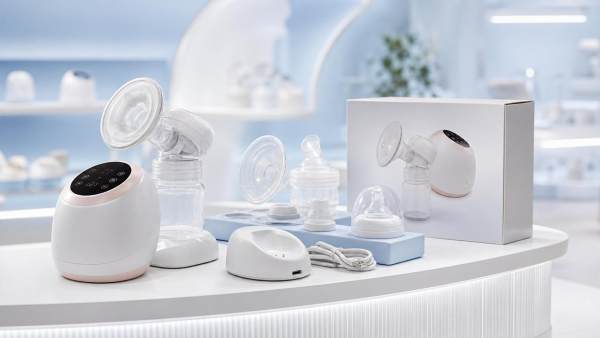
Electric Breast Pump OEM: Cost, Compliance, and MOQ Basics
For procurement teams evaluating electric breast pump OEM partners, understanding cost structure, compliance requirements, and MOQ expectations is essential to reducing sourcing risk and improving margin control.
This guide breaks down the key factors buyers should review before shortlisting manufacturers, helping you compare suppliers more efficiently and make informed, scalable purchasing decisions in a highly regulated category.
Why electric breast pump OEM sourcing needs deeper review
The electric breast pump category looks simple at first glance. In practice, it combines electronics, food-contact materials, and maternal care safety.
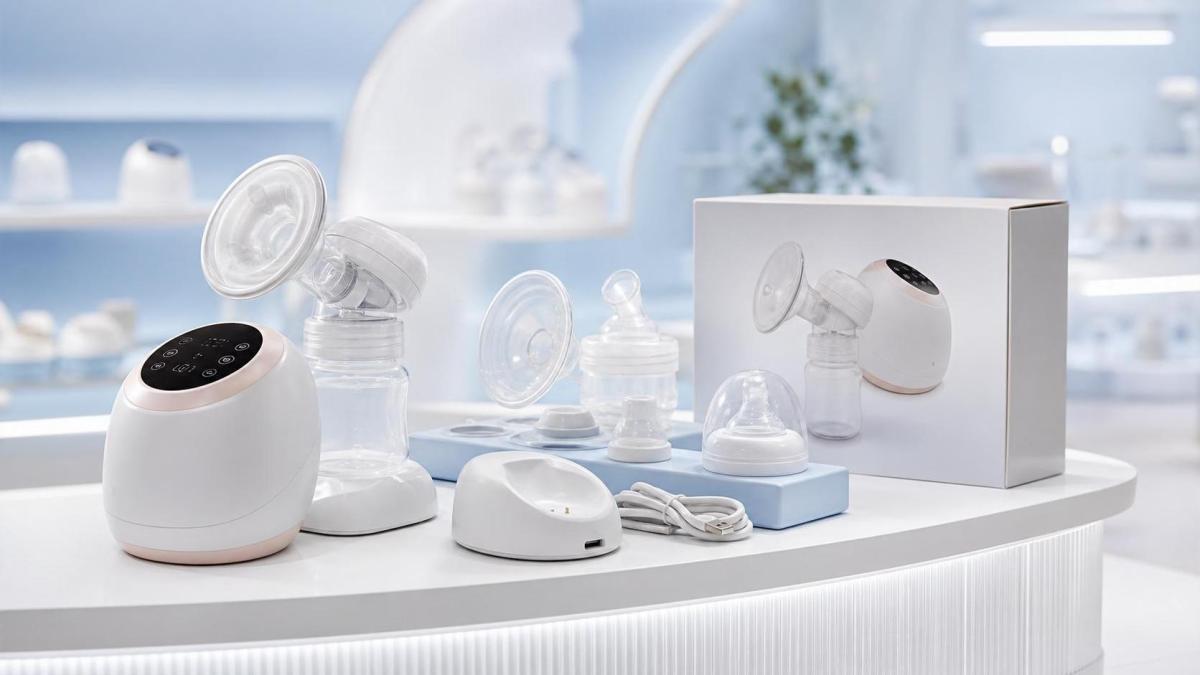
That mix changes how an electric breast pump OEM should be evaluated. Price alone rarely predicts long-term supply performance.
A cheaper quote can hide tooling gaps, unstable components, or incomplete documentation. Those issues usually appear later, when fixing them costs more.
More buyers now ask for quiet motors, closed systems, wearable formats, and easier cleaning. This also affects certification scope and production complexity.
In real sourcing work, the better question is not just, “What is your unit price?” It is, “What supports that unit price?”
- Does the factory own core motor and PCB integration knowledge?
- Can it manage compliance for destination markets?
- Is the MOQ realistic for launch, replenishment, and product testing?
- Can the supplier scale without changing quality performance?
These questions form the baseline for selecting an electric breast pump OEM that supports both margin and brand stability.
Understanding electric breast pump OEM cost structure
Cost analysis starts with breaking the quote into visible layers. This makes supplier comparison cleaner and more objective.
1. Core product cost
The largest portion usually comes from the motor, battery, PCB, shell materials, silicone parts, charger, tubing, and packaging.
If the electric breast pump OEM offers wearable models, expect higher component cost and tighter assembly tolerances.
Silent motor claims also matter. Lower noise often requires better engineering, not just a different marketing line.
2. Tooling and development cost
Private-label projects may require mold changes, logo tools, color matching, package design adjustment, or app pairing support.
Some electric breast pump OEM suppliers amortize tooling into future orders. Others charge it upfront. Clarify this early.
3. Compliance cost
Testing and certification can materially affect total landed cost. This is especially true for regulated retail channels.
If the electric breast pump OEM already holds relevant reports, the path is faster. If not, timeline and expense increase.
4. Operational cost
Operational costs include defect handling, spare parts support, labeling changes, inspection fees, and carton optimization.
These items often look small, but they affect margin over repeated orders.
A reliable electric breast pump OEM should explain cost drivers clearly. If quote logic feels vague, risk is usually higher.
Compliance basics that should never be treated as optional
Compliance is often where sourcing decisions become expensive. A strong electric breast pump OEM needs more than attractive samples.
It should provide structured documentation, stable test history, and a clear understanding of destination market requirements.
Key certification and documentation areas
- FDA-related readiness for the US market, depending on product classification and claims.
- CE documentation for applicable European market access.
- RoHS, REACH, EMC, and electrical safety reports where relevant.
- Biocompatibility or food-contact material evidence for silicone and collection parts.
- Battery transport compliance for air or sea shipment.
- User manual, warnings, traceability labels, and carton marks.
From a procurement perspective, compliance is not only about passing customs. It also protects channel access and return rates.
A common issue appears when an electric breast pump OEM shows old reports for a similar model, not the exact final configuration.
That gap matters. A battery change, PCB revision, or silicone supplier switch can affect report relevance.
Useful compliance questions to ask
- Are reports issued for this exact model and bill of materials?
- Which lab issued them, and when do they expire?
- What changes require retesting?
- Who controls document updates during production?
- Can batch traceability link finished goods to component lots?
The best electric breast pump OEM partners answer these questions quickly, with documentation that is current and consistent.
MOQ basics: how to evaluate flexibility without creating hidden cost
MOQ is often discussed too narrowly. It is not just the minimum order quantity on a quotation sheet.
For electric breast pump OEM projects, MOQ usually has several layers that affect planning, cash flow, and inventory risk.
Typical MOQ layers
- Product MOQ for each model.
- Color MOQ for shell or silicone variation.
- Packaging MOQ for custom boxes, inserts, and manuals.
- Component MOQ for batteries, adapters, or motors.
- Accessory MOQ for flanges, valves, and replacement sets.
This is why a low stated MOQ can be misleading. The electric breast pump OEM may still require higher commitments through packaging or components.
In practical terms, MOQ flexibility is useful only when it matches launch strategy. Small first orders help test demand, but not if unit cost becomes unworkable.
How to assess MOQ quality
Ask whether the electric breast pump OEM can separate pilot production from mass production terms.
Check if neutral stock can reduce the first run. See whether accessory bundling can lower carton complexity.
Also review reorder logic. Some suppliers support mixed-model containers or rolling forecasts, which improves stock balance.
A healthy MOQ setup should support three goals:
- Controlled launch risk.
- Predictable margin structure.
- Scalable replenishment planning.
How to compare electric breast pump OEM suppliers more effectively
Once cost, compliance, and MOQ are visible, supplier comparison becomes more disciplined. This is where good decisions usually take shape.
Instead of reviewing quotes in isolation, compare the total sourcing package behind each electric breast pump OEM offer.
Use a practical review checklist
- Sample consistency versus production promise.
- Documentation completeness and update control.
- Noise level, suction stability, and battery runtime.
- Defect response terms and spare part support.
- MOQ flexibility across SKUs and packaging options.
- Lead time reliability during peak production periods.
It also helps to score each electric breast pump OEM using weighted criteria. That reduces emotional bias during quote comparison.
This kind of framework makes discussions clearer internally and helps justify supplier selection with stronger evidence.
Common sourcing mistakes and how to avoid them
Several mistakes repeat across the electric breast pump OEM category. Most are preventable with tighter early-stage review.
- Choosing based on the lowest quote without checking component equivalence.
- Assuming existing certificates cover a customized version.
- Accepting MOQ terms without unpacking packaging and accessory minimums.
- Skipping production audit questions because the sample looks good.
- Ignoring post-shipment defect handling until after the PO is placed.
A dependable electric breast pump OEM relationship starts before negotiation. It begins with disciplined qualification and realistic cost modeling.
Final takeaways for a stronger sourcing decision
The electric breast pump OEM decision should balance speed, compliance, and commercial control. Focusing on only one of those usually creates problems later.
The most reliable suppliers explain their cost structure, show market-ready documentation, and offer MOQ logic that fits actual demand planning.
In a regulated baby and maternity category, stable execution matters more than a visually strong quotation sheet.
When comparing an electric breast pump OEM shortlist, use a structured review process, verify every assumption, and test supplier flexibility before scaling volume.
That approach improves margin visibility, reduces launch delays, and supports a more resilient product line over time.
For teams building the next sourcing round, start with a quote matrix, a compliance checklist, and a clear MOQ scenario model. That usually reveals the right partner faster.
Related Intelligence
 Skincare OEMAug 16, 2026Amazon Enforces AI Human Metadata Rule for Beauty and Personal Care SellersAmazon now enforces AI human metadata rules for beauty sellers. Learn how to protect listings, traffic, and compliance in skincare, cosmetics, and beauty devices.
 Beauty DevicesAug 15, 2026China to Roll Out Nationwide Cross-Border Cash Pooling for MultinationalsChina to roll out nationwide cross-border cash pooling for multinationals from Sept. 14. Discover how this policy could improve treasury efficiency, liquidity management, and China-linked supply chains.
 Beauty DevicesAug 14, 2026China Imposes Temporary Export Ban on Helium, Affecting Cooling Supply ChainsChina's temporary helium export ban may disrupt cooling supply chains for beauty RF devices and laser systems. Learn what ODMs, buyers, and procurement teams should check now.
![]() Cosmetics & PkgAug 13, 2026PPWR becomes mandatory: Beauty and personal care packaging materials usher in new EPR and PFAS compliance requirementsPPWR takes effect for cosmetics packaging in the EU, bringing EPR registration and PFAS limits. Learn what brands, importers, and suppliers must do now.
Cosmetics & PkgAug 13, 2026PPWR becomes mandatory: Beauty and personal care packaging materials usher in new EPR and PFAS compliance requirementsPPWR takes effect for cosmetics packaging in the EU, bringing EPR registration and PFAS limits. Learn what brands, importers, and suppliers must do now. Cosmetics & PkgAug 12, 2026EU PPWR Now Enforced for Beauty Packaging ComplianceEU PPWR now enforced for beauty packaging compliance: learn how EPR, ERN, heavy metals and PFAS rules affect EU exports, customs clearance and platform sales.
 Cosmetics & PkgAug 11, 2026EU PPWR Rules Take Effect on Aug. 12 for Beauty PackagingEU PPWR rules for beauty packaging take effect on Aug. 12, 2026. Learn key compliance steps, EPR, labeling, PFAS limits, and how to avoid customs delays and fines.
 Smart Pet DevicesAug 10, 2026EU EPR Rules to Cover Smart Pet Devices on Aug. 15EU EPR Rules will cover smart pet devices from Aug. 15, 2026. Learn how smart collars, feeders, and monitoring devices can avoid delisting, customs delays, and compliance risks in the EU.
 Infant Feeding & CareAug 09, 2026CPSC Recalls Baby Sleep Sacks Over Undeclared TDCPPCPSC Recalls Baby Sleep Sacks Over Undeclared TDCPP: learn how this 2026 recall impacts CPC documents, third-party testing, and U.S. baby product compliance for exporters.
 Infant Feeding & CareAug 08, 2026ECHA Adds 5 SVHCs, Importer Notices Due From Oct 2026ECHA adds 5 SVHCs to the Candidate List, with importer notices due from October 2026. Learn how REACH affects exporters, supply chains, and documentation readiness.
 Baby Gear & StrollersAug 07, 2026CPSC Revises Crib Rail Standard for November 2026CPSC revises crib rail standard for November 2026, adding dynamic impact tests and mandatory third-party lab testing. Learn how the new rule affects U.S. market access, compliance, and shipments.
 Electronic & RC ToysAug 06, 2026EU to Require EN IEC 62115:2025 for Electronic ToysEU to Require EN IEC 62115:2025 for Electronic Toys from Oct 1, 2026. Learn scope, battery and AI safety updates, CE compliance risks, and how exporters can avoid customs delays.
 Baby Gear & StrollersAug 05, 2026US Stroller Stability Rule Takes Effect Aug. 15US Stroller Stability Rule Takes Effect Aug. 15: learn how new U.S. stroller compliance, ASTM F833-26a, and CPSC testing rules may affect imports, certification, and shipment readiness.
 Infant Feeding & CareAug 04, 2026ECHA Adds 5 SVHCs, Triggering Baby Care Export ReviewECHA adds 5 SVHCs, prompting an urgent baby care export review for EU-bound products. Learn the 0.1% threshold risks, compliance steps, and how to avoid customs delays and fines.












