
ODM Baby vs Private Label: Cost, Speed, and Brand Control
ODM Baby vs Private Label: Cost, Speed, and Brand Control
For business decision-makers evaluating baby product sourcing, understanding ODM baby strategies versus private label is essential to balancing cost, launch speed, and long-term brand control.
This guide explores how each model affects margins, compliance, customization, and market agility, helping retail buyers and brand owners choose the right path for scalable growth.
Why the ODM Baby Decision Matters More Now
The baby category looks attractive, but it is rarely simple. Safety expectations are higher, trend cycles are shorter, and retailers face more pressure on margins.
That is why the ODM baby model keeps gaining attention. It offers a faster route to market than building a product completely from scratch.
Private label, however, still appeals to brands that want more ownership over positioning, packaging, and future portfolio expansion.
In practical sourcing work, the choice is not only about manufacturing. It shapes pricing power, compliance risk, launch timing, and how defensible the brand becomes.
For travel service buyers selling family travel essentials, baby travel accessories, or curated retail packs, this decision has direct commercial impact.
What ODM Baby and Private Label Actually Mean
An ODM baby supplier develops the core product design, technical structure, and often the initial compliance pathway before the buyer enters.
The buyer then customizes selected elements. That usually includes color, packaging, logo, bundled accessories, and sometimes materials or minor functions.
Private label usually starts with an existing product platform too, but brand control tends to center more on market presentation than technical ownership.
In many markets, the line between ODM baby and private label overlaps. The real difference lies in how much design input and exclusivity the buyer secures.
A useful question is this: are you buying a ready-made product with branding, or shaping a semi-custom solution with a strategic factory partner?
Cost Comparison: Upfront Savings vs Long-Term Margin Logic
Cost is usually the first filter. On the surface, an ODM baby approach often looks cheaper because development expenses are shared across multiple customers.
Tooling costs may already be absorbed. Certification documents may already exist. Sampling also tends to move faster and with fewer engineering revisions.
Private label can also be cost-effective, especially when the supplier offers a mature catalog. Still, pricing varies more based on packaging complexity and order volume.
The hidden issue is margin durability. A low-entry ODM baby product may face stronger price competition if similar versions are sold to other buyers.
That means short-term savings can weaken long-term pricing power. If the product is easy to compare, distributors and marketplaces will push prices down.
A better cost analysis should include:
- Initial tooling and sample development costs
- Certification update expenses by destination market
- MOQ pressure and inventory carrying risk
- Price erosion risk over twelve to twenty-four months
- Potential for premium packaging or bundled offers
In real sourcing decisions, the cheapest unit cost is rarely the best commercial outcome.
Speed to Market: Where ODM Baby Usually Wins
If launch speed matters, ODM baby usually has the edge. The factory already understands the product architecture, manufacturing steps, and common compliance hurdles.
That reduces development uncertainty. It also shortens the time needed for sourcing teams to compare technical feasibility across several suppliers.
This matters in seasonal programs. It matters even more in travel retail, where product assortments often align with holiday peaks and family travel demand.
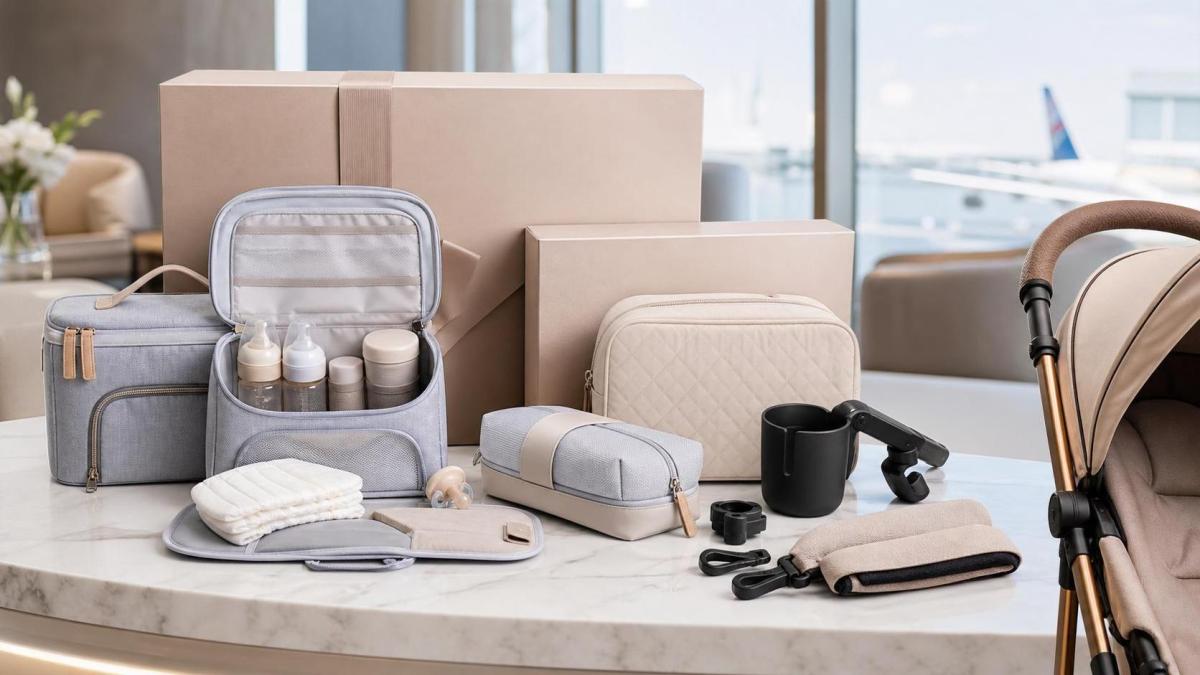
Examples include portable baby feeding kits, stroller accessories, diaper travel organizers, and compact care sets for hospitality or tourism channels.
A private label route can still move quickly when the supplier has organized documentation and stable production lines. But it often depends on how much customization is added.
The more packaging layers, inserts, bundled components, or country-specific claims involved, the slower the approval process becomes.
A simple timing rule
Choose ODM baby when speed is central to the business case. Choose private label when timing is flexible and brand distinction drives the return.
Brand Control: The Real Strategic Trade-Off
Brand control is where sourcing decisions become strategic. This is also where many teams underestimate the long-term consequences.
With ODM baby, the factory often retains the core product know-how. Buyers may receive customization, but not deep ownership of the concept.
That is not always a problem. If the goal is rapid category entry, limited exclusivity may be an acceptable trade.
Private label usually gives more room to shape the customer story. Packaging, claims hierarchy, visual identity, and cross-category consistency become easier to manage.
For decision-makers building a multi-market retail brand, that flexibility matters. It supports repeat purchase, channel differentiation, and stronger negotiation with distributors.
The key is not abstract control. The key is whether control creates measurable commercial value.
Compliance and Risk: The Baby Category Changes the Equation
Baby products are not forgiving. Materials, labels, claims, and testing records all require more discipline than many adjacent consumer categories.
This is one reason the ODM baby model can be attractive. Experienced factories often know the recurring test standards and documentation patterns.
Still, buyers should never assume existing certificates fully cover a new market, new material, or new packaging claim.
In practice, even a small product change can trigger fresh validation. This is especially true for FDA, CE, and CPC-related pathways.
Private label adds another layer because the brand owner may carry greater visibility and reputational exposure in the target market.
A smart sourcing checklist should confirm:
- Material specifications match submitted test reports
- Claims on packaging match legal review
- Factory records support traceability
- Ongoing quality controls fit production scale
- Destination market labeling rules are updated
In short, compliance strength can make an ODM baby offer look cheaper, faster, and safer at the same time. But only if verified properly.
When ODM Baby Is the Better Choice
ODM baby is usually the better option when the market window is short and technical complexity is already solved by the supplier.
It also works well when the product is not the entire brand story, but part of a broader retail or travel service offer.
Typical fit scenarios include:
- Testing demand before investing in a larger range
- Launching baby travel accessories into seasonal channels
- Adding compliant products to hospitality or tourism programs
- Building speed in fast-moving e-commerce campaigns
- Reducing development burden for lean procurement teams
From a portfolio perspective, ODM baby can be a disciplined first step. It lets teams validate demand before committing to deeper differentiation.
When Private Label Makes More Sense
Private label becomes stronger when brand architecture matters more than raw speed. This is common when the product line supports premium positioning.
It is also a better fit when several SKUs must look and feel consistent across channels, markets, and customer touchpoints.
For travel service brands, that might include curated family welcome kits, airport retail packs, resort baby convenience sets, or loyalty-driven product bundles.
In those cases, packaging experience and customer perception can be more valuable than shaving a few weeks off the sourcing cycle.
Private label also gives more room for future assortment planning. Once the visual and compliance systems are structured, line extensions become easier.
How to Make the Final Decision
A good sourcing decision starts with business priorities, not factory presentations. That point is easy to miss when teams focus only on quotations.
Use this decision sequence:
- Define whether speed, margin, or differentiation matters most.
- Check how much technical customization is truly necessary.
- Review compliance gaps by destination market.
- Model price erosion risk over the next two buying cycles.
- Assess whether brand control will create measurable premium value.
If quick validation is the goal, ODM baby is often the practical answer. If strategic brand ownership matters more, private label usually wins.
The strongest teams do not treat this as a binary choice forever. They often begin with ODM baby, then shift toward deeper brand control once demand is proven.
That phased approach reduces risk, preserves flexibility, and aligns sourcing decisions with real market evidence. In a competitive baby category, that is often the smartest path.
Related Intelligence
 Skincare OEMAug 16, 2026Amazon Enforces AI Human Metadata Rule for Beauty and Personal Care SellersAmazon now enforces AI human metadata rules for beauty sellers. Learn how to protect listings, traffic, and compliance in skincare, cosmetics, and beauty devices.
 Beauty DevicesAug 15, 2026China to Roll Out Nationwide Cross-Border Cash Pooling for MultinationalsChina to roll out nationwide cross-border cash pooling for multinationals from Sept. 14. Discover how this policy could improve treasury efficiency, liquidity management, and China-linked supply chains.
 Beauty DevicesAug 14, 2026China Imposes Temporary Export Ban on Helium, Affecting Cooling Supply ChainsChina's temporary helium export ban may disrupt cooling supply chains for beauty RF devices and laser systems. Learn what ODMs, buyers, and procurement teams should check now.
![]() Cosmetics & PkgAug 13, 2026PPWR becomes mandatory: Beauty and personal care packaging materials usher in new EPR and PFAS compliance requirementsPPWR takes effect for cosmetics packaging in the EU, bringing EPR registration and PFAS limits. Learn what brands, importers, and suppliers must do now.
Cosmetics & PkgAug 13, 2026PPWR becomes mandatory: Beauty and personal care packaging materials usher in new EPR and PFAS compliance requirementsPPWR takes effect for cosmetics packaging in the EU, bringing EPR registration and PFAS limits. Learn what brands, importers, and suppliers must do now. Cosmetics & PkgAug 12, 2026EU PPWR Now Enforced for Beauty Packaging ComplianceEU PPWR now enforced for beauty packaging compliance: learn how EPR, ERN, heavy metals and PFAS rules affect EU exports, customs clearance and platform sales.
 Cosmetics & PkgAug 11, 2026EU PPWR Rules Take Effect on Aug. 12 for Beauty PackagingEU PPWR rules for beauty packaging take effect on Aug. 12, 2026. Learn key compliance steps, EPR, labeling, PFAS limits, and how to avoid customs delays and fines.
 Smart Pet DevicesAug 10, 2026EU EPR Rules to Cover Smart Pet Devices on Aug. 15EU EPR Rules will cover smart pet devices from Aug. 15, 2026. Learn how smart collars, feeders, and monitoring devices can avoid delisting, customs delays, and compliance risks in the EU.
 Infant Feeding & CareAug 09, 2026CPSC Recalls Baby Sleep Sacks Over Undeclared TDCPPCPSC Recalls Baby Sleep Sacks Over Undeclared TDCPP: learn how this 2026 recall impacts CPC documents, third-party testing, and U.S. baby product compliance for exporters.
 Infant Feeding & CareAug 08, 2026ECHA Adds 5 SVHCs, Importer Notices Due From Oct 2026ECHA adds 5 SVHCs to the Candidate List, with importer notices due from October 2026. Learn how REACH affects exporters, supply chains, and documentation readiness.
 Baby Gear & StrollersAug 07, 2026CPSC Revises Crib Rail Standard for November 2026CPSC revises crib rail standard for November 2026, adding dynamic impact tests and mandatory third-party lab testing. Learn how the new rule affects U.S. market access, compliance, and shipments.
 Electronic & RC ToysAug 06, 2026EU to Require EN IEC 62115:2025 for Electronic ToysEU to Require EN IEC 62115:2025 for Electronic Toys from Oct 1, 2026. Learn scope, battery and AI safety updates, CE compliance risks, and how exporters can avoid customs delays.
 Baby Gear & StrollersAug 05, 2026US Stroller Stability Rule Takes Effect Aug. 15US Stroller Stability Rule Takes Effect Aug. 15: learn how new U.S. stroller compliance, ASTM F833-26a, and CPSC testing rules may affect imports, certification, and shipment readiness.
 Infant Feeding & CareAug 04, 2026ECHA Adds 5 SVHCs, Triggering Baby Care Export ReviewECHA adds 5 SVHCs, prompting an urgent baby care export review for EU-bound products. Learn the 0.1% threshold risks, compliance steps, and how to avoid customs delays and fines.












