
REACH Baby Feeding Products: Testing Scope and Compliance Risks
Why are REACH baby feeding products under closer scrutiny now?
REACH baby feeding products sit at the intersection of chemical safety, retail compliance, and cross-border supply chain risk.
That matters even more when product lines support family travel, hospitality retail, airport shops, and destination-based baby care services.
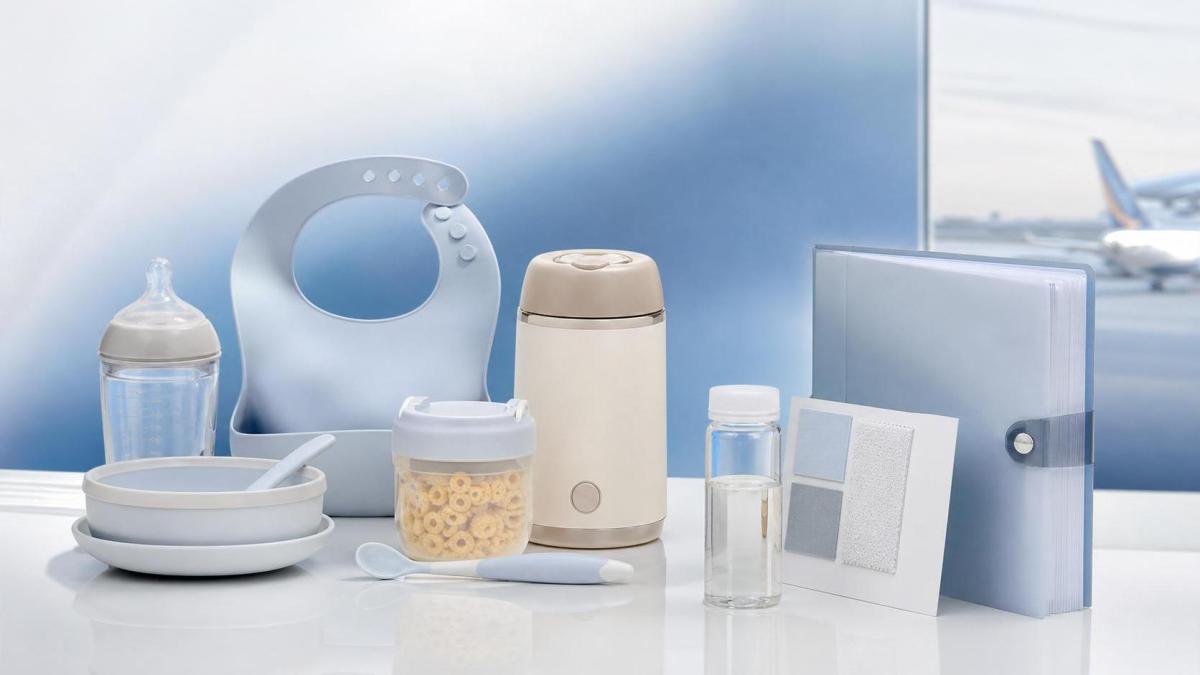
In travel service settings, feeding bottles, bowls, spoons, bibs, snack containers, and portable warmers move through many hands and markets.
A product may be sourced in one country, packed in another, and sold through travel retail or hotel channels across Europe.
That is where REACH baby feeding products become a practical control issue, not just a legal phrase.
The real difficulty is that REACH is not a single test.
It is a framework covering substances, restricted chemicals, SVHC disclosure, and documentation duties across materials and components.
For travel-related retail programs, delays caused by incomplete files can disrupt seasonal launches and replenishment schedules.
This is also why platforms such as Global Consumer Sourcing track compliance as part of wider supply chain resilience.
In practice, the question is rarely whether testing is needed.
The better question is which materials, substances, and records actually determine market access risk.
What does the testing scope usually include for REACH baby feeding products?
The scope depends on material composition, product design, and supplier transparency.
A silicone spoon and a decorated plastic bottle will not carry the same chemical profile.
Still, most REACH baby feeding products are reviewed through several recurring layers.
- SVHC screening for candidate list substances above reporting thresholds.
- Annex XVII restriction checks for phthalates, PAHs, heavy metals, and other regulated substances.
- Material-specific testing for plastics, silicone, rubber, inks, coatings, adhesives, and metal parts.
- Verification of colorants, printed graphics, soft-touch finishes, and decorative trims.
- Document review covering declarations, lab reports, bills of materials, and traceable supplier statements.
The broadest mistakes usually come from assuming the food-contact body is the only concern.
In reality, lids, valves, printed marks, straps, suction bases, and packaging accessories may carry separate risk.
That becomes relevant for travel service channels where compact, portable, multi-part feeding sets are common.
A useful way to frame the scope is to map every component that a lab can isolate and test separately.
If the bill of materials is vague, the testing plan will usually be weak as well.
A quick decision table helps narrow priorities
Before sending samples, it helps to match product features to likely compliance hotspots.
Where do compliance failures usually happen?
Most failures do not start in the laboratory.
They start earlier, when product teams rely on generic declarations or outdated material statements.
One common issue is component substitution after sampling.
A supplier may change a color masterbatch, valve material, or print vendor without updating the file.
Another problem is overconfidence in food-contact compliance alone.
EU food-contact testing and REACH baby feeding products are related, but they are not interchangeable requirements.
Travel service assortments create another pressure point.
Gift sets, travel kits, and seasonal bundles often combine products from multiple factories under one presentation box.
That structure can break traceability if one component lacks current evidence.
The higher-risk warning signs usually include:
- Declarations that do not identify material grades or supplier names.
- Reports issued for similar items rather than the exact model.
- Testing that covers only the main body, not accessories.
- No update process when the REACH candidate list changes.
- Packaging claims that introduce additional chemical or labeling exposure.
When a shipment is tied to airport retail, cruise supply, or destination family packages, timing pressure usually hides these gaps until late.
How should testing be planned when timelines are tight?
A rushed launch does not remove the need for a structured plan.
It just makes prioritization more important.
For REACH baby feeding products, a practical testing plan usually starts with product decomposition.
List every material, direct supplier, color variant, and decorative process.
Then rank them by chemical uncertainty, not by visible size.
A tiny printed scale may deserve more attention than a large polypropylene cup body.
In real sourcing programs, the most efficient sequence often looks like this:
- Review current bills of materials and supplier declarations.
- Identify components with unknown chemistry or recent changes.
- Target high-risk materials for early screening.
- Confirm whether full restriction testing is needed before mass production.
- Lock approved materials and maintain version control.
This approach reduces avoidable rework and supports faster release decisions.
It also aligns with the kind of evidence-driven sourcing logic often highlighted by Global Consumer Sourcing.
The point is not more paperwork for its own sake.
The point is having records strong enough to survive audits, customer review, and regulatory questions.
What is often misunderstood about documents for REACH baby feeding products?
A pass report is helpful, but it is not the whole file.
For REACH baby feeding products, documentation needs to connect the tested sample to the shipped item.
That means model identity, component traceability, supplier linkage, and revision history should all be visible.
More importantly, SVHC obligations may require ongoing attention as the candidate list evolves.
A declaration issued last year may be incomplete today.
The most reliable document set usually includes:
- A current bill of materials with component-level descriptions.
- Supplier declarations tied to exact materials and dates.
- Laboratory reports matching the final construction.
- Change control records for resin, color, print, or hardware modifications.
- A review schedule linked to regulatory updates and annual verification.
This matters in travel service supply chains because assortments often refresh quickly.
Short selling windows leave little room to rebuild a weak technical file after goods are already booked.
How can teams reduce long-term compliance risk without slowing the business?
The strongest control is consistency at the component level.
When approved materials remain stable, REACH baby feeding products become easier to manage across repeat orders and travel retail variants.
It also helps to separate low-risk and high-risk design choices early.
Simple molded parts with limited decoration are easier to control than mixed-material gift sets with printed accessories.
A realistic risk-reduction routine usually includes supplier onboarding, sample retention, document review, and periodic spot checks.
The goal is to catch drift before it reaches customs, retail shelves, or customer complaints.
For organizations tracking sourcing through sector intelligence, that wider view matters.
Regulatory control, retail timing, and destination-channel packaging often affect each other more than expected.
A sensible next step is to review current baby feeding assortments by component, not by finished SKU alone.
Then compare testing scope, supplier evidence, and update frequency against actual route-to-market risk.
That is usually where the most important compliance gaps first become visible.
Related Intelligence
 Skincare OEMAug 16, 2026Amazon Enforces AI Human Metadata Rule for Beauty and Personal Care SellersAmazon now enforces AI human metadata rules for beauty sellers. Learn how to protect listings, traffic, and compliance in skincare, cosmetics, and beauty devices.
 Beauty DevicesAug 15, 2026China to Roll Out Nationwide Cross-Border Cash Pooling for MultinationalsChina to roll out nationwide cross-border cash pooling for multinationals from Sept. 14. Discover how this policy could improve treasury efficiency, liquidity management, and China-linked supply chains.
 Beauty DevicesAug 14, 2026China Imposes Temporary Export Ban on Helium, Affecting Cooling Supply ChainsChina's temporary helium export ban may disrupt cooling supply chains for beauty RF devices and laser systems. Learn what ODMs, buyers, and procurement teams should check now.
![]() Cosmetics & PkgAug 13, 2026PPWR becomes mandatory: Beauty and personal care packaging materials usher in new EPR and PFAS compliance requirementsPPWR takes effect for cosmetics packaging in the EU, bringing EPR registration and PFAS limits. Learn what brands, importers, and suppliers must do now.
Cosmetics & PkgAug 13, 2026PPWR becomes mandatory: Beauty and personal care packaging materials usher in new EPR and PFAS compliance requirementsPPWR takes effect for cosmetics packaging in the EU, bringing EPR registration and PFAS limits. Learn what brands, importers, and suppliers must do now. Cosmetics & PkgAug 12, 2026EU PPWR Now Enforced for Beauty Packaging ComplianceEU PPWR now enforced for beauty packaging compliance: learn how EPR, ERN, heavy metals and PFAS rules affect EU exports, customs clearance and platform sales.
 Cosmetics & PkgAug 11, 2026EU PPWR Rules Take Effect on Aug. 12 for Beauty PackagingEU PPWR rules for beauty packaging take effect on Aug. 12, 2026. Learn key compliance steps, EPR, labeling, PFAS limits, and how to avoid customs delays and fines.
 Smart Pet DevicesAug 10, 2026EU EPR Rules to Cover Smart Pet Devices on Aug. 15EU EPR Rules will cover smart pet devices from Aug. 15, 2026. Learn how smart collars, feeders, and monitoring devices can avoid delisting, customs delays, and compliance risks in the EU.
 Infant Feeding & CareAug 09, 2026CPSC Recalls Baby Sleep Sacks Over Undeclared TDCPPCPSC Recalls Baby Sleep Sacks Over Undeclared TDCPP: learn how this 2026 recall impacts CPC documents, third-party testing, and U.S. baby product compliance for exporters.
 Infant Feeding & CareAug 08, 2026ECHA Adds 5 SVHCs, Importer Notices Due From Oct 2026ECHA adds 5 SVHCs to the Candidate List, with importer notices due from October 2026. Learn how REACH affects exporters, supply chains, and documentation readiness.
 Baby Gear & StrollersAug 07, 2026CPSC Revises Crib Rail Standard for November 2026CPSC revises crib rail standard for November 2026, adding dynamic impact tests and mandatory third-party lab testing. Learn how the new rule affects U.S. market access, compliance, and shipments.
 Electronic & RC ToysAug 06, 2026EU to Require EN IEC 62115:2025 for Electronic ToysEU to Require EN IEC 62115:2025 for Electronic Toys from Oct 1, 2026. Learn scope, battery and AI safety updates, CE compliance risks, and how exporters can avoid customs delays.
 Baby Gear & StrollersAug 05, 2026US Stroller Stability Rule Takes Effect Aug. 15US Stroller Stability Rule Takes Effect Aug. 15: learn how new U.S. stroller compliance, ASTM F833-26a, and CPSC testing rules may affect imports, certification, and shipment readiness.
 Infant Feeding & CareAug 04, 2026ECHA Adds 5 SVHCs, Triggering Baby Care Export ReviewECHA adds 5 SVHCs, prompting an urgent baby care export review for EU-bound products. Learn the 0.1% threshold risks, compliance steps, and how to avoid customs delays and fines.












