
How to Choose a Pet Grooming Table with Arm for Daily Salon Use
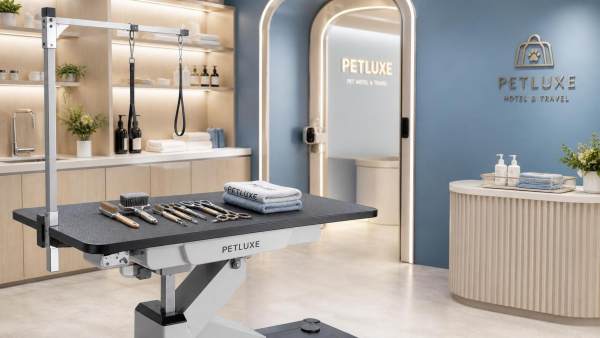
Choosing a pet grooming table with arm for daily salon use is not a minor equipment decision. It shapes handling safety, grooming speed, pet comfort, and the overall consistency of service, especially in busy pet-friendly travel destinations where salons support hotels, resorts, boarding spaces, and mobile care providers.
A stable setup helps reduce strain during repetitive work. It also lowers the chance of slips, sudden movement, and uneven positioning. In practical terms, the right table supports better workflow, cleaner finishing, and a calmer experience for pets that may already feel stressed after transport or a change in environment.
This matters even more as the pet economy expands alongside travel services. More destinations now welcome pets, and grooming is no longer limited to standalone salons. It appears in boarding facilities, airport-area pet care, luxury stays, and short-term travel support services where reliability and fast turnover both matter.
Why the right table matters in daily operations
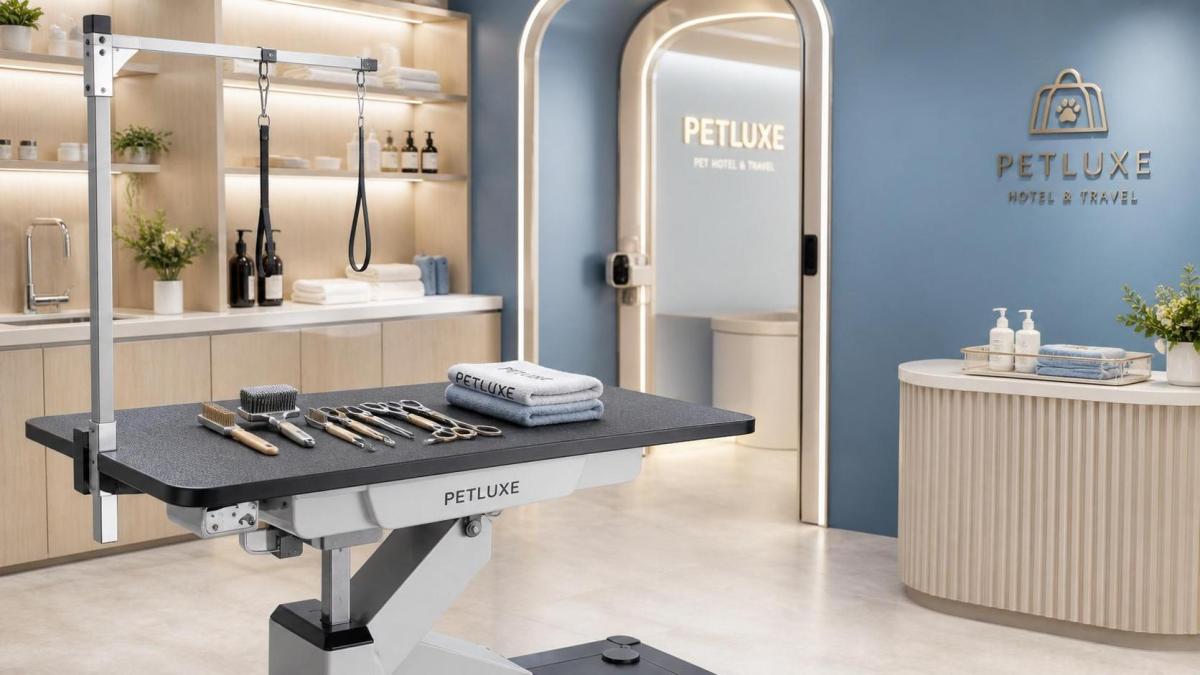
A pet grooming table with arm is more than a raised platform. It combines a work surface with controlled restraint support, allowing safer positioning during brushing, clipping, drying, nail work, and finishing tasks.
For daily use, the table must perform under repetition. A model that feels acceptable during occasional sessions may become frustrating after multiple appointments, especially when handling different breeds, coat types, and behavior patterns.
In travel-related service environments, the pressure can be different from a neighborhood salon. Appointment windows may be tighter. Pets may be unfamiliar with the location. Staff may need equipment that resets quickly between clients and cleans easily after each session.
That is where selection criteria become practical rather than cosmetic. The best pet grooming table with arm is the one that supports real working conditions, not just showroom appeal.
What defines a professional-grade pet grooming table with arm
Professional use usually depends on five essentials: stability, adjustability, restraint control, surface durability, and cleaning efficiency. If one of these areas is weak, the table often becomes harder to use over time.
Stability comes first
A wobbling table creates risk even before grooming begins. When pets shift weight suddenly, the base should remain planted. Look for strong frame construction, balanced leg design, and non-slip feet that hold steady on smooth salon floors.
Height adjustment protects both posture and pace
Electric or hydraulic height adjustment is often worth the investment in high-frequency settings. It reduces bending, speeds setup between appointments, and helps maintain control when handling small dogs and larger breeds on the same day.
The arm should support restraint without causing stress
The arm system should feel secure, not harsh. Good designs allow loop placement adjustments, easy attachment, and enough rigidity to limit unsafe movement without making the pet feel trapped.
Surface quality affects cleaning and control
A textured, non-slip tabletop helps pets stand with more confidence. At the same time, the surface should resist moisture, loose hair, product residue, and frequent sanitizing. If it stains or peels early, replacement costs rise quickly.
Key factors to compare before buying
A quick product listing rarely tells the whole story. Comparing tables through actual operating needs usually leads to better decisions than comparing price alone.
A pet grooming table with arm should also match the service mix. A luxury pet hotel may prioritize quiet lifting and refined presentation. A mobile or compact travel service may care more about foldability and transport efficiency.
How travel services change grooming equipment priorities
The travel service angle is easy to overlook, yet it strongly affects equipment choices. Pets arriving from flights, road trips, or hotel stays often behave differently from local repeat clients. They may be more alert, tired, or reactive.
That makes controlled handling more important. A dependable pet grooming table with arm helps create a predictable work zone when the pet is adapting to a temporary environment.
There is also a space planning issue. Grooming stations in resorts, pet spas, and destination boarding facilities often share room with bathing, drying, or wellness services. Equipment must fit into a broader guest-service layout without slowing movement.
- Compact footprints help in mixed-use service rooms.
- Fast sanitation supports back-to-back appointments.
- Reliable restraint matters when pets are unfamiliar with handlers.
- Quiet lifting systems improve the overall hospitality experience.
Seen this way, table selection is linked not only to grooming quality, but also to the broader service standards expected in travel and hospitality settings.
What current sourcing trends reveal
Market attention is moving beyond basic equipment specs. Buyers and operators increasingly look at compliance, materials, lifecycle cost, and supplier reliability. That shift mirrors what Global Consumer Sourcing tracks across the wider pet economy.
GCS focuses on data-backed retail and manufacturing intelligence, where performance, certification readiness, and resilient supply chains matter more than low headline pricing. For grooming equipment, that means asking tougher questions before selecting a supplier or platform.
A pet grooming table with arm may seem like a straightforward product, yet manufacturing quality can vary in weld strength, corrosion resistance, hardware consistency, lifting reliability, and coating durability. Those differences become visible only after repeated use.
GCS-style evaluation encourages looking at:
- Factory quality control and batch consistency.
- Material traceability and finish durability.
- Relevant safety and compliance documentation.
- Packaging that protects the table in global transit.
- After-sales parts support for arms, loops, and lift components.
This approach is especially useful when equipment supports premium services. Downtime caused by weak sourcing choices can disrupt operations far more than the initial price difference suggests.
Practical signs of a good fit
The best choice is usually clear when the table matches both the animals handled and the pace of the workplace. Several signs point to a strong fit.
Daily setup feels easy
Arms attach securely, restraints adjust smoothly, and the table height changes without hesitation. Small friction points disappear, which saves energy over a full day.
Cleaning does not interrupt workflow
Hair, water, and product residue should wipe away quickly. Crevices that trap debris become a daily annoyance and can undermine hygiene standards.
Pets settle faster on the surface
Grip texture, stable footing, and balanced restraint often reduce restless shifting. That makes precision grooming easier and can shorten appointment times.
The table still performs after repeated cycles
A durable pet grooming table with arm should not loosen, wobble, or show rapid wear after normal commercial use. Long-term consistency is often a better value measure than a low entry price.
A smart next step before making the final choice
Before selecting a pet grooming table with arm, it helps to write down the actual working conditions: average pet size, daily appointment volume, available floor space, cleaning routine, and whether the service operates in a salon, resort, boarding unit, or travel-linked care setting.
Then compare models against those realities rather than against general marketing claims. Ask for clear specifications, lifting details, material information, and support options. If sourcing internationally, review the supplier with the same discipline used for other critical retail equipment.
In the end, the right table should make daily work calmer, safer, and more repeatable. That is the standard worth using when narrowing options, especially in a pet service market increasingly shaped by travel, hospitality, and higher customer expectations.
Related Intelligence
 Skincare OEMAug 16, 2026Amazon Enforces AI Human Metadata Rule for Beauty and Personal Care SellersAmazon now enforces AI human metadata rules for beauty sellers. Learn how to protect listings, traffic, and compliance in skincare, cosmetics, and beauty devices.
 Beauty DevicesAug 15, 2026China to Roll Out Nationwide Cross-Border Cash Pooling for MultinationalsChina to roll out nationwide cross-border cash pooling for multinationals from Sept. 14. Discover how this policy could improve treasury efficiency, liquidity management, and China-linked supply chains.
 Beauty DevicesAug 14, 2026China Imposes Temporary Export Ban on Helium, Affecting Cooling Supply ChainsChina's temporary helium export ban may disrupt cooling supply chains for beauty RF devices and laser systems. Learn what ODMs, buyers, and procurement teams should check now.
![]() Cosmetics & PkgAug 13, 2026PPWR becomes mandatory: Beauty and personal care packaging materials usher in new EPR and PFAS compliance requirementsPPWR takes effect for cosmetics packaging in the EU, bringing EPR registration and PFAS limits. Learn what brands, importers, and suppliers must do now.
Cosmetics & PkgAug 13, 2026PPWR becomes mandatory: Beauty and personal care packaging materials usher in new EPR and PFAS compliance requirementsPPWR takes effect for cosmetics packaging in the EU, bringing EPR registration and PFAS limits. Learn what brands, importers, and suppliers must do now. Cosmetics & PkgAug 12, 2026EU PPWR Now Enforced for Beauty Packaging ComplianceEU PPWR now enforced for beauty packaging compliance: learn how EPR, ERN, heavy metals and PFAS rules affect EU exports, customs clearance and platform sales.
 Cosmetics & PkgAug 11, 2026EU PPWR Rules Take Effect on Aug. 12 for Beauty PackagingEU PPWR rules for beauty packaging take effect on Aug. 12, 2026. Learn key compliance steps, EPR, labeling, PFAS limits, and how to avoid customs delays and fines.
 Smart Pet DevicesAug 10, 2026EU EPR Rules to Cover Smart Pet Devices on Aug. 15EU EPR Rules will cover smart pet devices from Aug. 15, 2026. Learn how smart collars, feeders, and monitoring devices can avoid delisting, customs delays, and compliance risks in the EU.
 Infant Feeding & CareAug 09, 2026CPSC Recalls Baby Sleep Sacks Over Undeclared TDCPPCPSC Recalls Baby Sleep Sacks Over Undeclared TDCPP: learn how this 2026 recall impacts CPC documents, third-party testing, and U.S. baby product compliance for exporters.
 Infant Feeding & CareAug 08, 2026ECHA Adds 5 SVHCs, Importer Notices Due From Oct 2026ECHA adds 5 SVHCs to the Candidate List, with importer notices due from October 2026. Learn how REACH affects exporters, supply chains, and documentation readiness.
 Baby Gear & StrollersAug 07, 2026CPSC Revises Crib Rail Standard for November 2026CPSC revises crib rail standard for November 2026, adding dynamic impact tests and mandatory third-party lab testing. Learn how the new rule affects U.S. market access, compliance, and shipments.
 Electronic & RC ToysAug 06, 2026EU to Require EN IEC 62115:2025 for Electronic ToysEU to Require EN IEC 62115:2025 for Electronic Toys from Oct 1, 2026. Learn scope, battery and AI safety updates, CE compliance risks, and how exporters can avoid customs delays.
 Baby Gear & StrollersAug 05, 2026US Stroller Stability Rule Takes Effect Aug. 15US Stroller Stability Rule Takes Effect Aug. 15: learn how new U.S. stroller compliance, ASTM F833-26a, and CPSC testing rules may affect imports, certification, and shipment readiness.
 Infant Feeding & CareAug 04, 2026ECHA Adds 5 SVHCs, Triggering Baby Care Export ReviewECHA adds 5 SVHCs, prompting an urgent baby care export review for EU-bound products. Learn the 0.1% threshold risks, compliance steps, and how to avoid customs delays and fines.












