Automatic Pet Product Regulations: Key Compliance Risks in 2026

Automatic pet product regulations are moving from a niche concern to a frontline supply chain issue in 2026. Smart feeders, self-cleaning litter boxes, GPS collars, and app-linked dispensers now combine consumer electronics, pet safety, and cross-border retail rules in one product category.
That shift matters well beyond the pet aisle. Travel services, especially pet-friendly hotels, airlines, tour operators, and travel retailers, increasingly encounter automatic pet products through onboard sales, amenity partnerships, and baggage-linked safety incidents.
A device that fails in a home can trigger complaints. A device that overheats in transit, leaks during a hotel stay, or carries incomplete import documentation can disrupt customer experience, create liability exposure, and damage supplier confidence.
For platforms such as Global Consumer Sourcing, which track the pet economy through a compliance and sourcing lens, the real question is no longer whether demand exists. It is whether product approval processes match the complexity of automatic pet product regulations across markets.
Why 2026 Raises the Compliance Stakes
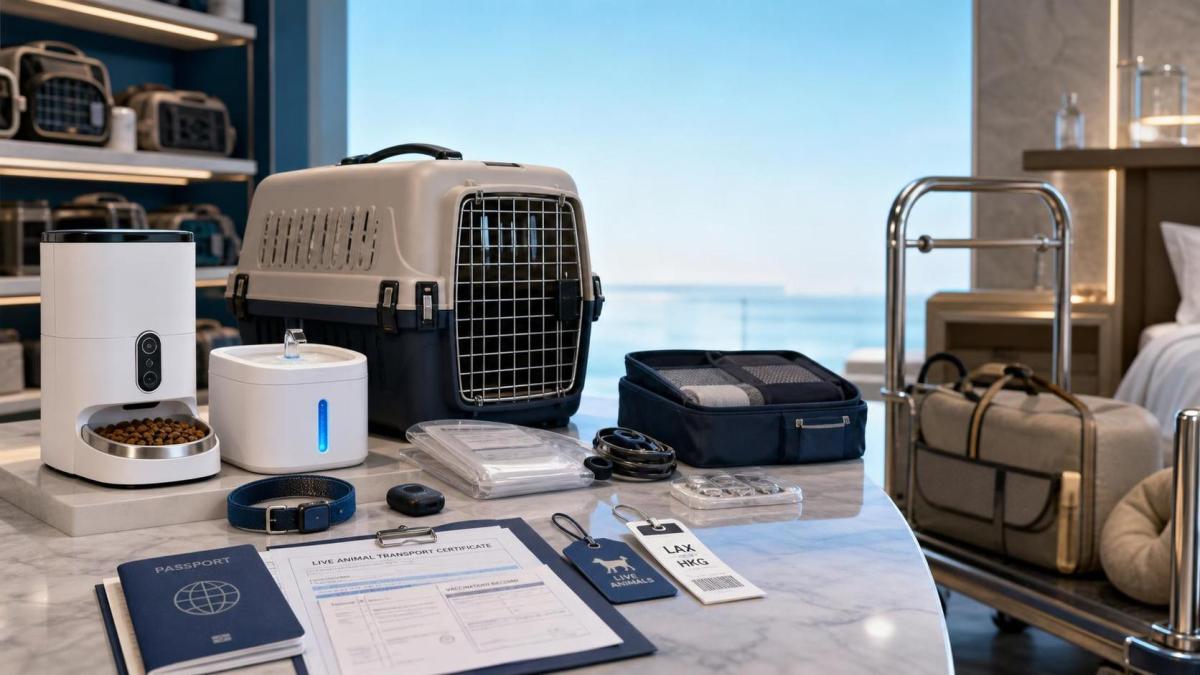
The category has changed fast. Many automatic pet products now include lithium batteries, sensors, Wi-Fi modules, motion components, detachable food-contact parts, and software updates. Each feature can trigger a different compliance obligation.
Regulators are also paying closer attention to connected household devices. In practical terms, automatic pet product regulations now sit at the intersection of electrical safety, EMC, chemical restrictions, labeling, packaging, and digital accountability.
Travel service operators feel this pressure indirectly but clearly. Pet owners expect safe products during road trips, flights, cruises, and extended stays. When retailers or hospitality partners stock noncompliant devices, the reputational impact travels quickly across review platforms and social channels.
Another factor is product diversification. A gravity feeder had a narrow risk profile. A voice-enabled feeder with a camera, timed motor, rechargeable battery, and mobile app presents a much broader regulatory surface.
What Automatic Pet Product Regulations Usually Cover
The term sounds simple, but the scope is not. Automatic pet product regulations do not usually come from one single rulebook. They come from overlapping requirements that vary by jurisdiction and sales channel.
In most cases, review starts with product architecture. Is the item powered? Does it emit radio frequency? Does it touch food or water? Can a pet access moving parts? Does it collect user data through an app?
Those questions determine which frameworks apply. They also affect whether a travel retailer, airport concession, or hotel gift shop can responsibly list the item.
The Risks That Get Missed Most Often
Some failures are obvious, such as a charger without proper certification. The larger problem is the accumulation of smaller gaps that look harmless until a launch window or shipment depends on them.
Certification mismatch across markets
A product approved for one market is often assumed to be ready for another. That assumption causes trouble. CE marking, FCC compliance, UKCA documentation, and regional battery rules are not interchangeable.
This matters in travel-linked distribution because goods frequently move through duty-free channels, airport retail, destination stores, and online cross-border fulfillment. Documentation must travel with the product, not stay with the factory.
Food-contact and hygiene blind spots
Automatic feeders and water dispensers often include bowls, tubes, tanks, and pumps that contact pet food or water. That creates another layer of review beyond electronics.
Materials, migration limits, cleaning instructions, and mold resistance all affect product acceptability. For hospitality settings or pet-friendly travel stays, hygiene failures can generate immediate service complaints.
Packaging and warning language
Automatic pet product regulations are often broken by packaging, not hardware. Missing age warnings, unclear power ratings, untranslated instructions, or incomplete recycling marks are common reasons for shipment delays.
When products are sold to travelers, concise labeling becomes more important. Users may open and operate the item in transit, in hotel rooms, or in unfamiliar voltage environments.
Software changes without compliance review
Connected products keep evolving after production. App updates, firmware patches, and remote-control features can alter device behavior, wireless performance, or data handling.
If software governance is weak, compliance files become outdated while the market version keeps changing. That disconnect is becoming a central issue in automatic pet product regulations.
Why This Matters in Travel Services
At first glance, pet devices and travel services may seem unrelated. In reality, their connection is growing through pet-friendly tourism, travel retail, and destination hospitality.
Hotels increasingly offer pet amenity kits. Airport and resort stores are expanding premium pet assortments. Some travel platforms partner with retail suppliers to monetize pet travel demand beyond bookings.
That creates a sourcing challenge. Travel brands are not always structured like specialist electronics retailers, yet they still inherit exposure when they sell, bundle, recommend, or distribute automatic pet products.
A defective feeder in a vacation rental can become both a product incident and a service failure. A battery-powered litter device refused during air transport can trigger refund requests and complaints directed at the travel brand.
This is where GCS-style intelligence becomes practical. Cross-category sourcing visibility helps teams compare supplier maturity, certification readiness, and market-specific documentation before a product reaches a travel-focused sales channel.
A More Useful Approval Framework
Strong approval decisions usually come from asking better questions early. Automatic pet product regulations should be treated as a launch framework, not a final paperwork task.
- Map every functional element: power source, connectivity, moving parts, liquid exposure, and contact surfaces.
- Match each element to destination-market rules before sampling is finalized.
- Verify that test reports reflect the exact production configuration, not a similar model.
- Review packaging artwork and manuals as part of compliance, not after shipment booking.
- Check battery transport files for air and express channels used in travel retail replenishment.
- Set a process for firmware and app changes that triggers regulatory reassessment.
Supplier selection also needs a sharper filter. Low defect rates do not automatically indicate compliance depth. A reliable factory should demonstrate document control, change management, and familiarity with multi-market certification paths.
Signals That a Supplier Is Not Ready
Several warning signs tend to appear before larger failures. They are worth treating seriously, especially when automatic pet product regulations are still evolving by market and product type.
- Reports are expired, incomplete, or issued for another model number.
- The factory cannot explain differences between destination-market requirements.
- Label files are handled by sales teams without compliance review.
- Food-contact materials lack traceable declarations.
- Battery specifications change between sample stage and production booking.
- App functions are outsourced with no documented update control.
When these signs appear, the safest response is not always to reject immediately. Sometimes the better move is to pause commercialization, request a full compliance matrix, and re-sequence launch timing.
Where to Focus Next
In 2026, automatic pet product regulations will keep expanding alongside product intelligence and cross-border retail complexity. The most resilient teams will treat compliance as part of product design, sourcing, and channel strategy from the start.
For travel services, the immediate priority is to identify where automatic pet products enter the customer journey. That could be through retail partnerships, curated amenities, destination merchandising, or bundled travel offers.
From there, build a narrower review path. Separate powered from non-powered products. Separate connected devices from simple dispensers. Then compare supplier files against the exact markets and transport routes involved.
The practical next step is not a generic policy refresh. It is a working checklist tied to product architecture, channel risk, and market entry evidence. That is where automatic pet product regulations become manageable, measurable, and far less expensive to get wrong.
Related Intelligence
 Infant Feeding & CareSep 20, 2026How Can Retailers Prevent Mold Complaints About Bath Toys?How can retailers prevent mold complaints about bath toys? Explore drainable designs, supplier controls, testing, and care guidance to reduce moisture risks.
 Camping & WaterSep 20, 2026Which Folding Chair Fabrics Last Longest Outdoors?Which folding chair fabrics last longest outdoors? Compare acrylic, PVC-coated polyester, UV-stabilized polyester, and mesh for durable, pet-friendly outdoor seating.
 Camping & WaterSep 20, 2026Are Folding Camping Chairs Tested for Weight Capacity?Are folding camping chairs tested for weight capacity? Learn what credible load testing, safety margins, and supplier documentation mean for confident outdoor product sourcing.
 Corporate & Seasonal GiftsSep 20, 2026How Can Corporate Gift Buyers Avoid Missing Event Deadlines?How do corporate gift buyers avoid missed event deadlines? Discover proven sourcing, customization, compliance, and shipping strategies for pet-themed corporate gifts.
 Corporate & Seasonal GiftsSep 20, 2026What Should Be Approved Before Placing a Custom Gift Order?What should be approved before placing a custom gift order? Explore the essential checks for safe, compliant, retail-ready custom pet gifts.
 Corporate & Seasonal GiftsSep 20, 2026Which Custom Gift Materials Have the Lowest Defect Rates?Which custom gift materials have the lowest defect rate? Explore why silicone, stainless steel, polypropylene, and polyester help pet gift brands reduce rejects and improve quality.
 Skincare OEMAug 16, 2026Amazon Enforces AI Human Metadata Rule for Beauty and Personal Care SellersAmazon now enforces AI human metadata rules for beauty sellers. Learn how to protect listings, traffic, and compliance in skincare, cosmetics, and beauty devices.
 Beauty DevicesAug 15, 2026China to Roll Out Nationwide Cross-Border Cash Pooling for MultinationalsChina to roll out nationwide cross-border cash pooling for multinationals from Sept. 14. Discover how this policy could improve treasury efficiency, liquidity management, and China-linked supply chains.
 Beauty DevicesAug 14, 2026China Imposes Temporary Export Ban on Helium, Affecting Cooling Supply ChainsChina's temporary helium export ban may disrupt cooling supply chains for beauty RF devices and laser systems. Learn what ODMs, buyers, and procurement teams should check now.
![]() Cosmetics & PkgAug 13, 2026PPWR becomes mandatory: Beauty and personal care packaging materials usher in new EPR and PFAS compliance requirementsPPWR takes effect for cosmetics packaging in the EU, bringing EPR registration and PFAS limits. Learn what brands, importers, and suppliers must do now.
Cosmetics & PkgAug 13, 2026PPWR becomes mandatory: Beauty and personal care packaging materials usher in new EPR and PFAS compliance requirementsPPWR takes effect for cosmetics packaging in the EU, bringing EPR registration and PFAS limits. Learn what brands, importers, and suppliers must do now. Cosmetics & PkgAug 12, 2026EU PPWR Now Enforced for Beauty Packaging ComplianceEU PPWR now enforced for beauty packaging compliance: learn how EPR, ERN, heavy metals and PFAS rules affect EU exports, customs clearance and platform sales.
 Cosmetics & PkgAug 11, 2026EU PPWR Rules Take Effect on Aug. 12 for Beauty PackagingEU PPWR rules for beauty packaging take effect on Aug. 12, 2026. Learn key compliance steps, EPR, labeling, PFAS limits, and how to avoid customs delays and fines.
 Smart Pet DevicesAug 10, 2026EU EPR Rules to Cover Smart Pet Devices on Aug. 15EU EPR Rules will cover smart pet devices from Aug. 15, 2026. Learn how smart collars, feeders, and monitoring devices can avoid delisting, customs delays, and compliance risks in the EU.