
Pet Compliance Standards: Key Tests and Labeling Risks to Know
Why do pet compliance standards matter so much in travel retail?
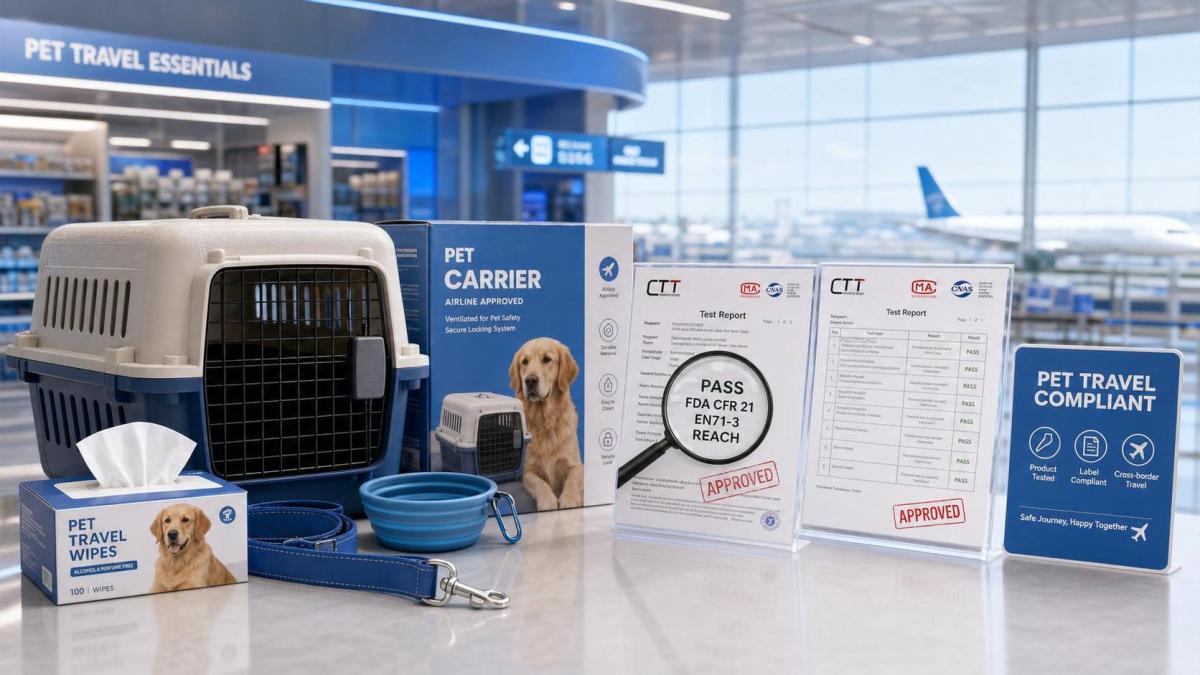
Pet products sold through travel retail face unusual pressure. They move across borders quickly, enter mixed regulatory markets, and often reach consumers in airports, tourist districts, and cross-border e-commerce channels.
That is why pet compliance standards are not just a factory issue. They affect customs clearance, shelf approval, online listing acceptance, and post-sale complaint handling.
In practical terms, one missing warning line or one failed chemical screen can delay a launch tied to a seasonal travel peak. For travel service ecosystems, timing matters almost as much as product safety.
The bigger concern is that pet items often look low risk. A leash, travel bowl, carrier accessory, or pet grooming wipe may appear simple, yet each can trigger different compliance duties.
This is where reliable supply-chain intelligence becomes valuable. Platforms such as Global Consumer Sourcing track how retail demand, destination rules, and product safety expectations intersect across the pet economy.
For teams managing quality gates, the goal is straightforward: reduce failed inspections, avoid labeling disputes, and make sure pet compliance standards are checked before goods enter global retail channels.
Which products usually need closer review under pet compliance standards?
A common question is whether all pet items face the same compliance burden. They do not. Risk depends on contact type, material, use environment, and the claims printed on the pack.
Travel-linked pet goods often require extra review because they are used on the move. They may be folded, heated, cleaned, chewed, clipped, or used in confined transport spaces.
The products that usually deserve earlier testing include:
- Pet carriers, harnesses, and restraint systems with load-bearing parts.
- Travel bowls, feeders, and bottles that may involve food-contact materials.
- Grooming wipes, shampoos, and care items with chemical or biocidal ingredients.
- Toys and chew items that present small-part, migration, or mechanical hazards.
- Beds, mats, and soft goods with filling, coating, flammability, or fiber-label concerns.
A simple way to judge exposure is to ask three things. Does the item touch the pet’s mouth or skin? Can it break during transport use? Does the packaging promise something regulated?
If the answer is yes to any of these, pet compliance standards should be reviewed early, not after production booking.
What tests are usually considered the key checks before shipment?
This is often where confusion starts. There is no single global test pack for all pet products. The correct scope depends on destination market, product category, and material profile.
Still, some test areas appear repeatedly in pet compliance standards reviews. These checks tend to carry the highest value because they catch the most common failure points.
More often than not, the first failure is not dramatic. It may be an ink migration issue, a weak buckle, or a missing substance declaration from a component supplier.
That is why many teams now screen materials before final assembly. It shortens the correction cycle and prevents retesting of the full product.
When using outside intelligence, the useful question is not only “What test is required?” It is also “Which failure is most likely for this channel and product use?”
Why do labeling risks create so many avoidable disputes?
Labeling is where pet compliance standards become visible. A product may pass lab testing and still create a market problem because the packaging says too much, too little, or the wrong thing.
In travel retail and cross-border distribution, labels often need to work in multiple jurisdictions. That increases the chance of conflict between marketing language and legal wording.
The most common labeling problems usually involve:
- Unsupported claims such as non-toxic, antibacterial, calming, or eco-safe.
- Missing age, species, weight, or supervision warnings.
- Incomplete material disclosure for textiles, plastics, or coatings.
- Country-of-origin errors and traceability gaps.
- Instructions that do not match actual use conditions during travel.
A useful rule is to separate safety statements from sales language. If a claim implies performance, health benefit, or chemical absence, evidence should already exist in the file.
This is one reason data-backed editorial platforms are gaining attention. They help teams compare regulatory wording trends and retailer expectations without relying only on supplier assumptions.
How do destination markets change the compliance decision?
Pet compliance standards are rarely universal. A product accepted in one market may still require different labeling, document format, or substance thresholds elsewhere.
This matters in tourism-heavy distribution models. Goods sold near airports, cruise ports, resort retail, or travel marketplaces may circulate faster than standard domestic inventory.
The better approach is to build a destination-based review path:
- Map where the product will actually ship, not just where it is first warehoused.
- Check whether the item is treated as a general consumer product, pet accessory, or chemical-containing good.
- Confirm retailer-specific compliance manuals alongside legal rules.
- Align test reports, declarations, and artwork review to the same destination version.
In real sourcing cycles, the compliance problem often appears when one stock keeping unit is reused across regions with different label obligations. That saves artwork cost early, but creates correction cost later.
A platform like GCS is helpful here because destination intelligence is rarely static. Retailers react to recalls, policy shifts, and consumer scrutiny faster than annual manuals suggest.
What usually goes wrong in implementation, cost, and timing?
Many compliance delays come from process design, not from complex regulations. Teams wait too long to lock materials, request incomplete documents, or test only after packaging is printed.
The hidden cost of weak pet compliance standards control is not only lab fees. It includes repacking, booking loss, detention, disposal, and time spent explaining preventable non-conformities.
The most reliable way to reduce those costs is to stage the work:
- Start with a bill of materials risk review before final sampling.
- Run critical chemical screens on high-risk components first.
- Review artwork against claims, warnings, and destination language rules.
- Book full testing early enough to allow one correction round.
- Keep technical files consistent across report dates, versions, and SKUs.
If lead time is tight, prioritize the tests most likely to stop shipment. That decision should be evidence-based, not driven by whichever document is easiest to obtain.
A fast launch is useful only when the product can stay listed, stay cleared, and stay complaint-resistant after arrival.
What is the most practical next step if you need a cleaner compliance workflow?
A stronger process usually begins with better classification. Separate pet products by contact type, claim type, and destination-market exposure before discussing testing volume.
Then build one working checklist that links materials, tests, labels, and documents. Pet compliance standards become easier to manage when those pieces are reviewed together, not in isolation.
It also helps to compare supplier claims with independent market intelligence. GCS-style reporting is useful because it connects retail trends, safety expectations, and sourcing realities across the pet economy.
The main takeaway is simple. Pet compliance standards should be treated as a commercial control point, not a last-minute formality. Testing, labeling, and destination review need to move in parallel.
If the current process feels reactive, start by auditing one recent SKU. Check where data was missing, which label statement lacked support, and which test was booked too late.
That single review often reveals the next improvements clearly: tighter material declarations, earlier screening, better artwork control, and a more predictable path through global travel retail.
Related Intelligence
 Skincare OEMAug 16, 2026Amazon Enforces AI Human Metadata Rule for Beauty and Personal Care SellersAmazon now enforces AI human metadata rules for beauty sellers. Learn how to protect listings, traffic, and compliance in skincare, cosmetics, and beauty devices.
 Beauty DevicesAug 15, 2026China to Roll Out Nationwide Cross-Border Cash Pooling for MultinationalsChina to roll out nationwide cross-border cash pooling for multinationals from Sept. 14. Discover how this policy could improve treasury efficiency, liquidity management, and China-linked supply chains.
 Beauty DevicesAug 14, 2026China Imposes Temporary Export Ban on Helium, Affecting Cooling Supply ChainsChina's temporary helium export ban may disrupt cooling supply chains for beauty RF devices and laser systems. Learn what ODMs, buyers, and procurement teams should check now.
![]() Cosmetics & PkgAug 13, 2026PPWR becomes mandatory: Beauty and personal care packaging materials usher in new EPR and PFAS compliance requirementsPPWR takes effect for cosmetics packaging in the EU, bringing EPR registration and PFAS limits. Learn what brands, importers, and suppliers must do now.
Cosmetics & PkgAug 13, 2026PPWR becomes mandatory: Beauty and personal care packaging materials usher in new EPR and PFAS compliance requirementsPPWR takes effect for cosmetics packaging in the EU, bringing EPR registration and PFAS limits. Learn what brands, importers, and suppliers must do now. Cosmetics & PkgAug 12, 2026EU PPWR Now Enforced for Beauty Packaging ComplianceEU PPWR now enforced for beauty packaging compliance: learn how EPR, ERN, heavy metals and PFAS rules affect EU exports, customs clearance and platform sales.
 Cosmetics & PkgAug 11, 2026EU PPWR Rules Take Effect on Aug. 12 for Beauty PackagingEU PPWR rules for beauty packaging take effect on Aug. 12, 2026. Learn key compliance steps, EPR, labeling, PFAS limits, and how to avoid customs delays and fines.
 Smart Pet DevicesAug 10, 2026EU EPR Rules to Cover Smart Pet Devices on Aug. 15EU EPR Rules will cover smart pet devices from Aug. 15, 2026. Learn how smart collars, feeders, and monitoring devices can avoid delisting, customs delays, and compliance risks in the EU.
 Infant Feeding & CareAug 09, 2026CPSC Recalls Baby Sleep Sacks Over Undeclared TDCPPCPSC Recalls Baby Sleep Sacks Over Undeclared TDCPP: learn how this 2026 recall impacts CPC documents, third-party testing, and U.S. baby product compliance for exporters.
 Infant Feeding & CareAug 08, 2026ECHA Adds 5 SVHCs, Importer Notices Due From Oct 2026ECHA adds 5 SVHCs to the Candidate List, with importer notices due from October 2026. Learn how REACH affects exporters, supply chains, and documentation readiness.
 Baby Gear & StrollersAug 07, 2026CPSC Revises Crib Rail Standard for November 2026CPSC revises crib rail standard for November 2026, adding dynamic impact tests and mandatory third-party lab testing. Learn how the new rule affects U.S. market access, compliance, and shipments.
 Electronic & RC ToysAug 06, 2026EU to Require EN IEC 62115:2025 for Electronic ToysEU to Require EN IEC 62115:2025 for Electronic Toys from Oct 1, 2026. Learn scope, battery and AI safety updates, CE compliance risks, and how exporters can avoid customs delays.
 Baby Gear & StrollersAug 05, 2026US Stroller Stability Rule Takes Effect Aug. 15US Stroller Stability Rule Takes Effect Aug. 15: learn how new U.S. stroller compliance, ASTM F833-26a, and CPSC testing rules may affect imports, certification, and shipment readiness.
 Infant Feeding & CareAug 04, 2026ECHA Adds 5 SVHCs, Triggering Baby Care Export ReviewECHA adds 5 SVHCs, prompting an urgent baby care export review for EU-bound products. Learn the 0.1% threshold risks, compliance steps, and how to avoid customs delays and fines.












