
Consumer Product Compliance Regulations for Travel Gear
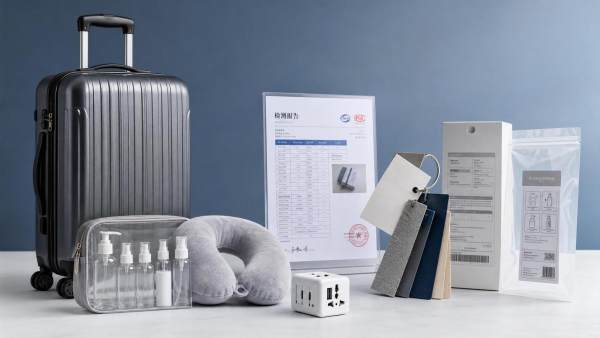
Travel gear sits at the intersection of mobility, consumer safety, and cross-border retail. For brands, sourcing teams, and travel service businesses, consumer product compliance regulations are not a back-office detail. They shape whether a suitcase, travel bottle, neck pillow, or power accessory can enter a market, pass inspection, and perform safely in real use.
That matters more now because travel products move through complex supply chains and multiple jurisdictions. A single item may be designed for e-commerce, sold by a hospitality partner, packed for air travel, and used by families, commuters, or business travelers. In that setting, compliance connects product safety, brand credibility, and operational continuity.
For businesses tracking sourcing risk, Global Consumer Sourcing (GCS) reflects a broader market reality. Retail growth now depends on reliable manufacturing, verified safety standards, and supplier transparency. Travel gear is no exception, especially as private-label lines expand and product claims face closer scrutiny.
What compliance means for travel gear
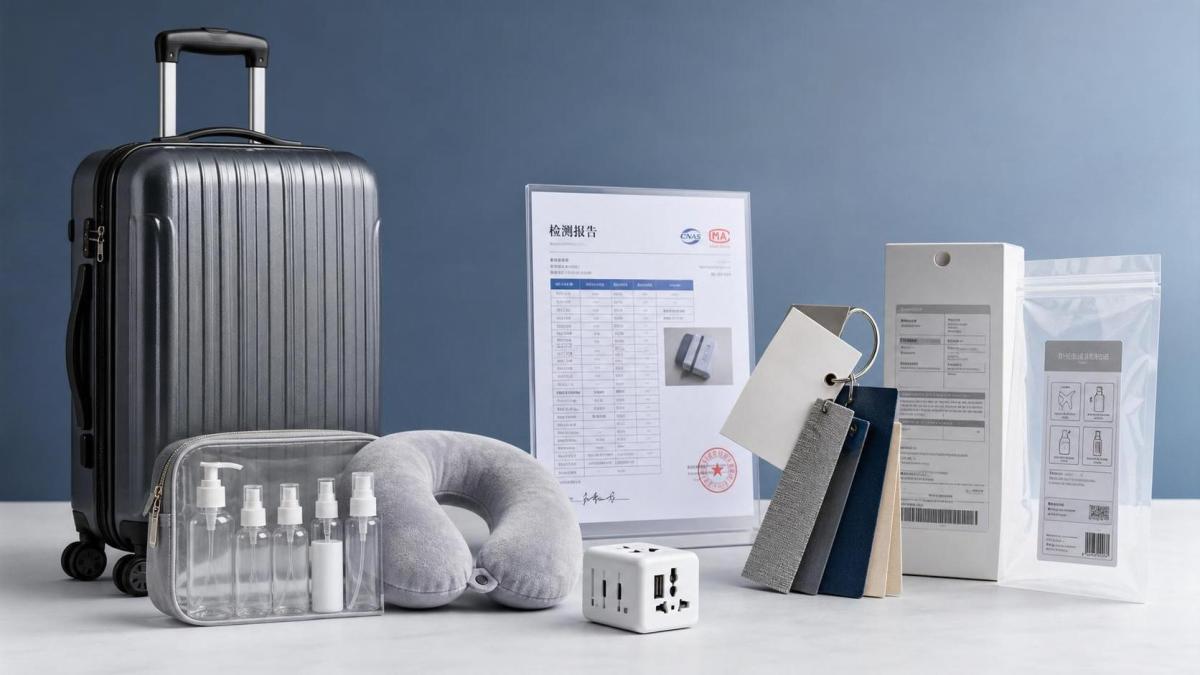
Consumer product compliance regulations cover the legal and technical requirements that consumer goods must meet before sale. In travel gear, this often includes chemical restrictions, physical safety, labeling, performance testing, flammability, and documentation.
The category is broader than luggage alone. It can include backpacks, packing cubes, reusable travel containers, child travel accessories, locks, adapters, travel organizers, and soft goods used during transport and hospitality stays.
Simple products can still trigger complex obligations. A cosmetic travel bottle may require material safety review. A children’s neck pillow may fall under stricter testing. A battery-enabled tracker pouch introduces electrical and transport considerations.
Why the issue is receiving more attention
Several pressures are pushing consumer product compliance regulations higher on the agenda. First, online retail has shortened product launch cycles. New designs reach the market faster, but weak pre-launch checks can expose hidden defects.
Second, regulators are paying closer attention to traceability. They increasingly expect evidence, not assumptions. Technical files, test reports, supplier declarations, and labeling records must match the actual product shipped.
Third, travel goods often combine materials and functions. A carry-on may involve zippers, coatings, metal hardware, printing inks, foam filling, and plastic handles. Each component can affect the final compliance profile.
There is also a reputational factor. Product recalls in travel-related categories spread quickly through marketplaces and review platforms. A compliance failure no longer remains limited to one shipment. It can weaken future listings, retail partnerships, and market entry plans.
The rules behind the label
In practice, consumer product compliance regulations differ by destination market. The United States, the European Union, and the United Kingdom each use different legal structures, reporting expectations, and conformity pathways.
For travel gear, the core regulatory themes usually include:
- restricted substances in plastics, textiles, coatings, and metal parts;
- mechanical safety, especially for handles, buckles, wheels, and closures;
- clear labeling, warnings, care marks, and country-of-origin information;
- age grading when products may be used by children;
- special controls for electronics, batteries, or food-contact components.
This is where teams often make costly mistakes. They focus on a finished product claim, but overlook component-level obligations. A travel organizer advertised as eco-friendly, leakproof, or child-safe needs proof that supports those statements.
Testing is only one part of readiness
A laboratory report is valuable, but it is not the entire compliance system. Effective control also depends on approved materials, stable specifications, production consistency, packaging accuracy, and supplier change management.
If a zipper pull, dye formula, or foam insert changes after testing, the original report may no longer reflect the shipped product. That gap is common in private-label and OEM/ODM production.
Where travel service and retail operations overlap
Travel service businesses increasingly influence product selection. Hotels, airlines, tour operators, and travel subscription brands offer branded kits, amenity packs, and mobility accessories. These items may look promotional, but they remain consumer products.
That changes the risk picture. A toiletry set placed in a premium travel package still needs compliant materials and truthful labeling. A travel adapter offered as part of a service bundle may trigger electrical safety responsibilities.
From a sourcing perspective, this is why GCS-style market intelligence matters. Compliance is no longer isolated from merchandising or supply chain strategy. It influences assortment decisions, supplier qualification, and the speed at which new products can scale internationally.
High-risk areas to review before launch
Some issues appear repeatedly across travel gear programs. Reviewing them early reduces delays later.
The table shows a practical pattern. Compliance problems rarely start with one large failure. They usually begin with an unchecked material, a vague claim, or a supplier substitution that was never reviewed.
How to build a stronger compliance workflow
A workable system starts before product testing. It begins with a clear product profile, target markets, intended user group, and use environment. Travel gear faces abrasion, compression, liquid contact, temperature shifts, and repeated handling.
That context should guide the compliance review. A compact checklist helps:
- map each SKU to every sales market and channel;
- collect full bills of materials, not just finished samples;
- screen claims on packaging, listings, and inserts;
- match testing protocols to product age use and function;
- set rules for post-approval material changes.
Documentation discipline is equally important. Consumer product compliance regulations often require teams to demonstrate due diligence after a complaint, marketplace query, or customs review. Missing records can turn a manageable issue into a blocked shipment.
Supplier oversight deserves more than declarations
Supplier declarations are useful, but they should not stand alone. Material traceability, factory process controls, and sample retention provide stronger evidence. This is especially relevant when multiple factories share one product family.
Many sourcing teams now treat compliance as a live supply chain function rather than a pre-shipment event. That approach aligns with the GCS view of modern retail: resilient product lines depend on verified inputs, consistent execution, and credible data.
What good judgment looks like in daily decisions
In real programs, the best compliance decisions are usually practical. If a factory offers a lower-cost coating, the question is not only price. It is whether the change affects restricted substances, durability claims, or odor thresholds.
If marketing requests new packaging language, the issue is not wording alone. It is whether “BPA-free,” “non-toxic,” “airport-ready,” or “safe for children” can be supported in the target market.
This is why consumer product compliance regulations should be interpreted as a decision framework. They help teams judge what evidence is needed, when retesting is necessary, and which supplier changes create material risk.
A practical next step for travel product programs
A useful next move is to review one active travel gear category end to end. Check the material list, claims, labels, test scope, and supplier approvals against the destination market. Gaps often become visible when the entire product file is viewed together.
For organizations expanding across channels or regions, updated intelligence also matters. Market-facing platforms such as GCS can support that process by connecting compliance trends with sourcing realities, category movement, and supplier capability signals.
Consumer product compliance regulations are not static, and travel gear is rarely simple. The strongest results usually come from combining regulatory awareness, disciplined documentation, and supplier control before the next launch window closes.
- consumer goods
- supply chain
- product lines
- e-commerce
- product safety
- market intelligence
- product compliance
- supply chain strategy
- product testing
- global consumer sourcing
- supplier capability
- technical requirements
- consumer product compliance
- product compliance regulations
- consumer product compliance regulations
Related Intelligence
 Skincare OEMAug 16, 2026Amazon Enforces AI Human Metadata Rule for Beauty and Personal Care SellersAmazon now enforces AI human metadata rules for beauty sellers. Learn how to protect listings, traffic, and compliance in skincare, cosmetics, and beauty devices.
 Beauty DevicesAug 15, 2026China to Roll Out Nationwide Cross-Border Cash Pooling for MultinationalsChina to roll out nationwide cross-border cash pooling for multinationals from Sept. 14. Discover how this policy could improve treasury efficiency, liquidity management, and China-linked supply chains.
 Beauty DevicesAug 14, 2026China Imposes Temporary Export Ban on Helium, Affecting Cooling Supply ChainsChina's temporary helium export ban may disrupt cooling supply chains for beauty RF devices and laser systems. Learn what ODMs, buyers, and procurement teams should check now.
![]() Cosmetics & PkgAug 13, 2026PPWR becomes mandatory: Beauty and personal care packaging materials usher in new EPR and PFAS compliance requirementsPPWR takes effect for cosmetics packaging in the EU, bringing EPR registration and PFAS limits. Learn what brands, importers, and suppliers must do now.
Cosmetics & PkgAug 13, 2026PPWR becomes mandatory: Beauty and personal care packaging materials usher in new EPR and PFAS compliance requirementsPPWR takes effect for cosmetics packaging in the EU, bringing EPR registration and PFAS limits. Learn what brands, importers, and suppliers must do now. Cosmetics & PkgAug 12, 2026EU PPWR Now Enforced for Beauty Packaging ComplianceEU PPWR now enforced for beauty packaging compliance: learn how EPR, ERN, heavy metals and PFAS rules affect EU exports, customs clearance and platform sales.
 Cosmetics & PkgAug 11, 2026EU PPWR Rules Take Effect on Aug. 12 for Beauty PackagingEU PPWR rules for beauty packaging take effect on Aug. 12, 2026. Learn key compliance steps, EPR, labeling, PFAS limits, and how to avoid customs delays and fines.
 Smart Pet DevicesAug 10, 2026EU EPR Rules to Cover Smart Pet Devices on Aug. 15EU EPR Rules will cover smart pet devices from Aug. 15, 2026. Learn how smart collars, feeders, and monitoring devices can avoid delisting, customs delays, and compliance risks in the EU.
 Infant Feeding & CareAug 09, 2026CPSC Recalls Baby Sleep Sacks Over Undeclared TDCPPCPSC Recalls Baby Sleep Sacks Over Undeclared TDCPP: learn how this 2026 recall impacts CPC documents, third-party testing, and U.S. baby product compliance for exporters.
 Infant Feeding & CareAug 08, 2026ECHA Adds 5 SVHCs, Importer Notices Due From Oct 2026ECHA adds 5 SVHCs to the Candidate List, with importer notices due from October 2026. Learn how REACH affects exporters, supply chains, and documentation readiness.
 Baby Gear & StrollersAug 07, 2026CPSC Revises Crib Rail Standard for November 2026CPSC revises crib rail standard for November 2026, adding dynamic impact tests and mandatory third-party lab testing. Learn how the new rule affects U.S. market access, compliance, and shipments.
 Electronic & RC ToysAug 06, 2026EU to Require EN IEC 62115:2025 for Electronic ToysEU to Require EN IEC 62115:2025 for Electronic Toys from Oct 1, 2026. Learn scope, battery and AI safety updates, CE compliance risks, and how exporters can avoid customs delays.
 Baby Gear & StrollersAug 05, 2026US Stroller Stability Rule Takes Effect Aug. 15US Stroller Stability Rule Takes Effect Aug. 15: learn how new U.S. stroller compliance, ASTM F833-26a, and CPSC testing rules may affect imports, certification, and shipment readiness.
 Infant Feeding & CareAug 04, 2026ECHA Adds 5 SVHCs, Triggering Baby Care Export ReviewECHA adds 5 SVHCs, prompting an urgent baby care export review for EU-bound products. Learn the 0.1% threshold risks, compliance steps, and how to avoid customs delays and fines.












