Global Li-ion Battery Recycling Rate Hits 62.3%
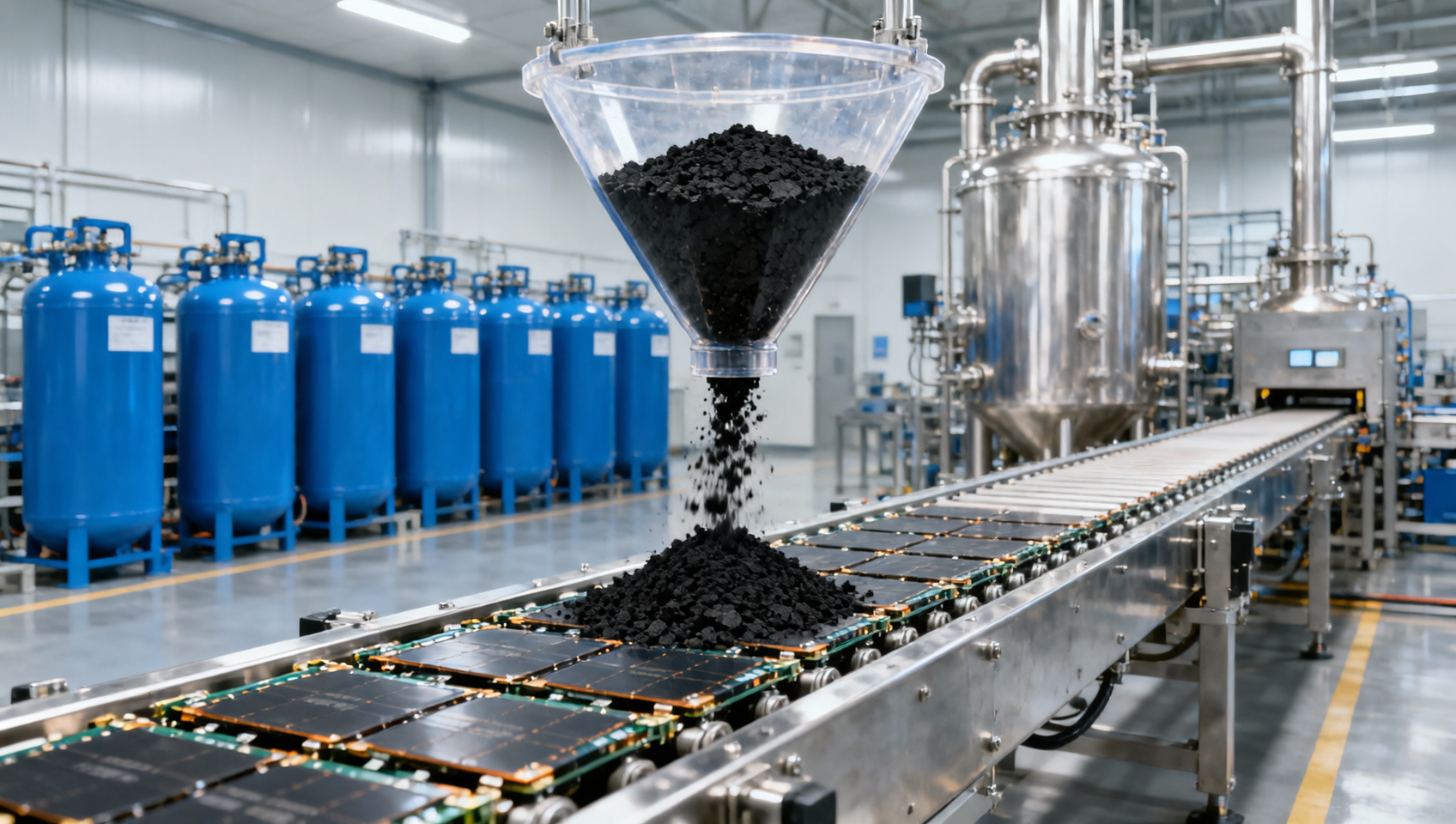
Global lithium-ion battery recycling rate has reached 62.3%—a record high—according to the International Battery Association (IBA)’s 2026 Global Lithium Battery Circularity Annual Report, released on April 16. This milestone directly lowers BOM costs for 3.7V/1000–3000mAh battery modules used in beauty devices and smart pet devices, with implications for supply chain participants across procurement, manufacturing, and export-oriented OEM/ODM operations.
Event Overview
On April 16, the International Battery Association (IBA) published its 2026 Global Lithium Battery Circularity Annual Report, reporting a combined global recycling rate of 62.3% for both power and consumer lithium-ion batteries—the highest level recorded to date. The report attributes the rise to expanded collection infrastructure and improved hydrometallurgical recovery efficiency, particularly for lithium iron phosphate (LFP) cathode materials. As a result, prices for regenerated LFP cathode material declined by 23% year-on-year (vs. 2025), contributing to a 9% average reduction in bill-of-materials (BOM) cost for 3.7V/1000–3000mAh battery modules used in beauty devices and smart pet devices. Leading Chinese ODM manufacturers have passed on part of this saving to their European and U.S. clients, offering 4–6 percentage points of margin relief to reinforce market share.
Industries Affected
Beauty Device OEMs & ODMs
These manufacturers rely heavily on compact, high-cycle-life lithium-ion battery modules. A 9% BOM cost reduction directly improves gross margin or enables competitive pricing—especially critical for mid-tier brands targeting price-sensitive Western markets. The benefit is most pronounced for models using LFP-based cells, where recycled cathode material now constitutes a growing share of active material sourcing.
Smart Pet Device Manufacturers
Similar to beauty devices, smart pet products (e.g., GPS trackers, automated feeders, interactive toys) prioritize safety, longevity, and cost control over energy density. Lower battery module BOM costs improve unit economics, especially for volume-driven SKUs sold via Amazon or direct-to-consumer channels where margin compression is acute.
LFP Cathode Material Buyers & Procurement Teams
Buyers sourcing regenerated LFP cathode material—particularly those under annual supply agreements tied to benchmark indices—have seen tangible input cost relief. The 23% YoY price drop reflects not just higher recycling yields but also increased competition among certified recyclers entering the LFP-specific refining segment.
Export-Focused Battery Module Assemblers
Chinese assemblers supplying battery modules to overseas clients face dual pressure: rising compliance expectations (e.g., EU Battery Regulation due diligence) and shrinking margins. The cost reduction enables them to absorb some certification or traceability-related overhead without passing full cost increases to buyers—supporting continuity in long-term contracts.
What Enterprises and Practitioners Should Monitor and Do
Track official updates on LFP recycling yield benchmarks
The IBA report cites 62.3% as a *combined* rate; however, LFP-specific recovery rates remain unpublished. Current more-than-20% price decline suggests strong progress—but stakeholders should monitor forthcoming national or regional disclosures (e.g., China’s Ministry of Ecology and Environment or EU’s Joint Research Centre reports) for granular LFP recovery data before revising long-term material cost forecasts.
Review battery module sourcing strategies for Q3–Q4 2026 procurement cycles
Since ODMs are already passing on savings, original equipment brands may see revised quotations from Tier-1 module suppliers in mid-2026. Companies finalizing battery specs for new product launches should confirm whether regenerated LFP content meets safety certifications (e.g., UL 2054, IEC 62133-2) and assess any impact on cycle life validation protocols.
Distinguish between headline recycling rate and actual material availability
Analysis来看, the 62.3% figure reflects mass recovered—not necessarily mass re-entering active production. Regenerated LFP material must still pass purity, morphology, and consistency thresholds before use in consumer-grade cells. Procurement teams should verify supplier claims of ‘recycled-content’ cells with third-party test reports—not just marketing statements.
Prepare for tightening regulatory alignment on recycled content disclosure
From industry角度看, the EU Battery Regulation (effective February 2027) will require declared minimum recycled cobalt, lead, lithium, and nickel content. While LFP contains no cobalt or nickel, its lithium content falls under scope. Firms exporting beauty or pet devices into the EU should begin collecting batch-level lithium origin data—even if current designs use only virgin or mixed-source material—to avoid delays during future compliance audits.
Editorial Perspective / Industry Observation
This development is better understood as an early-stage inflection point—not yet a systemic shift. Observation来看, the 62.3% recycling rate marks meaningful progress in collection and sorting, but the real bottleneck remains in standardized, scalable regeneration of LFP at commercial scale. The 23% price drop in regenerated LFP material signals growing confidence among refiners—but does not yet imply parity with virgin material in performance-critical applications. From industry角度, the primary value lies in cost predictability: for consumer electronics segments with narrow margins and short product lifecycles, even modest BOM relief supports pricing stability and faster ROI on R&D investment. Continued monitoring is warranted—not because the trend is uncertain, but because its pace and scalability will determine how broadly these benefits extend beyond LFP-focused modules.
Ultimately, this milestone underscores that circularity is transitioning from ESG reporting metric to a measurable input cost variable—especially for non-NMC chemistries in low-to-mid-power applications. It does not eliminate upstream mining demand, nor does it guarantee uniform cost reduction across all battery formats. Rather, it confirms that recycling economics are now materially influencing BOM decisions in specific, high-volume consumer device categories.
Source Attribution
Main source: International Battery Association (IBA), 2026 Global Lithium Battery Circularity Annual Report, published April 16.
Areas requiring ongoing observation: LFP-specific recovery yield breakdowns, regional regulatory implementation timelines (especially EU Battery Regulation Annexes), and third-party verification standards for regenerated cathode material in consumer-grade cells.
Related Intelligence
 Camping & WaterApr 18, 2026CPSC Launches New TPU Camping Bladder ChecksCPSC launches TPU camping bladder checks: Critical −20°C performance enforcement for exporters, suppliers & OEMs. Act now to avoid U.S. customs delays.
 Beauty DevicesApr 18, 2026Global Li-ion Battery Recycling Rate Hits 62.3%Li-ion battery recycling rate hits 62.3%—cutting BOM costs for beauty & smart pet device batteries. Discover how LFP cathode savings boost margins and compliance readiness.
 Beauty DevicesApr 18, 2026Canton Fair Phase II Preview: Beauty Device Inquiries +41% YoYBeauty device inquiries surge +41% YoY ahead of Canton Fair Phase II — Middle East buyers prioritize RF safety & energy efficiency certification.
 Smart Pet DevicesApr 18, 2026Vietnam Requires ISO 13485 + Vietnamese Manual for Smart Pet CollarsISO 13485 + Vietnamese manual now mandatory for smart pet collars entering Vietnam from May 2026—avoid customs delays & ensure compliance now.
 Infant Feeding & CareApr 18, 2026JETRO 2026 Spring Guide: Antibacterial Silicone & Traceability Now Dual Requirements for Infant Feeding Products in JapanAntibacterial silicone & traceability are now dual must-haves for Japan’s infant feeding products — per JETRO’s 2026 Spring Guide. Act now to secure certified supply and avoid Q2 delays.
 Corporate & Seasonal GiftsApr 18, 2026TÜV Rheinland Launches Green Gift Packaging CertificationGreen Gift Packaging certification by TÜV Rheinland unlocks EU retail access, 18% price premiums & 'Eco-Preferred' labeling — act now to meet mandatory tender requirements.
 STEM & Educational ToysApr 18, 2026SASO Launches Fast-Track for STEM Toy EMC Pre-ScanSASO Launches Fast-Track for STEM Toy EMC Pre-Scan: AI voice modules must complete EMC pre-scan within 48h — slash certification to 5 days. Act now!
 Camping & WaterApr 18, 2026RCEP Cuts Tariffs on China-Made Camping Water Bags for Vietnam/IndonesiaRCEP cuts tariffs on China-made camping water bags for Vietnam/Indonesia—unlock cost savings & navigate new TPU cold-resistance compliance demands now.
 Cosmetics & PkgApr 18, 2026FDA VCRP Rule for Cosmetic Packaging Effective Apr 16, 2026FDA VCRP Rule for Cosmetic Packaging takes effect Apr 16, 2026 — register PET bottles, tubes & pumps separately. Avoid U.S. customs delays!
 Beauty DevicesApr 18, 2026EU CBAM Carbon Tariff Takes Effect Apr 1, 2026: Impacts on Beauty Devices & Smart Nursery MonitorsEU CBAM carbon tariff starts Apr 1, 2026 — impacts beauty devices & smart nursery monitors using aluminum, lithium-ion batteries. Act now to avoid 3.2–5.8% cost hikes.
 Infant Feeding & CareApr 17, 2026Canton Fair Phase II 2026 Focuses on Health ConsumptionCanton Fair Phase II 2026 highlights surging global demand for Health Consumption—Infant Feeding & Care, Beauty Devices, and Camping & Water lead buyer pre-registrations.
 Smart Pet DevicesApr 17, 2026JIS T 0901:2026 Enforces 3m Drop & Salt Spray for Pet Smart CollarsJIS T 0901:2026 mandates 3m drop & salt spray tests for pet smart collars — critical for Japan market access. Learn compliance steps, impact on exporters, and urgent actions.
 Nursery Furniture & MonitorsApr 17, 2026Vietnam Requires ISO 13485 for Imported Used Baby Beds from July 2026ISO 13485 required for imported used baby beds in Vietnam from July 2026 — critical for exporters, OEMs & retailers. Act now to ensure compliance and market access.