Global Li-ion Recycling Rate Hits 62%: Impact on Beauty Device Batteries
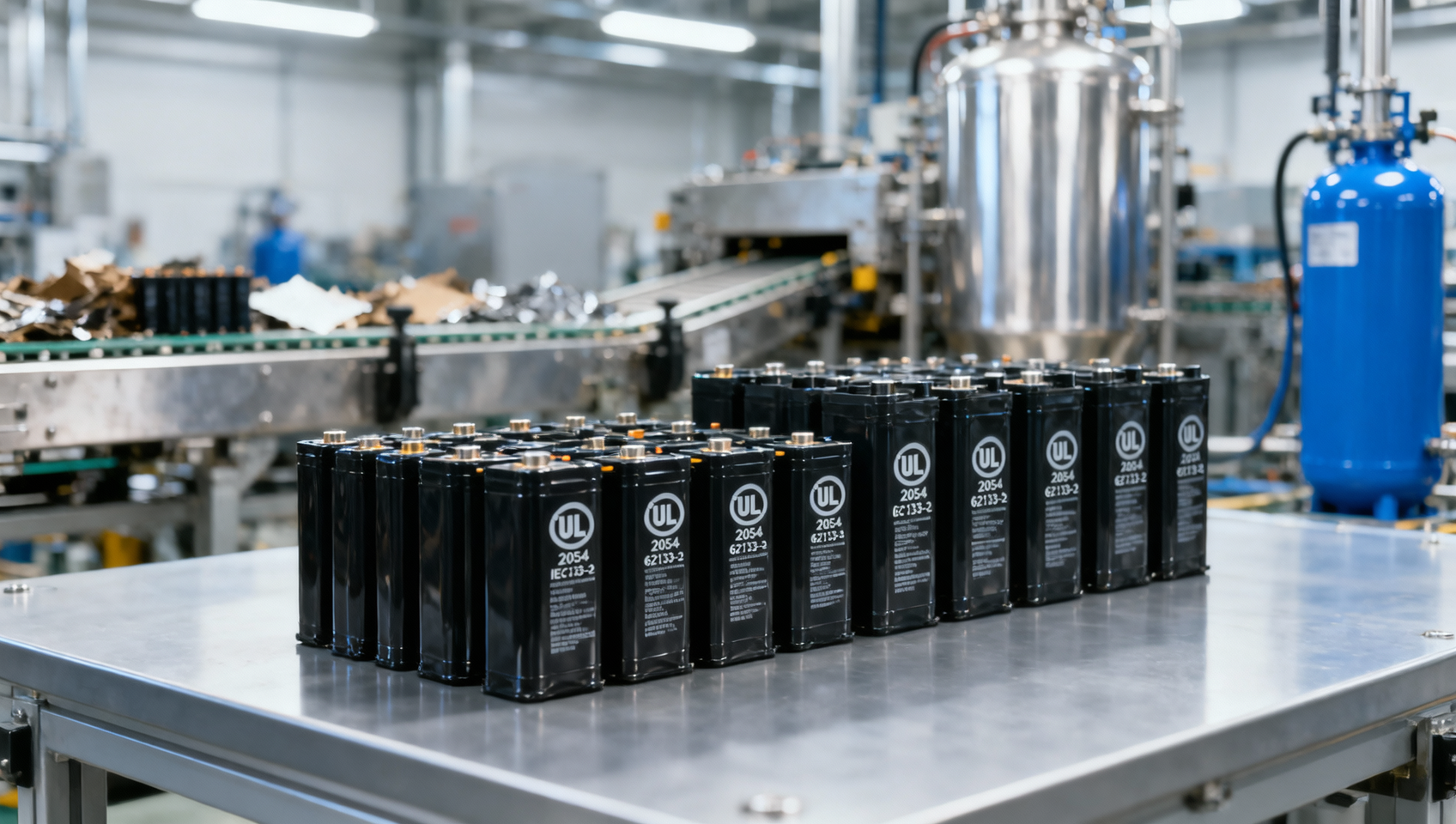
On April 24, 2026, the International Battery Association (IBA) reported a global lithium-ion battery recycling rate of 62% for combined automotive and consumer batteries — a milestone with measurable implications for manufacturers of high-rate lithium-polymer batteries used in beauty devices, particularly those supplying D2C brands in North America and Europe.
Event Overview
According to the IBA’s Global Li-ion Recycling Report Q1, published on April 24, 2026, the global recycling rate for lithium-ion batteries — covering both powertrain and consumer applications — reached 62%. As a direct consequence, the bill-of-materials (BOM) cost for domestically produced high-rate lithium-polymer batteries used in beauty devices declined by 9% year-on-year. Concurrently, lead times from mainstream suppliers shortened to six weeks, down from the prior 8–10 week range.
Industries Affected
Beauty device OEMs and ODMs: These manufacturers rely on consistent supply of certified, high-rate LiPo cells. Reduced BOM costs and shorter lead times improve gross margin flexibility and accelerate time-to-market for new product launches — especially critical for seasonal or trend-driven skincare and haircare tools.
Component procurement teams (in electronics manufacturing): Procurement functions face revised cost benchmarks and tighter delivery windows. The 9% BOM reduction reflects improved secondary material availability, but also signals increased sensitivity to upstream recycling infrastructure performance — not just raw mining output.
D2C beauty brands (especially US/EU-based): Faster battery supply enables more responsive hardware iteration. With typical product cycles compressing under competitive pressure, a two-week reduction in core component lead time directly supports quarterly launch cadences and inventory planning accuracy.
Logistics and supply chain service providers: Shorter lead times increase demand for agile, small-batch air freight coordination and customs-ready documentation — especially for shipments carrying UN3480-certified LiPo cells across transatlantic routes.
What Enterprises and Practitioners Should Monitor and Act On
Track official updates on regional recycling policy alignment
The IBA report is a global aggregate. From industry perspective, national-level enforcement of extended producer responsibility (EPR) schemes — especially in the EU and China — may drive further localized cost and lead-time shifts. Current data does not indicate which jurisdictions contributed most to the 62% figure; monitoring upcoming regulatory filings is advisable.
Focus on battery certification and compliance documentation
Analysis来看, faster delivery cycles do not automatically imply simplified compliance. High-rate LiPo cells for beauty devices must still meet IEC 62133-2, UL 2054, and transport regulations (e.g., IATA PI 965 Section II). Suppliers shortening lead times may compress internal testing windows — increasing risk of late-stage non-conformance. Verify documentation timelines alongside delivery promises.
Reassess safety margin in battery inventory planning
Observation suggests that while 6-week lead times improve responsiveness, they reduce buffer against unexpected demand spikes or quality rejections. For brands launching multiple SKUs per quarter, maintaining a minimum 4–6 week strategic stock of qualified battery lots remains prudent — even as average lead times shrink.
Clarify whether cost reductions reflect recycled content or process efficiency
Current reporting does not specify the driver behind the 9% BOM decline. It could stem from higher yields of recovered cobalt/nickel, lower refining energy use, or supplier consolidation. From industry angle, understanding this distinction matters: if driven by recycled inputs, long-term price stability improves; if driven by temporary capacity optimization, the benefit may be less durable.
Editorial Observation / Industry Perspective
This development is best understood as an early-stage inflection point — not yet a fully stabilized market shift. The 62% recycling rate marks progress, but remains heavily dependent on collection infrastructure scale-up and hydrometallurgical recovery efficiency gains. For beauty device supply chains, the immediate impact is tangible (cost + timing), yet its sustainability hinges on continued investment in closed-loop logistics and standardization of battery pack disassembly protocols. Current more relevant interpretation is that recycling maturity is now beginning to influence mid-tier electronics segments — not just EVs or premium laptops — suggesting broader downstream adoption is accelerating.
Conclusion: The 62% global lithium-ion recycling rate is a structural signal, not just a statistical update. It confirms that circular economy mechanisms are now materially affecting component economics and lead times in adjacent electronics sectors. However, it remains a transitional benchmark: one that reflects current capabilities, not guaranteed future resilience. Practitioners are better served treating it as a catalyst for supply chain recalibration — not a permanent cost floor.
Source: International Battery Association (IBA), Global Li-ion Recycling Report Q1, released April 24, 2026. Note: Regional breakdowns, material-specific recovery yields, and supplier-level attribution remain pending in publicly available versions of the report.
Related Intelligence
 Electronic & RC ToysApr 25, 2026CPSC Proposes FCC Part 18B RF Leakage Test for Wireless Charging in Electronic ToysCPSC proposes FCC Part 18B RF leakage testing for wireless charging in electronic toys—critical for Qi2.0/USB-PD3.1 exporters, OEMs & compliance labs.
 Nursery Furniture & MonitorsApr 25, 2026JETRO Spring 2026: Blockchain Batch Code Mandatory for Infant MonitorsJETRO Spring 2026 mandates blockchain batch code for infant monitors — EN60601-1-12 compliance + Hyperledger Fabric registration required. Act now to avoid port rejections!
") Corporate & Seasonal GiftsApr 25, 2026TÜV Rheinland Updates Green Packaging LCA Protocol (2026)TÜV Rheinland Green Packaging LCA Protocol V2.1 (2026) mandates full-life-cycle carbon heatmaps for Corporate & Seasonal Gifts packaging — critical for ALDI/LIDL market access.
Corporate & Seasonal GiftsApr 25, 2026TÜV Rheinland Updates Green Packaging LCA Protocol (2026)TÜV Rheinland Green Packaging LCA Protocol V2.1 (2026) mandates full-life-cycle carbon heatmaps for Corporate & Seasonal Gifts packaging — critical for ALDI/LIDL market access. Beauty DevicesApr 25, 2026Global Li-ion Recycling Rate Hits 62%: Impact on Beauty Device BatteriesLi-ion recycling rate hits 62% — discover how this impacts beauty device battery costs, lead times & compliance for D2C brands and OEMs.
 Infant Feeding & CareApr 25, 2026Canton Fair Phase III: Infant Feeding Inquiries +63% YoYCanton Fair Phase III infant feeding inquiries +63% YoY — urgent CPC & ISO 8124-3 compliance insights for exporters, silicone suppliers & labs.
") Smart Pet DevicesApr 25, 2026Vietnam Enforces New Smart Pet Collar Standards (Apr 2026)Vietnam Enforces New Smart Pet Collar Standards: Bluetooth 5.4 testing & embedded Vietnamese voice prompts now mandatory for market entry.
Smart Pet DevicesApr 25, 2026Vietnam Enforces New Smart Pet Collar Standards (Apr 2026)Vietnam Enforces New Smart Pet Collar Standards: Bluetooth 5.4 testing & embedded Vietnamese voice prompts now mandatory for market entry. Nursery Furniture & MonitorsApr 25, 2026SASO AI Ethics Rule for Smart Baby Monitors in Saudi ArabiaSASO AI Ethics Rule for Smart Baby Monitors in Saudi Arabia: Urgent compliance update for exporters & manufacturers — local AI ethics testing now mandatory at Riyadh lab.
 Camping & WaterApr 25, 2026RCEP Camping Water Bag Tariff Cut: Indonesia Adopts New TPU-Aluminum SpecRCEP Camping Water Bag tariff cut + new TPU-aluminum spec in Indonesia — boost compliance, cut costs, and win LPSE tenders. Act now!
 Cosmetics & PkgApr 25, 2026FDA Updates VCRP Guidance: Nano-TiO₂ Sunscreen Packaging Requires Separate Safety DossierNano-TiO₂ sunscreen packaging now requires a separate FDA VCRP safety dossier—key for Chinese OEMs & U.S. brands. Act before Q2 2026 deadlines.
 Cosmetics & PkgApr 25, 2026EU EPR Mandatory for Beauty Packaging in FR/DE/BE/NL from Apr 25, 2026EU EPR mandatory for beauty packaging in FR/DE/BE/NL from Apr 25, 2026—act now to avoid customs blocks, marketplace delisting & fines up to 4% of turnover.
 Cosmetics & PkgApr 24, 2026SAMR Fines 7 Platforms $230M for 'Ghost Kitchen' Packaging ViolationsSAMR fines 7 platforms $230M for ghost kitchen packaging violations—critical alert for infant feeding, supplement, and export packaging manufacturers.
 Nursery Furniture & MonitorsApr 24, 2026Canton Fair Phase III: Infant Monitors Draw Middle East Demand Amid EN60601-1-12 FocusInfant monitors at Canton Fair Phase III spark Middle East demand — IEC 60601-1-12:2022 compliance is now critical for GCC hospital tenders.
 Smart Pet DevicesApr 24, 2026Vietnam Enforces ISO 13485 + Vietnamese Manual for Smart Pet CollarsISO 13485 + Vietnamese manual now mandatory for smart pet collars entering Vietnam — avoid customs rejection. Act now to comply with MOH/MOIT’s April 2026 regulation.