Korea MFDS Mandates Dual Certification for Beauty Device Lithium Cells
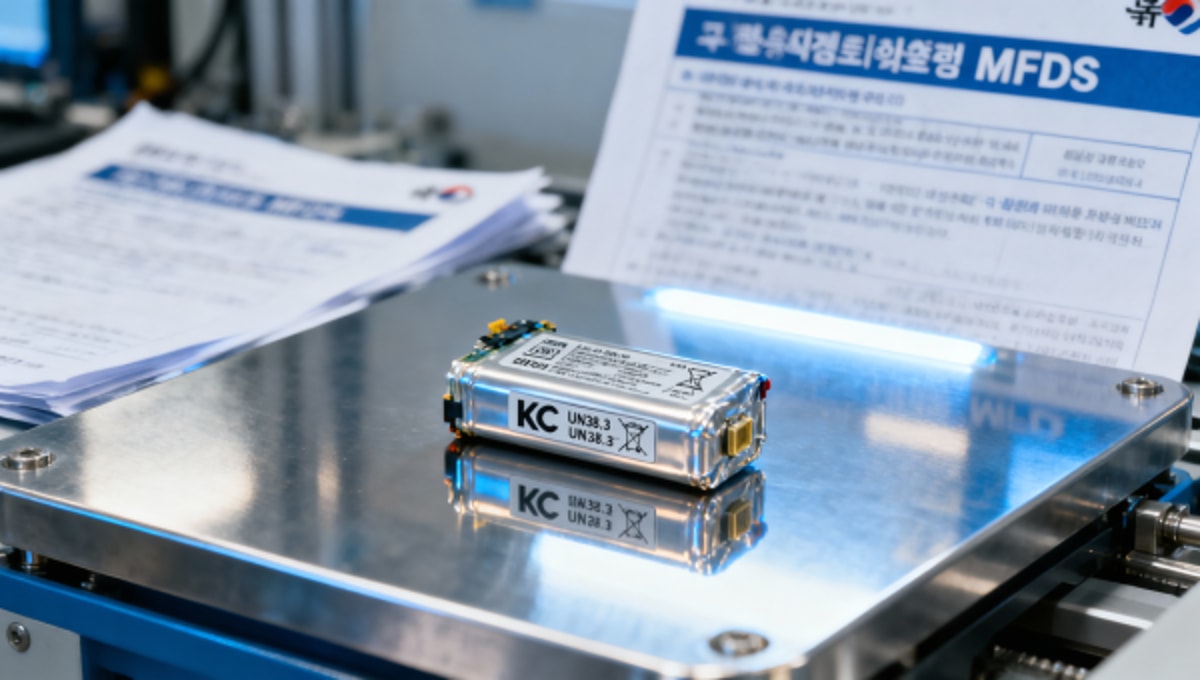
On May 4, 2026, the Korean Ministry of Food and Drug Safety (MFDS) issued a technical notice requiring all rechargeable lithium cells used in cosmetic devices—including radiofrequency, microcurrent, and LED-based instruments—to comply with both UN38.3 transport safety testing and the newly adopted Korean national standard KC 62133-2:2026. This requirement directly affects manufacturers, exporters, and certification service providers engaged in the Korean beauty device market.
Event Overview
The Korean Ministry of Food and Drug Safety (MFDS) published a technical notice on May 4, 2026, stipulating that all cosmetic instruments containing rechargeable lithium cells must pass two mandatory certifications: UN38.3 (for safe air/sea transport of lithium batteries) and KC 62133-2:2026 (the updated Korean safety standard for secondary lithium cells and batteries). The previous version, KC 62133-1, is no longer valid as of the notice’s issuance date. Compliance is required for Korea Certification (KC) registration of finished devices; failure to meet both standards will result in registration rejection.
Industries Affected
Original Equipment Manufacturers (OEMs), particularly China-based
OEMs supplying battery-integrated beauty devices to Korean importers or brand owners are directly impacted because the notice mandates dual certification at the cell level—and requires updated battery module documentation and full-device safety reports aligned with KC 62133-2:2026. Since many Chinese OEMs previously relied on KC 62133-1–certified cells or generic UN38.3 test reports, requalification may delay production timelines and increase compliance costs.
Component Suppliers (Lithium Cell & Battery Pack Providers)
Suppliers of lithium cells or pre-assembled battery modules must now ensure their products carry valid KC 62133-2:2026 certification—issued by an MFDS-recognized Korean certification body—not just UN38.3. Cells certified under older versions or non-Korean schemes (e.g., IEC 62133-2:2017 without KC marking) do not satisfy the new requirement. This narrows the pool of eligible components for KC-registered devices.
KC Certification Agents & Testing Laboratories
Third-party service providers supporting KC registration must update their test protocols and reporting templates to reflect KC 62133-2:2026’s revised clauses—including thermal runaway propagation tests, enhanced mechanical abuse requirements, and updated labeling provisions. Labs not yet accredited for KC 62133-2:2026 may be unable to issue valid reports for new submissions.
Distributors & Brand Owners Marketing in Korea
Brands distributing RF, microcurrent, or LED beauty devices in Korea must verify that every unit contains cells bearing both UN38.3 test evidence and KC 62133-2:2026 certification. Inventory already cleared under KC 62133-1 remains unaffected—but new batches require full re-evaluation. Failure to confirm dual compliance risks post-market noncompliance findings during MFDS inspections or customs clearance.
Key Considerations and Recommended Actions
Monitor official KC implementation guidance from MFDS and KATS
The notice confirms the effective date and scope but does not yet clarify transition periods for existing stock or grandfathering rules for devices already in KC review. Stakeholders should track updates from the Korean Agency for Technology and Standards (KATS) and MFDS announcements regarding enforcement timelines and acceptable evidence formats.
Verify cell-level certification status before finalizing BOMs
Procurement teams should request updated KC 62133-2:2026 certificates—not just test reports—for all lithium cells, along with proof of KC mark authorization from the issuing body. Cross-check certificate numbers against KATS’ publicly accessible KC database where available.
Update both battery module and full-device safety documentation
Compliance is not satisfied by cell-level certification alone. OEMs must submit revised battery module safety assessments and integrated device-level safety reports (e.g., referencing IEC 62368-1 or KC 62368-1 where applicable) that explicitly reference KC 62133-2:2026 as the basis for cell evaluation.
Engage KC-accredited labs early for test scheduling
Lead times for KC 62133-2:2026 testing—including mandatory preconditioning, cycle life verification, and thermal shock validation—may extend beyond standard UN38.3 turnaround. Early engagement helps avoid bottlenecks ahead of planned KC application deadlines.
Editorial Observation / Industry Perspective
Observably, this notice signals a tightening of regulatory alignment between battery safety and medical-cosmetic device oversight in Korea—not a sudden policy shift, but a formalized convergence of transport and end-use safety expectations. Analysis shows MFDS is treating lithium-powered beauty devices with increasing scrutiny akin to low-risk medical equipment, especially given their direct skin contact and prolonged operation profiles. From an industry standpoint, the dual-certification mandate is less a transitional measure and more a structural recalibration: it elevates cell-level due diligence from a supply chain checkpoint to a prerequisite for market access. Continued attention is warranted as KATS may issue supplementary interpretation documents later in 2026.
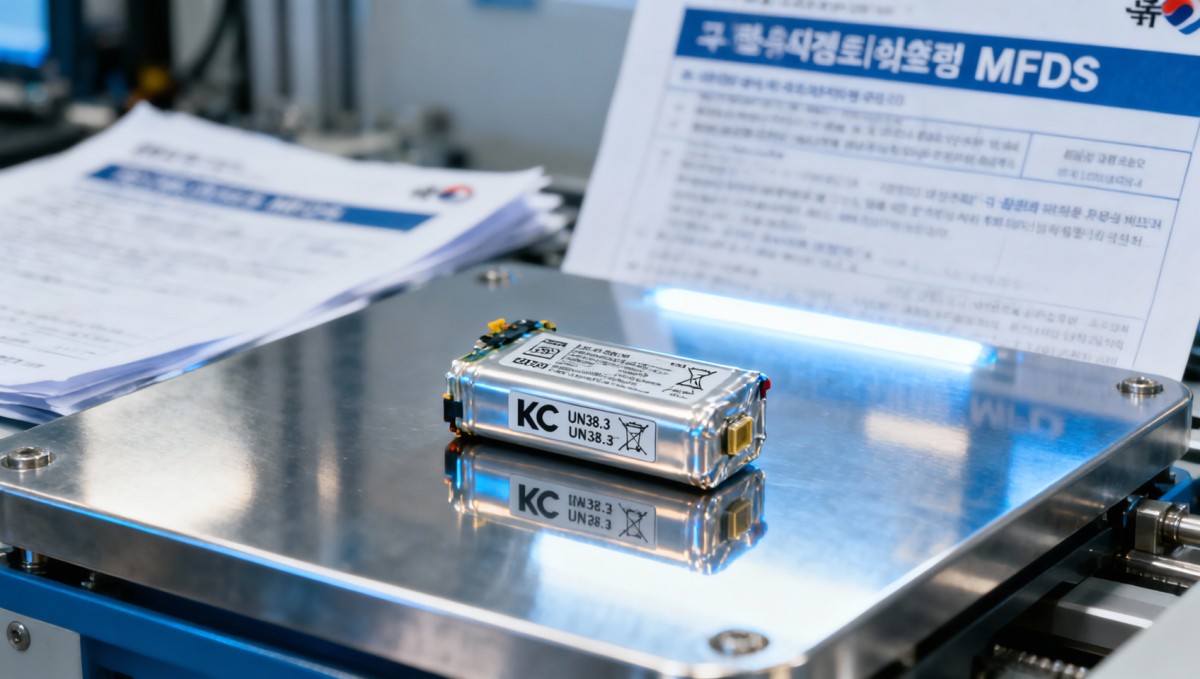
This notice underscores that compliance for beauty electronics entering Korea has evolved from a product-level assessment to a layered, component-specific obligation—with lithium cells now carrying independent, non-delegable certification weight. It is best understood not as an isolated regulatory update, but as a marker of broader regulatory maturation in the Korean personal wellness device sector—where safety accountability is increasingly distributed across the value chain rather than centralized at the final device stage.
Source: Korean Ministry of Food and Drug Safety (MFDS), Technical Notice dated May 4, 2026. Note: Ongoing monitoring is recommended for KATS-issued implementation guidelines and potential clarification notices.
Related Intelligence
 Pet Grooming & TravelMay 06, 2026Custom Printed Dog Collars: Design Choices That Improve Repeat OrdersCustom printed dog collars that drive repeat orders: explore durable materials, lasting print methods, safer hardware, and private-label design choices that boost retail appeal.
 Smart Pet DevicesMay 06, 2026Aquarium LED Lighting OEM: What Impacts Energy Use and Plant GrowthAquarium led lighting oem guide for travel service projects: compare energy use, PAR, spectrum, thermal control, and OEM reliability to improve plant growth and reduce operating costs.
 Skincare OEMMay 06, 2026Private Label Pet Shampoo: How to Balance Formula, Scent, and PositioningPrivate label pet shampoo strategies for travel brands: learn how to balance formula, scent, compliance, and positioning to boost guest experience, retail appeal, and brand value.
 Pet Grooming & TravelMay 06, 2026Airline Approved Pet Carrier: Common Mistakes Before You FlyAirline approved pet carrier guide: avoid common pre-flight mistakes, compare airline rules, size, ventilation, and comfort to choose a safer, stress-free travel carrier.
 Activewear OEMMay 06, 2026Custom Dog Sweaters: What Changes the Final Price MostCustom dog sweaters pricing explained for travel service buyers: compare materials, MOQ, customization, compliance, and supplier costs to cut risk, protect margins, and source smarter.
 Pet Furniture & EnrichmentMay 06, 2026Bird Cage Wholesale: Which Styles Fit Small Stores BestBird cage wholesale guide for small stores: discover compact, decorative, and foldable styles that save space, sell faster, and suit tourism-driven retail demand.
 Smart Pet DevicesMay 06, 2026LED Dog Collar Manufacturer: How to Judge Visibility and Battery LifeLED dog collar manufacturer selection starts with visibility and battery life. Learn how to compare suppliers, verify safety, and choose reliable collars for travel and outdoor use.
 Pet Grooming & TravelMay 06, 2026Pet Nail Grinder Manufacturer: 6 Safety Details You Should Not IgnorePet nail grinder manufacturer selection affects safety, compliance, and brand trust. Discover 6 critical details buyers in travel services should review before choosing a supplier.
 Pet Grooming & TravelMay 06, 2026Dog Grooming Clippers Wholesale: A Practical Guide to Motor and Blade OptionsDog grooming clippers wholesale guide covering motor types, blade options, noise, durability, and maintenance—helping buyers compare specs, reduce sourcing risk, and choose better-performing products.
 Pet Grooming & TravelMay 06, 2026Retractable Dog Leash Wholesale: Which Mechanisms Cause Fewer ComplaintsRetractable dog leash wholesale guide: discover which mechanisms cause fewer complaints, reduce returns, and improve buyer trust with smarter sourcing for travel retail channels.
 Smart Pet DevicesMay 06, 2026Canister Filter for Aquarium: How to Size It Correctly the First TimeCanister filter for aquarium sizing made simple: learn how to match flow, media capacity, and bioload for clear water, healthier fish, and fewer costly upgrade mistakes.
 Smart Pet DevicesMay 06, 2026Smart Pet Tag Tracker: What to Look for Beyond GPS ClaimsSmart pet tag tracker buying guide for travel: compare battery life, coverage, app usability, durability, and compliance beyond GPS claims to choose with confidence.
 Pet Grooming & TravelMay 06, 2026How a Pet Raincoat Manufacturer Handles Sizing and WaterproofingPet raincoat manufacturer insights for travel retail buyers: learn how suppliers manage sizing logic, waterproof testing, seam sealing, and scalable QC for reliable sourcing.