US CPSC Dual Certification Rule for Smart Beauty Devices Takes Effect May 3, 2026
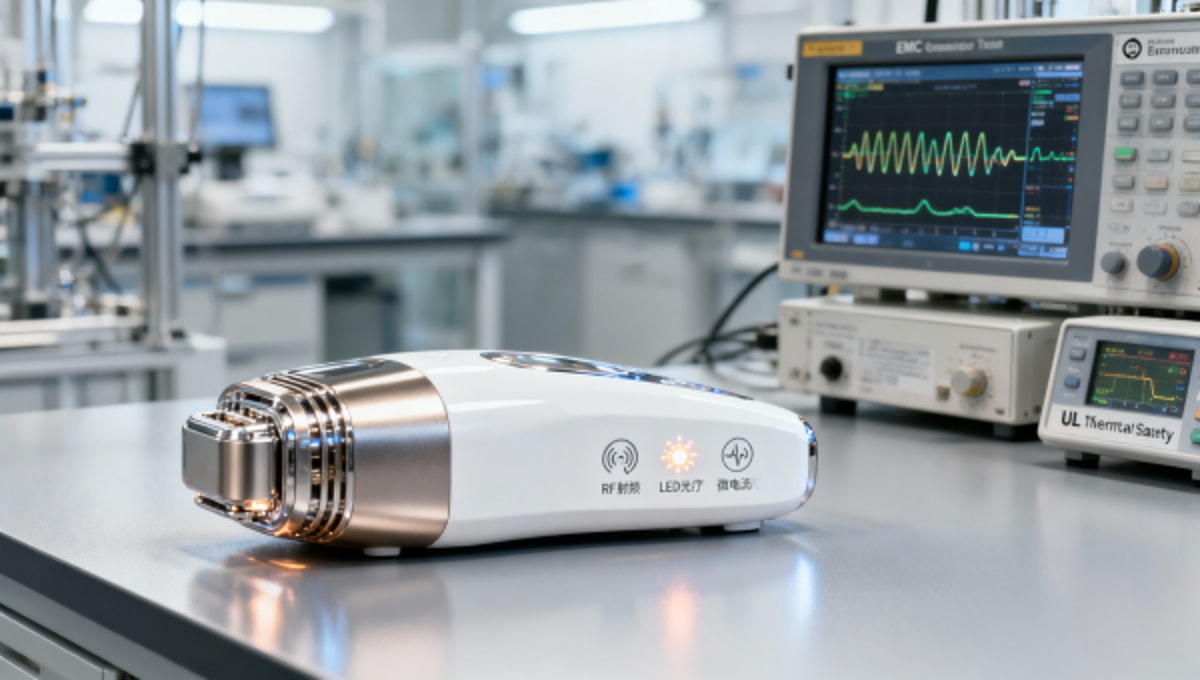
On May 3, 2026, the U.S. Consumer Product Safety Commission (CPSC) formally implemented its Personal Care Devices Safety Rule, mandating electromagnetic compatibility (EMC) and thermal safety certification for RF, microcurrent, and LED-based beauty devices entering the U.S. market. This development directly impacts China-based OEM manufacturers of beauty devices—particularly those supplying North American brands—and signals a structural shift in export compliance requirements for personal care electronics.
Event Overview
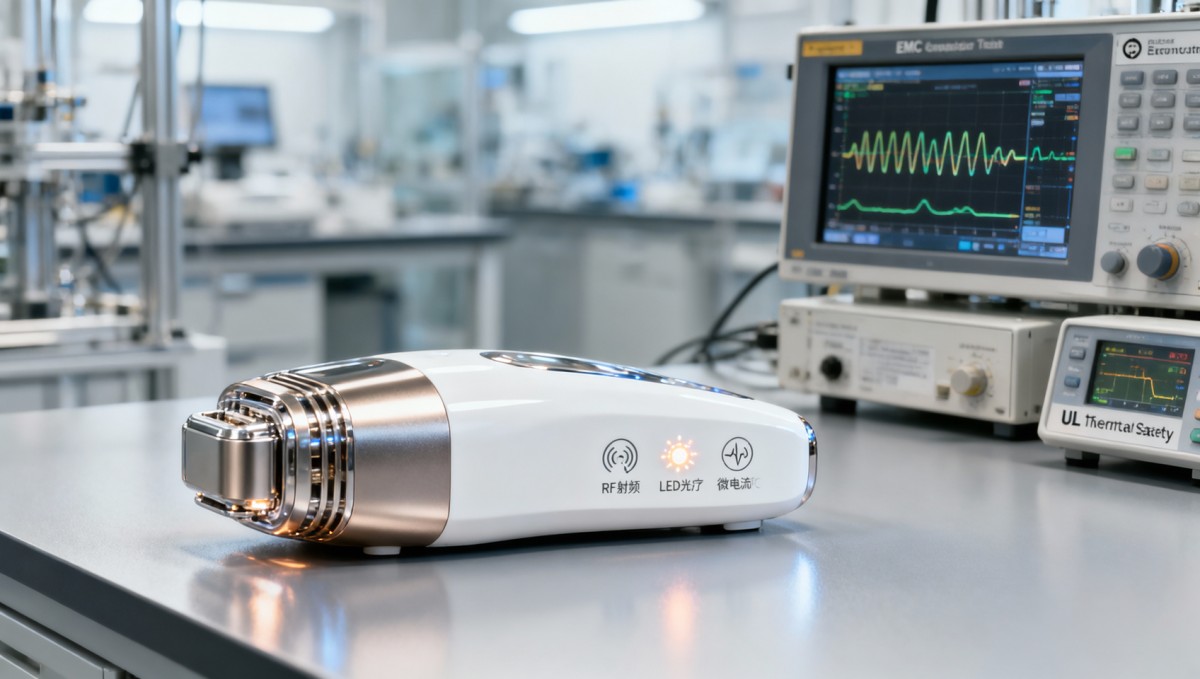
The U.S. CPSC’s Personal Care Devices Safety Rule entered into force on May 3, 2026. Under this rule, all RF-, microcurrent-, and LED-based personal care devices intended for consumer use in the United States must undergo FCC Part 18 EMC testing and UL 879A thermal runaway safety verification prior to importation. Products failing to meet both requirements are subject to detention or re-exportation at U.S. ports of entry.
Industries Affected by Segment
Direct Exporters & OEM Manufacturers
Chinese beauty device OEMs serving U.S. private-label or white-label brands are directly affected because compliance responsibility now rests with the importer of record—and often flows back contractually to the manufacturer. Impact manifests as delayed shipments, increased pre-market testing costs, and potential loss of contracts if dual certification cannot be demonstrated before May 3, 2026.
Contract Testing & Certification Service Providers
Laboratories and certification bodies accredited for FCC Part 18 and UL 879A testing face rising demand—especially those with CPSC-recognized accreditation and U.S.-based reporting capability. Impact includes tighter capacity scheduling, longer lead times for test reports, and heightened scrutiny of report validity by U.S. customs brokers.
U.S.-Based Importers & Brand Owners
Importers listed on FDA/CPSC filings must verify that incoming shipments include valid FCC and UL 879A documentation. Impact includes added due diligence in supplier qualification, risk of inventory hold at CBP facilities, and possible liability exposure under CPSC Section 15(b) reporting obligations if non-compliant units enter commerce.
What Stakeholders Should Monitor and Do Now
Track official CPSC guidance updates and enforcement interpretations
Analysis shows the CPSC has not yet published detailed FAQs or enforcement thresholds (e.g., sampling rates, grace periods for transitional stock). Stakeholders should monitor the CPSC’s official website and Federal Register notices for clarifications issued after May 3, 2026.
Verify certification scope against actual product configurations
Observably, FCC Part 18 applies to devices generating RF energy for functional purposes (e.g., RF skin tightening), while UL 879A covers thermal hazard evaluation—including battery-integrated devices and multi-mode operation. Companies should confirm whether their specific models fall under the rule’s defined “personal care device” scope, rather than assuming broad applicability.
Distinguish between regulatory signal and operational readiness
From industry angle, the May 3 effective date marks a formal compliance threshold—not a phased rollout. Customs brokers and CBP officers are instructed to verify documentation upon entry; no automatic grace period is stipulated. Pre-clearance validation (e.g., third-party review of test reports) is recommended before first shipment post–May 3.
Prepare documentation packages proactively
Current best practice involves assembling complete technical files—including test reports, equipment schematics, user manuals, and label compliance statements—before production runs conclude. Delays in report issuance or discrepancies in model numbering have caused recent port detentions; early engagement with accredited labs reduces bottleneck risk.
Editorial Perspective / Industry Observation
This rule is better understood as an enforcement escalation—not a new safety concept. EMC and thermal safety have long been implicit expectations under CPSC’s general safety provisions; the 2026 rule codifies them as explicit, verifiable prerequisites for a defined product class. Observably, it reflects CPSC’s increasing focus on emerging technologies in unregulated consumer categories. Analysis suggests this may presage similar requirements for other low-voltage wearable electronics—but only if further incident data or petition activity emerges. For now, it functions primarily as a gatekeeping mechanism, not a broad regulatory expansion.
Conclusion
The CPSC’s dual-certification requirement represents a concrete compliance milestone—not merely procedural noise—for manufacturers and importers of smart beauty devices. Its significance lies less in novelty and more in enforceability: it introduces objective, auditable criteria where subjective risk assessments previously prevailed. Stakeholders are advised to treat it as an operational checkpoint requiring documented verification—not a strategic trend to monitor from afar.
Source Disclosure:
Primary source: U.S. Consumer Product Safety Commission (CPSC), Personal Care Devices Safety Rule, effective May 3, 2026 (published in Federal Register, Docket No. CPSC-2023-0042).
Note: Ongoing monitoring is advised for CPSC-issued enforcement advisories, lab accreditation updates, and potential petitions for amendment or exemption—none of which have been confirmed as of the rule’s effective date.
Related Intelligence
 Nursery Furniture & MonitorsMay 04, 2026Wooden Baby Cribs Wholesale: Safety Checks That Should Not Be SkippedWooden baby cribs wholesale safety checks every buyer should verify: compliance, materials, structural strength, hardware, and factory controls to reduce recall risk.
 Activewear OEMMay 04, 2026Organic Baby Clothes Wholesale: How to Verify Fabric ClaimsOrganic baby clothes wholesale guide: learn how to verify fabric claims, check certifications, review lab tests, and spot supplier risks for safer sourcing and confident wholesale decisions.
 Infant Feeding & CareMay 04, 2026Wholesale Cloth Diapers: Cost Trade-Offs That Matter Over TimeWholesale cloth diapers: compare more than unit price. Discover the long-term cost trade-offs in sourcing, compliance, returns, packaging, and margin strategy.
 Infant Feeding & CareMay 04, 2026Biodegradable Baby Wipes: Are They Better in Daily UseBiodegradable baby wipes: are they truly better for daily use? Explore softness, durability, skin safety, and travel convenience to choose the best option for family trips.
 Infant Feeding & CareMay 04, 2026Silicone Teething Rings: What to Look for Before You BuySilicone teething rings guide: learn how to compare safety, food-grade materials, easy-clean designs, and age-appropriate features before you buy for home or travel.
 Infant Feeding & CareMay 04, 2026Baby Pacifiers Manufacturer Comparison: Material, Mold, and ComplianceBaby pacifiers manufacturer comparison guide covering material safety, mold precision, and compliance readiness to help buyers reduce sourcing risk and choose reliable global partners.
 Infant Feeding & CareMay 04, 2026Silicone Baby Bibs OEM Trends That Make Sense in 2026Silicone baby bibs OEM trends for 2026: discover safer sourcing, private-label flexibility, and travel retail opportunities that help buyers reduce risk and grow family-focused sales.
 Infant Feeding & CareMay 04, 2026BPA Free Baby Bottles: How to Judge Safety Beyond the LabelBPA free baby bottles safety goes beyond the label. Learn how travel service quality teams assess materials, testing, certificates, and supplier risk for safer sourcing.
 Infant Feeding & CareMay 04, 2026Electric Breast Pump OEM: What to Review Before Final ApprovalElectric breast pump OEM final approval starts with more than price. Review compliance, reliability, warranty risk, and supplier readiness before you sign.
 Infant Feeding & CareMay 04, 2026Manual Breast Pump Wholesale: When Simpler Products Sell BetterManual breast pump wholesale performs best where portability, affordability, and easy selling matter most. Discover why simpler products win in travel retail, pharmacies, e-commerce, and emerging markets.
 Infant Feeding & CareMay 04, 2026Baby High Chairs OEM: Features Parents Notice Before Anything ElseBaby high chairs OEM guide for parents: compare stability, harness safety, non-toxic materials, and easy-clean design to choose a trusted high chair with confidence.
 Baby Gear & StrollersMay 04, 2026Maternity Backpack OEM Ideas That Fit Modern Parenting NeedsMaternity backpack OEM ideas for modern parenting: explore travel-ready layouts, smart storage, safe materials, and customization tips that help brands source better and launch with confidence.
 Baby Gear & StrollersMay 04, 2026Baby Walkers Wholesale: Market Demand, Risks, and Model SelectionBaby walkers wholesale insights for travel retail and global buyers: explore demand shifts, compliance risks, and the best model mix to source safer, higher-converting products.