Custom Power Banks OEM: What to Review Before Approving Battery Specs
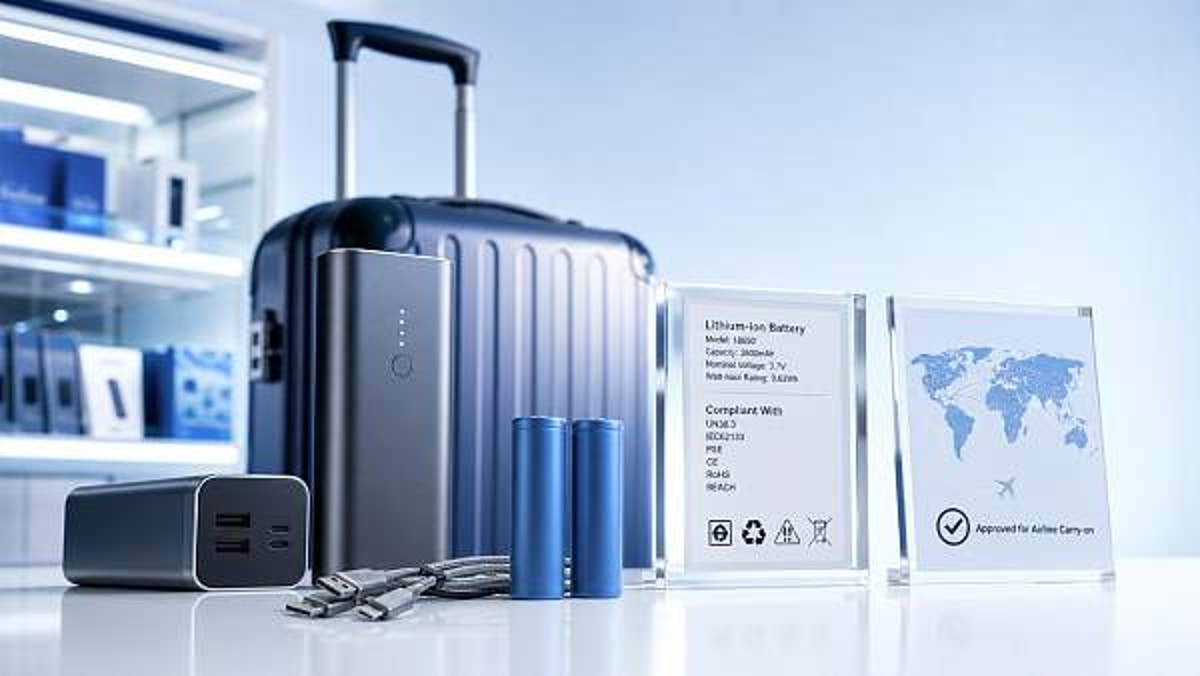
Before approving battery specifications for custom power banks OEM projects, technical evaluators need more than a basic capacity check. From cell chemistry and charging efficiency to safety compliance, cycle life, and transport requirements, every detail can affect product reliability, traveler satisfaction, and brand risk. This guide outlines the key points to review before moving forward with production.
For travel service brands, distributors, airport retail programs, and sourcing teams serving mobile travelers, battery approval is not a routine paperwork step. It is a risk-control decision that affects user safety, on-the-go charging performance, return rates, and even whether a shipment can legally move across borders. That is why a checklist approach works best for custom power banks OEM evaluations: it helps technical reviewers verify the non-negotiable items first, compare supplier claims against measurable evidence, and flag hidden issues before tooling, packaging, and volume production are approved.
Start With the Approval Logic: What Must Be Confirmed First
Before discussing capacity, appearance, or private-label branding, define the actual travel use case. A power bank designed for city sightseeing customers, long-haul business travelers, tour operators, hotel gift shops, or airline-related retail channels may require different trade-offs. Technical evaluators should first align the battery specification with intended usage frequency, expected device mix, travel regulations, and the target price band.
Use the following priority logic when reviewing a custom power banks OEM proposal:
- Is the battery chemistry suitable for the product positioning and transport route?
- Does rated capacity translate into realistic output capacity under normal use?
- Are protection functions, charging behavior, and thermal limits validated by test data?
- Do certifications and shipping documents match the destination market?
- Can the supplier maintain cell consistency at scale, not only on samples?
If any of these five areas is weak, approving the battery spec too early can create later failures in field performance, customs clearance, or post-sale reputation.
Core Checklist for Reviewing Battery Specs in Custom Power Banks OEM
1. Verify the Cell Chemistry and Cell Format
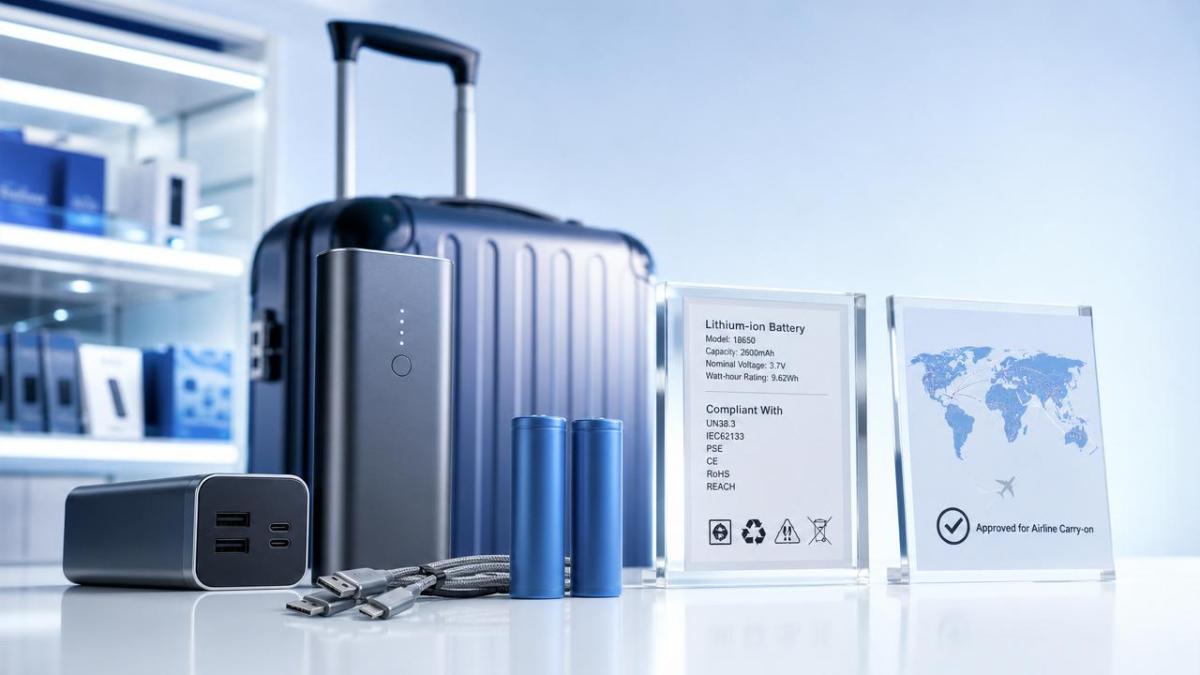
The first technical check is not just “lithium battery yes or no,” but exactly what chemistry and physical format are being proposed. Most power banks use lithium-ion or lithium-polymer cells. Each has implications for thickness, mechanical stability, energy density, swelling risk, and enclosure design. A slim promotional travel charger may favor polymer pouch cells, while a rugged outdoor or rental-use model may rely on cylindrical cells for durability and sourcing stability.
Ask the OEM supplier for the exact cell brand, model, nominal voltage, and sourcing tier. If the supplier only provides generic wording such as “A-grade battery,” treat that as insufficient. Technical approval should be tied to a traceable cell specification sheet, not a marketing label.
2. Check Rated Capacity Versus Delivered Capacity
One of the most common mistakes in custom power banks OEM projects is approving a nominal mAh value without reviewing conversion losses. A power bank may advertise 10,000mAh based on cell rating at 3.7V, but the usable energy delivered to a phone at 5V is lower because of boost conversion efficiency, internal resistance, and cable loss. For travel users, this difference directly affects satisfaction.
Technical evaluators should request:
- Nominal cell capacity and total energy in Wh
- Rated output capacity at specific voltage and current conditions
- Conversion efficiency data at low, medium, and high load
- Test conditions, including ambient temperature and aging status
For travel-related retail channels, Wh is often the more meaningful compliance metric because airline rules and transport declarations are commonly based on watt-hours rather than only mAh.
3. Review Charge and Discharge Performance Under Real Scenarios
Battery specs should be evaluated in the context of actual traveler behavior: fast top-ups in airports, hotel room overnight charging, powering multiple devices during long rides, and occasional use after storage. A technically acceptable battery on paper may still perform poorly in these conditions if the charge-discharge design is unbalanced.
Key checks include input charging speed, supported protocols, output stability, self-discharge rate, and performance during pass-through charging if that function is offered. If the product claims PD, QC, or other fast-charging compatibility, request protocol verification logs instead of accepting a simple icon printed on packaging.
4. Confirm the Full Protection Circuit Set
No battery specification should be approved without a protection review. At minimum, the pack and control board should demonstrate overcharge protection, over-discharge protection, over-current protection, short-circuit protection, and temperature-related control. Better designs also manage cell balancing where applicable and include recovery logic after fault events.
For custom power banks OEM sourcing, ask who designs the PCM or BMS, whether key ICs are from recognized suppliers, and whether any component substitutions are allowed after approval. Unauthorized substitutions are a major hidden risk in mass production.
Use a Practical Review Table Before Signing Off
Check the Life-Cycle Numbers, Not Just Launch Performance
Travel accessories often face intermittent but long-term usage, making cycle life and calendar aging especially important. A battery that performs well in factory samples can degrade quickly if cell quality is inconsistent or if thermal design is weak. Technical reviewers should look beyond “500 cycles” claims and ask what capacity retention level defines end of life, such as 80% after a stated number of cycles.
Also review storage behavior. Travel gift channels and seasonal promotions may involve months in inventory before use. If self-discharge is high or storage recovery is poor, customers may receive underperforming units, creating complaints even when the design initially passed inspection.
Match Battery Specs to Travel-Service Scenarios
In the travel service sector, battery approval should reflect where and how the power bank will be sold or used. The same custom power banks OEM specification may not fit every channel.
For Hotel, Resort, and Gift-Shop Programs
Prioritize visual design, broad phone compatibility, moderate capacity, and safe overnight charging. Clear labeling and low return risk matter more than extreme output power.
For Tour Operators and Mobile Rental Use
Focus on cycle durability, enclosure robustness, connector wear, and batch consistency. These products experience repeated handling and often need predictable performance across many units.
For Airport, Duty-Free, and Cross-Border Retail
Transport documentation, watt-hour declaration, UN38.3 alignment, and destination-market safety compliance become critical. Packaging claims must accurately match the tested battery configuration.
Do Not Overlook Compliance, Shipping, and Labeling Risks
Many sourcing delays happen after technical approval because compliance files were incomplete or not tied to the final bill of materials. For custom power banks OEM projects, technical evaluators should coordinate with sourcing and compliance teams before sign-off. Review whether the supplier can provide relevant reports for electrical safety, EMC if applicable, battery transport testing, and market-specific requirements such as CE or other regional standards.
Also inspect the label content. Incorrect mAh, Wh, input-output ratings, or origin details can trigger customs issues, channel rejection, or legal exposure. In battery products, documentation accuracy is part of the technical review, not only an artwork task.
Commonly Missed Red Flags in Custom Power Banks OEM Programs
- Sample units use premium cells, but production may shift to lower-tier alternatives without formal notice.
- The supplier quotes nominal capacity only and avoids publishing rated output capacity.
- Protection circuit details are described generally, but no validation reports are provided.
- Fast-charging claims appear on packaging, yet interoperability testing is incomplete.
- Compliance reports belong to a similar model, not the exact approved configuration.
- Mass-production tolerances for cell matching, internal resistance, or thermal behavior are undefined.
Execution Advice: What Technical Evaluators Should Request Before Approval
To make the approval process efficient and defensible, prepare a structured document request list. This should include the cell datasheet, battery pack specification, PCB or BMS overview, cycle-life report, charge-discharge test records, safety test summary, transport certification file, and production change-control policy. If possible, require golden sample retention and a clear rule that no cell or key component change can occur without re-approval.
For higher-volume travel programs, it is also wise to confirm incoming inspection standards, batch traceability format, and post-shipment failure analysis support. These operational details often determine whether a custom power banks OEM partnership remains stable after launch.
Final Review Questions Before You Move to Production
Before final approval, ask a short set of decision-focused questions: Does this battery specification fit the real traveler use case? Are the energy and output claims transparent and test-backed? Are the safety protections and certifications complete for the intended market and shipping route? Can the supplier maintain the same cell quality in scaled production? And if a field issue occurs, do you have traceability and technical support in place?
If any answer is uncertain, pause approval and request clarification. In custom power banks OEM projects, early diligence is far less costly than post-launch recalls, traveler complaints, or blocked shipments. If you are moving into supplier discussions, the best next step is to align on battery chemistry, rated energy, protection architecture, certifications, batch consistency controls, timeline, and any destination-specific travel retail requirements before locking the final specification.
Related Intelligence
 Corporate & Seasonal GiftsMay 07, 2026Branded USB Flash Drives: When Classic Promo Items Still Make SenseBranded USB flash drives still make sense for travel service brands—discover how they boost partner engagement, showcase premium content, and support higher-conversion B2B campaigns.
![]() Corporate & Seasonal GiftsMay 07, 2026Reborn Baby Dolls Wholesale: Key Quality Signs to Check Before Orderingreborn baby dolls wholesale buyers: learn the key quality signs to check before ordering, from materials and realism to compliance and factory consistency.
Corporate & Seasonal GiftsMay 07, 2026Reborn Baby Dolls Wholesale: Key Quality Signs to Check Before Orderingreborn baby dolls wholesale buyers: learn the key quality signs to check before ordering, from materials and realism to compliance and factory consistency. STEM & Educational ToysMay 07, 2026Montessori Toys Wholesale: What Sells Better Than Trend-Driven Toy PicksMontessori toys wholesale offers travel retailers and distributors a smarter alternative to fad toys—safer, educational, durable, and built for steady demand, repeat orders, and long-term trust.
 Corporate & Seasonal GiftsMay 07, 2026Custom Printed Mugs Bulk: Which Sizes and Coatings Make Better Gift ItemsCustom printed mugs bulk: discover the best sizes and coatings for travel gifts, hotel branding, and souvenir retail to boost appeal, durability, and buyer confidence.
 STEM & Educational ToysMay 07, 2026Sensory Toys for Autism OEM: Features That Matter More Than Bright PackagingSensory toys for autism OEM selection for travel services should prioritize safety, compliance, durability, and calming design over flashy packaging. Discover what truly improves guest experience.
 STEM & Educational ToysMay 07, 2026Custom Board Games Printing: How to Avoid Expensive Reprint MistakesCustom board games printing guide for travel service teams: avoid costly reprints, fix supplier risks, choose the right materials, and keep projects on time and on budget.
 Corporate & Seasonal GiftsMay 07, 2026Custom Power Banks OEM: What to Review Before Approving Battery SpecsCustom power banks OEM guide for travel service buyers: review battery chemistry, real output, safety, cycle life, and compliance before approval to reduce risk and boost buyer confidence.
 STEM & Educational ToysMay 07, 2026DIY Craft Kits for Kids: Which Projects Work Best for Short Attention SpansDIY craft kits for kids that keep short attention spans engaged on trips. Discover mess-free, travel-friendly projects for flights, road trips, and hotel downtime.
 STEM & Educational ToysMay 07, 2026Magnetic Building Blocks Manufacturer: Safety Points You Should Never SkipMagnetic building blocks manufacturer safety guide: learn the must-check tests, compliance documents, and audit points to avoid recalls, protect your brand, and source with confidence.
 Corporate & Seasonal GiftsMay 07, 2026Corporate Gift Sets Wholesale: How to Match Product Mix With BudgetCorporate gift sets wholesale for travel services: learn how to match product mix with budget, control landed costs, manage compliance, and choose higher-ROI gift sets.
 Corporate & Seasonal GiftsMay 07, 2026Action Figures Manufacturer: What to Compare Before Locking in a SupplierAction figures manufacturer comparison guide for travel buyers: evaluate compliance, customization, packaging, lead times, and supplier stability before choosing a sourcing partner.
 Corporate & Seasonal GiftsMay 07, 2026Birthday Party Decorations: How to Build a Theme Without OverbuyingBirthday party decorations made simple: learn how to build a stylish theme with fewer items, smart venue-friendly choices, and budget-saving tips that still create a memorable celebration.
 Corporate & Seasonal GiftsMay 07, 2026Fidget Spinners Bulk: When Low Unit Cost Becomes a Hidden Quality RiskFidget spinners bulk may look cost-effective, but hidden quality, compliance, and return risks can hurt travel retail margins. Learn how to source smarter before you buy.