Ningbo Port Launches Holiday Gifts Green Channel
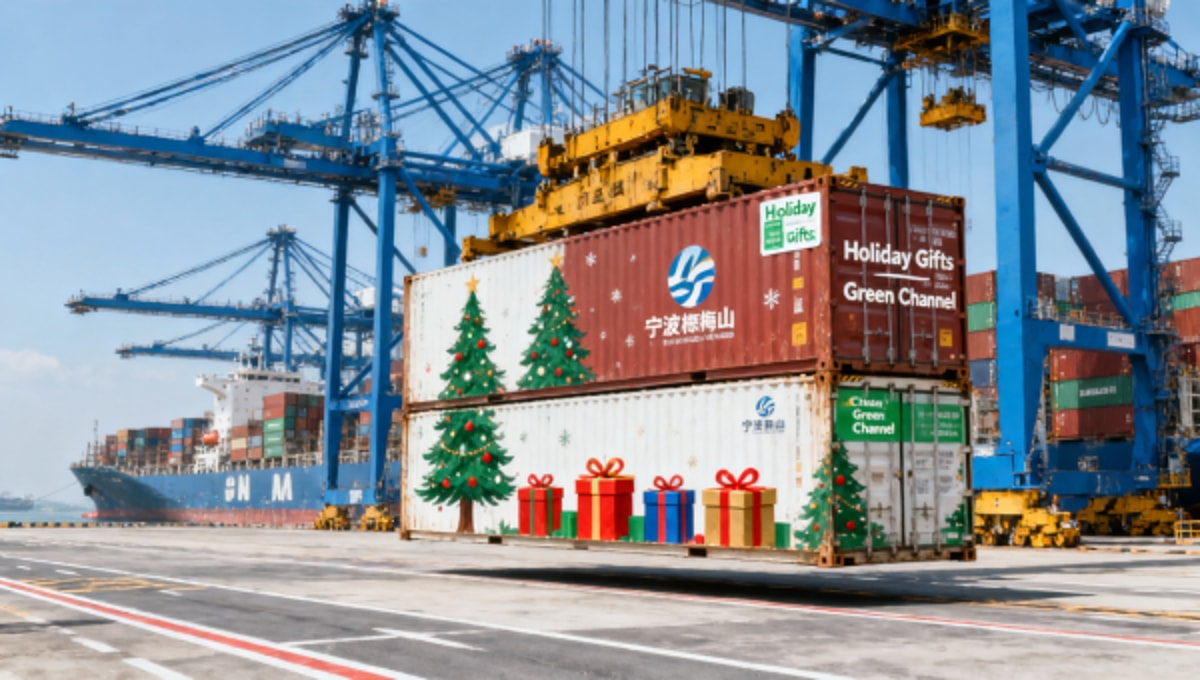
Ningbo Port activated the ‘Holiday Gifts Green Channel’ on May 4, 2026 — a customs facilitation initiative targeting Corporate & Seasonal Gifts exports, including Christmas decorations, custom gift boxes, and corporate promotional items. The measure directly affects exporters in fast-cycle gifting, retail branding, and B2B promotional goods sectors, as it compresses average clearance time from 42 to under 8 hours. This shift signals a targeted operational upgrade for time-sensitive seasonal export flows.
Event Overview
Effective from 00:00 on May 4, 2026, Ningbo Customs and Ningbo Port Group launched a pilot ‘Holiday Gifts Green Channel’ at Meishan Port Area. The initiative applies exclusively to Corporate & Seasonal Gifts — defined as Christmas decorations, branded gift boxes, and enterprise promotional items. It offers预约通关 (appointment-based customs clearance), centralized inspection, and same-day release. According to official data released, average customs processing time dropped from 42 hours to within 8 hours. In its first week, the channel handled export shipments valued at over RMB 230 million.
Industries Affected by Segment
Direct Exporters (Brands, Distributors, E-commerce Sellers)
These enterprises ship finished holiday gifts directly from China to overseas markets. They benefit most immediately from faster release — reducing container dwell time, demurrage exposure, and inventory holding costs ahead of peak-season deadlines. Impact manifests primarily in improved shipment predictability and tighter alignment with overseas retail calendars (e.g., Black Friday, Christmas shelf-set dates).
Contract Manufacturers & OEM/ODM Producers
Factories producing private-label or co-branded holiday goods face upstream pressure to synchronize production, packaging, and documentation timelines with the new 8-hour window. Delays in labeling, origin declarations, or HS code classification now carry higher opportunity cost — as bottlenecks post-manufacturing may negate the green channel’s time savings.
Supply Chain & Logistics Service Providers
Freight forwarders, customs brokers, and bonded warehousing operators must adapt internal workflows to support appointment-based submission and pre-inspection coordination. Their role shifts toward proactive documentation validation and real-time slot management — rather than reactive problem-solving after declaration.
What Enterprises Should Monitor and Do Now
Track official scope definition and expansion plans
The current pilot applies only to Meishan Port and explicitly lists three product categories. Observably, the eligibility criteria — including HS code ranges, documentation requirements (e.g., gift value thresholds, branding evidence), and whether third-party logistics providers can initiate appointments — remain unspecified. Enterprises should monitor Ningbo Customs’ official notices for formal guidance.
Validate alignment between product classification and green channel eligibility
Not all festive or branded items qualify. Analysis shows the channel targets goods where seasonality and corporate intent are objectively verifiable — e.g., products bearing client logos, sold in fixed holiday-themed SKUs, or declared under specific tariff lines. Misclassification risks rejection from the channel, triggering standard 42-hour processing. Pre-submission HS code verification is strongly advised.
Reassess inland logistics timing and documentation handoffs
With customs release compressed to ≤8 hours, inland transport, warehouse staging, and document preparation must now operate on near-real-time cadence. For example, if a shipment arrives at Meishan terminal at 10:00 a.m., full documentation must be submitted and validated well before noon to secure same-day inspection. Current more suitable practice is to front-load certificate-of-origin issuance, packing list finalization, and label compliance checks at factory level — not at port.
Prepare for potential port-specific operational variance
This is a pilot at Meishan only. Analysis shows no indication yet that Beilun or Zhenhai terminals will adopt identical protocols. Exporters using multiple Ningbo Port terminals should not assume interoperability. Dual-track planning — maintaining standard clearance capacity alongside green channel readiness — remains prudent until broader rollout is confirmed.
Editorial Perspective / Industry Observation
This initiative is best understood as an operational signal — not yet a systemic policy shift. Observably, it reflects growing institutional recognition of seasonal export volatility as a distinct logistics challenge, separate from general trade facilitation. Its narrow scope (single port, limited product set, no tariff or duty changes) suggests testing of process agility rather than broad regulatory reform. From industry angle, its significance lies less in immediate scale and more in precedent: it introduces a template for time-bound, category-specific customs treatment — one likely to be replicated for other high-tempo export segments (e.g., back-to-school supplies, Lunar New Year goods) if pilot KPIs hold.
However, the absence of published performance benchmarks (e.g., target inspection pass rate, maximum daily throughput, escalation protocol for failed appointments) means actual reliability remains unverified. The channel’s utility hinges on consistency — not just speed. Therefore, industry attention should focus on execution fidelity over headline metrics.
Conclusion
The Ningbo Port ‘Holiday Gifts Green Channel’ represents a targeted, port-level optimization — not a wholesale change to export regulation. Its primary value is in de-risking time-critical holiday shipments for qualified participants, provided they align documentation, classification, and logistics timing precisely. Currently, it is more appropriately understood as a workflow calibration tool for experienced exporters — not a universal acceleration lever. Ongoing observation of its Meishan pilot outcomes, especially scalability and procedural transparency, will determine its wider relevance.
Information Sources
Main source: Official announcement jointly issued by Ningbo Customs and Ningbo Port Group, effective May 4, 2026. No third-party or media-sourced data included. Note: Expansion beyond Meishan Port, eligibility updates, and formal HS code guidance remain pending official publication and are subject to ongoing monitoring.
Related Intelligence
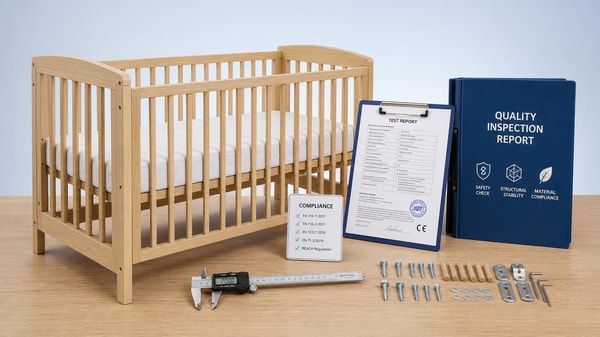
 Nursery Furniture & MonitorsMay 04, 2026Wooden Baby Cribs Wholesale: Safety Checks That Should Not Be SkippedWooden baby cribs wholesale safety checks every buyer should verify: compliance, materials, structural strength, hardware, and factory controls to reduce recall risk.
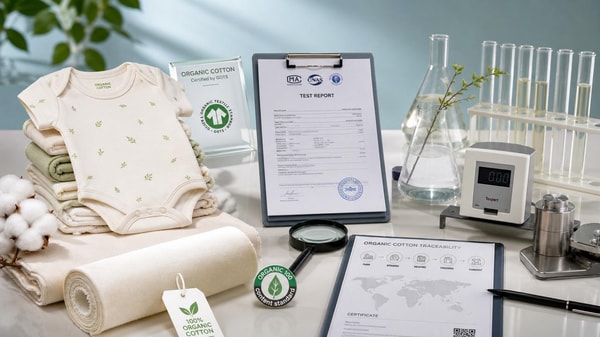
 Activewear OEMMay 04, 2026Organic Baby Clothes Wholesale: How to Verify Fabric ClaimsOrganic baby clothes wholesale guide: learn how to verify fabric claims, check certifications, review lab tests, and spot supplier risks for safer sourcing and confident wholesale decisions.
 Infant Feeding & CareMay 04, 2026Wholesale Cloth Diapers: Cost Trade-Offs That Matter Over TimeWholesale cloth diapers: compare more than unit price. Discover the long-term cost trade-offs in sourcing, compliance, returns, packaging, and margin strategy.
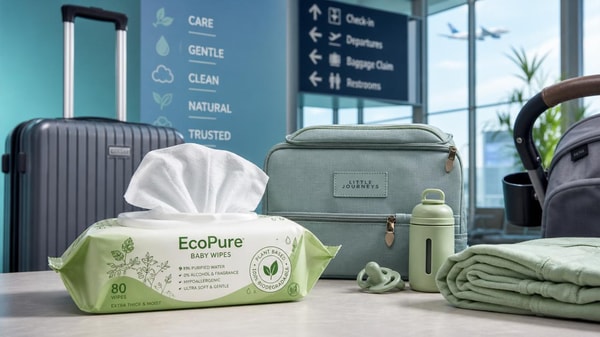
 Infant Feeding & CareMay 04, 2026Biodegradable Baby Wipes: Are They Better in Daily UseBiodegradable baby wipes: are they truly better for daily use? Explore softness, durability, skin safety, and travel convenience to choose the best option for family trips.
 Infant Feeding & CareMay 04, 2026Silicone Teething Rings: What to Look for Before You BuySilicone teething rings guide: learn how to compare safety, food-grade materials, easy-clean designs, and age-appropriate features before you buy for home or travel.
 Infant Feeding & CareMay 04, 2026Baby Pacifiers Manufacturer Comparison: Material, Mold, and ComplianceBaby pacifiers manufacturer comparison guide covering material safety, mold precision, and compliance readiness to help buyers reduce sourcing risk and choose reliable global partners.
 Infant Feeding & CareMay 04, 2026Silicone Baby Bibs OEM Trends That Make Sense in 2026Silicone baby bibs OEM trends for 2026: discover safer sourcing, private-label flexibility, and travel retail opportunities that help buyers reduce risk and grow family-focused sales.
 Infant Feeding & CareMay 04, 2026BPA Free Baby Bottles: How to Judge Safety Beyond the LabelBPA free baby bottles safety goes beyond the label. Learn how travel service quality teams assess materials, testing, certificates, and supplier risk for safer sourcing.
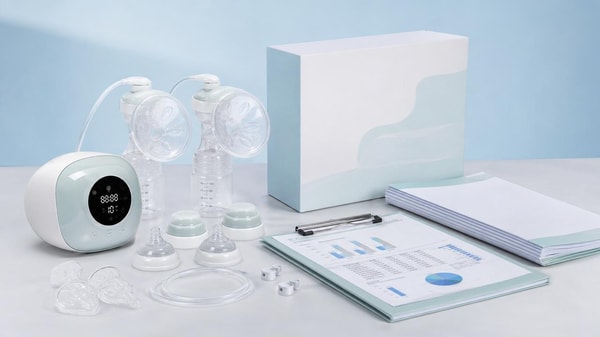
 Infant Feeding & CareMay 04, 2026Electric Breast Pump OEM: What to Review Before Final ApprovalElectric breast pump OEM final approval starts with more than price. Review compliance, reliability, warranty risk, and supplier readiness before you sign.
 Infant Feeding & CareMay 04, 2026Manual Breast Pump Wholesale: When Simpler Products Sell BetterManual breast pump wholesale performs best where portability, affordability, and easy selling matter most. Discover why simpler products win in travel retail, pharmacies, e-commerce, and emerging markets.
 Infant Feeding & CareMay 04, 2026Baby High Chairs OEM: Features Parents Notice Before Anything ElseBaby high chairs OEM guide for parents: compare stability, harness safety, non-toxic materials, and easy-clean design to choose a trusted high chair with confidence.
 Baby Gear & StrollersMay 04, 2026Maternity Backpack OEM Ideas That Fit Modern Parenting NeedsMaternity backpack OEM ideas for modern parenting: explore travel-ready layouts, smart storage, safe materials, and customization tips that help brands source better and launch with confidence.
 Baby Gear & StrollersMay 04, 2026Baby Walkers Wholesale: Market Demand, Risks, and Model SelectionBaby walkers wholesale insights for travel retail and global buyers: explore demand shifts, compliance risks, and the best model mix to source safer, higher-converting products.