EU to Enforce EN IEC 62115-2 Standard for Smart Baby Toys by Q3 2026
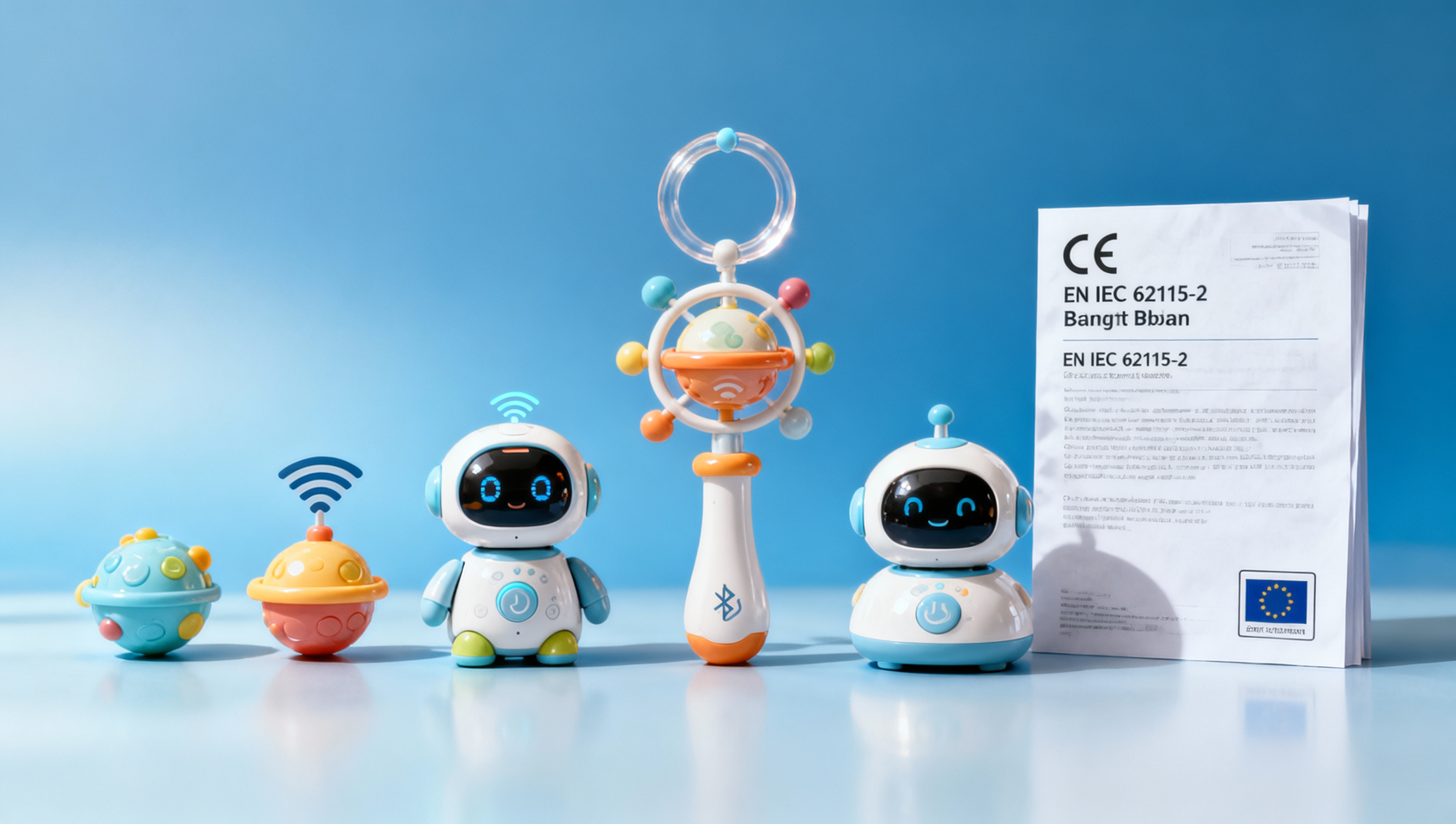
The European Committee for Electrotechnical Standardization (CENELEC) has released the draft EN IEC 62115-2:2026, introducing new requirements for electronic toys with Wi-Fi/Bluetooth connectivity, voice interaction, and AI learning capabilities. The regulation, set to take effect in Q3 2026, will impact manufacturers and exporters of smart baby toys, including rattles, educational robots, and connected baby monitors. This development is particularly relevant for Chinese exporters targeting the EU market, as compliance with CE-RED, EN IEC 62115-2, and GDPR will become mandatory.
Event Overview
On April 5, 2026, CENELEC published the draft EN IEC 62115-2:2026, which introduces stricter electromagnetic compatibility (EMC), cybersecurity, and data privacy requirements for smart baby toys. The new standard will become mandatory in the third quarter of 2026, affecting products such as smart rattles, early education robots, and connected baby monitors.
Impacted Sub-Sectors
Direct Exporters
Manufacturers and exporters of smart baby toys to the EU will face increased compliance costs and testing requirements. Products must now meet EN IEC 62115-2 alongside CE-RED and GDPR standards, potentially delaying market entry.
Supply Chain and Component Suppliers
Suppliers of Wi-Fi/Bluetooth modules, voice recognition chips, and AI-enabled components will need to ensure their products align with the new EMC and cybersecurity requirements. This may lead to redesigns or additional testing for critical components.
Compliance Testing Services
Testing laboratories and certification bodies will see increased demand for EN IEC 62115-2 assessments. However, they must first obtain accreditation to perform these evaluations, creating a potential bottleneck in the certification process.
Key Considerations and Actions
Monitor Regulatory Updates
Companies should track the final publication of EN IEC 62115-2 and any transitional provisions. The current draft may undergo revisions before becoming mandatory.
Assess Product Portfolio
Manufacturers must identify which products fall under the new scope and prioritize compliance efforts for high-volume or high-margin items. Early education robots and connected monitors appear most affected.
Review Supply Chain Compliance
Component sourcing strategies may need adjustment to ensure suppliers can provide parts meeting the updated EMC and cybersecurity standards. This is particularly critical for wireless communication modules.
Prepare for Combined Testing
Since products must comply with multiple regulations simultaneously (CE-RED, EN IEC 62115-2, GDPR), companies should plan for integrated testing approaches to reduce time and cost impacts.
Industry Perspective
From an industry viewpoint, this regulation represents the EU's continued focus on child safety in connected devices. While the standards aim to address legitimate concerns about data privacy and electromagnetic safety, they may create temporary market access challenges. The regulation should be viewed as part of a broader trend toward stricter IoT device requirements, particularly for products targeting vulnerable user groups.
Conclusion
The EN IEC 62115-2 update signals the EU's commitment to safer smart toys but presents immediate compliance challenges for manufacturers. Companies exporting to the EU should treat this as an urgent priority, given the 2026 enforcement timeline. The regulation's impact extends beyond simple technical compliance, potentially reshaping product design approaches for connected child-oriented devices.
Sources
1. CENELEC EN IEC 62115-2:2026 draft publication (April 5, 2026)
2. Ongoing monitoring of EU Official Journal for final publication date
Related Intelligence
 Infant Feeding & CareApr 13, 2026Canada to Ban DBP/BBP/DEHP in Toys, Urgent Switch to Alternatives NeededCanada bans DBP, BBP, DEHP in toys for kids under 3 by late 2026. Chinese exporters must urgently switch to safer alternatives like DINCH or ATBC to avoid shipment rejections. Act now to comply!
 Infant Feeding & CareApr 13, 2026Guobang TCM Decoction Pieces Phase II Project Launches: Expansion of Pediatric Herbal Patches and Plant-Based Care ProductsGuobang TCM launches Phase II project, expanding pediatric herbal patches & plant-based care production. FDA-compliant facility targets欧美market shortages with natural, hormone-free solutions. Explore industry impacts now.
 Infant Feeding & CareApr 13, 2026Cloud Warehouse Winery Launches Grand Cru Division: High-End Infant Nutrition Supply Chain Capabilities ExpandCloud Warehouse Winery launches Grand Cru Division, expanding high-end infant nutrition supply chain capabilities with EU-certified奶粉 processing &冷链 logistics. Discover how this impacts婴童 nutrition ODM producers & organic suppliers.
 Infant Feeding & CareApr 13, 2026Ningbo Huaxiang's PEEK Production Line Trial: Boosting Localization of High-End Medical Baby ProductsNingbo Huaxiang's 4,000-ton/year PEEK production line trial boosts localization of high-end medical baby products, cutting import reliance by 25% and delivery cycles by 30%. A game-changer for infant medical equipment and export manufacturers.
 Electronic & RC ToysApr 13, 2026EU to Enforce EN IEC 62115-2 Standard for Smart Baby Toys by Q3 2026EU's EN IEC 62115-2 standard for smart baby toys takes effect Q3 2026, impacting Wi-Fi/Bluetooth connected toys. Learn new EMC, cybersecurity & GDPR compliance requirements for EU exports.
 Skincare OEMApr 13, 2026China's New Facial Cleanser Standard Takes Effect in September, Covering Mousse/Gel/Powder for First TimeChina's new facial cleanser standard GB/T 29680—2026 takes effect September 2026, now covering mousse, gel & powder formulations with stricter child safety requirements. Essential reading for cosmetic exporters and manufacturers.
 Cosmetics & PkgApr 13, 2026Canada to Ban DBP/BBP/DEHP in Kids' Cosmetics: Industry ImpactCanada's 2026 ban on DBP, BBP, DEHP in kids' cosmetics forces Chinese exporters to reformulate. Learn impacts on manufacturers, suppliers & key compliance strategies for this phthalate-free shift.
 Activewear OEMApr 13, 2026Marathon Runners Get Up to $14K Homebuyer Subsidies in ChinaMarathon runners in China can now receive up to $14K homebuyer subsidies in cities like Nanjing and Chengdu. Discover how this policy boosts sports apparel and wearable tech demand while creating real estate opportunities.
 Activewear OEMApr 13, 20266 Chinese Players Advance in Snooker Worlds, Chang Bingyu Wins 1.47M with 147 Break6 Chinese snooker players advance to World Championship main draw as Chang Bingyu wins ¥1.34M with 147 break, sparking 40% surge in equipment demand. Explore how this impacts cue manufacturers, smart scoring systems & training facilities worldwide.
 STEM & Educational ToysApr 13, 2026Canada to Ban DBP/BBP/DEHP in Children's Sports Toys: Urgent Material Switch NeededCanada bans DBP, BBP & DEHP in children's sports toys by 2026. Learn urgent material switch strategies for TPE/TPR alternatives and SGS compliance to protect $430M export market.
 Sports & OutdoorsApr 11, 2026The Rise of Custom Travel as a Premium Consumer Service: Analyzing the Inbound Market for Central ChinaDiscover premium custom travel in Central China with 2026 visa policies. Experience Luoyang's culture & Shaolin Temple's private lessons for elite travelers.
 Beauty DevicesApr 11, 2026RCEP ASEAN New Tariff List Takes Effect: Vietnam/Thailand Cuts Import Duty on Chinese Beauty Devices to 2.8%Vietnam & Thailand slash import duties on Chinese beauty devices to 2.8% under RCEP ASEAN tariff cuts. Boost your export competitiveness with RCEP Certificate of Origin benefits now!
 Beauty DevicesApr 11, 2026SASO Updates Mandatory Certification List for Personal Care AppliancesSASO updates its Mandatory Certification List for Personal Care Appliances, adding six new devices. Starting July 2026, SABER certification is required for imports. Learn how this impacts exporters and key compliance steps.