Power Rack Manufacturer: Safety Details That Matter More Than Finish
When evaluating a power rack manufacturer, quality control and safety teams know that surface finish is secondary to structural integrity, weld consistency, hole accuracy, and load-tested reliability. In today’s sourcing environment, the details that prevent failure, reduce liability, and support compliance matter far more than appearance—especially when buyer trust and long-term product safety are on the line.
For sourcing professionals in travel service-adjacent retail channels—such as hotel fitness rooms, resort wellness spaces, cruise recreation zones, serviced apartment gyms, and destination training centers—a checklist-based review is the most practical way to assess a power rack manufacturer. Safety managers and QC teams rarely fail because they missed a glossy brochure. They fail when they overlook metal thickness variation, anchor point weakness, packaging damage risk, or incomplete traceability records. A clear inspection framework helps reduce product recalls, installation disputes, and guest injury exposure.
Why quality and safety teams should use a checklist first
A power rack is not just another piece of fitness equipment. In hospitality and travel service environments, it may be used by guests with different training experience, body sizes, and risk awareness. That means the selected power rack manufacturer must be judged on predictable performance under variable use conditions, not on showroom appearance. A checklist makes that process repeatable across supplier audits, sample reviews, pre-shipment inspections, and incoming quality control.
The biggest value of checklist thinking is prioritization. Instead of being distracted by powder coating color, branding, or accessory count, teams can verify what truly affects safety: tube dimensions, weld penetration, upright stability, hole spacing accuracy, hardware grade, pin retention, and verified load capacity. This is especially relevant for buyers supplying tourism properties, where equipment uptime, liability control, and maintenance simplicity directly influence guest satisfaction and brand reputation.
First-pass screening: what to confirm before reviewing samples
- Ask whether the power rack manufacturer has a documented quality system for metal fabrication, welding, finishing, packaging, and final inspection.
- Confirm whether load ratings are based on real testing, engineering calculation, or only marketing claims. Test evidence matters more than catalog statements.
- Check whether the supplier can provide dimensional tolerances for uprights, crossmembers, hole positions, and safety spotter arms.
- Verify whether material certificates, hardware specifications, and welding procedures are traceable by production batch.
- Review whether packaging is designed to prevent deformation, coating damage, and mixed hardware errors during international transport.
- Confirm familiarity with destination market requirements, warning labels, user instructions, and liability-sensitive documentation for commercial installation.
If a power rack manufacturer cannot answer these baseline questions clearly, the sourcing process should not move directly to price negotiation. Weak early documentation often predicts later production inconsistency.
Core inspection checklist: the safety details that matter more than finish
1. Structural steel and wall thickness
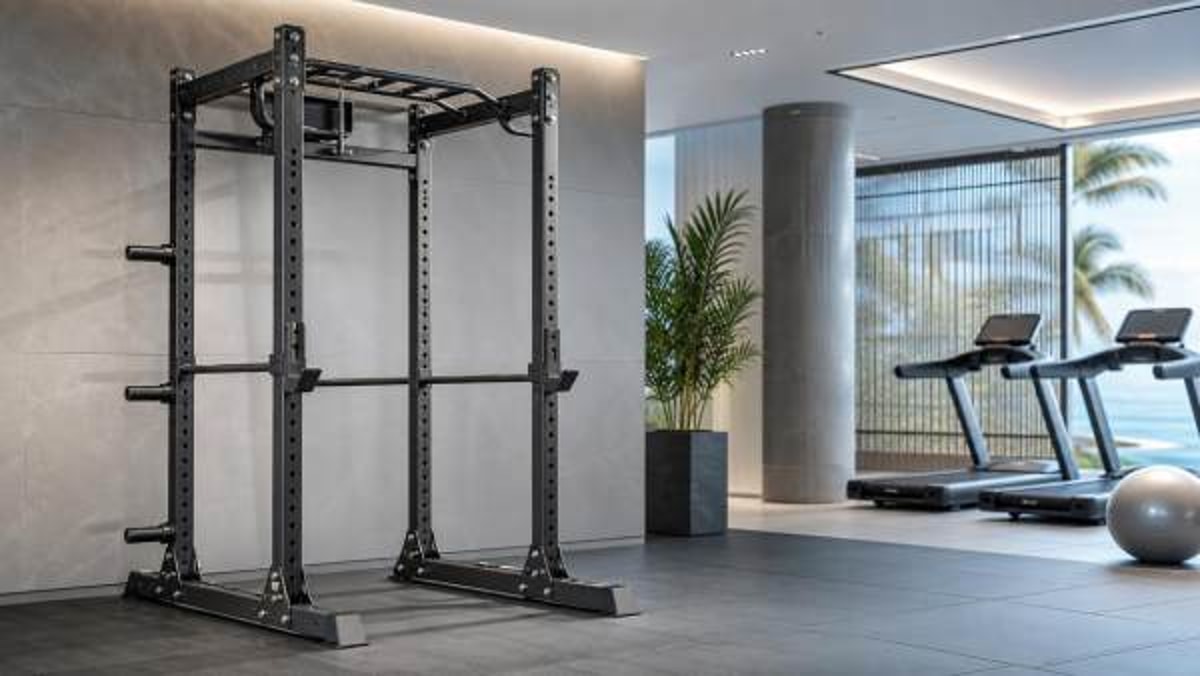
Start with the steel itself. QC teams should verify actual tube dimensions, wall thickness consistency, and straightness. A reliable power rack manufacturer should disclose whether the rack uses 11-gauge, 12-gauge, or another specification, and whether tolerances are controlled across lots. Thin-wall substitution, out-of-square tubing, or inconsistent cut lengths can compromise stability long before visible cosmetic defects appear.
2. Weld quality and joint consistency
Welds should be inspected for continuity, undercut, porosity, spatter concentration, and inconsistent bead profile. The key question is not whether welds look decorative, but whether they support repeatable strength at critical stress points. Pay special attention to base joints, crossmember connections, pull-up bars, and safety arm brackets. A capable power rack manufacturer will know which weld zones are safety-critical and how they are checked during production.
3. Hole placement accuracy and accessory fit
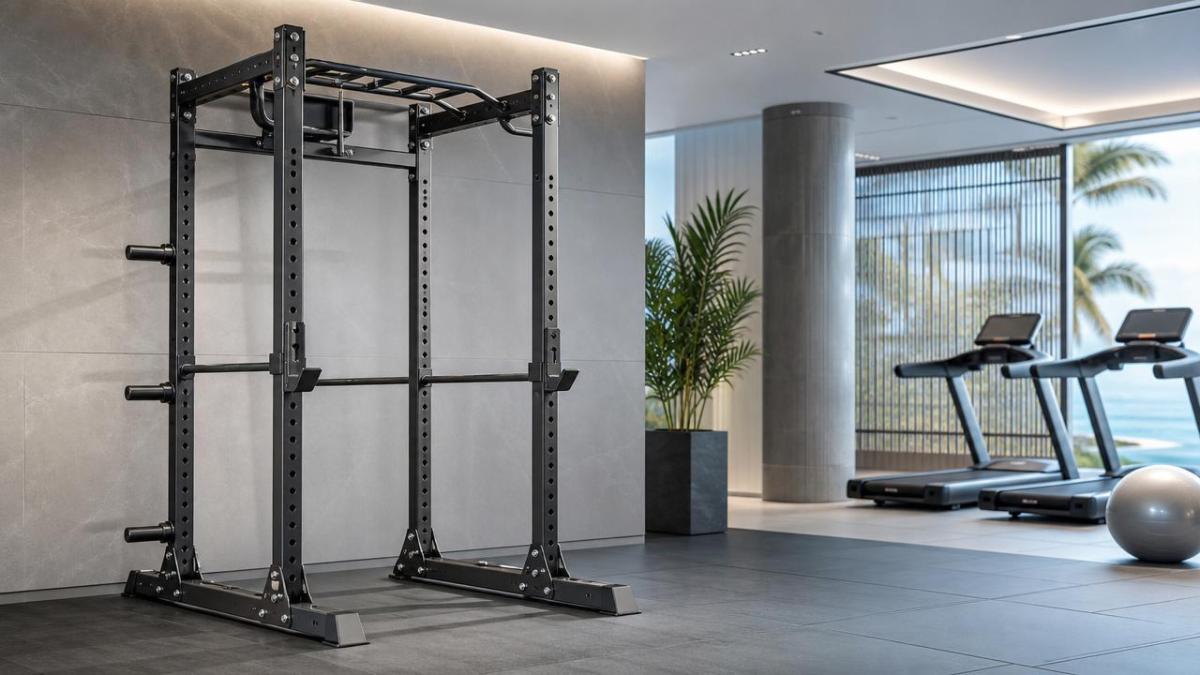
Misaligned holes create more than an assembly inconvenience. They affect J-cup positioning, safety pin engagement, side-to-side balance, and long-term wear. For hospitality gyms and resort wellness facilities, equipment must be easy to assemble and maintain with minimal on-site improvisation. Ask the power rack manufacturer for tolerance standards on hole spacing, hole diameter, laser cutting quality, and left-right alignment across uprights.
4. Stability, anchoring, and anti-tip performance
Freestanding stability is important, but so is the intended installation method. Some travel service locations can anchor into concrete; others operate in leased spaces where anchoring options are limited. A responsible power rack manufacturer should clearly state whether the design requires anchoring for safe commercial use, what hardware is recommended, and how the frame behaves under asymmetric loading. Never assume a heavy frame alone is enough.
5. Safety arms, catches, and pin mechanisms
Spotter arms and safety catches are often the last line of defense. Inspect locking pins, retaining clips, insertion depth, steel thickness, contact surfaces, and anti-rotation design. Inconsistent fit between accessories and uprights can lead to dangerous partial engagement. The best power rack manufacturer will demonstrate wear testing, impact testing, or at minimum repeated cycle evaluation for these components.
6. Load testing and evidence quality
Static load claims should be separated from real-use reliability. Ask what was tested, for how long, at what points, and under what conditions. Did the power rack manufacturer test the full frame, the J-cups, the pull-up bar, and the safety arms separately? Were overload, fatigue, and impact conditions reviewed? Documentation quality matters: dated reports, lot references, fixture details, and pass criteria are more useful than generic statements like “tested to commercial standard.”
A practical judgment table for supplier evaluation
Use the following comparison logic when screening each power rack manufacturer under consideration.
Scenario-based checks for hospitality, resort, and travel-related fitness spaces
Not every facility uses a power rack the same way. A boutique hotel gym may see low-frequency but unsupervised use. A cruise ship or remote destination lodge may require corrosion-aware finishes and spare-part planning. A branded resort fitness center may need premium appearance, but that should never override structural requirements. When reviewing a power rack manufacturer, match the checklist to the operating scenario.
- For hotel gyms: prioritize ease of assembly, anti-misuse labeling, stable footprint, and low maintenance hardware.
- For resort and coastal properties: verify corrosion resistance, hardware coating durability, and packaging against moisture exposure in transit.
- For luxury wellness destinations: confirm both appearance consistency and hidden structural repeatability, especially across multiple installed units.
- For high-turnover serviced apartments: check replacement part availability, clear instructions, and simplified periodic inspection requirements.
Commonly overlooked risks when choosing a power rack manufacturer
Several issues are easy to miss during sample approval. First, some suppliers present one high-quality sample while mass production uses different tubing or looser hole tolerances. Second, cosmetic powder coating can conceal weld grinding, heat distortion, or sharp-edge correction work. Third, packaging failures can bend components enough to create field assembly stress, even when factory inspection passed. Fourth, manuals often focus on assembly but omit use limitations, anchoring requirements, and routine inspection points. For safety managers, these are not secondary details; they are liability triggers.
Another overlooked issue is compatibility drift. A power rack manufacturer may change accessory suppliers, pin diameters, or hardware grades without updating drawings or customer approvals. That creates inconsistency in replacement parts and raises maintenance risk for travel service operators managing multiple sites. Strong change-control discipline should be treated as a sourcing requirement, not a bonus feature.
Execution advice: how QC and safety teams should validate before purchase
- Request engineering drawings, material specs, and accessory interface dimensions before placing a sample order.
- Inspect the sample with dimensional tools, not just visual review. Measure tube wall, hole spacing, perpendicularity, and pin fit.
- Ask the power rack manufacturer for testing evidence tied to the exact model and revision being quoted.
- Review packaging drop-risk points and carton labeling logic, especially for multi-box shipments to hotels or overseas project sites.
- Define an incoming inspection checklist for hardware count, coating damage, deformation, and installation-critical components.
- Require approval for any material, dimension, or accessory change after the sample sign-off stage.
FAQ for buyers, QC personnel, and safety managers
Is powder coating quality unimportant?
It matters, but it should rank below structural safety, dimensional control, and tested reliability. A neat finish cannot compensate for weak welds or poor fit.
What is the first red flag from a power rack manufacturer?
The inability to provide consistent technical documents, test evidence, and tolerance standards is often the earliest warning sign.
Should commercial buyers always require anchoring?
Not always, but the intended use case must be clearly defined. If the design depends on anchoring for safe commercial use, that requirement must be explicit in the supplier documentation.
Final decision guide: what to discuss before moving forward
Before approving any power rack manufacturer, safety and quality teams should align internally on five points: target user environment, required load profile, installation constraints, maintenance capability, and documentation expectations. Then, in supplier discussions, prioritize questions about material traceability, testing method, revision control, spare parts, packaging reliability, and lead time for corrective action.
For travel service buyers, the best sourcing outcome is not simply a rack that looks premium in photos. It is a rack that arrives intact, installs correctly, performs safely, and remains dependable across repeated guest use. If you need to advance evaluation with a power rack manufacturer, prepare your required dimensions, intended user load, installation surface details, destination compliance needs, maintenance plan, and project timeline first. That information will make technical discussions faster, reduce sourcing risk, and help identify the supplier that can support both safety and long-term operational trust.
Related Intelligence
 Cosmetics & PkgMay 02, 2026OEM Cosmetics Manufacturer: 7 Questions to Ask Before Product Development StartsOEM cosmetics manufacturer selection starts with the right questions. Learn 7 smart checks to reduce compliance, cost, and launch risks before product development begins.
 Beauty DevicesMay 02, 2026How to Evaluate a Gua Sha Tools Manufacturer for Consistent QualityGua sha tools manufacturer selection starts with quality control. Learn how to assess materials, certifications, production consistency, and supply reliability with confidence.
 Beauty DevicesMay 02, 2026Body Contouring Machine: When the Higher Price Is Actually JustifiedBody contouring machine buyers in travel services: learn when a higher price is justified through ROI, compliance, uptime, and premium package revenue potential.
 Fitness EquipmentMay 02, 2026Power Rack Manufacturer: Safety Details That Matter More Than FinishPower rack manufacturer selection starts with safety, not surface finish. Discover a practical checklist for QC teams to assess welds, load testing, stability, and compliance before sourcing.
 Fitness EquipmentMay 02, 2026Olympic Barbell Manufacturer Checklist for Strength Equipment SourcingOlympic barbell manufacturer checklist for travel service buyers: compare quality, compliance, OEM capability, and delivery reliability to source safer, longer-lasting strength equipment.
 Skincare OEMMay 02, 2026Whitening Toothpaste Private Label: What Customers Notice FirstWhitening toothpaste private label buyers in travel retail notice packaging, whitening claims, and daily-use safety first. See what drives trust, faster conversions, and smarter sourcing.
 Skincare OEMMay 02, 2026Wholesale Body Scrub: Texture, Fragrance, and Packaging Choices That SellWholesale body scrub buying guide for travel retail: compare textures, fragrances, and packaging choices that boost shelf appeal, compliance readiness, and faster sales.
 Beauty DevicesMay 02, 2026Jade Roller Wholesale: How to Spot Quality Issues Before They Reach CustomersJade roller wholesale quality issues can lead to costly returns. Learn how to spot material flaws, weak assembly, and compliance risks before products reach customers.
 Beauty DevicesMay 02, 2026What Makes a Water Flosser Manufacturer Reliable for Ongoing OrdersWater flosser manufacturer selection matters for travel retail success. Learn how to assess quality, compliance, lead times, and OEM support for reliable ongoing orders.
 Fitness EquipmentMay 02, 2026Commercial Treadmills Wholesale: Cost Drivers You Need to Understand FirstCommercial treadmills wholesale cost drivers explained for hotels, resorts, and travel brands. Compare pricing, compliance, shipping, and service risks before you buy.
 Fitness EquipmentMay 02, 2026Resistance Bands OEM: Small Design Choices That Improve Daily UseResistance bands OEM tips for travel service brands: discover small design choices that improve comfort, safety, storage, and durability for better guest use and operator efficiency.
 Fitness EquipmentMay 02, 2026Wholesale Yoga Mats: How to Build a Better Product Mix for RetailWholesale yoga mats buying guide for travel retail: learn how to build a profitable product mix for resorts, hotels, airports, and retreat channels with smarter sourcing and lower inventory risk.
 Cosmetics & PkgMay 02, 2026Wholesale Cosmetic Sponges: Material Differences That Change User ExperienceWholesale cosmetic sponges explained: discover how latex-free, hydrophilic, and microfiber materials affect blending, hygiene, and travel convenience for a smarter beauty buy.