China Imposes Zero Tariffs on All African Diplomatic Partners; Cosmetic Packaging and Baby Products Lead Beneficiaries

Effective May 1, 2026, China has implemented full zero-tariff treatment for imports from 20 non-Least Developed Countries (non-LDCs) with which it maintains diplomatic relations—significantly impacting the cosmetic packaging and infant care product sectors.
Policy Rollout and Confirmed Implementation Details
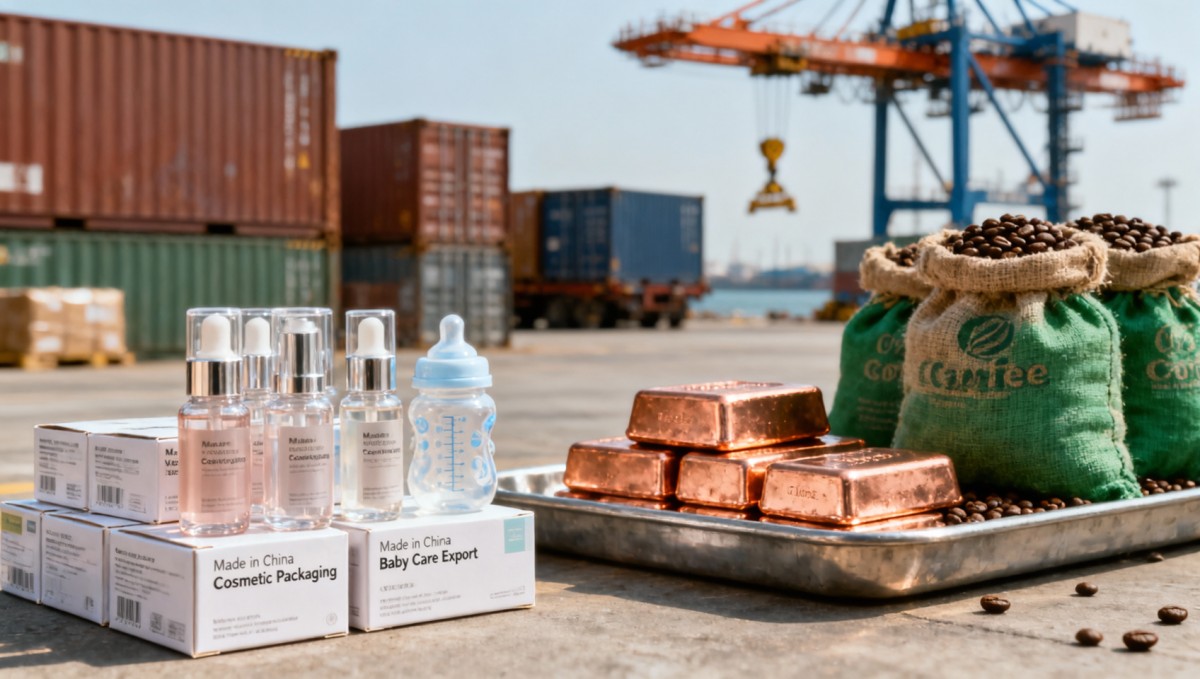
Starting May 1, 2026, China applies zero import tariffs to a defined list of goods originating from 20 African countries that are not classified as Least Developed Countries and maintain formal diplomatic ties with China. Eligible products include cosmetic squeeze tubes, vacuum bottles, and packaging boxes for baby feeding bottles—categories identified for high export compatibility. The first verified case involved a South African apple shipment clearing customs under the new regime, resulting in immediate tariff savings of RMB 20,000. Concurrently, enterprises in Ningbo have expanded imports of copper ingots, green coffee beans, and baby stroller components—spurring renewed demand for domestic OEM packaging solutions and infant product export support services.
Multi-Role Industry Impact Across the Value Chain
Direct Exporters and Importers
Companies engaged in bilateral trade face revised duty calculations and updated customs declarations. Those exporting cosmetic packaging or infant care items to the 20 eligible African countries now benefit from cost reduction and improved price competitiveness—but must verify country-specific origin documentation and tariff line applicability before shipment.
Raw Material Procurement Firms
Firms sourcing inputs such as copper ingots or coffee beans from these African nations are adjusting procurement volumes and logistics planning. The tariff exemption lowers landed costs, enabling more aggressive inventory strategies—but also increases scrutiny on traceability, phytosanitary certification (for agricultural goods), and metal assay reports (for copper).
Contract Manufacturers and OEM Suppliers
Domestic OEM providers supporting infant product and cosmetic packaging exports report rising inbound inquiries for co-packaging, labeling, and assembly services. This reflects downstream demand triggered by easier market access—but also raises requirements for export-compliant documentation, batch traceability systems, and regulatory alignment with destination-country labeling standards.
Supply Chain Service Providers
Freight forwarders, customs brokers, and compliance consultants are updating tariff databases, revising client advisories, and preparing training materials on preferential origin rules—including proof-of-origin procedures, invoice certification formats, and post-clearance audit readiness.
Key Operational Considerations for Enterprises
Verify Origin Eligibility and Product Coverage
Not all African countries qualify—only the 20 non-LDC diplomatic partners are included. Companies must cross-check Harmonized System (HS) codes against the official tariff elimination list and confirm whether their specific product variants (e.g., plastic vs. aluminum vacuum bottles) fall within scope.
Strengthen Supplier Documentation Protocols
Importers must now obtain certified origin declarations from African suppliers—preferably using Form A or equivalent. For infant product components, additional conformity documentation (e.g., EN 14350 or ISO 8124 test reports) may be required by local regulators—even if not mandated by Chinese customs.
Align Production and Delivery Timelines with New Trade Flows
Rising demand for OEM packaging and infant accessories implies tighter production scheduling. Manufacturers should reassess capacity buffers, raw material lead times, and quality control checkpoints—particularly where dual-use components (e.g., food-grade silicone parts used in both baby bottles and cosmetic applicators) require separate validation pathways.
Monitor Evolving Certification Requirements
While tariffs are removed, technical barriers remain unchanged. Exporters must still comply with destination-country safety, labeling, and environmental standards (e.g., REACH, CPSIA, SABS). No automatic mutual recognition is granted—certification bodies retain independent authority over conformity assessment outcomes.
Industry Perspective: Beyond Tariff Savings
Analysis shows this policy shift functions less as a standalone trade concession and more as a strategic enabler for deeper industrial linkage. Observably, the selection of cosmetic packaging and infant care items reflects deliberate alignment with Africa’s growing consumer middle class—and with China’s domestic strengths in precision molding, surface finishing, and small-batch customization. It is more appropriate to understand this as an infrastructure-level adjustment: lowering entry thresholds for Chinese SMEs while raising expectations around supply chain transparency and technical documentation rigor. What deserves closer attention is how rapidly African regulatory authorities adapt—especially regarding acceptance of Chinese-issued test reports and digital certificate verification platforms.
Strategic Implications for Sector Development
This measure marks a structural recalibration—not just a short-term cost adjustment. By prioritizing high-value, low-bulk, regulation-sensitive categories like cosmetic packaging and infant product components, the policy incentivizes quality-driven export behavior rather than volume-driven dumping. Its long-term significance lies in accelerating integration between African market access and Chinese manufacturing specialization—provided firms treat tariff removal as a catalyst for upgrading compliance capability, not merely a margin boost.
Source Attribution and Verification Guidance
This article synthesizes the provided information: title, event date (2026-05-01), and summary description. Specific official source links were not provided in the input and should be verified continuously. Stakeholders are advised to monitor updates from China’s Ministry of Commerce (MOFCOM), General Administration of Customs of China (GACC), and the African Union’s Trade Policy Monitor. Ongoing observation is warranted for detailed implementation guidelines, origin certification templates, sectoral exclusions, and feedback from pilot enterprises in Ningbo and other export hubs.
Related Intelligence
 Default CategoryMay 29, 2026Revised Maritime Code Shifts No-Collection Liability to ShipperRevised Maritime Code shifts no-collection liability to shipper—critical for FOB/CFR exporters, cosmetic tube & baby gear OEMs. Act now to mitigate demurrage and port risks.
 Default CategoryMay 29, 2026Hormuz Strait Disruption Extends Shipping Times for Baby & Pet Care GoodsHormuz Strait disruption extends shipping times for baby & pet care goods—10–14 day delays impact EU supply chains. Act now to mitigate stockouts, air freight costs, and missed sales cycles.
 Default CategoryMay 29, 2026US ITC Issues Partial Final Determination in Open-Ear Headphone 337 InvestigationUS ITC's partial final determination on open-ear headphones targets bone-conduction acoustic structures — critical for beauty tech, pet wearables & baby monitors. Act now to assess compliance risk.
 Default CategoryMay 29, 2026China Imposes Zero Tariffs on All African Diplomatic Partners; Cosmetic Packaging and Baby Products Lead BeneficiariesCosmetic packaging and baby products lead gains as China imposes zero tariffs on imports from 20 African diplomatic partners—effective May 1, 2026.
 Default CategoryMay 29, 2026EU Launches Final Anti-Dumping Investigation on Chinese PET Spunbond NonwovensEU anti-dumping investigation on Chinese PET spunbond nonwovens intensifies—impacting hygiene, pet care & activewear supply chains. Act now.
 Smart Pet DevicesMay 29, 2026Reflective Pet Collars for Night Safety: Buying TipsReflective pet collars for night safety help keep pets visible on trips and night walks. Discover smart buying tips for comfort, durability, fit, and safer travel.
 Camping & WaterMay 29, 2026Wholesale Tactical Backpacks: Cost and Quality ChecksWholesale tactical backpacks need smart cost and quality checks. Learn how to assess materials, load testing, compliance, and suppliers for safer travel gear sourcing.
 Pet Grooming & TravelMay 29, 2026Personalized Pet Accessories Supplier Selection GuidePersonalized pet accessories supplier guide for travel retailers: learn how to assess safety, customization, materials, lead times, and export readiness.
 Pet Grooming & TravelMay 29, 2026What Pet Retail Buyers Look for in 2026Pet retail buyers in 2026 want safer, sustainable, travel-ready products. Discover compliance, private-label, demand, and margin signals that win shelf space.
 Nursery Furniture & MonitorsMay 29, 2026Smart Baby Monitor with Camera: Key Features to CheckSmart baby monitor with camera buying guide for travel services—compare video stability, privacy, safety, battery life, and compliance before sourcing.
 Default CategoryMay 28, 2026Hormuz Strait Delays Disrupt Infant & Pet Product Shipments to Middle East, E. AfricaHormuz Strait delays hit infant feeding & pet grooming shipments to Middle East and E. Africa—discover impact, routes, and compliance fixes.
 Default CategoryMay 28, 2026CapitalG Leads OpenRouter’s Series B for AI-Powered ODM Sourcing in Beauty & ToysCapitalG leads OpenRouter’s Series B to power AI-driven ODM sourcing for beauty & toys—enabling compliant, real-time product development with regulatory intelligence built in.
 Default CategoryMay 28, 2026U.S. Gas Tax Relief Talks May Ease Logistics Costs for Outdoor Water Gear ExportsU.S. gas tax relief talks could cut logistics costs for outdoor water gear exports—timely insights for exporters optimizing summer shipments and last-mile pricing.