
Professional Hair Dryer OEM: 2026 Feature Trends to Watch
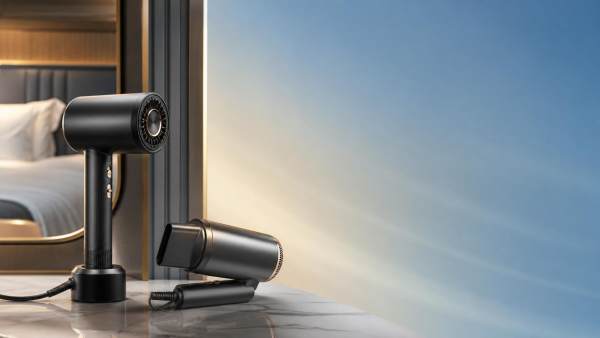
As global retail sourcing grows more data-driven, choosing the right professional hair dryer oem partner is becoming a strategic advantage for brands seeking speed, compliance, and product differentiation. In 2026, feature innovation, sustainability demands, and evolving consumer expectations will reshape how buyers evaluate manufacturing capabilities, making trend awareness essential for smarter sourcing and long-term market success.
For travel service brands, hospitality operators, destination retailers, airport shops, cruise procurement teams, and amenity program managers, this shift has direct commercial implications. A professional hair dryer oem decision is no longer limited to wattage and appearance. It now affects guest satisfaction scores, in-room durability, regional compliance, logistics planning, after-sales workload, and the consistency of branded guest experiences across 10, 50, or even 500 locations.
Within travel services, hair dryers sit at the intersection of hospitality comfort and supply chain discipline. Hotels need quiet, safe, easy-to-maintain devices. Travel retail buyers need compact packaging, attractive merchandising, and market-ready certifications. Resort groups need private-label differentiation without extending development lead times beyond 8 to 16 weeks. This is why tracking 2026 feature trends matters for enterprise decision-makers responsible for sourcing performance, brand standards, and operating margin.
Why Professional Hair Dryer OEM Matters More in Travel Service Procurement
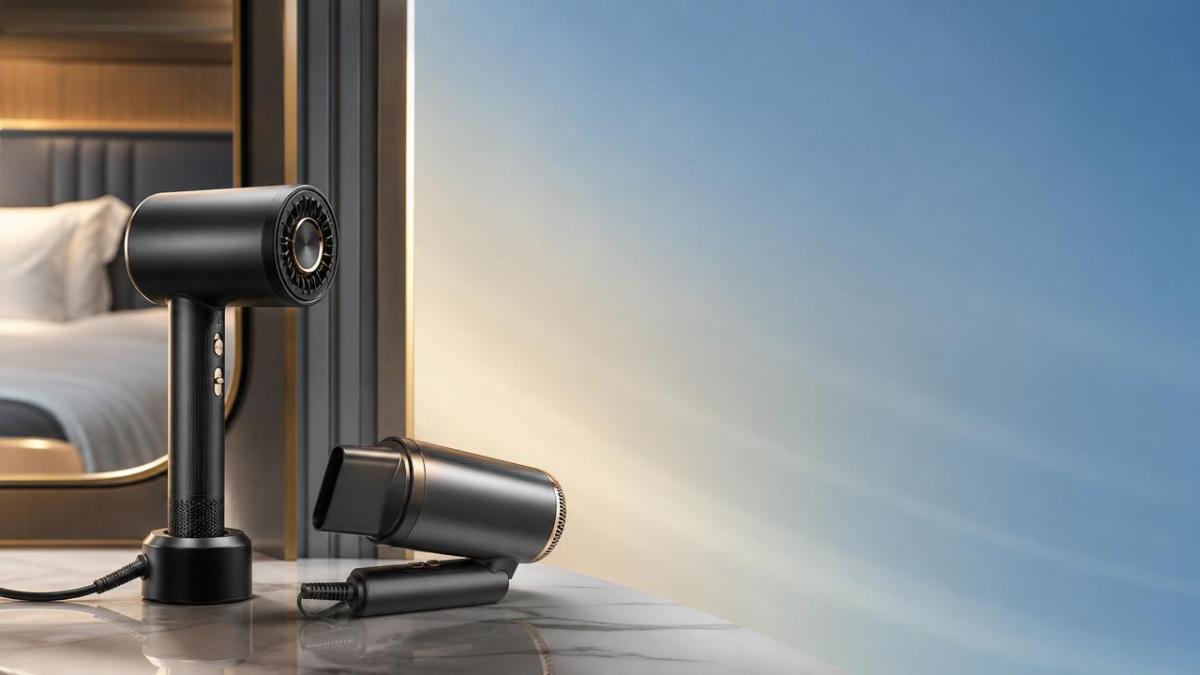
Travel service procurement differs from standard consumer retail because use conditions are more demanding. A hotel room dryer may run several times per day, while a cruise cabin unit must tolerate salt exposure, compact storage, and frequent cleaning. For serviced apartments and premium hostels, replacement cycles often fall between 18 and 36 months, depending on build quality, voltage stability, and guest usage intensity.
That makes the professional hair dryer oem model attractive for brands that need custom features, faster replenishment, and better control over compliance documentation. Instead of buying generic stock units, enterprise buyers can align product design with brand positioning, target price bands, and regional operating requirements. In practice, that means fewer mismatches between guest expectations and procurement outcomes.
Key travel-sector use cases
- Hotels and resorts requiring wall-mount or drawer-stored dryers for 100 to 2,000 rooms
- Airport retail and duty-free operators needing shelf-ready packaging and multilingual labeling
- Cruise and rail hospitality buyers prioritizing compact formats, dual-voltage options, and serviceability
- Vacation rental managers seeking reliable mid-cost units with low complaint rates
- Wellness retreats and spa chains demanding premium airflow, lower noise, and higher aesthetic value
Procurement pain points that 2026 trends are solving
Many travel operators still struggle with four recurring issues: inconsistent quality across batches, missing regulatory files, excessive noise in guest rooms, and short product life under frequent use. A capable professional hair dryer oem partner can address these concerns through standardized component control, test reporting, packaging adaptation, and modular maintenance design.
The table below shows how buyer priorities differ across major travel service channels. This helps procurement teams avoid applying one specification sheet to all operating environments.
The key takeaway is straightforward: travel service procurement requires context-specific specification planning. The strongest professional hair dryer oem partners are those that can adapt airflow performance, packaging, safety features, and service documentation to each travel channel rather than pushing one generic configuration.
2026 Feature Trends Enterprise Buyers Should Watch
In 2026, feature selection will become a practical sourcing lever, not just a marketing exercise. Travel service buyers are evaluating products based on total use value over 12 to 36 months. That includes energy use, complaint reduction, replacement speed, and brand fit. A forward-looking professional hair dryer oem roadmap should therefore include performance, sustainability, and serviceability features together.
1. Lower-noise airflow engineering
Guest room acoustics are increasingly important, especially in premium hotels and wellness properties. Buyers are now asking for lower-noise operation in the 68dB to 78dB range instead of older high-noise units that disturb adjacent sleepers or early-morning roommates. Noise reduction is becoming a procurement criterion because it directly affects perceived room quality.
Why it matters for travel services
A quieter dryer can improve the in-room experience without adding visible complexity. For hotels with 200 rooms, even a modest reduction in guest complaints can justify a slightly higher unit price if the product also lasts longer and reduces replacement calls for housekeeping or maintenance teams.
2. Compact, foldable, and storage-aware design
Space efficiency is no longer relevant only for consumers. Travel operators increasingly want foldable or drawer-friendly products for rooms under 24 square meters, cruise cabins, and travel retail displays. This trend is especially useful when operators want to standardize amenities across several room categories without redesigning cabinetry.
3. Dual-voltage and global compatibility options
For airport retail, cross-border gift programs, and multinational hospitality brands, dual-voltage capability remains a strong differentiator. It supports international guest expectations and can reduce SKU complexity in some distribution models. Not every property needs it, but for travel retail channels it can be a high-conversion feature.
4. Sustainable material and packaging upgrades
Sustainability claims are under closer review, so enterprise buyers are prioritizing practical changes over vague messaging. Examples include reduced-plastic packaging, recyclable paper inserts, simplified accessory counts, and repair-friendly component layouts. For travel brands with public sustainability targets, these details help align sourcing with procurement policy.
5. Safety and maintenance features that reduce operating friction
In high-turnover properties, overheating protection, removable filter access, and tangle-resistant cords are operationally valuable. A professional hair dryer oem program that includes maintenance-oriented design can save labor time across hundreds of rooms. Even a 3-minute reduction per inspection cycle becomes significant at portfolio scale.
The following table summarizes 2026 feature priorities and how they translate into travel service value. This can help decision-makers build a more practical RFQ or supplier scorecard.
Rather than chasing every new feature, travel buyers should prioritize those that affect guest experience, operational efficiency, and cross-market compliance. In many cases, 4 to 6 well-selected features generate more commercial value than a longer list of consumer-facing add-ons.
How to Evaluate a Professional Hair Dryer OEM for Travel Service Programs
Selecting a professional hair dryer oem partner should follow a structured review process. Enterprise buyers often focus too heavily on unit cost in the first round, then discover hidden risks in testing, replenishment, or packaging adaptation. A better approach is to score suppliers across product fit, compliance readiness, operational responsiveness, and scale capability.
Four evaluation pillars
- Specification alignment: airflow, noise, voltage, cable length, storage format, and finish
- Compliance support: market-specific documentation, labeling accuracy, and testing coordination
- Supply chain performance: MOQ flexibility, sample lead time, production stability, and replenishment cycle
- Brand execution: private-label packaging, multilingual manuals, and consistency across batches
Typical lead-time checkpoints
For many travel service sourcing projects, sampling may take 7 to 21 days, packaging confirmation 1 to 2 weeks, and mass production 30 to 60 days depending on complexity and seasonality. If a supplier cannot explain these stages clearly, procurement teams should treat that as a visibility risk rather than a minor communication issue.
Questions decision-makers should ask early
- Can the supplier adapt the product for hotel use, travel retail use, and international power requirements?
- What components most affect failure rate over an 18 to 24 month operating cycle?
- How are batch consistency and incoming material checks managed?
- What packaging options are available for e-commerce, duty-free, or room-amenity deployment?
- How quickly can replacement parts or repeat orders be handled during peak travel seasons?
A mature professional hair dryer oem partner should be able to answer these questions with process clarity, not vague assurances. For procurement leaders, visibility into execution is often more valuable than a small nominal discount that later creates guest complaints or stock disruptions.
Risk Control, Compliance, and Lifecycle Planning
Travel service companies operate across multiple jurisdictions and usage environments, so risk control needs to be built into the sourcing plan from day one. The right professional hair dryer oem arrangement should support not only first shipment readiness, but also lifecycle management over 2 to 3 budget cycles.
Common sourcing risks
The most common risks include certification mismatch by destination market, packaging that fails local labeling rules, excessive return rates caused by weak internal components, and inconsistent appearance between reorders. In hospitality, even small visual differences can disrupt room-standard consistency, especially in upscale chains.
Practical controls for enterprise teams
Buyers can reduce risk by establishing 5 control points: approved golden sample, packaging sign-off, pre-production material review, in-line quality checks, and pre-shipment inspection. These steps are simple, but they help prevent expensive rollout issues when launching across 50 or more properties.
It is also wise to define service expectations for replacement parts, repeat order windows, and issue escalation times. For example, a 24- to 72-hour response standard for quality incidents can materially improve operational resilience during high-occupancy periods.
Lifecycle thinking beats one-time buying
Travel service organizations that treat hair dryers as a lifecycle category rather than a one-off purchase usually gain better cost control. A slightly higher-spec unit may reduce room-level failures, support a cleaner brand image, and simplify portfolio-wide replenishment planning. That matters far more than chasing the lowest opening quote.
What GCS Intelligence Adds to Better OEM Decisions
For enterprise buyers navigating global sourcing complexity, market intelligence is as important as product comparison. GCS helps decision-makers interpret feature trends, manufacturing signals, certification expectations, and category shifts across beauty and personal care sourcing. That perspective is especially useful for travel service brands balancing guest experience with procurement discipline.
When evaluating a professional hair dryer oem opportunity, decision-makers need more than a catalog. They need category-specific insight into what features are becoming standard, what claims deserve scrutiny, and how supply partners can support profitable expansion into hospitality, travel retail, and cross-border channels. That is where data-backed sourcing intelligence becomes commercially valuable.
Best-fit situations for strategic sourcing insight
- Launching a private-label amenity or retail line in 2 or more travel markets
- Upgrading legacy hotel room equipment across multi-property portfolios
- Comparing OEM/ODM options for premium versus value-tier guest segments
- Improving compliance visibility before entering new regional sales channels
In 2026, the most effective professional hair dryer oem decisions will come from buyers who connect product features with travel-specific operating realities. Quiet performance, compact design, global usability, sustainable packaging, and maintainable construction are no longer optional talking points. They are sourcing variables that influence guest satisfaction, replacement costs, and brand credibility over time.
For hotels, resorts, airport retail programs, cruise operators, and branded travel service suppliers, the opportunity is clear: build a sourcing framework that matches channel needs, validates supplier capability, and prioritizes lifecycle value. If you are assessing your next professional hair dryer oem project, now is the right time to refine specifications, benchmark partner readiness, and align procurement with 2026 demand signals.
To explore category-specific sourcing insight, benchmark feature priorities, or discuss a travel-focused product roadmap, contact GCS today to get a tailored solution, review product details, and learn more about smarter global sourcing strategies.
Related Intelligence
 Skincare OEMAug 16, 2026Amazon Enforces AI Human Metadata Rule for Beauty and Personal Care SellersAmazon now enforces AI human metadata rules for beauty sellers. Learn how to protect listings, traffic, and compliance in skincare, cosmetics, and beauty devices.
 Beauty DevicesAug 15, 2026China to Roll Out Nationwide Cross-Border Cash Pooling for MultinationalsChina to roll out nationwide cross-border cash pooling for multinationals from Sept. 14. Discover how this policy could improve treasury efficiency, liquidity management, and China-linked supply chains.
 Beauty DevicesAug 14, 2026China Imposes Temporary Export Ban on Helium, Affecting Cooling Supply ChainsChina's temporary helium export ban may disrupt cooling supply chains for beauty RF devices and laser systems. Learn what ODMs, buyers, and procurement teams should check now.
![]() Cosmetics & PkgAug 13, 2026PPWR becomes mandatory: Beauty and personal care packaging materials usher in new EPR and PFAS compliance requirementsPPWR takes effect for cosmetics packaging in the EU, bringing EPR registration and PFAS limits. Learn what brands, importers, and suppliers must do now.
Cosmetics & PkgAug 13, 2026PPWR becomes mandatory: Beauty and personal care packaging materials usher in new EPR and PFAS compliance requirementsPPWR takes effect for cosmetics packaging in the EU, bringing EPR registration and PFAS limits. Learn what brands, importers, and suppliers must do now. Cosmetics & PkgAug 12, 2026EU PPWR Now Enforced for Beauty Packaging ComplianceEU PPWR now enforced for beauty packaging compliance: learn how EPR, ERN, heavy metals and PFAS rules affect EU exports, customs clearance and platform sales.
 Cosmetics & PkgAug 11, 2026EU PPWR Rules Take Effect on Aug. 12 for Beauty PackagingEU PPWR rules for beauty packaging take effect on Aug. 12, 2026. Learn key compliance steps, EPR, labeling, PFAS limits, and how to avoid customs delays and fines.
 Smart Pet DevicesAug 10, 2026EU EPR Rules to Cover Smart Pet Devices on Aug. 15EU EPR Rules will cover smart pet devices from Aug. 15, 2026. Learn how smart collars, feeders, and monitoring devices can avoid delisting, customs delays, and compliance risks in the EU.
 Infant Feeding & CareAug 09, 2026CPSC Recalls Baby Sleep Sacks Over Undeclared TDCPPCPSC Recalls Baby Sleep Sacks Over Undeclared TDCPP: learn how this 2026 recall impacts CPC documents, third-party testing, and U.S. baby product compliance for exporters.
 Infant Feeding & CareAug 08, 2026ECHA Adds 5 SVHCs, Importer Notices Due From Oct 2026ECHA adds 5 SVHCs to the Candidate List, with importer notices due from October 2026. Learn how REACH affects exporters, supply chains, and documentation readiness.
 Baby Gear & StrollersAug 07, 2026CPSC Revises Crib Rail Standard for November 2026CPSC revises crib rail standard for November 2026, adding dynamic impact tests and mandatory third-party lab testing. Learn how the new rule affects U.S. market access, compliance, and shipments.
 Electronic & RC ToysAug 06, 2026EU to Require EN IEC 62115:2025 for Electronic ToysEU to Require EN IEC 62115:2025 for Electronic Toys from Oct 1, 2026. Learn scope, battery and AI safety updates, CE compliance risks, and how exporters can avoid customs delays.
 Baby Gear & StrollersAug 05, 2026US Stroller Stability Rule Takes Effect Aug. 15US Stroller Stability Rule Takes Effect Aug. 15: learn how new U.S. stroller compliance, ASTM F833-26a, and CPSC testing rules may affect imports, certification, and shipment readiness.
 Infant Feeding & CareAug 04, 2026ECHA Adds 5 SVHCs, Triggering Baby Care Export ReviewECHA adds 5 SVHCs, prompting an urgent baby care export review for EU-bound products. Learn the 0.1% threshold risks, compliance steps, and how to avoid customs delays and fines.












