
Tmall Health Launches 'Health Supplement Safety Alliance'
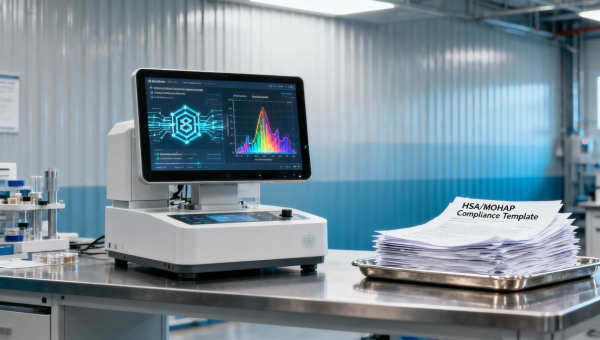
On May 20, 2026, Tmall Health partnered with 15 brands—including By-Health, Centrum, and Harbin Pharmaceutical Group—to establish the 'Health Supplement Safety Alliance'. The initiative introduces blockchain-based raw material traceability, standardized efficacy claim review protocols, and harmonized cross-border regulatory documentation. While domestic in scope, its end-to-end digital record system covering 'raw materials–manufacturing–claims' is already drawing reference from emerging market regulators such as Singapore’s Health Sciences Authority (HSA) and the UAE’s Ministry of Health and Prevention (MOHAP), potentially shaping pre-approval templates for health-beauty devices and nutritional supplement equipment exported to Southeast Asia and the Middle East.
Event Overview
On May 20, 2026, Tmall Health jointly launched the 'Health Supplement Safety Alliance' with 15 brands, including By-Health, Centrum, and Harbin Pharmaceutical Group. The alliance’s first-phase priorities are: (1) blockchain-based traceability of raw materials; (2) a content review mechanism for health benefit claims; and (3) standardization of cross-border regulatory filing documents. The initiative is domestically oriented but generates digital audit trails across the 'raw material–production–claim' chain. Regulatory authorities in Singapore (HSA) and the UAE (MOHAP) are reportedly referencing this framework for evaluating imported health-beauty instruments and nutritional supplement devices.
Industries Affected
Direct Exporters of Health-Beauty Devices & Nutritional Equipment
These enterprises face indirect regulatory pressure as HSA and MOHAP begin aligning pre-approval assessments with the Alliance’s digital documentation standards. Impact manifests in longer pre-submission preparation cycles, increased demand for verifiable supply-chain data, and potential delays if legacy export dossiers lack granular traceability or claim substantiation aligned with the Alliance’s model.
Raw Material Suppliers Serving Export-Oriented Brands
Suppliers may experience upstream compliance requests—for example, demands for batch-level blockchain traceability records or third-party verification of origin and purity—especially when their materials feed into products destined for Singapore or UAE markets. The Alliance’s emphasis on raw material provenance signals a de facto escalation in evidentiary expectations beyond current local requirements.
Contract Manufacturers of Nutritional Supplements & Cosmetic Devices
Manufacturers handling private-label or OEM production for Alliance members—or for brands targeting ASEAN/GCC markets—may need to adapt internal quality documentation systems to support immutable, auditable logs of processing steps, testing results, and claim linkage. This could affect validation protocols, IT infrastructure readiness, and staff training related to digital recordkeeping.
Distribution & Regulatory Affairs Service Providers
Firms supporting cross-border registrations must now anticipate that dossier reviews in Singapore and the UAE may implicitly benchmark against the Alliance’s structure—e.g., expecting clearly segmented evidence packages for ingredient sourcing, manufacturing controls, and clinical/functional claim justification. Standardized templates previously used for China-only filings may no longer suffice as proxy references.
What Enterprises and Practitioners Should Monitor and Do Now
Track official guidance from HSA and MOHAP on digital dossier expectations
While no formal adoption has been announced, both agencies have acknowledged reviewing the Alliance’s framework. Monitoring their upcoming consultation papers or updated submission checklists—particularly for Class II/III health-beauty devices and novel ingredient supplements—is critical to distinguish early signals from binding requirements.
Map current export documentation against the Alliance’s three pillars
Compare existing cross-border filing packages (e.g., for Singapore’s HSA Product Registration or UAE’s MOHAP Medical Device License) against the Alliance’s focus areas: raw material traceability depth, claim substantiation rigor, and consistency of technical file formatting. Identify gaps where blockchain records or claim-specific test reports are missing or inconsistently presented.
Distinguish between policy signaling and operational rollout
The Alliance itself applies only within China’s e-commerce ecosystem. Its influence abroad remains observational—not regulatory. Companies should avoid prematurely overhauling systems based solely on this initiative, but rather treat it as an early indicator of evolving evidentiary norms in priority export jurisdictions.
Prepare internal alignment on data sharing and documentation protocols
For exporters working with multiple suppliers or contract manufacturers, initiate cross-functional discussions now on how to collect, store, and share traceability and claim-supporting data—especially if future submissions to HSA or MOHAP require unified digital archives. Pilot integration with blockchain-enabled platforms (even at batch level) may reduce implementation lag later.
Editorial Perspective / Industry Observation
Observably, this initiative functions less as an immediate regulatory mandate and more as a coordination mechanism among major Chinese platforms and brands to raise baseline documentation quality. Analysis shows its cross-border relevance lies not in legal enforceability, but in its role as a ‘reference architecture’—one that lowers information asymmetry for foreign regulators assessing complex, digitally enabled health products. From an industry perspective, it reflects growing convergence between e-commerce governance and international regulatory expectations, especially where product categories (e.g., smart beauty devices with supplement pairing) straddle medical, cosmetic, and wellness classifications. Current attention should focus on how quickly—and selectively—emerging-market agencies translate observed practices into formal guidance.
In summary, the 'Health Supplement Safety Alliance' does not introduce new laws, but signals a shift toward interoperable, evidence-rich digital dossiers as a competitive and compliance prerequisite—not just in China, but increasingly for exports to dynamic regulatory environments in Southeast Asia and the Middle East. It is best understood not as a rule change, but as an early marker of documentation standardization accelerating across fragmented health-tech trade corridors.
Source: Public announcement by Tmall Health on May 20, 2026; statements from By-Health and Harbin Pharmaceutical Group confirming participation; reported engagement by Singapore HSA and UAE MOHAP cited in official press briefing materials. Note: Ongoing observation is required to confirm whether HSA or MOHAP will formalize adoption of any Alliance-derived elements in future regulatory updates.
Related Intelligence
 Skincare OEMAug 16, 2026Amazon Enforces AI Human Metadata Rule for Beauty and Personal Care SellersAmazon now enforces AI human metadata rules for beauty sellers. Learn how to protect listings, traffic, and compliance in skincare, cosmetics, and beauty devices.
 Beauty DevicesAug 15, 2026China to Roll Out Nationwide Cross-Border Cash Pooling for MultinationalsChina to roll out nationwide cross-border cash pooling for multinationals from Sept. 14. Discover how this policy could improve treasury efficiency, liquidity management, and China-linked supply chains.
 Beauty DevicesAug 14, 2026China Imposes Temporary Export Ban on Helium, Affecting Cooling Supply ChainsChina's temporary helium export ban may disrupt cooling supply chains for beauty RF devices and laser systems. Learn what ODMs, buyers, and procurement teams should check now.
![]() Cosmetics & PkgAug 13, 2026PPWR becomes mandatory: Beauty and personal care packaging materials usher in new EPR and PFAS compliance requirementsPPWR takes effect for cosmetics packaging in the EU, bringing EPR registration and PFAS limits. Learn what brands, importers, and suppliers must do now.
Cosmetics & PkgAug 13, 2026PPWR becomes mandatory: Beauty and personal care packaging materials usher in new EPR and PFAS compliance requirementsPPWR takes effect for cosmetics packaging in the EU, bringing EPR registration and PFAS limits. Learn what brands, importers, and suppliers must do now. Cosmetics & PkgAug 12, 2026EU PPWR Now Enforced for Beauty Packaging ComplianceEU PPWR now enforced for beauty packaging compliance: learn how EPR, ERN, heavy metals and PFAS rules affect EU exports, customs clearance and platform sales.
 Cosmetics & PkgAug 11, 2026EU PPWR Rules Take Effect on Aug. 12 for Beauty PackagingEU PPWR rules for beauty packaging take effect on Aug. 12, 2026. Learn key compliance steps, EPR, labeling, PFAS limits, and how to avoid customs delays and fines.
 Smart Pet DevicesAug 10, 2026EU EPR Rules to Cover Smart Pet Devices on Aug. 15EU EPR Rules will cover smart pet devices from Aug. 15, 2026. Learn how smart collars, feeders, and monitoring devices can avoid delisting, customs delays, and compliance risks in the EU.
 Infant Feeding & CareAug 09, 2026CPSC Recalls Baby Sleep Sacks Over Undeclared TDCPPCPSC Recalls Baby Sleep Sacks Over Undeclared TDCPP: learn how this 2026 recall impacts CPC documents, third-party testing, and U.S. baby product compliance for exporters.
 Infant Feeding & CareAug 08, 2026ECHA Adds 5 SVHCs, Importer Notices Due From Oct 2026ECHA adds 5 SVHCs to the Candidate List, with importer notices due from October 2026. Learn how REACH affects exporters, supply chains, and documentation readiness.
 Baby Gear & StrollersAug 07, 2026CPSC Revises Crib Rail Standard for November 2026CPSC revises crib rail standard for November 2026, adding dynamic impact tests and mandatory third-party lab testing. Learn how the new rule affects U.S. market access, compliance, and shipments.
 Electronic & RC ToysAug 06, 2026EU to Require EN IEC 62115:2025 for Electronic ToysEU to Require EN IEC 62115:2025 for Electronic Toys from Oct 1, 2026. Learn scope, battery and AI safety updates, CE compliance risks, and how exporters can avoid customs delays.
 Baby Gear & StrollersAug 05, 2026US Stroller Stability Rule Takes Effect Aug. 15US Stroller Stability Rule Takes Effect Aug. 15: learn how new U.S. stroller compliance, ASTM F833-26a, and CPSC testing rules may affect imports, certification, and shipment readiness.
 Infant Feeding & CareAug 04, 2026ECHA Adds 5 SVHCs, Triggering Baby Care Export ReviewECHA adds 5 SVHCs, prompting an urgent baby care export review for EU-bound products. Learn the 0.1% threshold risks, compliance steps, and how to avoid customs delays and fines.












