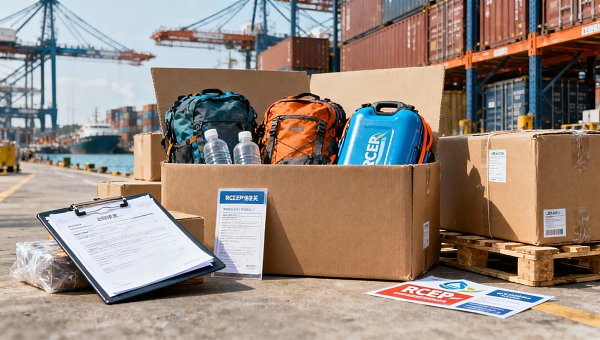
Ningbo Port Launches Green Fast-Check Channel for Infant Products
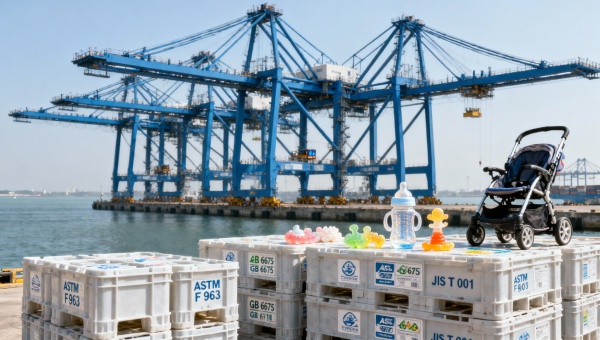
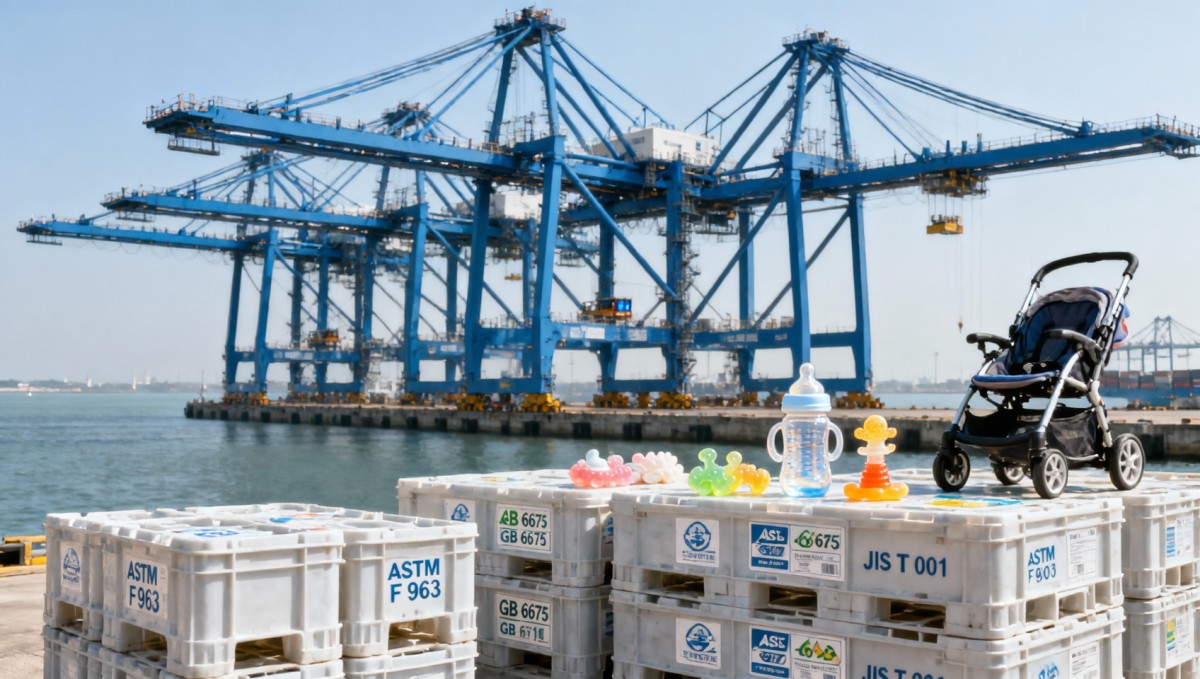
Ningbo Port, in collaboration with Ningbo Customs, activated a green fast-check channel for infant and toddler products on May 19, 2026. The initiative targets exporters submitting valid test reports compliant with JIS T 0601, ASTM F963, or GB 6675 standards — covering items such as baby strollers, baby bottles, and teething soothers. With full documentation verification and port inspection completed within ≤24 hours, the measure directly benefits international distributors serving U.S., Japanese, and Southeast Asian markets — especially those preparing for Q3 back-to-school shipments and Black Friday inventory build-up. Exporters of婴童用品 (infant and toddler products), compliance service providers, and cross-border logistics operators should monitor implications for lead time compression, certification workflows, and regional market responsiveness.
Event Overview
On May 19, 2026, Ningbo Customs and Ningbo Port jointly launched a green fast-check channel for infant and toddler products. Eligible goods — including baby strollers, baby bottles, and teething soothers — must be accompanied by valid test reports conforming to JIS T 0601, ASTM F963, or GB 6675 series standards. For such submissions, the combined process of document verification and on-site port inspection is capped at 24 hours.
Industries Affected by This Initiative
Direct Export Trading Enterprises
These enterprises are directly impacted because their shipment clearance speed now hinges on report validity and standard alignment. Delays previously caused by redundant testing or inconsistent documentation review may be reduced — but only if reports meet exact technical scope and version requirements under JIS, ASTM, or GB standards. Impact manifests primarily in shortened order-to-delivery cycles, particularly for time-sensitive retail windows in North America and Japan.
Contract Manufacturing & OEM Producers
OEM facilities supplying branded infant products face upstream pressure to pre-certify output against specific regulatory editions (e.g., ASTM F963–23 vs. F963–20). Since the green channel does not waive testing — only accelerates verification — manufacturers must ensure lab reports explicitly reference applicable clause coverage (e.g., heavy metals, mechanical hazards, flammability) and include traceable sample identification. Impact centers on documentation readiness, not production capability.
Distribution & Import-Export Logistics Providers
Firms managing end-to-end fulfillment for overseas retailers experience tighter coordination windows: 24-hour clearance requires synchronized scheduling across customs brokerage, warehouse staging, and carrier dispatch. Impact appears in operational planning — e.g., reduced buffer time for document correction or last-minute label adjustments — increasing reliance on pre-submission validation services.
Compliance & Testing Service Providers
Laboratories and third-party certification bodies see elevated demand for jurisdiction-specific reporting (e.g., JIS-compliant reports for Japanese importers; ASTM-aligned reports for U.S.-bound consignments). Impact lies in report formatting precision: minor omissions — such as missing test method revision years or incomplete product descriptions — may disqualify submissions from green-channel eligibility, even if technically compliant.
What Relevant Enterprises or Practitioners Should Focus On Now
Monitor official implementation guidelines beyond the initial announcement
Analysis shows the current rollout outlines eligibility criteria but does not yet clarify fallback procedures when reports are technically valid but administratively nonconforming (e.g., mismatched model numbers between report and packing list). Stakeholders should track subsequent notices from Ningbo Customs regarding acceptable deviations and re-submission protocols.
Prioritize verification of report alignment with target-market versions of JIS/ASTM/GB
Observably, not all JIS T 0601 or ASTM F963 editions are treated equally under the channel. For example, reports citing ASTM F963–17 may not qualify if the importing buyer requires F963–23 compliance. Exporters should confirm edition-level alignment with both the green channel’s acceptance policy and downstream buyer requirements — not just generic standard references.
Distinguish between policy intent and actual port-level execution
From industry perspective, the 24-hour target applies to the integrated verification-and-inspection workflow — not individual steps. In practice, bottlenecks may persist in physical inspection capacity or document upload system latency. Companies should treat the timeline as an upper-bound service level, not a guaranteed turnaround, and retain contingency plans for same-day submission failures.
Prepare documentation packages proactively — not reactively
Current more practical approach is to assemble full dossier sets (test reports, product specifications, labeling samples, factory audit summaries) before shipment booking — rather than waiting until container arrival. This reduces risk of delay due to incomplete submissions, which would default the consignment to standard clearance timelines.
Editorial Perspective / Industry Observation
This initiative is better understood as an operational refinement than a regulatory shift. It does not relax safety requirements or introduce new standards — instead, it optimizes verification efficiency for already-certified goods. Observably, its significance lies less in immediate throughput gains and more in signaling a broader trend: Chinese export ports increasingly segment clearance pathways by documentation maturity, rewarding exporters who invest in upfront compliance rigor. Analysis suggests this model may expand to other high-compliance categories (e.g., children’s apparel, electrical toys) if pilot results meet KPIs around error rate and average dwell time. However, scalability remains contingent on consistent report quality across labs and harmonized interpretation of standard clauses by customs officers — factors requiring ongoing observation.
In summary, the Ningbo green fast-check channel represents a targeted efficiency upgrade for infant product exporters meeting strict documentation prerequisites. Its value is real but conditional: it compresses lead times only where reporting infrastructure is mature and aligned. For stakeholders, the most constructive stance is neither overestimation nor dismissal — but calibrated attention to how documentation precision translates into port-level execution speed. Currently, it is best interpreted as a procedural signal — one that rewards preparedness, not a de facto acceleration for all participants.
Source: Official joint announcement by Ningbo Customs and Ningbo Port, released May 19, 2026.
Note: Implementation details — including volume thresholds, fee structure (if any), and escalation paths for disputed verifications — remain unconfirmed and require continued monitoring.
Related Intelligence
 Baby Gear & StrollersJul 04, 2026Ningbo-LA Spot Rates Hit $4,850 as Lead Times StretchNingbo-LA spot rates hit $4,850 as lead times stretch from 6 to 18 days. See how rising freight costs, tight space, and delivery risks could impact U.S. West Coast shipments.
 STEM & Educational ToysJul 04, 2026Amazon Japan Tightens Battery Rules for STEM ToysAmazon Japan tightens battery rules for STEM toys, requiring JIS C 62133-2:2026 test reports. Learn how sellers can avoid ASIN removal, frozen inventory, and compliance risks.
 Camping & WaterJul 04, 2026Vietnam Tightens Testing for Camping Cookware ExportsVietnam tightens testing for camping cookware exports under QCVN 16:2026. Learn how migration test reports affect market access, compliance planning, and Vietnam-bound shipments.
 Infant Feeding & CareJul 04, 2026FDA Updates Pacifier Guidance, Adds Bite-Test DataFDA updates pacifier guidance with new bite-test data expectations for silicone infant pacifiers. Learn how ISO 8124-1:2026 verification may affect import review, release timing, and U.S. supply chain compliance.
 Beauty DevicesJul 04, 2026EU CE EMC Rule Update Hits Beauty Device ExportsEU CE EMC rule update now impacts beauty device exports: learn what Regulation (EU) 2026/1289 changes, why customs may stop shipments, and how to stay compliant fast.
 Skincare OEMJul 04, 2026OEM Capability Showcase: Meeting FDA Requirements Without DelaysOEM capability showcase FDA requirements: discover how travel service suppliers reduce approval delays, improve traceability, and keep launches on schedule with audit-ready compliance.
 Electronic & RC ToysJul 04, 2026Electronic Toy Wholesaler Checklist for Margin and Return ControlElectronic toy wholesaler checklist for travel retail buyers: learn how to protect margin, reduce returns, and verify compliance before placing your next order.
 Pet Grooming & TravelJul 04, 2026Pet Retail Buyers Sourcing: 7 Supplier Risks to Check EarlyPet retail buyers sourcing starts with spotting supplier risks early. Learn 7 key checks to avoid delays, compliance issues, and margin loss while choosing stronger partners.
 Camping & WaterJul 04, 2026Camping Gear for Glamping: What Matters Most in Guest ExperienceCamping gear for glamping shapes sleep, comfort, safety, and guest ratings. Discover what matters most to create premium stays that boost bookings and return visits.
 Corporate & Seasonal GiftsJul 04, 2026Global Retail Shifts Reshaping Travel Gift Demand in 2026Global retail trends are reshaping travel gift demand in 2026. Discover what travelers want, where demand is growing, and how smarter sourcing can boost retail performance.
 Baby Gear & StrollersJul 03, 2026China Opens Smart Export Lane for Baby GearChina opens a smart export lane for Baby Gear & Strollers, cutting clearance from 38.6 to 3.2 hours. See what faster customs, AI review, and multi-standard checks mean for exporters and buyers.
 STEM & Educational ToysJul 03, 2026Amazon Makes EN71-8:2026 a Listing Gate for STEM ToysAmazon makes EN71-8:2026 a listing gate for STEM toys. Learn how the new compliance rule affects ASINs, testing, delisting risk, and supply chain planning.
 Camping & WaterJul 03, 2026RCEP Fast Lane Starts July 1 for Camping GearRCEP Fast Lane starts July 1 for Camping Gear, cutting customs clearance to 48 hours in Vietnam and Indonesia. Learn how certification, testing, and compliance can speed trade.