
Brand Procurement Checklist for Consistent Travel Merch Quality
Why does brand procurement matter so much for travel merch quality?
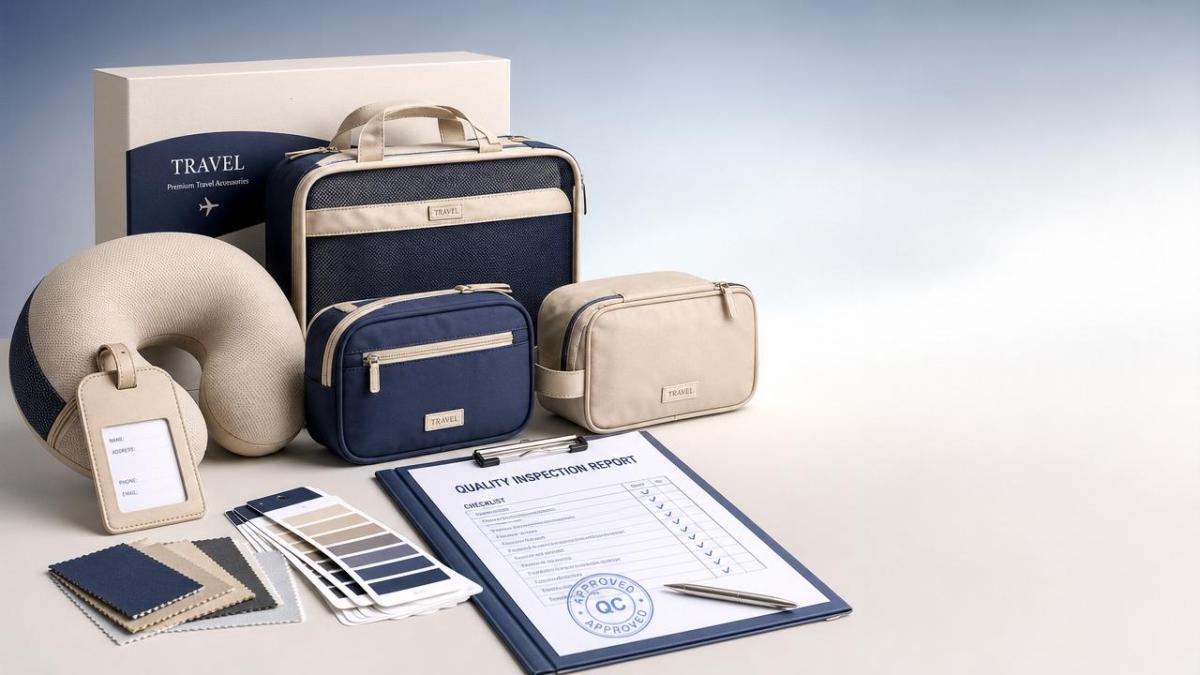
Travel merchandise often looks simple. In practice, it carries the service promise long after the trip ends.
A luggage tag, amenity kit, travel pouch, or branded neck pillow can reinforce trust or quietly damage it.
That is why brand procurement is not only about unit cost. It is about consistency, safety, timing, and brand fit.
For travel service brands, quality variation shows up quickly. Colors drift, zippers fail, logos peel, and packaging arrives crushed.
When that happens across multiple routes, campaigns, or partner locations, the issue becomes operational as well as reputational.
A disciplined brand procurement checklist helps prevent that drift. It gives every sourcing decision a clear quality baseline.
It also makes supplier comparison more objective. Instead of chasing the lowest quote, teams can judge long-term delivery reliability.
This matters even more in a market shaped by fast retail cycles and rising compliance pressure.
Insights from Global Consumer Sourcing, or GCS, reflect that shift. The platform tracks manufacturing agility, certification readiness, and sourcing resilience.
That perspective is useful for travel merch because guest-facing products now need retail-level quality discipline.
What should a practical brand procurement checklist include first?
The first screen should focus on product definition, not supplier promises. Vague briefs create expensive quality disputes later.
A usable brand procurement checklist usually starts with six control points.
- Exact use case, such as in-flight gifting, hotel welcome kits, loyalty rewards, or tour resale.
- Material standard, including fabric weight, coating, trim quality, and odor tolerance.
- Brand execution rules, including logo size, placement, color codes, and print durability.
- Safety and compliance needs, especially for skin contact items, children’s products, or electronics accessories.
- Packaging expectations, because presentation affects premium perception and damage rates.
- Reorder and scaling assumptions, so the first batch is not treated like a one-off prototype.
In real buying cycles, quality failures often begin with unclear tolerances. One supplier reads “premium vegan leather” differently from another.
The stronger approach is to define measurable standards. Use Pantone references, stitching counts, pull tests, carton specs, and approved sample dates.
This is where brand procurement becomes a control system rather than a purchasing task.
How can you tell whether a supplier can keep quality consistent at scale?
A polished sample proves very little on its own. The real question is whether the same finish survives across larger production runs.
More reliable evaluation comes from process evidence. Ask how the supplier controls incoming materials, in-line checks, and final inspection.
It also helps to review how they handle color consistency across batches and factories.
The table below captures a useful way to compare findings before moving forward.
GCS-style sourcing intelligence is relevant here because it emphasizes verified capability over marketing claims.
That approach is especially useful when travel brands source across categories, from soft goods to giftable accessories.
Where do cost savings usually go wrong in brand procurement?
The most common mistake is treating the quoted price as the total cost. Cheap travel merch often creates hidden expenses later.
A lower bid may depend on thinner materials, unstable print methods, weak packaging, or untested substitutions.
Those shortcuts can trigger breakage, returns, urgent reorders, or negative guest feedback. The savings disappear quickly.
A better brand procurement review looks at landed and operational cost together.
- Does the quote include testing, packaging, labeling, and freight assumptions?
- What defect rate is acceptable before the order becomes more expensive than a stronger initial quote?
- Will a short lead time depend on overtime production and weaker inspection control?
- Is the supplier pricing for a trial batch only, or for repeatable volume business?
In travel services, timing has a cost as well. Missing a launch window can affect promotional campaigns, route activations, or seasonal partnerships.
So the best sourcing decision is not always the cheapest unit. It is the quote with the most predictable total outcome.
What quality and compliance risks deserve extra attention?
Travel merch sits close to the customer experience. That makes seemingly small defects more sensitive than they appear on a spreadsheet.
Items used during journeys face friction, compression, humidity, heat, and frequent handling. Materials must be chosen for real conditions.
A soft pouch that looks good in a showroom may fail after repeated packing. A printed bottle may scratch during transit.
Need extra caution if the assortment includes children’s travel sets, cosmetics pouches, refillable containers, or tech accessories.
These categories can involve tighter testing expectations, chemical restrictions, or destination-specific labeling rules.
This is one reason GCS places so much emphasis on certification awareness and expert-reviewed supply chain insight.
In practical terms, a brand procurement checklist should ask for current reports, not general statements about compliance.
- Confirm test relevance to the exact product version and material mix.
- Check whether reports match destination market requirements.
- Review packaging safety, barcode accuracy, and warning label placement.
- Agree on corrective action timing before purchase orders are issued.
That preparation reduces both operational friction and brand exposure.
How should repeat orders and supplier reviews be managed?
The first order should not be the end of evaluation. Repeat consistency is where brand procurement proves its value.
A useful review cycle compares every new order against the approved baseline, not just against the latest shipment.
That matters because quality often slips gradually. A small color variance becomes normal if nobody checks historical standards.
It helps to maintain a simple supplier scorecard covering quality, on-time delivery, responsiveness, and claim resolution speed.
More mature programs also track whether the supplier supports innovation without destabilizing consistency.
For travel brands, this could mean introducing recycled fabrics, upgraded closures, or more durable decoration methods.
The goal is not constant change. It is controlled improvement supported by sourcing evidence.
That is where external market intelligence can help. GCS, for example, is valuable when teams need a broader view of material trends and supplier readiness.
A dependable brand procurement process keeps those decisions grounded in data, not guesswork.
So what does a strong next step look like?
Start by tightening the brief for every travel merchandise category. Define use conditions, visual standards, compliance needs, and acceptable tolerances.
Then compare suppliers against the same brand procurement checklist, using evidence instead of broad capability claims.
If costs differ, examine what is missing from the cheaper quote before assuming it is the better value.
Also review how repeat orders will be controlled. Long-term consistency matters more than one successful sample presentation.
The strongest travel merch programs usually combine internal standards with outside sourcing intelligence.
That is why market resources like GCS are useful in the background. They help validate supplier capability, compliance awareness, and category movement.
In the end, brand procurement works best when it protects quality before problems appear, not after products reach travelers.
Related Intelligence
 Skincare OEMAug 16, 2026Amazon Enforces AI Human Metadata Rule for Beauty and Personal Care SellersAmazon now enforces AI human metadata rules for beauty sellers. Learn how to protect listings, traffic, and compliance in skincare, cosmetics, and beauty devices.
 Beauty DevicesAug 15, 2026China to Roll Out Nationwide Cross-Border Cash Pooling for MultinationalsChina to roll out nationwide cross-border cash pooling for multinationals from Sept. 14. Discover how this policy could improve treasury efficiency, liquidity management, and China-linked supply chains.
 Beauty DevicesAug 14, 2026China Imposes Temporary Export Ban on Helium, Affecting Cooling Supply ChainsChina's temporary helium export ban may disrupt cooling supply chains for beauty RF devices and laser systems. Learn what ODMs, buyers, and procurement teams should check now.
![]() Cosmetics & PkgAug 13, 2026PPWR becomes mandatory: Beauty and personal care packaging materials usher in new EPR and PFAS compliance requirementsPPWR takes effect for cosmetics packaging in the EU, bringing EPR registration and PFAS limits. Learn what brands, importers, and suppliers must do now.
Cosmetics & PkgAug 13, 2026PPWR becomes mandatory: Beauty and personal care packaging materials usher in new EPR and PFAS compliance requirementsPPWR takes effect for cosmetics packaging in the EU, bringing EPR registration and PFAS limits. Learn what brands, importers, and suppliers must do now. Cosmetics & PkgAug 12, 2026EU PPWR Now Enforced for Beauty Packaging ComplianceEU PPWR now enforced for beauty packaging compliance: learn how EPR, ERN, heavy metals and PFAS rules affect EU exports, customs clearance and platform sales.
 Cosmetics & PkgAug 11, 2026EU PPWR Rules Take Effect on Aug. 12 for Beauty PackagingEU PPWR rules for beauty packaging take effect on Aug. 12, 2026. Learn key compliance steps, EPR, labeling, PFAS limits, and how to avoid customs delays and fines.
 Smart Pet DevicesAug 10, 2026EU EPR Rules to Cover Smart Pet Devices on Aug. 15EU EPR Rules will cover smart pet devices from Aug. 15, 2026. Learn how smart collars, feeders, and monitoring devices can avoid delisting, customs delays, and compliance risks in the EU.
 Infant Feeding & CareAug 09, 2026CPSC Recalls Baby Sleep Sacks Over Undeclared TDCPPCPSC Recalls Baby Sleep Sacks Over Undeclared TDCPP: learn how this 2026 recall impacts CPC documents, third-party testing, and U.S. baby product compliance for exporters.
 Infant Feeding & CareAug 08, 2026ECHA Adds 5 SVHCs, Importer Notices Due From Oct 2026ECHA adds 5 SVHCs to the Candidate List, with importer notices due from October 2026. Learn how REACH affects exporters, supply chains, and documentation readiness.
 Baby Gear & StrollersAug 07, 2026CPSC Revises Crib Rail Standard for November 2026CPSC revises crib rail standard for November 2026, adding dynamic impact tests and mandatory third-party lab testing. Learn how the new rule affects U.S. market access, compliance, and shipments.
 Electronic & RC ToysAug 06, 2026EU to Require EN IEC 62115:2025 for Electronic ToysEU to Require EN IEC 62115:2025 for Electronic Toys from Oct 1, 2026. Learn scope, battery and AI safety updates, CE compliance risks, and how exporters can avoid customs delays.
 Baby Gear & StrollersAug 05, 2026US Stroller Stability Rule Takes Effect Aug. 15US Stroller Stability Rule Takes Effect Aug. 15: learn how new U.S. stroller compliance, ASTM F833-26a, and CPSC testing rules may affect imports, certification, and shipment readiness.
 Infant Feeding & CareAug 04, 2026ECHA Adds 5 SVHCs, Triggering Baby Care Export ReviewECHA adds 5 SVHCs, prompting an urgent baby care export review for EU-bound products. Learn the 0.1% threshold risks, compliance steps, and how to avoid customs delays and fines.












