
Brand Trends to Watch in Corporate Gift Sourcing
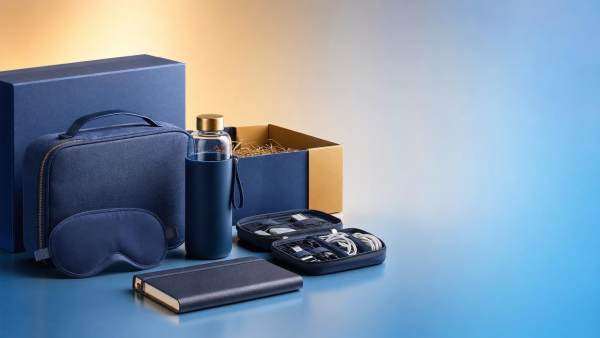
For distributors, agents, and sourcing partners in travel-related gifting, keeping pace with brand trends is essential to securing profitable corporate gift programs. As buyer expectations shift toward personalization, sustainability, compliance, and faster fulfillment, understanding what drives sourcing decisions can help you align with global retailers and brand owners more effectively.
In travel services, corporate gifting is no longer limited to logo pens or generic tote bags. Airlines, hotels, cruise operators, destination management companies, travel agencies, and loyalty program partners increasingly expect gifts that support brand storytelling, traveler convenience, and measurable campaign results.
For channel partners, this creates a more demanding sourcing environment. Buyers now compare lead times, packaging compliance, sustainability claims, minimum order quantities, and personalization options within the same shortlist. The distributors that win repeat business are the ones that can translate brand trends into sourcing decisions with less risk and faster turnaround.
This article explores the brand trends shaping corporate gift sourcing in travel services, with a practical focus on product selection, supplier screening, delivery planning, and margin protection for B2B intermediaries.
Why Brand Trends Matter More in Travel-Related Corporate Gifts
Travel gifting sits at the intersection of hospitality, mobility, and brand experience. A corporate gift may be handed out before departure, placed in a hotel welcome pack, bundled into a conference itinerary, or used as part of a loyalty redemption campaign. That means product relevance has a direct effect on perceived service quality.
Unlike traditional retail gifting, travel-related sourcing also works under tighter operational windows. Many campaigns are linked to seasonal travel peaks, event dates, route launches, or holiday promotions. In practice, buyers often expect samples within 7–10 days and bulk delivery within 3–6 weeks, depending on customization depth and destination complexity.
Brand trends help distributors anticipate these needs earlier. When you know which product categories are gaining traction, which materials are under scrutiny, and which packaging formats reduce shipping issues, you can guide clients toward more resilient sourcing choices before deadlines become critical.
The New Role of Corporate Gifts in Travel Services
Today’s travel gifts are expected to do at least 3 jobs at once: reinforce brand identity, improve traveler utility, and support campaign differentiation. A gift that cannot serve one of these roles is increasingly difficult to justify in procurement reviews.
- Brand reinforcement through premium feel, color consistency, and packaging coherence
- Traveler utility through compact, compliant, easy-to-carry product formats
- Commercial differentiation through personalization, sustainability, or destination relevance
For example, a luxury hotel group may favor curated room-drop gifts with elevated packaging, while a corporate travel agency may prioritize practical kits for frequent flyers. The underlying brand trends differ, but in both cases procurement is driven by guest experience and budget discipline.
What Travel Buyers Are Evaluating in 2025
Across travel services, sourcing teams typically evaluate gifts on 4 core dimensions: fit, compliance, fulfillment, and margin. These priorities influence not only what gets approved, but also which distributors stay on preferred supplier lists.
The table below shows how these evaluation points usually translate into operational requirements for travel gifting programs.
The key takeaway is that brand trends in travel gifting are not only aesthetic. They affect logistics, compliance review, and profitability. Distributors that link trend awareness to sourcing execution can reduce late-stage revisions and improve quote accuracy.
The Brand Trends Reshaping Corporate Gift Sourcing
Several brand trends are now influencing gift selection across airlines, hotels, tourism operators, and travel event organizers. While budgets vary by segment, the direction is clear: buyers want gifts that feel purposeful, easier to personalize, and safer to deliver across multiple markets.
1. Practical Premium Is Replacing Generic Volume
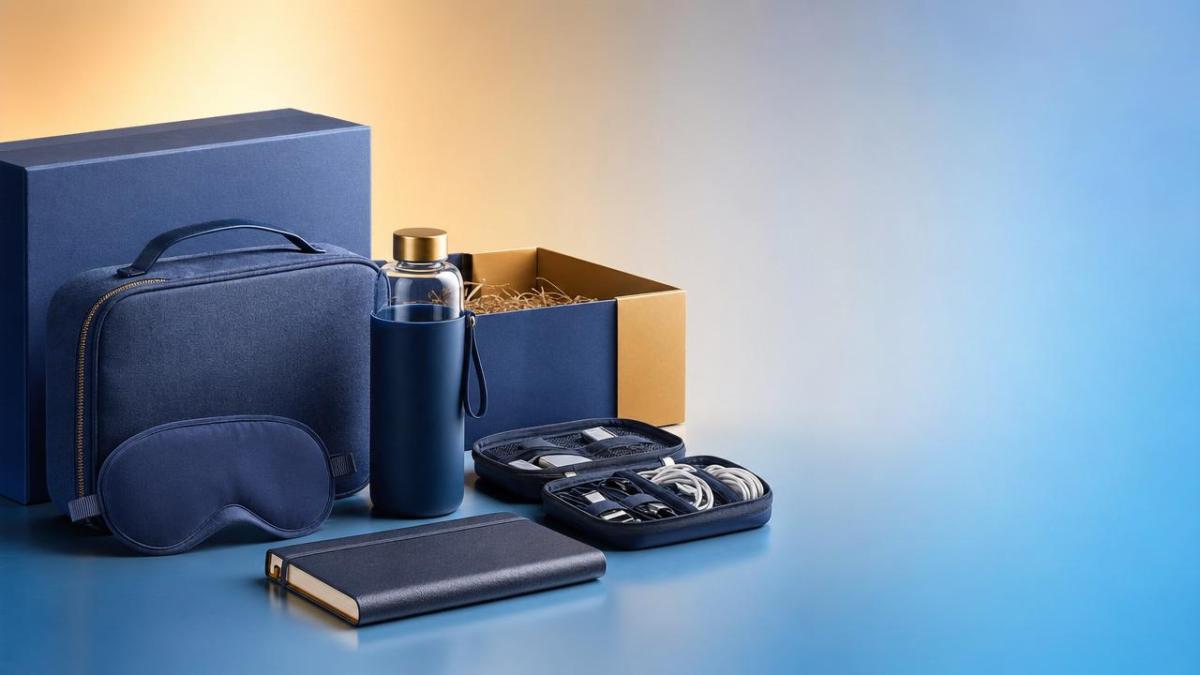
Many travel buyers are moving away from low-cost giveaways that create clutter. Instead, they prefer compact, useful items with stronger perceived value. This often includes travel organizers, refillable drinkware, sleep accessories, cable kits, destination-themed pouches, and premium notebook sets.
For distributors, this changes the sourcing brief. Rather than quoting 8 to 10 random gift options, it is often more effective to build 3 curated tiers: entry, mid-range, and premium. That simplifies buyer comparison and improves upsell potential.
Typical price architecture
- Entry tier: simple branded utility items for large-volume events
- Mid-range tier: curated kits for business travel programs and hotel packages
- Premium tier: higher-spec materials or gift-box presentation for executive travelers
A tiered structure also helps agents manage different account profiles, from regional tour operators ordering 500–1,000 units to multinational hospitality groups ordering 5,000 units or more across several destinations.
2. Personalization Has Shifted from Optional to Expected
Personalization is one of the strongest brand trends in corporate gifting because travel brands increasingly compete on experience. Personalization may involve guest name printing, route-specific packaging, language localization, event dates, or destination graphics rather than only logo application.
The sourcing challenge is operational. Buyers want tailored presentation without creating long delays or excessive setup costs. In many programs, the sweet spot is light customization with 1–2 print positions, 2 color variants, and standardized inserts that can be swapped by market.
Distributors should ask early whether the client needs variable data, market-specific packaging, or multi-language compliance text. These details can add 5–12 business days if left to the final stage.
3. Sustainability Claims Must Be Verifiable
Sustainability remains one of the most visible brand trends, especially in travel services where carbon impact and waste reduction are under close scrutiny. However, vague eco claims are no longer enough. Buyers increasingly ask what the material is, how the packaging is reduced, and whether documentation can support the claim.
In practical terms, this means channel partners should prioritize products with clear material descriptions, such as recycled polyester, FSC-aligned paper packaging, or reusable formats that reduce single-use waste. It is safer to present modest, document-backed benefits than broad environmental promises.
4. Compliance Is Becoming Part of Brand Reputation
For travel buyers operating across borders, non-compliant gifts can trigger customs delays, consumer complaints, or reputational risk. This is especially important for products used by children, cosmetics-adjacent items, electronics accessories, or anything intended for skin contact.
As a result, brand trends now include a compliance dimension. Buyers increasingly value sourcing partners that can flag risk early, explain which standards may apply, and narrow the shortlist to lower-risk options before sampling begins.
How Distributors Should Evaluate Suppliers Against These Trends
Recognizing brand trends is only the first step. The larger commercial advantage comes from turning those trends into supplier selection criteria. In travel gifting, a supplier that looks strong on product visuals may still fail on packaging durability, compliance documents, or shipment timing.
A disciplined evaluation framework helps distributors reduce rework and protect client confidence. The most effective approach is to assess suppliers across at least 5 areas before final quotation: category fit, certification readiness, customization flexibility, lead-time realism, and after-sales responsiveness.
A Practical Supplier Scorecard
The following scorecard can help channel partners compare suppliers for travel-related corporate gifts without relying only on unit price.
The most common mistake is to compare vendors on product cost alone. In travel campaigns, a lower unit price can be erased quickly by damaged packaging, missed event dates, or documentation gaps that delay customs clearance.
Questions to Ask Before You Commit
- What is the realistic MOQ for the chosen decoration and packaging format?
- Can the supplier support split shipments to 2–3 destinations?
- Which product claims can be documented, and which are only marketing language?
- What is the defect handling process if issues appear after arrival?
- Can the supplier reserve production capacity during peak travel seasons?
These questions are especially important for agents handling hotel openings, tourism board events, or route marketing campaigns where timing is fixed and replacement options are limited.
Popular Product Directions Emerging from Current Brand Trends
While each travel client has its own positioning, several product directions are appearing repeatedly in sourcing briefs. These categories tend to perform well because they combine portability, brand visibility, and user relevance during the trip itself.
High-potential gift categories for travel programs
- Travel comfort kits with eye masks, pouches, and compact organizers
- Reusable bottles or cups designed for business travelers and event attendees
- Destination-themed stationery or notebooks for conference and incentive travel
- Tech accessories such as cable organizers or adapter pouches
- Family travel items for resorts, airline holiday campaigns, or tourism promotions
What matters is not only the item category, but also how it fits the journey stage. Pre-trip gifts should be light and mailable. In-stay gifts should feel premium on arrival. Post-trip gifts tied to loyalty programs should be easy to replenish and standardize across markets.
Matching Product Type to Travel Use Case
This matrix can help distributors align product selection with actual travel-service scenarios and avoid overbuying the wrong format.
The strongest-performing categories are usually those that support the travel experience directly. This is why practical premium and lightweight personalization continue to dominate current brand trends in the sector.
Implementation Risks, Timelines, and Margin Protection
Even when the product concept is right, travel gift programs can lose margin through weak execution. The highest-risk points usually appear in 3 phases: pre-approval, production, and final delivery. Distributors who manage these phases tightly are more likely to secure repeat tenders.
Common risk areas
- Late artwork approval leading to compressed production windows
- Mismatch between approved sample and mass-production finish
- Underestimated packaging volume increasing freight cost per unit
- Destination-specific labeling requirements discovered too late
- Insufficient buffer time before hotel opening or travel event date
A practical planning rule is to build a 10%–15% time buffer into the sourcing calendar. If a campaign launch is fixed, backward scheduling should include sample approval, documentation review, packaging validation, and contingency for one revision cycle.
A workable 5-step sourcing workflow
- Define use case, traveler profile, and budget band
- Shortlist 3–5 SKUs aligned with current brand trends
- Check documentation, decoration limits, and packaging impact
- Approve sample and transit packaging before bulk PO
- Track production milestones and reserve delivery buffer
This workflow is especially effective for distributors serving multiple travel accounts at once, because it standardizes decision points and reduces the chance of rushed exceptions.
How GCS-style sourcing intelligence supports better decisions
For channel partners in travel services, the real advantage comes from combining trend awareness with verified supplier intelligence. Data-backed visibility into category direction, compliance expectations, and manufacturing responsiveness makes it easier to advise global retailers, hotel groups, and travel brands with confidence.
When sourcing decisions are informed by credible market analysis rather than reactive quoting, distributors can move faster on the right categories, avoid weak claims, and position themselves as strategic partners rather than order processors.
Brand trends in corporate gift sourcing are changing the travel-services market in practical ways: more personalization, clearer sustainability proof, tighter compliance review, and stronger demand for useful premium formats. For distributors, agents, and sourcing partners, success depends on matching these trends to realistic supplier capabilities, lead times, and program economics.
If you want to refine your travel gifting portfolio, improve supplier screening, or build more competitive corporate gift programs for global buyers, now is the time to act. Contact us to get a tailored sourcing strategy, review trend-aligned product directions, and explore solutions designed for modern travel-service brands.
Related Intelligence
 Skincare OEMAug 16, 2026Amazon Enforces AI Human Metadata Rule for Beauty and Personal Care SellersAmazon now enforces AI human metadata rules for beauty sellers. Learn how to protect listings, traffic, and compliance in skincare, cosmetics, and beauty devices.
 Beauty DevicesAug 15, 2026China to Roll Out Nationwide Cross-Border Cash Pooling for MultinationalsChina to roll out nationwide cross-border cash pooling for multinationals from Sept. 14. Discover how this policy could improve treasury efficiency, liquidity management, and China-linked supply chains.
 Beauty DevicesAug 14, 2026China Imposes Temporary Export Ban on Helium, Affecting Cooling Supply ChainsChina's temporary helium export ban may disrupt cooling supply chains for beauty RF devices and laser systems. Learn what ODMs, buyers, and procurement teams should check now.
![]() Cosmetics & PkgAug 13, 2026PPWR becomes mandatory: Beauty and personal care packaging materials usher in new EPR and PFAS compliance requirementsPPWR takes effect for cosmetics packaging in the EU, bringing EPR registration and PFAS limits. Learn what brands, importers, and suppliers must do now.
Cosmetics & PkgAug 13, 2026PPWR becomes mandatory: Beauty and personal care packaging materials usher in new EPR and PFAS compliance requirementsPPWR takes effect for cosmetics packaging in the EU, bringing EPR registration and PFAS limits. Learn what brands, importers, and suppliers must do now. Cosmetics & PkgAug 12, 2026EU PPWR Now Enforced for Beauty Packaging ComplianceEU PPWR now enforced for beauty packaging compliance: learn how EPR, ERN, heavy metals and PFAS rules affect EU exports, customs clearance and platform sales.
 Cosmetics & PkgAug 11, 2026EU PPWR Rules Take Effect on Aug. 12 for Beauty PackagingEU PPWR rules for beauty packaging take effect on Aug. 12, 2026. Learn key compliance steps, EPR, labeling, PFAS limits, and how to avoid customs delays and fines.
 Smart Pet DevicesAug 10, 2026EU EPR Rules to Cover Smart Pet Devices on Aug. 15EU EPR Rules will cover smart pet devices from Aug. 15, 2026. Learn how smart collars, feeders, and monitoring devices can avoid delisting, customs delays, and compliance risks in the EU.
 Infant Feeding & CareAug 09, 2026CPSC Recalls Baby Sleep Sacks Over Undeclared TDCPPCPSC Recalls Baby Sleep Sacks Over Undeclared TDCPP: learn how this 2026 recall impacts CPC documents, third-party testing, and U.S. baby product compliance for exporters.
 Infant Feeding & CareAug 08, 2026ECHA Adds 5 SVHCs, Importer Notices Due From Oct 2026ECHA adds 5 SVHCs to the Candidate List, with importer notices due from October 2026. Learn how REACH affects exporters, supply chains, and documentation readiness.
 Baby Gear & StrollersAug 07, 2026CPSC Revises Crib Rail Standard for November 2026CPSC revises crib rail standard for November 2026, adding dynamic impact tests and mandatory third-party lab testing. Learn how the new rule affects U.S. market access, compliance, and shipments.
 Electronic & RC ToysAug 06, 2026EU to Require EN IEC 62115:2025 for Electronic ToysEU to Require EN IEC 62115:2025 for Electronic Toys from Oct 1, 2026. Learn scope, battery and AI safety updates, CE compliance risks, and how exporters can avoid customs delays.
 Baby Gear & StrollersAug 05, 2026US Stroller Stability Rule Takes Effect Aug. 15US Stroller Stability Rule Takes Effect Aug. 15: learn how new U.S. stroller compliance, ASTM F833-26a, and CPSC testing rules may affect imports, certification, and shipment readiness.
 Infant Feeding & CareAug 04, 2026ECHA Adds 5 SVHCs, Triggering Baby Care Export ReviewECHA adds 5 SVHCs, prompting an urgent baby care export review for EU-bound products. Learn the 0.1% threshold risks, compliance steps, and how to avoid customs delays and fines.












