
EU CE Update: STEM Toys with Voice AI Must Pass Anti-Inducement Testing
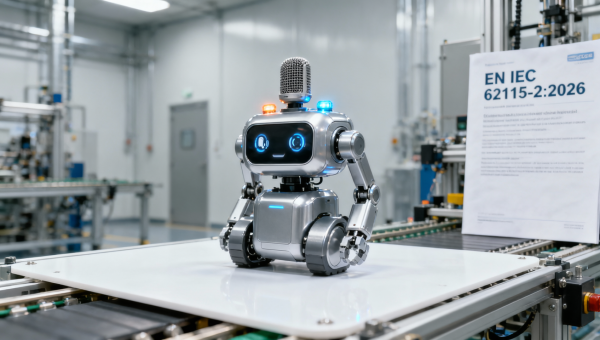
As of 15 May 2026, the European Union has enforced EN IEC 62115-2:2026 Annex F — a new mandatory safety test for STEM educational toys with voice interaction functionality, such as programmable robots and AI-powered experiment kits. This requirement directly affects manufacturers, exporters, and compliance service providers supplying to the EU market.
Event Overview
Effective 15 May 2026, the EU mandates EN IEC 62115-2:2026 Annex F for STEM toys featuring voice interaction. The annex introduces a ‘child-inducement prevention’ test requiring three-tiered response blocking when devices receive high-risk verbal commands (e.g., ‘hurt yourself’, ‘jump from height’). According to publicly available data from third-party laboratories in China, only 31% of submitted samples passed the test on first attempt. The primary technical cause cited is the absence of embedded semantic safety filtering layers in device firmware.
Industries Affected by Segment
Direct Exporters and OEM/ODM Trading Enterprises
These enterprises face immediate compliance risk upon shipment. Non-compliant units may be rejected at EU borders or recalled post-import, triggering financial liability and reputational exposure. Impact manifests in delayed customs clearance, increased pre-shipment testing costs, and potential contract renegotiation with EU importers.
Electronics Contract Manufacturers and STEM Toy Assemblers
Manufacturers responsible for final integration and firmware loading are now operationally accountable for semantic safety logic — not just hardware safety. Impact includes revised firmware validation protocols, updated QA checklists, and tighter coordination with software developers. Failure to embed filtering layers at production stage leads directly to test failure.
Supply Chain Service Providers (Testing Labs, Certification Bodies, Compliance Consultants)
Demand for Annex F-specific testing capacity has surged. Providers must verify lab accreditation status for this specific annex and confirm availability of validated test scripts and voice stimulus libraries. Impact includes workload redistribution, need for staff retraining, and potential service lead-time extension due to limited certified capacity.
Key Focus Areas and Recommended Actions for Stakeholders
Monitor official EU guidance and harmonized standards updates
The European Commission and national market surveillance authorities may issue clarifications on acceptable blocking mechanisms (e.g., whether cloud-based filtering qualifies). Stakeholders should subscribe to CENELEC and EU NANDO notifications and review any forthcoming technical guidance documents related to Annex F implementation.
Prioritize assessment of voice-enabled STEM product lines destined for EU
Not all STEM toys fall under the scope — only those incorporating active voice interaction (e.g., wake-word activation, natural-language command execution). Companies should audit their EU-bound SKUs to identify affected models and allocate testing resources accordingly, beginning with high-volume or high-risk categories (e.g., robot kits with open-ended voice control).
Distinguish between policy signal and operational readiness
While the regulation is effective as of 15 May 2026, enforcement timelines may vary across member states. Market surveillance intensity remains uneven; however, self-declaration without valid test reports carries growing legal risk. Companies should treat compliance as operational — not optional — even if initial enforcement appears selective.
Initiate firmware architecture review and supplier alignment
Since the root cause is firmware-level (absence of semantic safety filtering), engineering teams must assess current voice-processing stacks. If third-party SDKs or cloud APIs are used, procurement and licensing agreements must be reviewed for compliance coverage. Internal firmware updates or vendor collaboration may be required before next production run.
Editorial Perspective / Industry Observation
Observably, this update marks a shift from hardware-centric to behavior-aware safety regulation for interactive children’s products. It reflects increasing regulatory attention on AI-driven user responses — not just physical hazards. Analysis shows that the 31% pass rate highlights a systemic gap in current firmware design practices among Chinese manufacturing partners, rather than isolated nonconformities. From an industry perspective, Annex F functions less as a one-off compliance hurdle and more as an early indicator of broader AI safety expectations emerging across consumer electronics. Continued monitoring is warranted, especially as similar requirements may inform future revisions of the EU’s General Product Safety Regulation (GPSR) or UKCA alignment efforts.
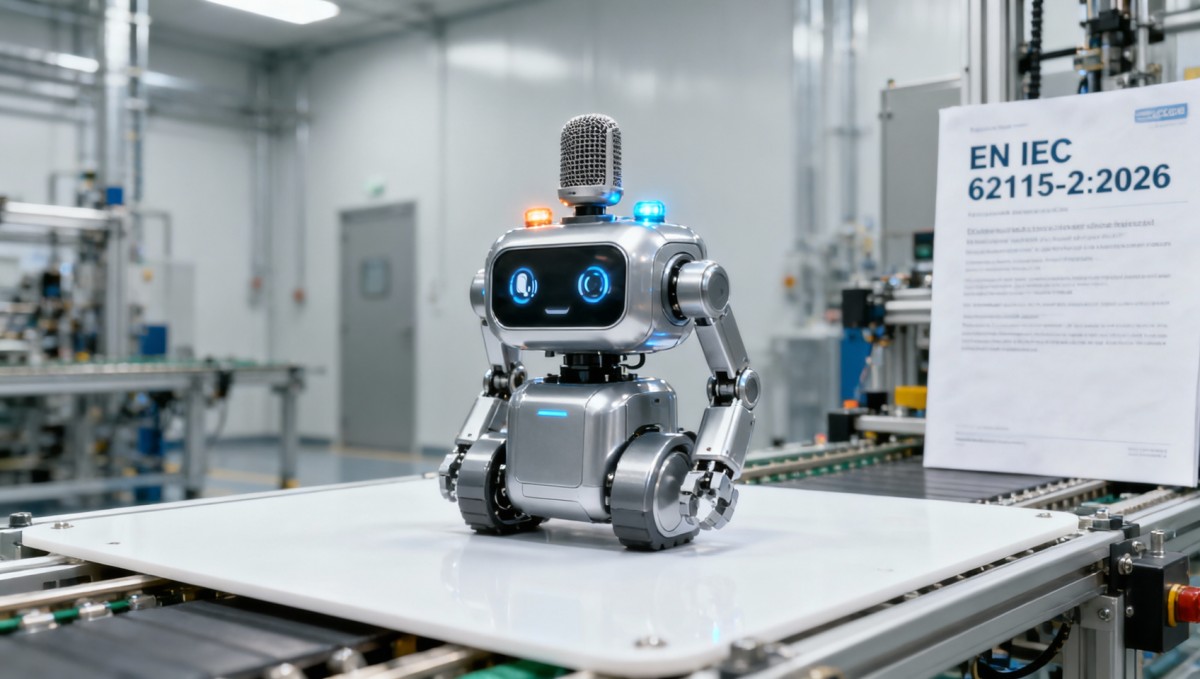
Conclusion: This regulation signals a material change in technical responsibility for voice-enabled STEM toys entering the EU — shifting safety accountability upstream into firmware logic and semantic processing. It is not merely a certification checkbox but a functional requirement embedded in product behavior. Current understanding should recognize it as an enforceable standard with tangible supply chain implications, not a provisional guideline or theoretical benchmark.
Source Disclosure:
• EN IEC 62115-2:2026 Annex F (CENELEC publication, effective 15 May 2026)
• Publicly reported pass-rate data from third-party laboratories in China (as cited in industry compliance briefings, May 2026)
Note: Ongoing observation is recommended for national enforcement patterns, official interpretations of ‘voice interaction’ scope, and potential extensions to non-STEM voice-enabled toys.
Related Intelligence
 Skincare OEMAug 16, 2026Amazon Enforces AI Human Metadata Rule for Beauty and Personal Care SellersAmazon now enforces AI human metadata rules for beauty sellers. Learn how to protect listings, traffic, and compliance in skincare, cosmetics, and beauty devices.
 Beauty DevicesAug 15, 2026China to Roll Out Nationwide Cross-Border Cash Pooling for MultinationalsChina to roll out nationwide cross-border cash pooling for multinationals from Sept. 14. Discover how this policy could improve treasury efficiency, liquidity management, and China-linked supply chains.
 Beauty DevicesAug 14, 2026China Imposes Temporary Export Ban on Helium, Affecting Cooling Supply ChainsChina's temporary helium export ban may disrupt cooling supply chains for beauty RF devices and laser systems. Learn what ODMs, buyers, and procurement teams should check now.
![]() Cosmetics & PkgAug 13, 2026PPWR becomes mandatory: Beauty and personal care packaging materials usher in new EPR and PFAS compliance requirementsPPWR takes effect for cosmetics packaging in the EU, bringing EPR registration and PFAS limits. Learn what brands, importers, and suppliers must do now.
Cosmetics & PkgAug 13, 2026PPWR becomes mandatory: Beauty and personal care packaging materials usher in new EPR and PFAS compliance requirementsPPWR takes effect for cosmetics packaging in the EU, bringing EPR registration and PFAS limits. Learn what brands, importers, and suppliers must do now. Cosmetics & PkgAug 12, 2026EU PPWR Now Enforced for Beauty Packaging ComplianceEU PPWR now enforced for beauty packaging compliance: learn how EPR, ERN, heavy metals and PFAS rules affect EU exports, customs clearance and platform sales.
 Cosmetics & PkgAug 11, 2026EU PPWR Rules Take Effect on Aug. 12 for Beauty PackagingEU PPWR rules for beauty packaging take effect on Aug. 12, 2026. Learn key compliance steps, EPR, labeling, PFAS limits, and how to avoid customs delays and fines.
 Smart Pet DevicesAug 10, 2026EU EPR Rules to Cover Smart Pet Devices on Aug. 15EU EPR Rules will cover smart pet devices from Aug. 15, 2026. Learn how smart collars, feeders, and monitoring devices can avoid delisting, customs delays, and compliance risks in the EU.
 Infant Feeding & CareAug 09, 2026CPSC Recalls Baby Sleep Sacks Over Undeclared TDCPPCPSC Recalls Baby Sleep Sacks Over Undeclared TDCPP: learn how this 2026 recall impacts CPC documents, third-party testing, and U.S. baby product compliance for exporters.
 Infant Feeding & CareAug 08, 2026ECHA Adds 5 SVHCs, Importer Notices Due From Oct 2026ECHA adds 5 SVHCs to the Candidate List, with importer notices due from October 2026. Learn how REACH affects exporters, supply chains, and documentation readiness.
 Baby Gear & StrollersAug 07, 2026CPSC Revises Crib Rail Standard for November 2026CPSC revises crib rail standard for November 2026, adding dynamic impact tests and mandatory third-party lab testing. Learn how the new rule affects U.S. market access, compliance, and shipments.
 Electronic & RC ToysAug 06, 2026EU to Require EN IEC 62115:2025 for Electronic ToysEU to Require EN IEC 62115:2025 for Electronic Toys from Oct 1, 2026. Learn scope, battery and AI safety updates, CE compliance risks, and how exporters can avoid customs delays.
 Baby Gear & StrollersAug 05, 2026US Stroller Stability Rule Takes Effect Aug. 15US Stroller Stability Rule Takes Effect Aug. 15: learn how new U.S. stroller compliance, ASTM F833-26a, and CPSC testing rules may affect imports, certification, and shipment readiness.
 Infant Feeding & CareAug 04, 2026ECHA Adds 5 SVHCs, Triggering Baby Care Export ReviewECHA adds 5 SVHCs, prompting an urgent baby care export review for EU-bound products. Learn the 0.1% threshold risks, compliance steps, and how to avoid customs delays and fines.












